Author: admin

  • Wedding Planning Checklist Detailed: A Practical Timeline

    Wedding Planning Checklist Detailed: A Practical Timeline

    A detailed wedding planning checklist should do more than give you a long list of tasks. It should show what comes first, what depends on another decision, what can wait, and who owns the next step. That order matters because your guest count affects the venue, the venue affects the layout, the layout affects rentals, and the final guest count affects catering and seating.

    Use this guide as a master framework, then adapt it to your wedding date, location, culture, faith tradition, guest needs, and budget. If you have less than a year, begin with the earliest unfinished section and compress the timeline. If you have more than a year, use the extra time for savings, research, travel planning, and thoughtful conversations rather than filling every week with small decisions.

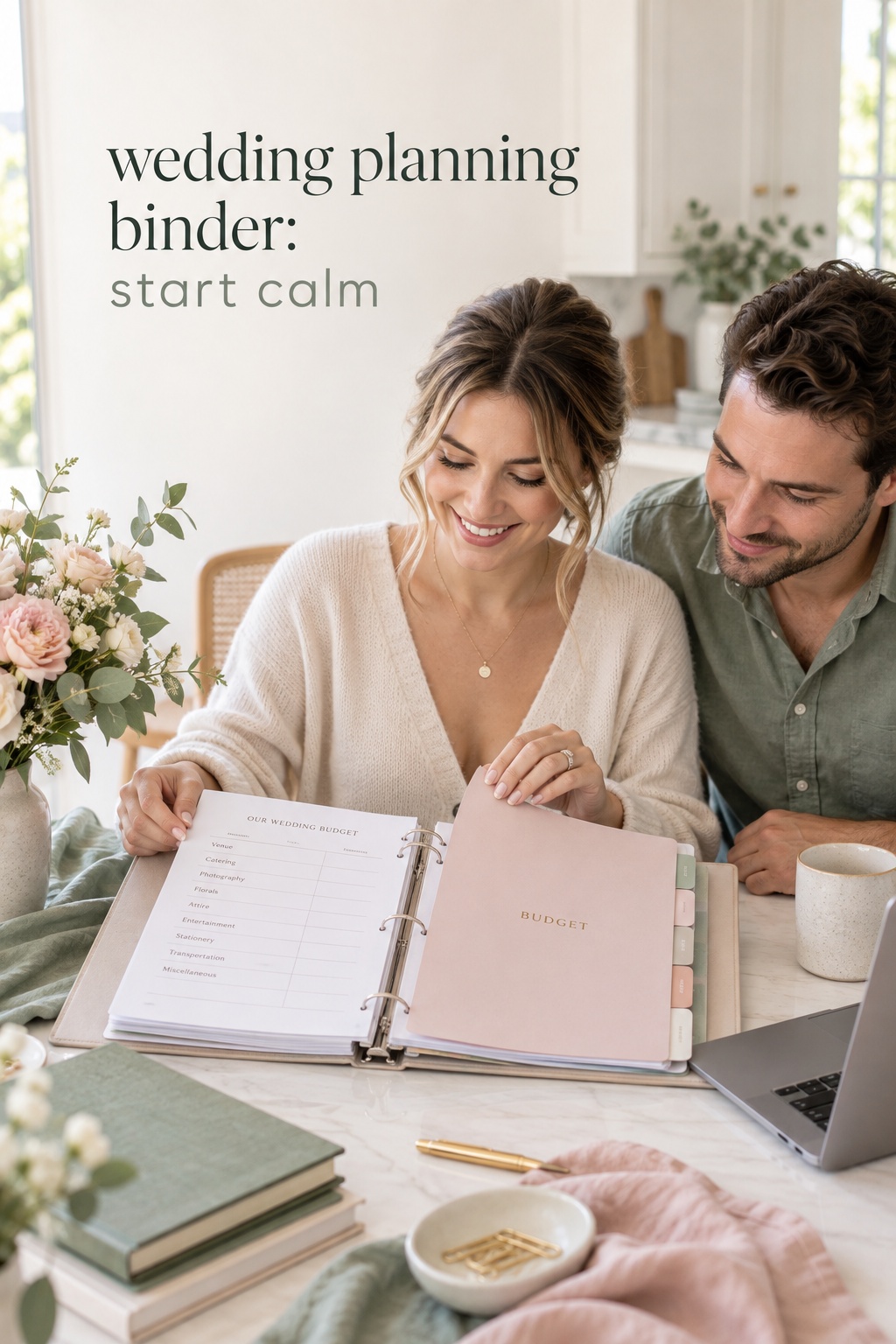
    wedding planning checklist detailed with a couple starting from clear priorities
    wedding planning checklist detailed: start with clarity

    Before you book anything: set the foundation

    The first stage of wedding planning is a short alignment meeting. You do not need to choose flowers or stationery yet. You do need a shared understanding of the celebration you are trying to create. Talk about the approximate guest experience, the season, the level of formality, the locations that could work, and the people who may contribute financially or practically.

    • Agree on an all-in budget range, including taxes, service charges, gratuities, attire, stationery, travel, and contingency money.
    • Create a rough guest range rather than waiting for a perfect guest list.
    • Choose a target season and identify dates that could work.
    • Decide which traditions, religious elements, family customs, or cultural events need to shape the schedule.
    • Choose one home for contracts, payments, guest information, ideas, and deadlines.

    Make the budget usable by separating estimates from committed costs. An estimate is a planning assumption. A committed cost is supported by a signed agreement, invoice, or payment record. Keep both figures visible. When a category changes, record why it changed and which priority will absorb the difference. A budget that only shows a final total hides the decisions that create that total.

    Build a preliminary guest list to the nearest ten. Include likely plus-ones, children, wedding party members, parents, and guests who may need travel support. You are not sending invitations yet. You are testing whether the wedding you imagine fits the spaces and costs you are considering. A guest range is one of the most useful tools in this entire checklist.

    Set up a shared planning system before research multiplies. It can be a spreadsheet, binder, planning platform, or carefully organized folder. Use consistent fields for vendor name, contact person, service, quote, deposit, balance, due date, cancellation terms, insurance information, and next action. Add the date each decision was made. This simple record makes later conversations faster and reduces the chance of losing a promise in an email thread.
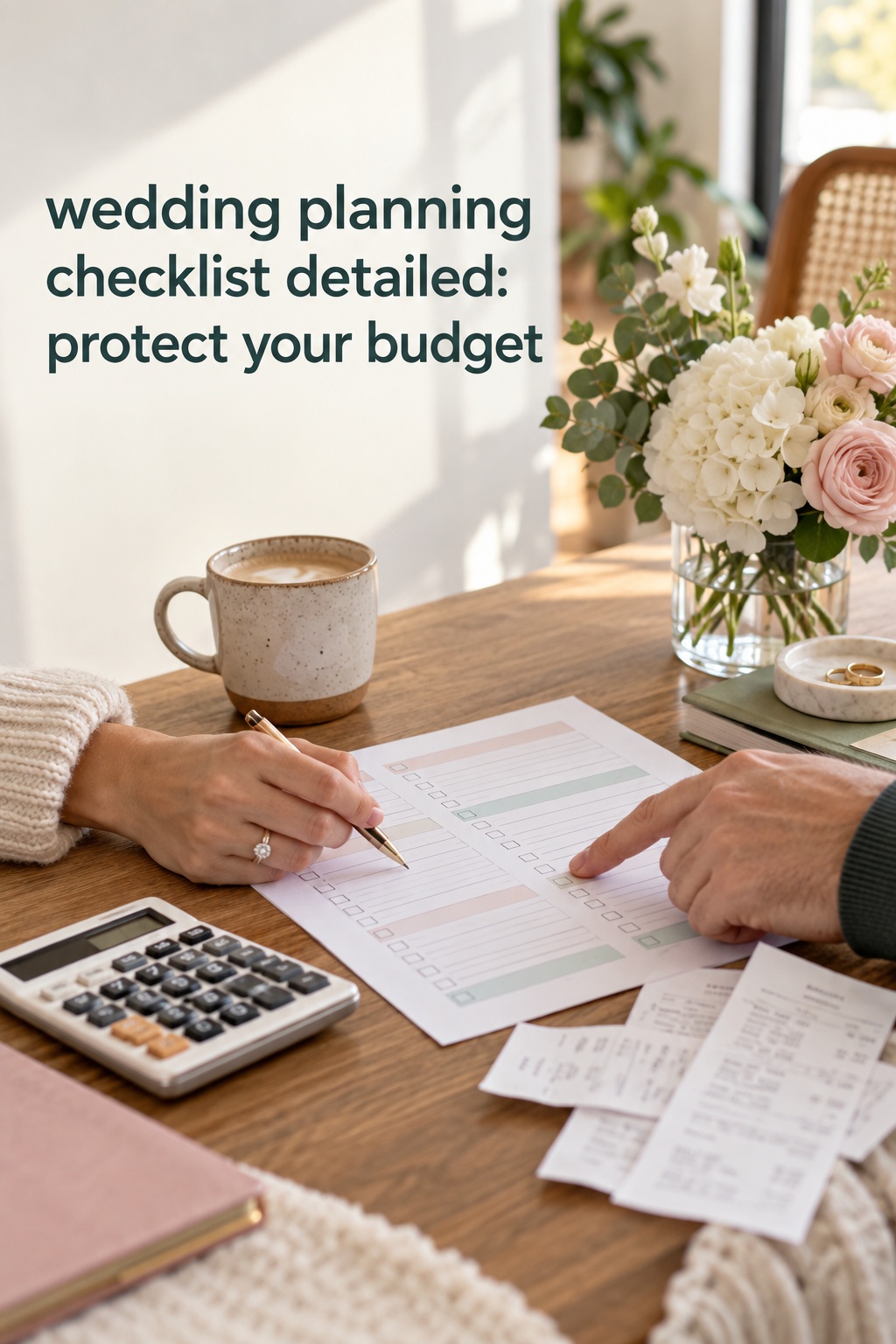
    wedding planning checklist detailed with a couple reviewing budget priorities
    wedding planning checklist detailed: protect your budget

    12 to 9 months before: secure the decisions that shape everything

    Once the foundation is clear, investigate venues. Compare more than the ceremony room or the reception photographs. Ask about guest capacity, weather backup, accessibility, parking, transportation, noise restrictions, getting-ready space, vendor rules, setup and breakdown windows, overtime, catering requirements, bar service, rentals, security, cleanup, and payment deadlines.

    • Tour a practical range of venues, including at least one option that challenges your first idea.
    • Request an itemized proposal and a sample contract.
    • Confirm the complete cost, not only the advertised rental fee.
    • Check whether the date is held, soft-booked, or available only until a deadline.
    • Review the cancellation, postponement, force majeure, and weather language before signing.
    • Confirm the final date, ceremony location, reception location, and guest capacity in writing.

    After the venue is secure, book the vendors whose availability matters most. For many couples, that means a planner or coordinator, photographer, videographer, caterer, entertainment, officiant, and florist. Your priorities may be different. The correct order is the one that protects the elements you care about most and respects the lead times in your region.

    Read every vendor agreement before paying a deposit. Look for the services included, the number of hours, arrival and departure times, deliverables, revision limits, payment schedule, overtime, substitution policy, cancellation terms, postponement terms, insurance, meals, travel, and ownership or delivery of finished files. Save the signed contract and receipt together. Add every payment deadline to the shared calendar immediately.

    This is also a good time to decide whether you need full planning, partial planning, or day-of coordination. A coordinator can be especially helpful when several vendors, multiple locations, complex family logistics, or a detailed guest experience are involved. The value is not only advice. It is the transfer of operational questions away from the couple during the final weeks and the wedding day.

    Order or begin shopping for attire according to the actual lead time. Custom clothing, made-to-order dresses, suits, international shipping, and multiple alterations may require more time than expected. Ask about delivery, returns, care, and the number of fittings. Include shoes, undergarments, jewelry, accessories, and attire for anyone whose outfit needs coordination.

    If many guests will travel, begin the first useful communication now. A wedding website or simple information page can hold the date, location, travel notes, hotel options, transportation information, and a way to ask questions. Avoid publishing details that are not confirmed. Clear early information helps guests make decisions without creating a flood of individual messages.

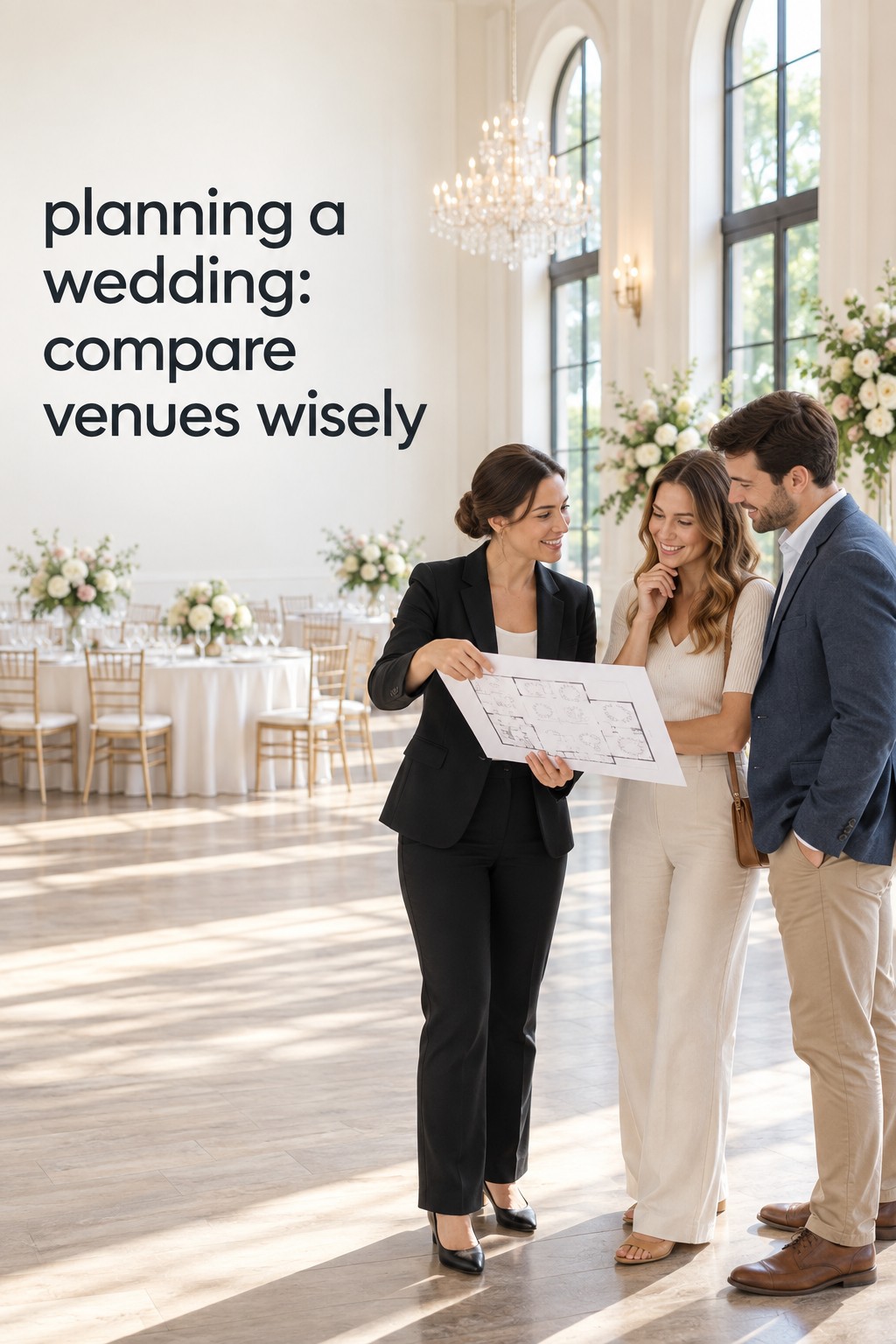
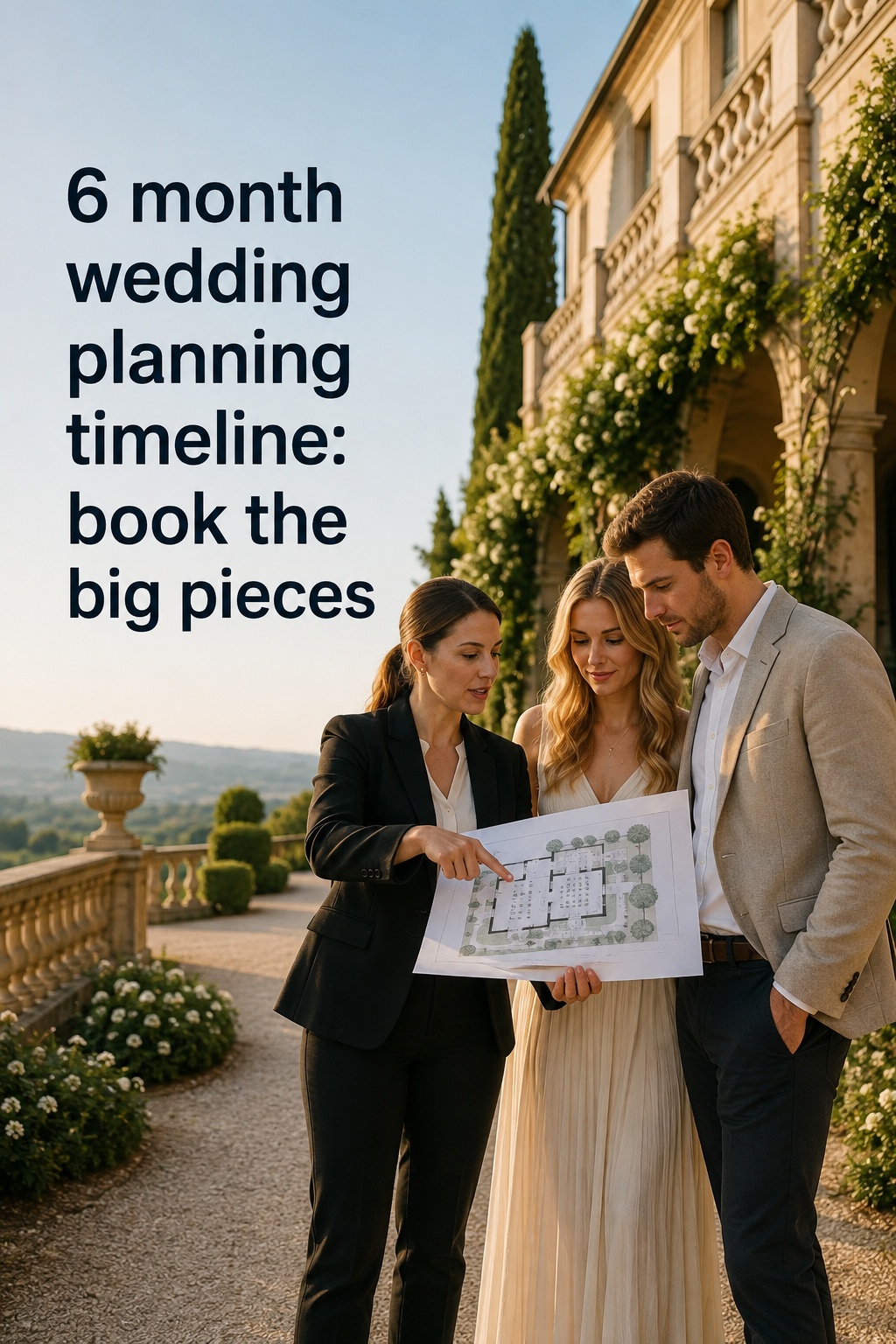
    wedding planning checklist detailed with a couple comparing venues with a planner
    wedding planning checklist detailed: compare venues wisely

    8 to 5 months before: build the guest experience

    With the major commitments in place, move into the part of planning where many ideas become real choices. Refine the guest list, confirm the invitation approach, and decide what information guests need at each point. If the wedding has travel, multiple events, or a complicated schedule, make the communication plan part of the guest experience rather than an afterthought.

    • Finalize the invitation wording, names, addresses, response method, and deadline.
    • Prepare save-the-dates if the date and location are firm and guests need advance notice.
    • Reserve hotel blocks or identify reliable lodging options when appropriate.
    • Review ceremony structure, readings, music, family participation, and accessibility needs.
    • Choose the broad design direction for stationery, flowers, rentals, signage, and attire.
    • Confirm the menu direction, dietary process, bar plan, and cake or dessert approach.
    • Reserve rentals, transportation, beauty appointments, and any specialist services with limited availability.

    Keep design decisions connected to the venue and the guest flow. A beautiful idea may require a particular power source, load-in window, ceiling height, flame policy, linen size, or setup team. Ask the florist, rental company, caterer, and venue how the idea works in the real room. Practical questions protect the look you want from last-minute substitutions.

    Use a decision log for choices that affect several people. Record the decision, the reason, the cost, the deadline, the owner, and the next action. For example, a menu decision may require a tasting, a dietary survey, a rental count, and a final approval date. Writing those links down prevents the common problem where everyone remembers the idea but no one remembers what must happen next.

    Discuss ceremony and reception responsibilities early. Decide who will give readings, make announcements, hold rings, manage personal items, welcome guests, handle gifts, collect cards, and answer vendor questions. These roles should be offered with clear expectations about time, attire, travel, and emotional energy. A named role is easier to support than a vague request to help.

    If you want one planning resource to keep these moving parts visible, The Wedding Command Center can be a useful place to organize the shared decisions, deadlines, and handoff details. Use it as a practical planning home, not as another source of inspiration to browse endlessly. The goal is to make the next action clear for both partners and trusted helpers.

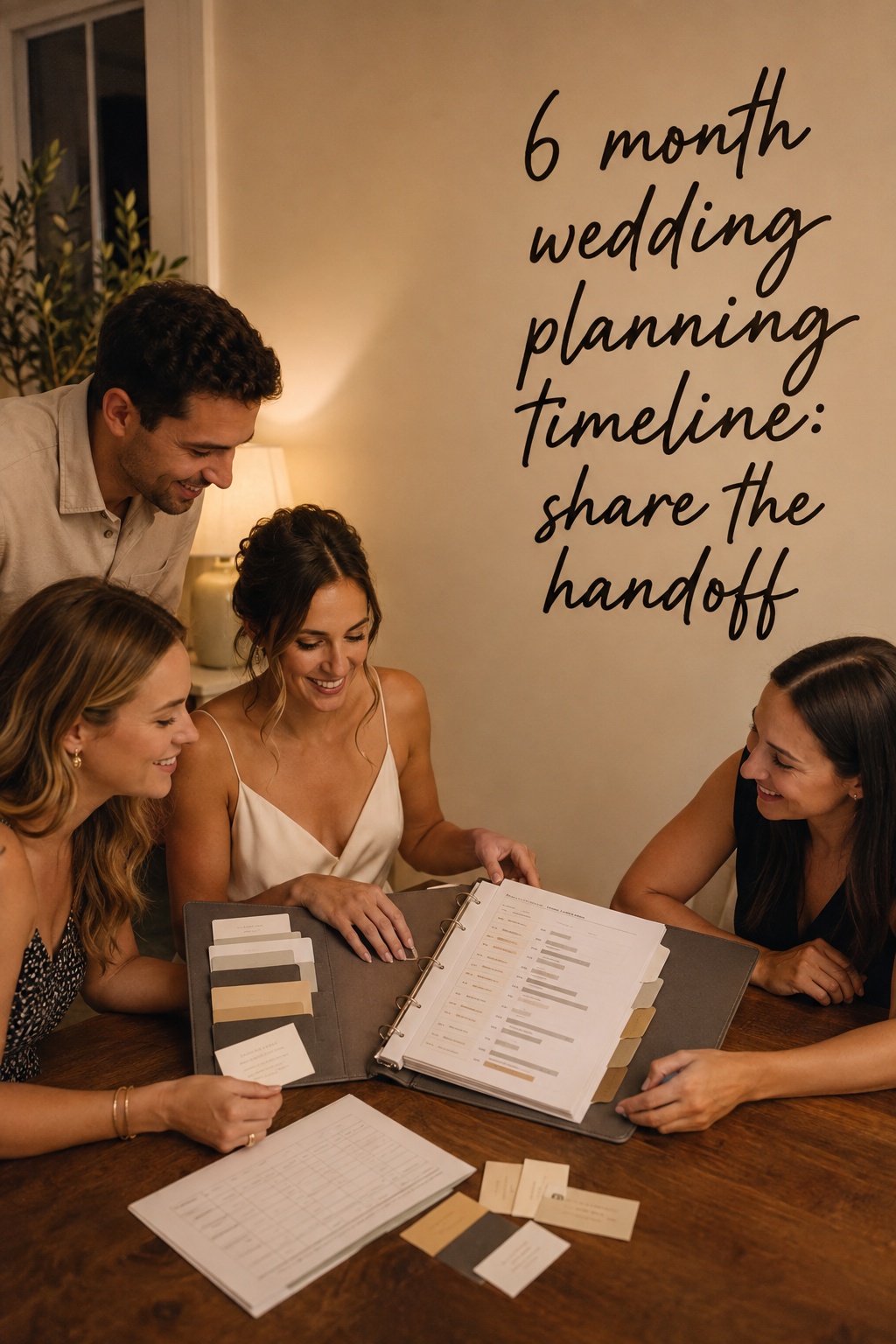
    wedding planning checklist detailed with a couple sharing planning tasks
    wedding planning checklist detailed: share the work

    4 to 1 months before: finalize the details and remove uncertainty

    Four months before the wedding, your checklist should shift from discovery to confirmation. There will still be choices, but most of them should be informed by the venue, vendor agreements, guest communication, and budget. Review your open decisions every week and mark each item as complete, waiting on someone else, scheduled, or no longer needed.

    • Send invitations according to the travel needs of your guests and the response timeline.
    • Track RSVPs, meal selections, accessibility requests, children, plus-ones, and lodging questions.
    • Schedule final attire fittings and check shoes, accessories, and garment care.
    • Confirm ceremony readings, vows, music, rehearsal plans, and officiant requirements.
    • Finalize menu selections, cake or dessert details, bar choices, rentals, and floral direction.
    • Prepare a draft floor plan and identify the information needed for the final seating chart.
    • Confirm transportation routes, pickup windows, parking, guest shuttles, and emergency contacts.
    • Research marriage-license requirements for the exact location where the ceremony will take place.

    Marriage-license rules are location-specific. Check the official local authority for identification, appointment requirements, waiting periods, application windows, fees, witnesses, officiant rules, and how long the license remains valid. Put the task on the checklist even if your officiant is helping. Legal paperwork deserves a named owner and a confirmed deadline.

    When invitations return, do not build the final seating chart too early. Start with a working chart if it helps you test tables and family dynamics, but wait for the response deadline and follow-up period before treating it as final. Keep a separate record of unanswered invitations. A seating chart made from assumptions usually has to be rebuilt.

    Schedule a venue walkthrough with the people who will use the final plan. Bring the coordinator, venue contact, caterer, rental representative, or anyone responsible for setup when possible. Confirm the ceremony transition, guest arrival, vendor access, power, bathrooms, food service, rain plan, signage, photography locations, storage, cleanup, and who makes decisions if conditions change.

    Create the day-of timeline by working backward from fixed anchors. Start with the ceremony time, venue access, sunset if photography depends on it, meal service, entertainment, transportation, and required departure time. Add generous transition space. A timeline that looks efficient on paper can feel rushed when it includes loading, parking, family photos, restroom breaks, outfit changes, and guests finding their seats.

    Prepare a concise vendor packet. Include the final timeline, venue address, contact list, floor plan, delivery instructions, setup responsibilities, meal information, ceremony order, photo priorities, transportation notes, and emergency contacts. Do not distribute private information widely. Give each person the version they need, and name one primary point of contact for questions on the day.

    The final week, wedding day, and week after

    The final week is for confirmation, packing, and handoff. It is not the time to redesign the entire wedding because of one new idea. Confirm arrival windows with vendors, provide the final guest count, check balances and tips according to contracts, complete the marriage-license plan, pack personal items, and transfer operational questions to the coordinator or named contact.

    • Share the approved timeline and contact tree with the people who need it.
    • Confirm transportation, lodging information, rehearsal details, and weather decisions.
    • Pack rings, documents, attire, accessories, medication, chargers, emergency supplies, and personal vows.
    • Label décor, cards, gifts, signage, favors, and items that must return home.
    • Give the point of contact a list of payments, deliveries, pickups, and items to collect.
    • Eat regular meals, sleep when you can, and protect a little time with your partner.

    On the wedding day, the couple should not be the default help desk. A coordinator, planner, trusted family member, or friend can answer routine questions and keep the handoff moving. Give that person authority to solve small problems within an agreed boundary. If every decision must return to the couple, the timeline will pull you away from the people and moments you planned to enjoy.

    After the wedding, close the system gradually. Confirm rental returns, collect personal items, save final contracts and receipts, download photographs when available, return attire or arrange preservation, send thank-you notes, and document any outstanding deposits. If your name or legal documents are changing, handle that as a separate administrative project. You do not need to complete every post-wedding task in one weekend.

    Mistakes that make a detailed checklist harder to use

    • Starting with exciting details. Decor and cake are enjoyable, but the budget, guest range, date, and venue create the constraints for later choices.
    • Tracking tasks without owners. A deadline without a person responsible will remain open until it becomes urgent.
    • Using too many disconnected systems. Scattered notes, texts, email threads, and spreadsheets make it difficult to know which version is current.
    • Comparing only headline prices. Include taxes, service fees, delivery, setup, meals, overtime, and required rentals before comparing vendors.
    • Building the seating chart too soon. Wait for real RSVPs and follow up with guests who have not responded.
    • Ignoring the handoff. A beautiful plan still needs a person, packet, timeline, and authority structure for the wedding day.
    • Treating one timeline as universal. Adjust for a short engagement, destination travel, religious ceremonies, cultural celebrations, accessibility, and local legal rules.

    The best wedding planning checklist is not the longest one. It is the one that helps you make the right decision at the right time, notice dependencies before they become emergencies, and share the work without losing the reason you are planning. Review it weekly, keep the next action visible, and let completed sections become space to breathe.
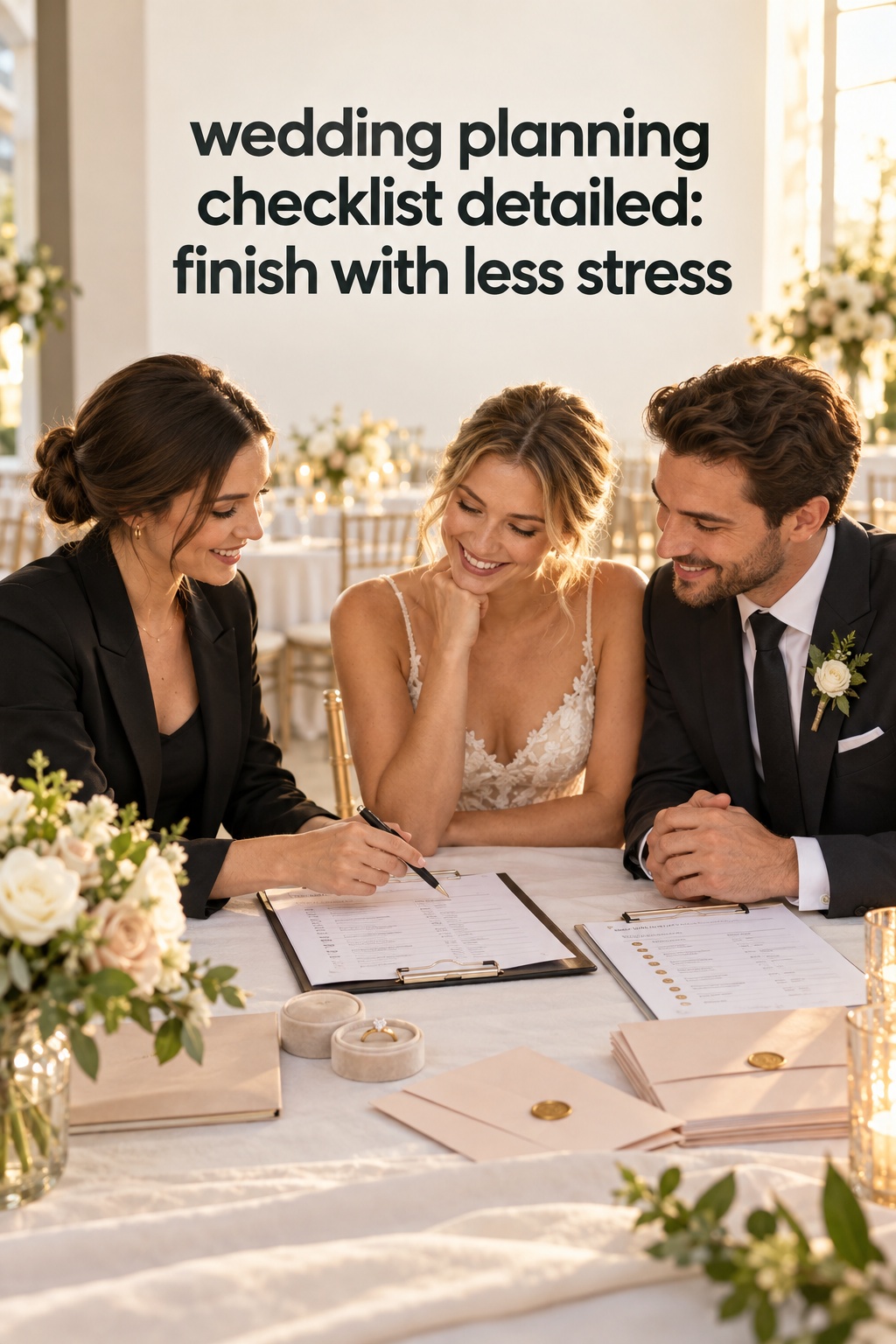
    wedding planning checklist detailed with a coordinator reviewing final details
    wedding planning checklist detailed: finish with less stress

    FAQ

    What should be on a detailed wedding planning checklist first?

    Start with the all-in budget, rough guest range, target season, possible dates, traditions or legal needs, and the type of guest experience you want. These decisions guide venue research and prevent you from choosing details that do not fit the actual celebration.

    When should you book the venue and major vendors?

    Book the venue as soon as your date, guest range, budget, and priorities are clear. Then secure vendors with limited availability, such as a planner, photographer, caterer, entertainment, or officiant. Lead times vary by location and season, so use real availability and contract deadlines rather than a generic rule alone.

    How do you use this checklist if you have less than 12 months?

    Begin with the earliest unfinished section and complete the foundation, venue, and core vendor work first. Compress research into focused decisions, ask vendors about rush timelines, and simplify optional details. Protect the date, legal requirements, guest communication, and the elements that matter most to you.

    Who should own wedding planning tasks?

    Assign ownership by outcome, not by occasional errands. One person can own vendor questions, another can own guest communication, and both can review budget changes and major contracts. Write down the owner, next action, and due date so responsibility stays visible and shared helpers know what they are agreeing to.

    When should you finalize the seating chart?

    Finalize the seating chart after the RSVP deadline, follow-up period, meal selections, and venue layout are clear. You can test table groupings earlier, but do not print place cards or treat the arrangement as final while important guest responses are still missing.

    What belongs in a wedding-day handoff packet?

    Include the final timeline, vendor contacts, venue address, floor plan, delivery and setup notes, ceremony order, photo priorities, transportation details, payment or pickup reminders, emergency contacts, and the person authorized to make decisions. Share only the information each recipient needs.

  • Planning a Wedding: What Matters Most in 2026

    Planning a Wedding: What Matters Most in 2026

    Planning a wedding can feel like opening twenty browser tabs at once. One tab holds venue inspiration, another holds a budget estimate, and a third contains a message from a relative about the guest list. Meanwhile, every decision seems to create three more decisions. The good news is that wedding planning is becoming more manageable when couples stop treating it as a race to collect ideas and start treating it as a connected system.

    The most useful shift is to separate what is genuinely changing in the wedding world from what will remain important no matter the season. Couples want celebrations that feel personal, but they also want realistic spending, clear communication, comfortable guests, and a day that does not depend on one person remembering every detail. That combination calls for thoughtful planning rather than endless trend chasing.

    planning a wedding with priorities and a shared budget
    Start planning a wedding with clear priorities and a shared budget.

    This guide explains the planning choices that matter most now, why their order affects everything that follows, and how to build a system flexible enough for a full-service celebration, a smaller gathering, or a mostly DIY wedding. Use it as a way to decide what deserves your attention first.

    What is changing in wedding planning

    Wedding planning is moving toward more intentional personalization. That does not necessarily mean adding more décor, more entertainment, or more elaborate stationery. It means deciding which parts of the day should carry the couple’s personality and allowing the rest to stay simple. A favorite meal, a meaningful ceremony structure, a carefully chosen playlist, or a thoughtful welcome for out-of-town guests can say more than a room filled with unrelated details.

    At the same time, couples are becoming more realistic about what a wedding requires financially. A useful budget is not a single number copied from a planning article. It is a working range that includes venue and catering, taxes, service charges, gratuities, attire, beauty, stationery, transportation, hotel needs, marriage-license costs, rentals, and a cushion for changes. The final amount depends on region, guest count, season, and the experience you want to create.

    Another important change is the rise of one shared planning system. A spreadsheet can be enough. A planning platform can be helpful. A shared folder with a clear naming convention can work too. The tool matters less than the habit: every quote, contract, payment, deadline, guest note, and open question should have a home that both partners can access.

    • Personalization is becoming more selective: couples are investing in a few meaningful experiences instead of decorating every surface.
    • Budgets are becoming more transparent: couples are discussing contributions, limits, and priorities before signing contracts.
    • Guest experience is part of design: transportation, food timing, seating comfort, sound, shade, and accessibility shape how the day feels.
    • Planning is more collaborative: partners are sharing ownership instead of assigning one person the role of project manager.
    • Flexibility matters more than perfection: a strong plan includes alternatives for weather, late RSVPs, vendor timing, and family changes.

    These changes do not mean that traditional choices are outdated. They simply make it easier to ask whether a choice supports the celebration you actually want. A trend is useful when it solves a planning problem, improves the guest experience, or helps the day feel more like you. It is less useful when it adds cost, labor, or stress without a clear benefit.

    planning a wedding while comparing venues and asking practical questions
    Compare venues wisely when planning a wedding.

    Why the order of your decisions matters

    Many planning frustrations begin with a decision made too early. Couples tour venues before estimating their guest range, choose a date before checking family realities, or fall in love with a design concept before learning what the venue includes. None of these choices is automatically wrong, but each can force expensive changes later. Planning a wedding becomes calmer when you make decisions in a sequence that allows one answer to clarify the next.

    Start with a shared vision conversation. Do you want a lively dinner party, a formal evening, a relaxed outdoor gathering, a city celebration, or a weekend that brings people together from different places? You do not need a final color palette. You need language for the experience. Ask what you want guests to remember, what you want to feel during the day, and which two or three elements would make the celebration worthwhile even if other details changed.

    Next, define priorities. One partner may care most about food while the other cares about photography, music, or a calm ceremony. Write those priorities down before dividing the budget. This is not a contest to determine whose preference wins. It is a way to make trade-offs visible. If the meal is a top priority, you might reduce the number of decorative installations. If live music matters most, you might choose a simpler floral plan.

    Then create a rough guest range rather than pretending you know the final count. The difference between 60 and 120 guests affects venue capacity, catering, rentals, transportation, invitations, hotel needs, and the amount of time you can spend with each person. A range helps you compare options honestly. It also gives you room to refine the list without rebuilding the entire plan.

    With priorities and guest range in view, build an all-in budget. Identify who is contributing, when funds will be available, and which expenses are easy to forget. Ask every vendor whether the quoted price includes taxes, service charges, delivery, setup, overtime, travel, and gratuity. Keep a separate line for contingency. A budget that uses every dollar on the first draft is not a plan; it is a future problem.

    • Vision and priorities
    • Guest range and travel needs
    • All-in budget and contribution expectations
    • Season, date flexibility, and ceremony location
    • Venue capacity, restrictions, and included services
    • High-impact vendors and the order in which to book them

    Only after these conversations should you compare venues in detail. Look beyond attractive photos. Ask about rain plans, access times, sound limits, catering rules, vendor requirements, parking, accessibility, restrooms, lighting, cleanup, insurance, and the point person for the day. A venue can be beautiful and still create friction if its policies conflict with your priorities.

    This sequence also helps you choose a planner. Full-service planning can be valuable when you want support from the beginning, have a complex guest experience, or simply do not want to manage every vendor conversation. A month-of or day-of coordinator can be a better fit when you enjoy making the decisions but want someone else to run the timeline and solve problems while you celebrate. The important question is not whether a planner is fashionable. It is which responsibilities you want to own.

    planning a wedding by booking the vendors that matter most
    Book what matters most when planning a wedding.

    Build a planning system that can survive real life

    A wedding plan should help you make decisions, not create another source of guilt. Choose one main system and set it up before the vendor list becomes complicated. At minimum, create sections for budget, guest list, vendor contacts, contracts, payment schedule, timeline, design references, questions, and items that still need an owner.

    Give each task a deadline and an owner. Shared ownership does not mean that both partners must do every task together. It means that both people know what is happening and can see the information. One person might lead transportation while the other leads stationery. A task is not complete until the decision, cost, due date, and next action are recorded.

    Use a simple decision log for choices that affect other parts of the plan. Record the date, the decision, the reason, the cost, and what needs to change as a result. For example, choosing a Saturday evening date may affect the venue price, hotel availability, transportation, and guest travel. Writing that down prevents you from reopening the same discussion months later.

    Contracts deserve their own review step. Before signing, confirm the service description, hours, deliverables, payment schedule, cancellation terms, postponement policy, overtime rate, travel fee, replacement plan, meal expectations, and what happens if the vendor becomes unavailable. Ask questions in writing and save the final version in the same place as the quote. If you are unsure about a legal or financial clause, get professional advice rather than relying on a casual interpretation.

    Your guest list system should do more than count names. Track household names, mailing addresses, invitation status, RSVP status, meal needs, accessibility needs, hotel information, transportation plans, and gifts if that is useful for your situation. Limit access to sensitive information and agree on who is allowed to make changes. A guest list that changes without a clear process can quietly break your catering, seating, and budget assumptions.

    • Create one master budget with estimated, contracted, paid, and remaining amounts.
    • Save contracts with consistent filenames and record every payment deadline.
    • Keep vendor contact details and arrival instructions in one place.
    • Use a guest list that records both RSVP status and practical needs.
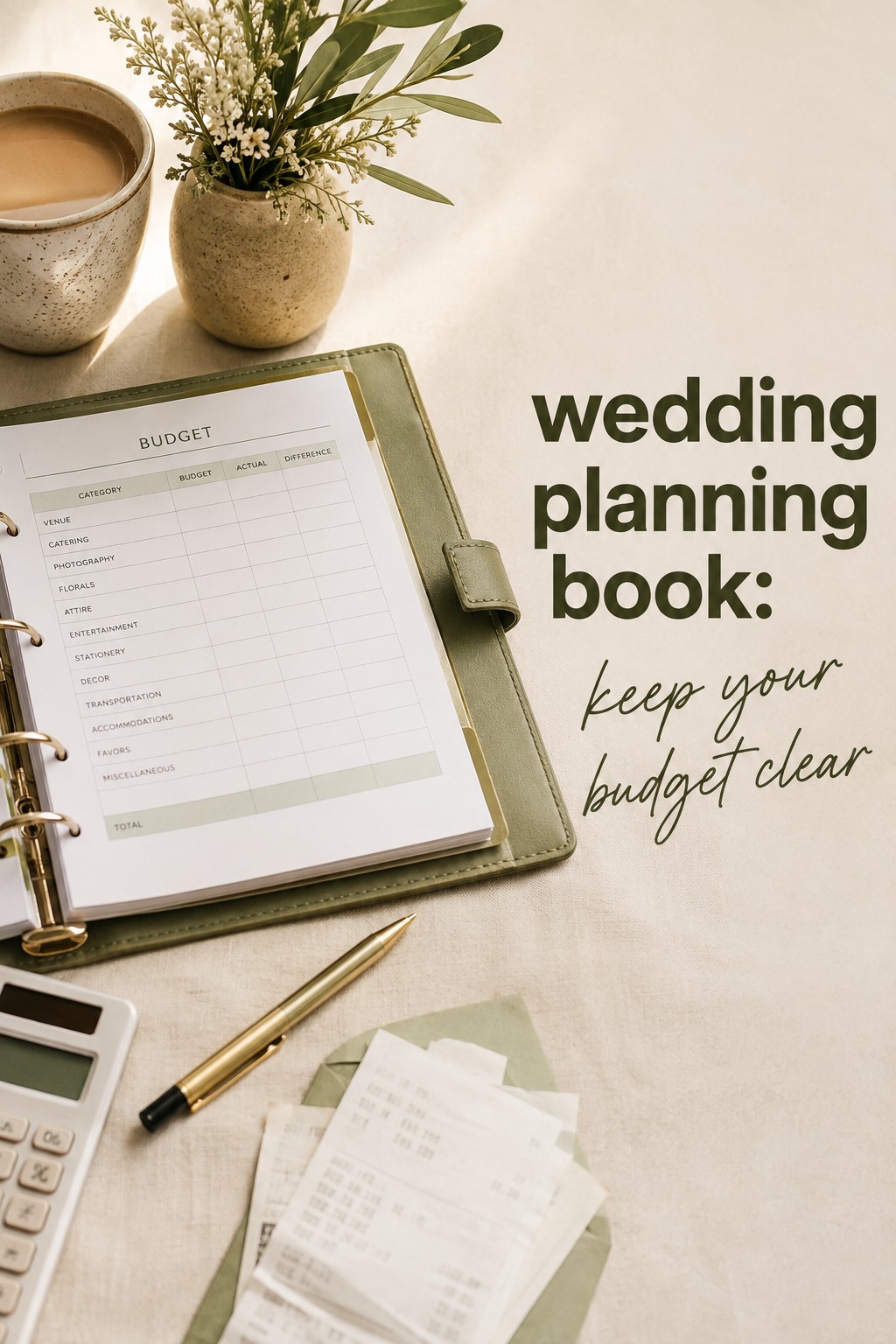
    • Review the plan together once a week, then stop planning for the evening.
    • Choose a non-couple point person for wedding-day questions and envelopes.

    Communication deserves a system too. Set boundaries around family input before the guest list or design decisions become emotionally loaded. You can invite opinions without handing over the final decision. A useful phrase is, “We are collecting ideas this week and will decide together on Sunday.” If someone is contributing money, clarify whether that contribution comes with expectations. Clear conversations early are kinder than resentful negotiations later.

    The Wedding Command Center can be a useful planning resource when you want your decisions, tasks, and wedding details gathered into a calmer structure. Use any planning resource in the same spirit: it should reduce scattered information and make the next action obvious, not encourage you to add more work.

    Build a handoff before the wedding week. Prepare a concise document with the final timeline, vendor contacts, venue access notes, floor plan, meal information, ceremony cues, transportation details, payment envelopes, emergency contacts, and the decisions that should not be changed without your approval. Share it with the planner or designated point person. The goal is not to control every minute. The goal is to make it possible for someone else to help.

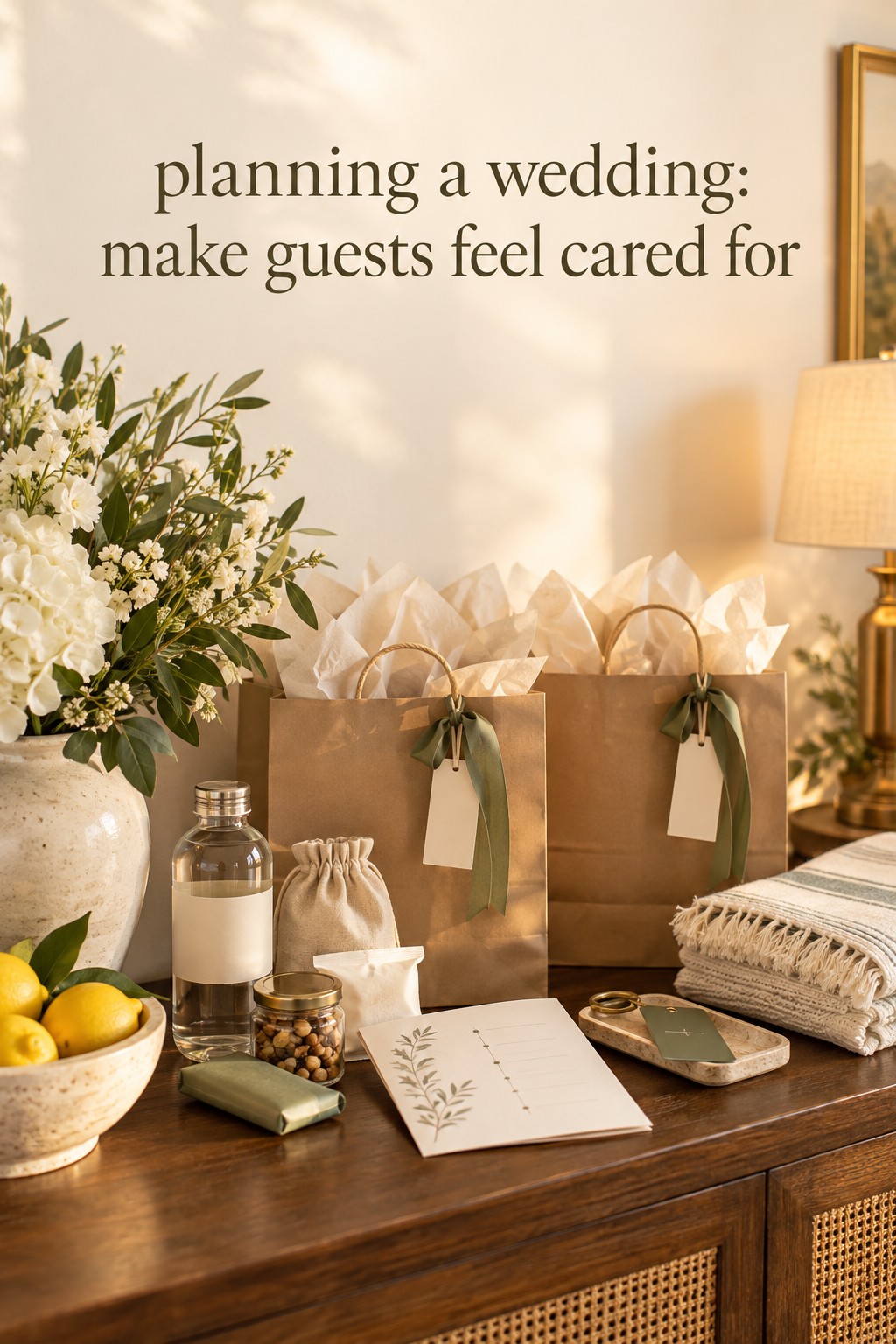
    planning a wedding with thoughtful guest welcome and travel details
    Make guests feel cared for when planning a wedding.

    Choose lasting details over short-lived pressure

    Wedding trends can be inspiring, but a trend should earn its place in the plan. Ask whether it improves the way people move through the day, strengthens the atmosphere, creates a meaningful memory, or solves a practical problem. If the answer is no, save the idea in an inspiration folder instead of putting it on the purchase list.

    Food is one of the most reliable ways to create a memorable experience. Think about how guests will eat, not only what the menu looks like on paper. Is there enough time between ceremony and dinner? Can guests with allergies or dietary restrictions eat confidently? Will older guests have comfortable access to food and seating? Is the late-night option worth the cost, or would an earlier meal and better service make a bigger difference?

    Music shapes the pace of the entire celebration. Share the emotional direction you want, then give the DJ or band practical information about entrances, announcements, volume, special dances, cultural moments, and songs that should not be played. A short, thoughtful list is often more useful than an enormous playlist with no context.

    Hospitality details matter especially when guests are traveling. Provide clear information about lodging, transportation, parking, weather, dress expectations, and the distance between ceremony and reception. If your celebration has multiple events, create one simple weekend schedule. Guests should not have to search through several messages to learn where they need to be.

    Outdoor weddings need a rain plan that you would genuinely be happy to use. Ask how quickly the venue can make the change, where guests will wait, how sound and lighting will work, and whether the alternative affects your floor plan or photography. Weather planning is not negative thinking. It is a way to protect the experience you are creating.

    Accessibility should be considered at the beginning, not added as a last-minute accommodation. Look at entrances, paths, restrooms, seating, sound, lighting, transportation, and communication. Ask guests privately if they need anything that would help them participate comfortably. Small changes can make a significant difference, and they often improve the experience for everyone.

    • Choose details that reflect your relationship or improve guest comfort.
    • Make sure the visual plan works with the venue’s actual light, weather, and access rules.
    • Consider how long each transition takes, including travel, portraits, meal service, and speeches.
    • Give vendors context about the feeling you want, not only a folder of images.
    • Keep one or two elements intentionally simple so the day has breathing room.

    Finally, protect time to be present. Couples often spend months planning a beautiful event and then become the people everyone calls when a chair is missing or a vendor is late. Put someone else in charge of logistics. Eat before the reception gets busy. Build pauses into the schedule. A wedding does not need to be perfectly efficient to be successful. It needs to leave room for you to notice the people who came to celebrate with you.

    planning a wedding while leaving room to be present on the day
    Leave room to be present while planning a wedding.

    FAQ

    What is the first thing to do when planning a wedding?

    Start with a shared conversation about the kind of experience you want, then agree on a rough guest range and realistic all-in budget. Those three pieces guide the date, venue, vendor priorities, and overall scale. You do not need a final theme before beginning, but you do need a common direction.

    How long does planning a wedding usually take?

    Many couples plan for about 12 to 18 months, especially when they want a popular venue or date. A shorter engagement can work for a smaller or flexible wedding, but it may limit vendor availability and increase rush decisions. Work backward from your date and identify the bookings that need the most lead time.

    Do I need a wedding planner?

    Not every couple needs full-service planning. Consider it if you want help with design, vendor selection, budget management, logistics, or a complex weekend schedule. If you enjoy planning but do not want to manage the wedding day, a month-of or day-of coordinator may provide the most useful support.

    How can couples keep a wedding budget realistic?

    Build the budget from the guest count, location, season, and priorities rather than from a generic percentage chart. Include taxes, service charges, gratuities, delivery, setup, attire alterations, stationery postage, transportation, legal fees, and a contingency amount. Compare proposals using the total expected cost, not only the starting price.

    When should we finalize the guest list?

    Begin a rough list early because guest count affects the venue and budget, but expect it to change as you learn more. Create clear rules for adding guests, plus-ones, children, and family obligations. Final numbers usually become firm after RSVPs, when you can finalize catering, seating, transportation, and hotel needs.
    What if our plans change after we book vendors?

    Review each contract and contact affected vendors quickly. Ask about date changes, postponement, cancellation, substitutions, and transferable payments. Keep a written record of every agreement. A flexible plan, a contingency fund, and a clear decision-maker make changes easier to manage than last-minute group conversations.

  • Wedding Planning Binder: A Calm, Practical Setup

    Wedding Planning Binder: A Calm, Practical Setup

    Wedding planning can feel disorganized even when you are doing something every day. A quote arrives by email, a parent sends a screenshot, a vendor mentions a deadline during a phone call, and an important decision ends up on a sticky note. The problem is rarely a lack of effort. It is that the information has no dependable home.

    A wedding planning binder gives your plans a visible center. It can hold meeting notes, approved inspiration, printed contracts, timelines, and the questions you want to ask next. It should make decisions easier to find, not become another oversized project to maintain. The most reliable setup uses the binder for stable, discussion-ready information and a digital master for details that change often.

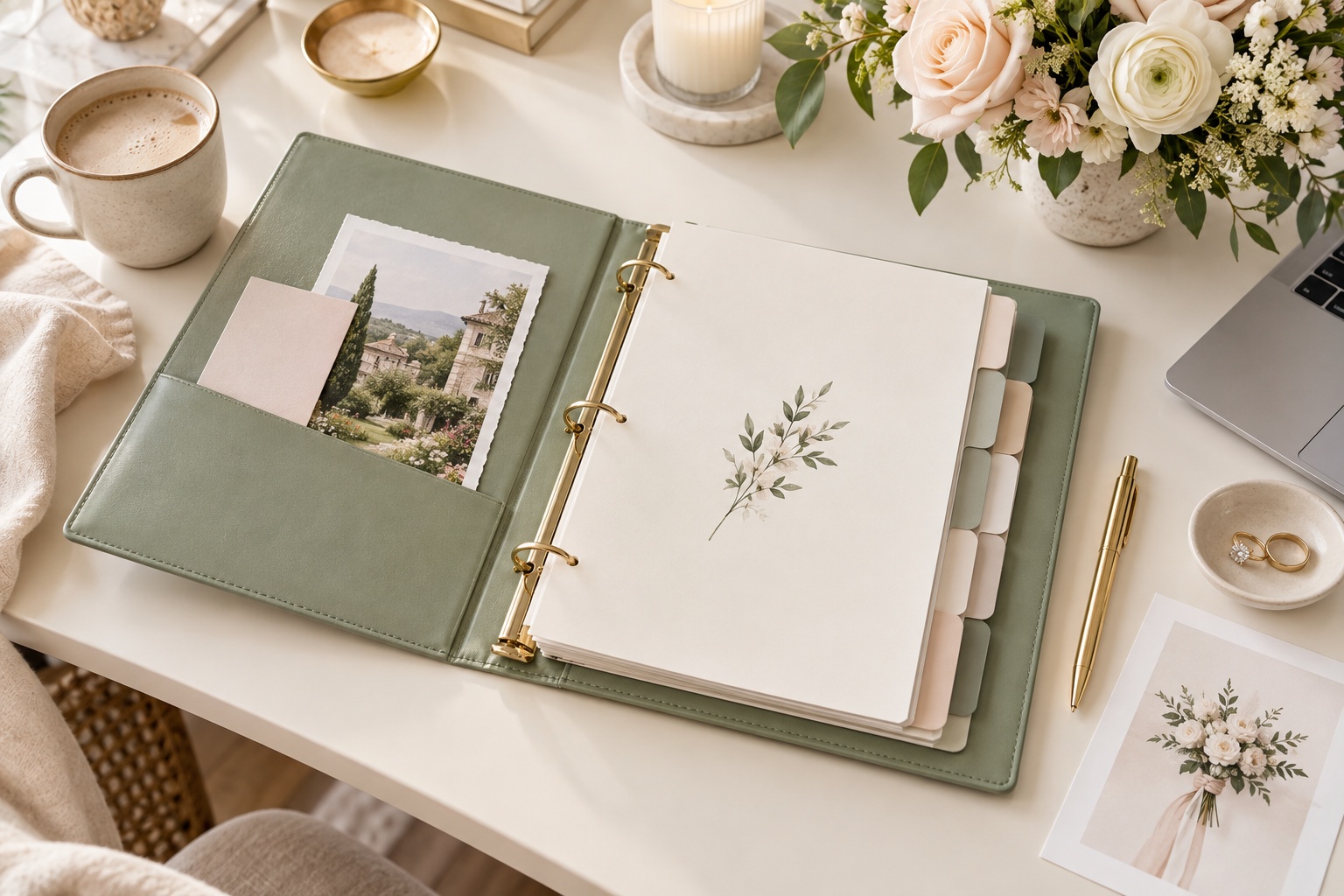
    wedding planning binder with tabs and budget pages on a bright table
    Start a wedding planning binder with a clear, calm setup.

    Start by Solving the Real Planning Problem

    Before buying dividers, decide what your wedding planning binder must do. Its job is to answer common questions quickly. What have we decided? What still needs a decision? What did the vendor promise? What is due next? Where can our planner or partner find the information without asking us to search through messages?

    That definition keeps the binder useful. A binder that tries to contain every email, every inspirational image, and every version of every guest list will become heavy and confusing. A binder that contains only final contracts will be too thin to support the planning process. Aim for a working record of decisions, conversations, and handoffs.

    Use one simple status language throughout the binder. For example, write “to decide,” “shortlist,” “booked,” “paid,” or “final.” Add the date to important notes. These small labels help you tell the difference between an idea and a commitment. They also make old pages easier to archive when plans change.

    Choose a binder size that matches your planning style. A sturdy 1.5- to 2-inch three-ring binder is enough for many couples at the beginning. A larger binder may be helpful for a large guest count, a destination wedding, or a planner who needs extensive printed materials. Start smaller if you can. Extra space encourages random filing.

    Add a front pocket for items that need attention at the next meeting, a back pocket for papers that need to be filed, and a pencil pouch for a pen, highlighter, measuring tape, and a few sticky notes. A label on the spine matters more than a decorative cover because the binder should be recognizable on a shared desk or in a venue meeting.

    Keep originals of legal documents, signed contracts, and irreplaceable receipts in a secure location. Place a clearly labeled copy in the binder when it helps with planning. This gives you the convenience of paper without turning a portable planning tool into the only place where critical documents exist.

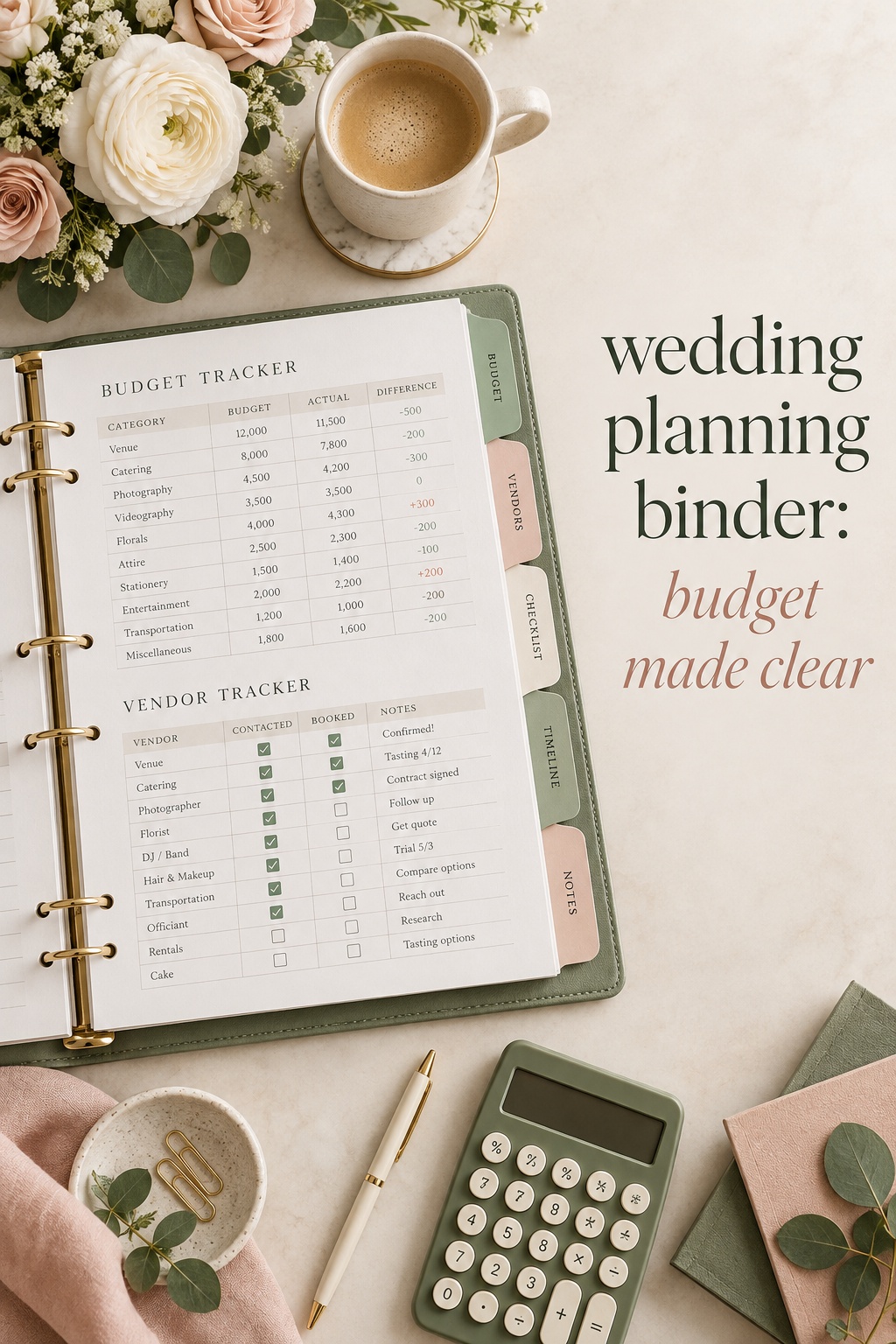
    wedding planning binder budget and vendor tracker with organized tabs
    Use a wedding planning binder to make budget decisions clearer.

    Build Sections That Match How Decisions Happen

    The best wedding planning binder sections follow the way a couple moves through the work. Begin with an overview, then place money and people near the front, followed by suppliers, design decisions, event details, and the final handoff. You can add or remove tabs as your wedding becomes more specific.

    Start with a dashboard. Put the wedding date, venue, ceremony and reception locations, guest-count range, planning contacts, and the next three decisions on one page. Include a small “last updated” line. This page is not meant to contain every detail. It is a quick orientation sheet for you, your partner, family members, and your planner.

    Make the next section priorities and vision. Write a short description of how you want the day to feel, followed by non-negotiables and flexible areas. This prevents the binder from becoming a collection of attractive ideas that do not fit the budget, venue, season, or guest experience. Keep only inspiration that supports an actual decision.

    Use a budget section for approved numbers and questions, not for every rough estimate you have ever received. A useful printed budget snapshot shows the category, estimated cost, actual cost, deposit paid, balance due, payment date, and notes. Add a contingency line. If the live budget is in a spreadsheet, print a dated snapshot before major meetings and write the date on the page.

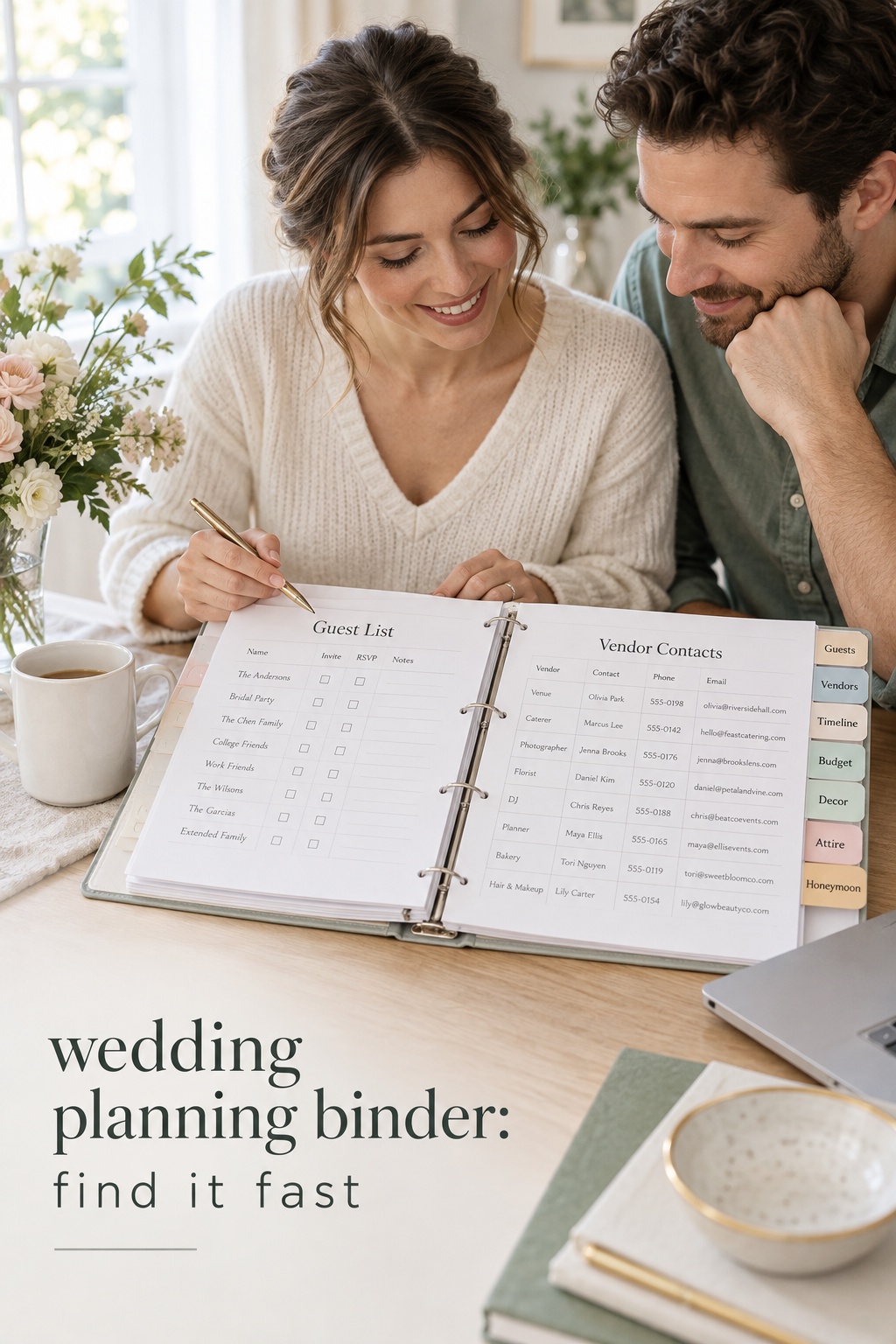
    Give the guest list its own divider, but keep the master list digital when possible. The binder can hold the current guest-count summary, RSVP deadline, meal-choice instructions, family grouping notes, and a printed list for a specific meeting. Avoid repeatedly hand-editing addresses or RSVP changes on paper. That is how two versions start to disagree.

    Create a vendor section with one page per booked vendor and a comparison page for vendors you are still considering. Record the category, company, primary contact, phone number, email, website, contract status, deposit, balance, arrival needs, and next follow-up date. Add a short note about why you chose a vendor. That context is valuable when someone else joins the planning conversation.

    Keep a contracts and payments section separate from general vendor research. File a copy of each signed agreement, followed by a one-page summary of payment dates, cancellation terms, included services, overtime rules, and outstanding questions. The summary should help you prepare for a call. It is not a replacement for reading the contract.

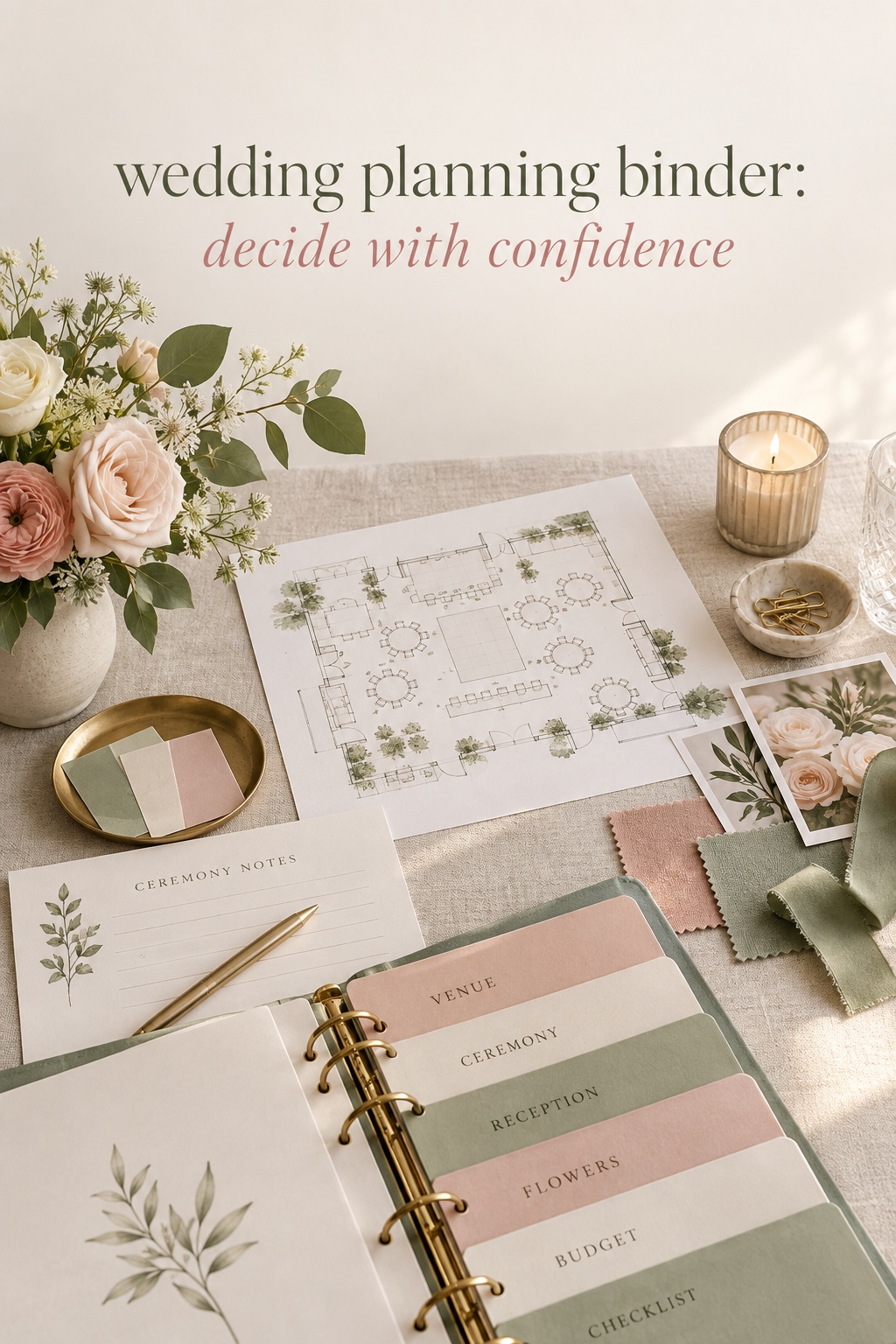
    Use design and decor for approved direction. Include color references, fabric or paper samples, rental notes, floral priorities, lighting ideas, signage wording, and a list of items you already own. Put the decision beside the inspiration. “Approved for ceremony aisle” is more useful than a page of unlabelled photos.

    Add dedicated tabs for attire, ceremony, reception, stationery, transportation, accommodations, and honeymoon only when the category has enough material to deserve its own home. Otherwise, group related topics. A slim binder with clear categories is easier to review than a thick binder with a divider for every possible wedding detail.

    The Wedding Command Center can be useful as a planning resource when you need one place to coordinate tasks, decisions, and responsibilities. If you use it alongside a binder, decide which system is the live source for changing information. The binder should then hold the summaries and printouts that make meetings and handoffs easier, rather than duplicate every task.

    wedding planning binder guest list and vendor contacts reviewed by a couple
    Keep guest and vendor details easy to find in your wedding planning binder.

    Use the Binder With a Digital Master

    A paper binder and a digital planning system solve different problems. Paper is calm, visible, and easy to discuss around a table. Digital files are searchable, shareable, and better for data that changes. Your system becomes much less stressful when each detail has one clear source of truth.

    Keep the live guest list, budget calculations, RSVP status, vendor payment tracker, and master planning checklist in the digital system. These areas contain frequent edits, formulas, or information that several people may update. Use the binder for dated snapshots, meeting agendas, approved decisions, samples, and notes that benefit from physical review.

    At the start of each planning month, review the digital master and replace outdated binder pages. Mark the new snapshot with the date and the initials of the person who prepared it. Remove old versions instead of stacking them behind the new page. If you need a history of changes, store it in a digital archive or a clearly labeled “previous versions” pocket.

    Prepare for meetings with a short agenda. Place the agenda in the front pocket, then pull only the relevant pages forward. A venue meeting may need the floor plan, guest-count range, catering questions, and budget snapshot. A florist meeting may need the approved mood direction, ceremony priorities, reception table count, and delivery timing.

    After every meeting, record decisions while they are fresh. Write what was agreed, who owns the next action, the due date, and where the final confirmation will be stored. If a vendor confirms something verbally, send a follow-up email and file the written response. Your binder can hold the note, but the written confirmation should remain easy to retrieve.

    Use color carefully. One color can identify actions for you, another can identify actions for your partner, and a third can flag a deadline. Too many colors turn pages into visual noise. Consistent labels, dates, and page titles are more powerful than a complicated color code.

    Protect private information. A binder may include budgets, phone numbers, addresses, travel details, and copies of contracts. Decide who can take it home and where it is stored. If you share digital files with family or vendors, give them access only to the pages or folders they need. Collaboration should not require exposing every planning detail.

    wedding planning binder with venue floor plan ceremony notes and fabric swatches
    Use a wedding planning binder to turn inspiration into confident decisions.

    Prepare a Separate Day-of Handoff

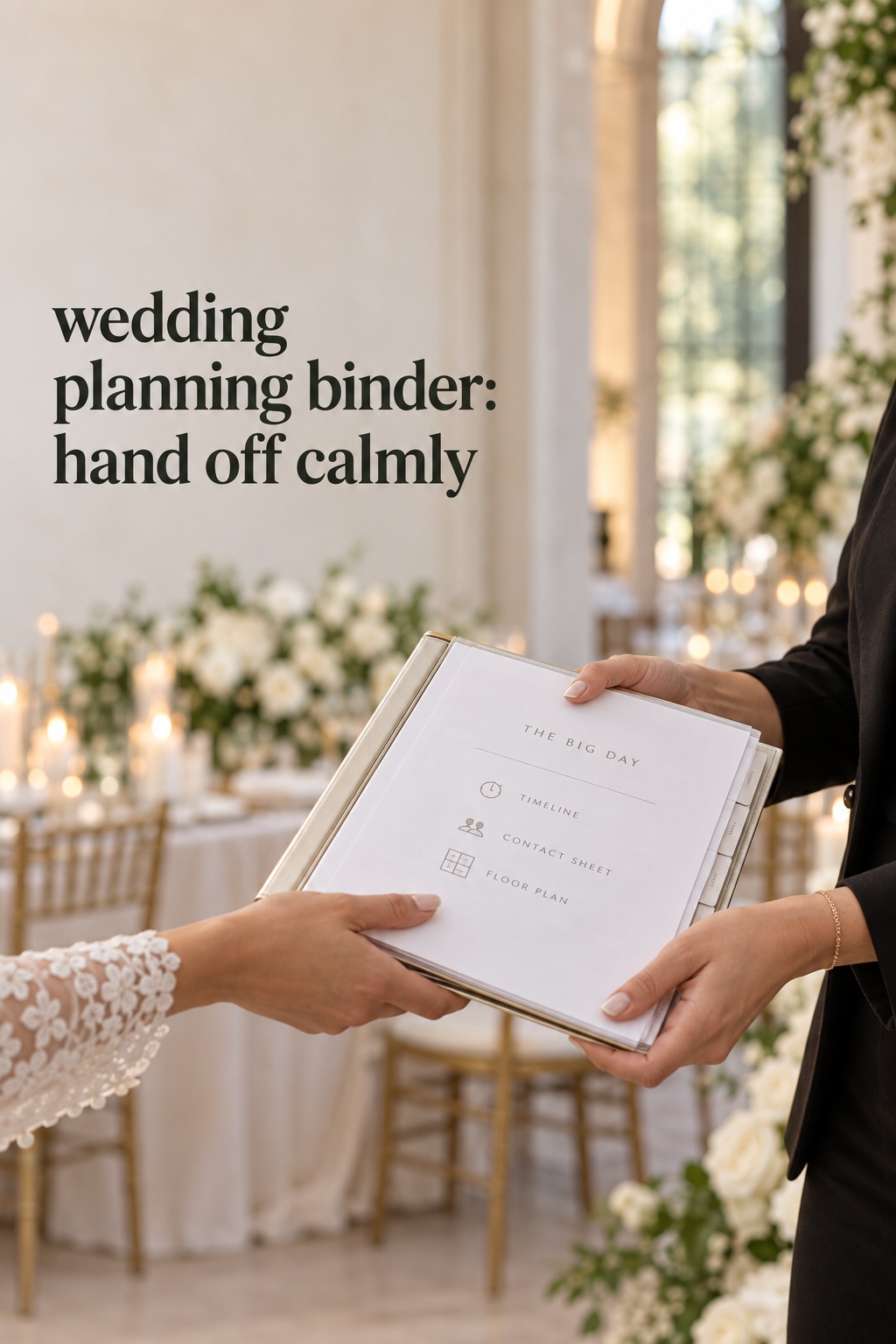
    Your planning binder is for the engagement. Your day-of packet is for the people who will execute the plan while you are getting married. These tools overlap, but they should not be identical. The day-of packet needs concise, final information and clear responsibilities. It usually does not need your full budget, early vendor comparisons, or months of discarded inspiration.

    Start the handoff with a one-page event overview. Include the date, venues, emergency contacts, planner or coordinator contact, transportation contact, guest-count estimate, and the location of the couple during key parts of the day. Add a note stating who is authorized to make decisions if an issue appears.

    Include the final timeline with vendor arrival windows, setup responsibilities, ceremony cues, meal service, speeches, photography priorities, transportation departures, and cleanup. Add realistic buffer time. A timeline that assumes every transition is instant will create pressure even when the vendors are doing everything correctly.

    Add a vendor contact sheet and a venue logistics page. Record loading instructions, parking, access codes, power needs, rental delivery, trash procedures, end-of-night responsibilities, and the person who receives personal items. If the venue has a preferred order of operations, include it. Practical details are often more valuable than another decor image.

    Include final versions of the floor plan, seating chart, family photo list, ceremony order, music preferences, meal notes, allergy information, and special accessibility needs. If you have a do-not-play list, place it with the music information. If the wedding is outdoors, note the sunset time and the rain plan so the coordinator and photographer can work from the same assumptions.
    Use labeled envelopes for tips, petty cash, rings, marriage-license logistics, or items that must be handed to a specific person. Do not put loose cash or legal originals into a binder that travels through many hands without assigning a responsible person. The handoff should clarify custody as well as timing.

    Give the coordinator or trusted helper time to review the packet before the wedding week. Ask them to identify missing answers, unrealistic timing, and decisions that still depend on the couple. A calm handoff is a final planning meeting, not a last-minute delivery of a thick mystery folder.

    Mistakes That Make a Wedding Binder Harder to Use

    The first mistake is filing without a review rhythm. Even a beautiful binder becomes unreliable when pages are not dated or replaced. Schedule a short weekly planning check-in and a monthly binder reset. During the reset, remove outdated pages, update the dashboard, and move completed decisions into a final section.

    The second mistake is treating Pinterest inspiration as a plan. Keep a small inspiration section, but give every page a purpose. Note the element you like, the part that may fit your event, the estimated cost, and the decision it supports. This turns scrolling into useful design research.

    The third mistake is storing every paper because it feels safer. Excess paper hides the pages you need and makes meetings slower. Scan or photograph useful records, keep the final version, and recycle duplicates after checking that they are not the only proof of a payment or agreement.

    The fourth mistake is allowing multiple people to edit the same paper system without a rule. Decide who owns updates to the budget, guest list, and timeline. Everyone can contribute notes, but one person should be responsible for transferring confirmed changes into the source of truth.

    The final mistake is building the binder for appearance instead of access. Pretty dividers are welcome, but the real test is speed. Can your partner find the next payment date? Can your planner find the final floor plan? Can a parent see only the pages relevant to their task? If yes, the binder is doing its job.

    wedding planning binder handed from a couple to a wedding coordinator
    Prepare a calm day-of handoff with your wedding planning binder.

    FAQ

    What should go in a wedding planning binder?

    Include a planning dashboard, priorities, budget snapshots, guest-count information, vendor contacts, contract summaries, approved design direction, meeting notes, decision pages, and relevant event logistics. Keep originals of legal or irreplaceable documents somewhere secure, and use the binder for labeled copies when helpful.

    How many sections should a wedding planning binder have?

    Begin with six to eight sections, such as overview, priorities, budget, guests, vendors, contracts, design, and event details. Add separate tabs for attire, ceremony, reception, transportation, or honeymoon only when the material becomes substantial. Fewer clear sections are easier to maintain than many empty ones.

    Should a wedding binder be digital or physical?

    A combined system is usually the most practical. Use a digital master for changing data such as RSVPs, formulas, payments, and shared task ownership. Use the physical binder for dated snapshots, samples, meeting agendas, approved decisions, and handoff materials that are easier to review on paper.

    When should I start a wedding planning binder?

    Start as soon as you have a date or a short list of active planning decisions. The early version can be small, with an overview, budget, guest estimate, venue notes, and a next-actions page. Add sections as you book vendors and make decisions instead of printing every possible worksheet at the beginning.

    What belongs in a day-of wedding binder?

    A day-of binder should contain final contacts, the event overview, a realistic timeline, venue logistics, floor plan, seating chart, family photo list, ceremony order, music notes, meal and accessibility details, rain-plan information, cleanup responsibilities, and clearly assigned custody of personal items or payments.

    How do I keep a wedding planning binder organized?

    Date important pages, keep one digital source for changing information, remove outdated printouts, and review the binder weekly or monthly. Put meeting materials in the front pocket before an appointment and file decisions afterward. A consistent update habit matters more than the binder’s size or decoration.

  • Wedding Planning Board: Build a System You’ll Use

    Wedding Planning Board: Build a System You’ll Use

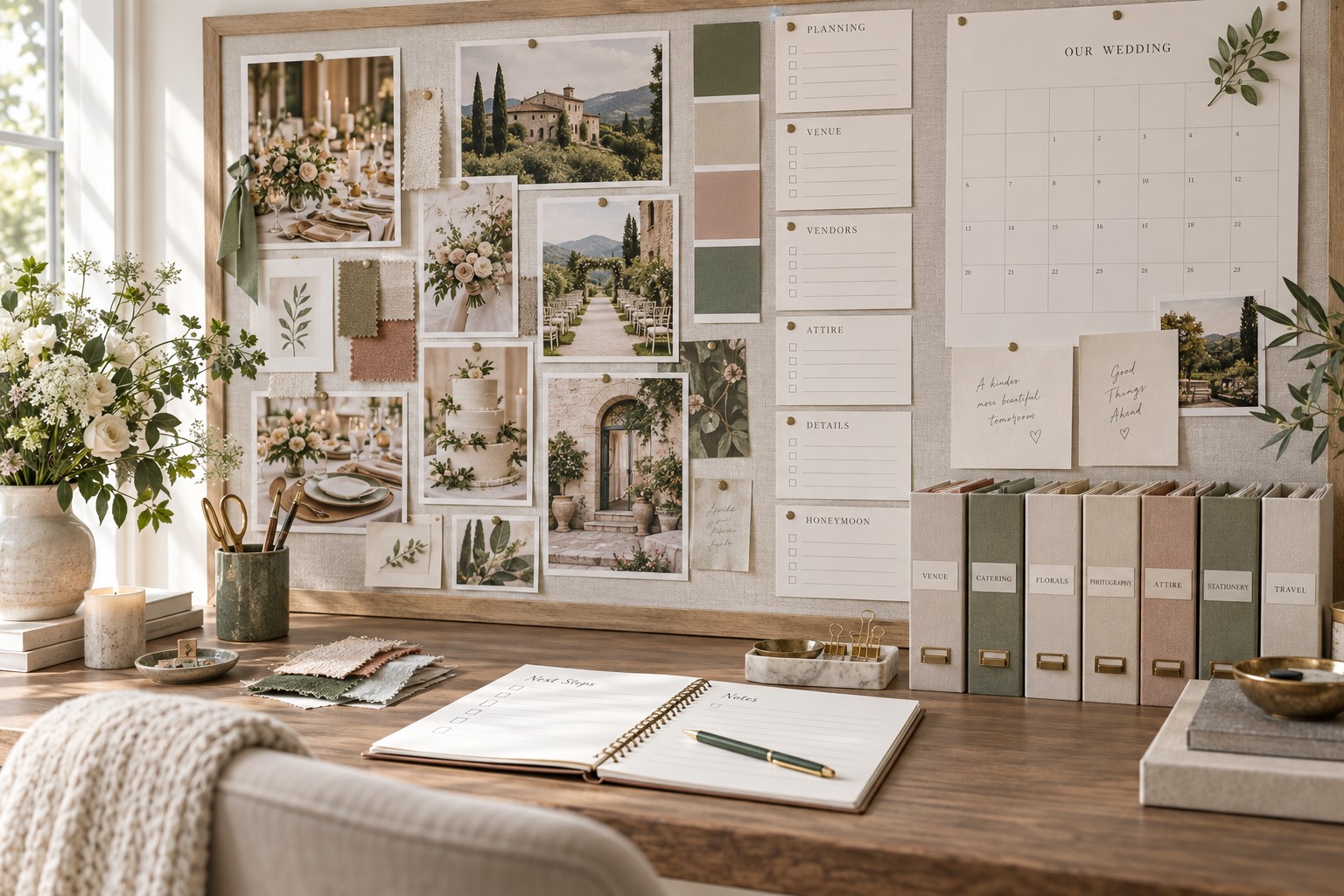
    A wedding planning board can be beautiful, but its real job is to make decisions easier. The best version gives you one place to see the feeling you want, the work that has to happen, the people responsible for it, and the dates that cannot slip.

    It should help you move from “I love this” to “This is our choice, this is what it costs, and this is what happens next.” That does not mean you need a complicated project-management system. A cork board, a notebook spread, a Pinterest board, or a shared digital workspace can all work. The difference is the structure behind it. Instead of collecting every pretty idea you see, build a practical wedding planning board with a clear visual direction, a small set of active decisions, and a reliable weekly reset.

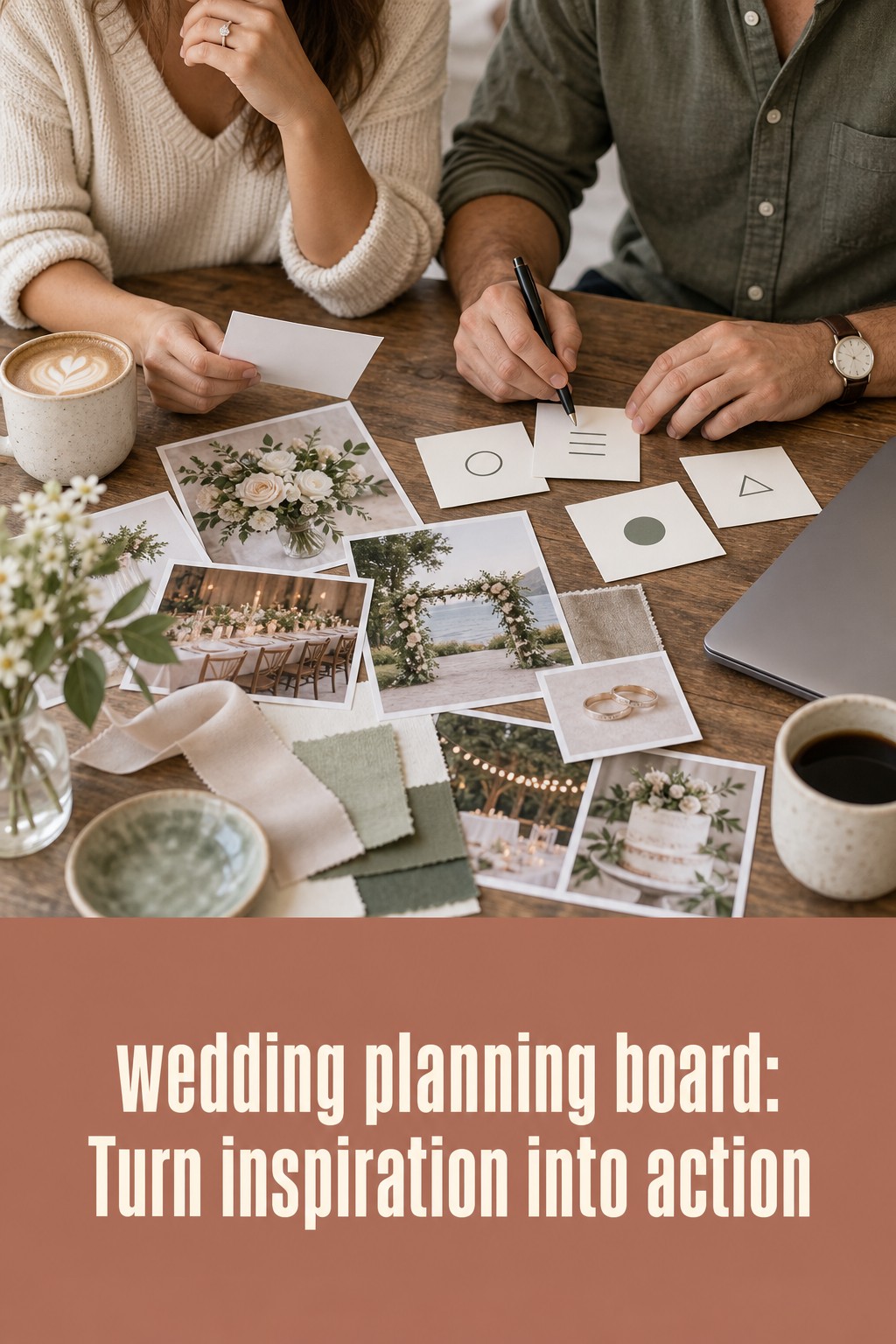
    wedding planning board with edited wedding inspiration and color ideas
    Use a wedding planning board to edit inspiration into a clear direction.

    Start with the building blocks of your wedding planning board

    Before choosing the board format, decide what the board must hold. A visual mood board and a task board solve different problems. One helps you recognize your style; the other helps you remember that a photographer needs to be booked, an invitation proof needs approval, or a marriage-license appointment has a deadline. A useful wedding planning board connects both.

    Think of your board as five connected zones. They can be five sections on a wall, five columns in a digital workspace, or five pages in a binder.

    • Vision: the words, colors, textures, and reference images that describe the experience you want.
    • Decisions: choices still being compared, such as ceremony location, meal format, floral direction, or attire.
    • Tasks: specific actions with one owner and one useful due date.
    • Vendors: contact details, proposals, questions, signed agreements, and payment milestones.
    • Dates: the wedding date, guest-facing deadlines, appointments, contract deadlines, and day-of timing.

    Keep the zones connected with a simple rule: every important visual should lead to a decision, and every decision should lead to a task. If you save a photo of a candlelit dinner, note what you actually like about it. Is it the warm light, the low centerpieces, the long table, or the relaxed feeling? Then add a next step, such as asking your venue about candle rules or requesting a quote for low floral arrangements.

    Write a short anchor statement at the top of the board. “An intimate garden dinner with warm light, seasonal flowers, and plenty of time with our guests” is more useful than “romantic wedding.” It gives you a filter for future ideas. If a new pin does not support the anchor statement, it goes into an archive instead of onto the active board.

    wedding planning board turning wedding inspiration into actionable tasks
    Turn wedding inspiration into action with a wedding planning board.

    Create the visual direction without overwhelming yourself

    Start with a wide gathering phase, but give it a limit. Spend one or two focused sessions collecting references from real weddings, stationery, fashion, interiors, restaurants, gardens, and travel. A wedding does not have to look like another wedding to teach you something. A hotel lobby may show you a color relationship. A still-life photograph may show you the right texture. A favorite restaurant may reveal the kind of table atmosphere you want.

    Then edit hard. A board with 150 competing images creates more anxiety than clarity. Keep the references that repeat a feeling or answer a planning question. Aim for a small, representative set rather than a complete catalog. You might keep three ceremony references, three reception references, two attire references, two stationery references, and a few detail references for flowers, lighting, favors, or dessert.

    Label each image with a useful note. Instead of “pretty,” write “soft cream and muted green,” “long family-style table,” “asymmetrical bouquet,” or “simple serif invitation with generous spacing.” These notes help you communicate with vendors and make it easier to compare proposals later.

    • Color: choose a lead color, one or two supporting colors, and a neutral.
    • Material: identify linen, paper, stone, glass, wood, silk, or brushed metal.
    • Shape: notice whether references are structured, rounded, loose, architectural, or delicate.
    • Light: decide whether the mood depends on daylight, candlelight, string lights, flash, or a mix.
    • Energy: describe the experience in guest terms, such as lively, unhurried, playful, formal, or intimate.

    Check every strong idea against your actual venue and guest experience. A tall floral installation may be perfect in a high-ceiling ballroom and awkward in a low-ceiling restaurant. A wide outdoor ceremony setup may look wonderful online but create a difficult walk for older relatives or guests using mobility aids. A dark palette may need additional lighting to photograph well. This is where a wedding planning board becomes practical: it keeps inspiration connected to constraints.

    Once you see patterns, reduce the board to three style words. “Warm, collected, garden-inspired” or “clean, coastal, celebratory” is enough. Use those words when reviewing décor, attire, paper goods, and vendor proposals. If a choice fits one word but fights the other two, pause before spending money.

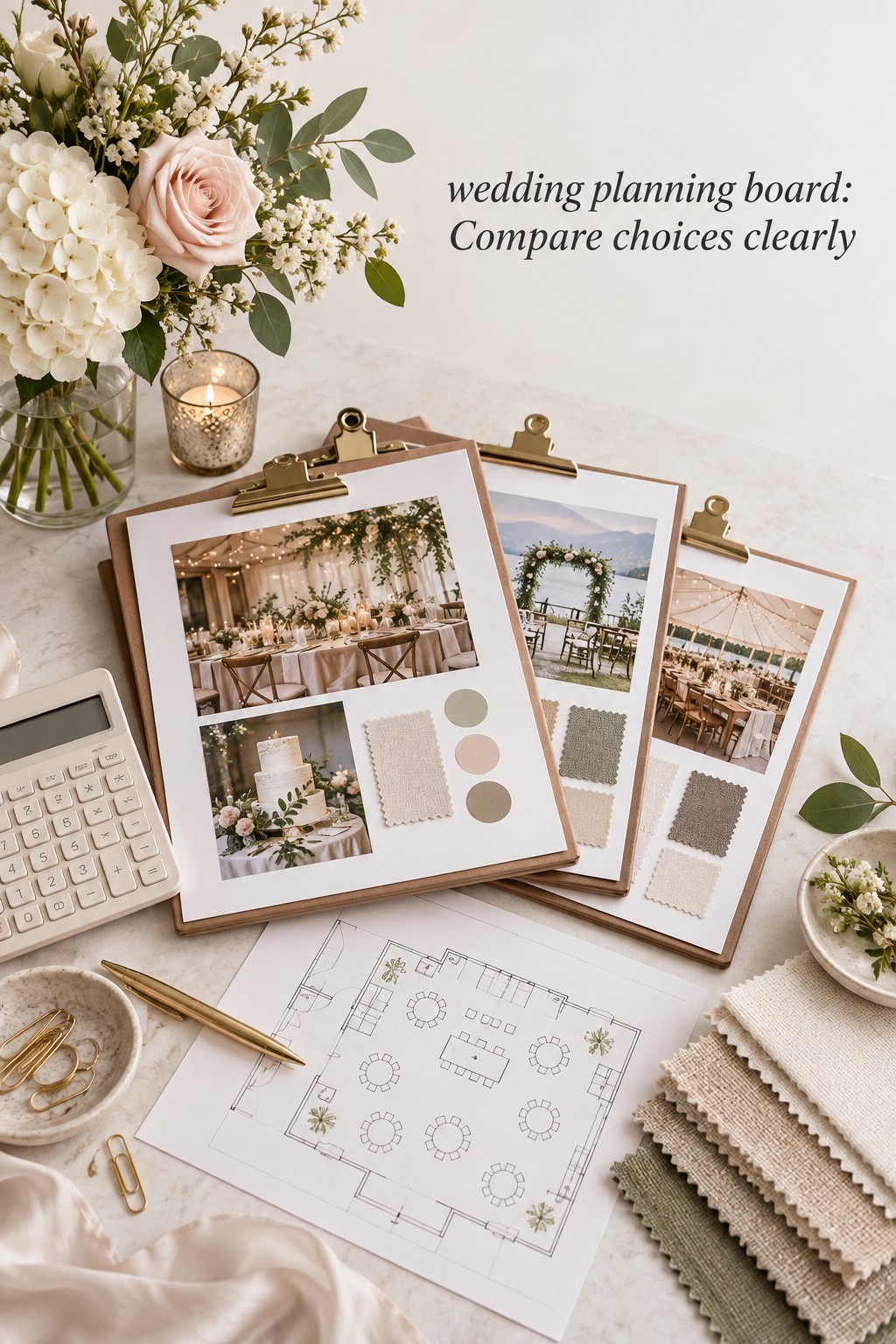
    wedding planning board for comparing wedding vendors and choices
    Compare wedding vendors clearly with a wedding planning board.

    Turn inspiration into a planning workflow

    The most important part of a wedding planning board is the handoff from ideas to action. Create a card, sticky note, or row for each meaningful task. A task should begin with a verb and describe one outcome. “Research photographers” is a project. “Shortlist three photographers whose work matches our warm, documentary style” is a task you can finish.

    Give each task four labels: owner, due date, status, and dependency. The owner may be you, your partner, a family member, or a planner. The due date should reflect when the task must be completed, not when you hope to think about it. The status can stay simple: to do, in progress, waiting, decided, or done. A dependency explains what has to happen first. For example, the invitation design may wait for the ceremony time and venue address.

    • Budget: confirm your comfort limit, priority categories, payment dates, and a small contingency.
    • Guest list: build a working list, record address needs, and note guests who require travel or accessibility support.
    • Venue: capture capacity, noise rules, weather backup, setup windows, included rentals, and restrictions.
    • Vendors: compare availability, service scope, price, contract terms, insurance, and communication style.
    • Guest experience: track transportation, hotel information, ceremony flow, food needs, and clear directions.

    Use a “next three” rule for the active work area. At the end of each planning session, choose the three actions that matter most before the next review. This prevents the board from becoming a wall of guilt. Completed tasks can move to an archive or a finished column. The active area should show what deserves attention now.

    A shared tool is especially helpful when two people plan together. Keep the board as the source of truth, then use your calendar for appointments and reminders. Avoid scattering final decisions across text messages, email threads, screenshots, and separate notes. If a vendor decision is made in email, add the final answer to the board and link or file the supporting document where both partners can find it.

    If you work with a professional planner, share the board early. The board does not replace a planner’s expertise, but it gives them a quick view of your priorities, open questions, and visual language. The Wedding Command Center can also be useful as a planning resource when you want a dedicated place to organize decisions, tasks, and details alongside your broader wedding vision. Use it to support your process, not to add another disconnected list.

    For physical boards, keep sensitive information private. Do not post contracts, home addresses, payment details, or guest contact information in a visible room. Use labeled folders or a private digital file for those records. The board can display a reminder such as “review photographer contract” without displaying the contract itself.

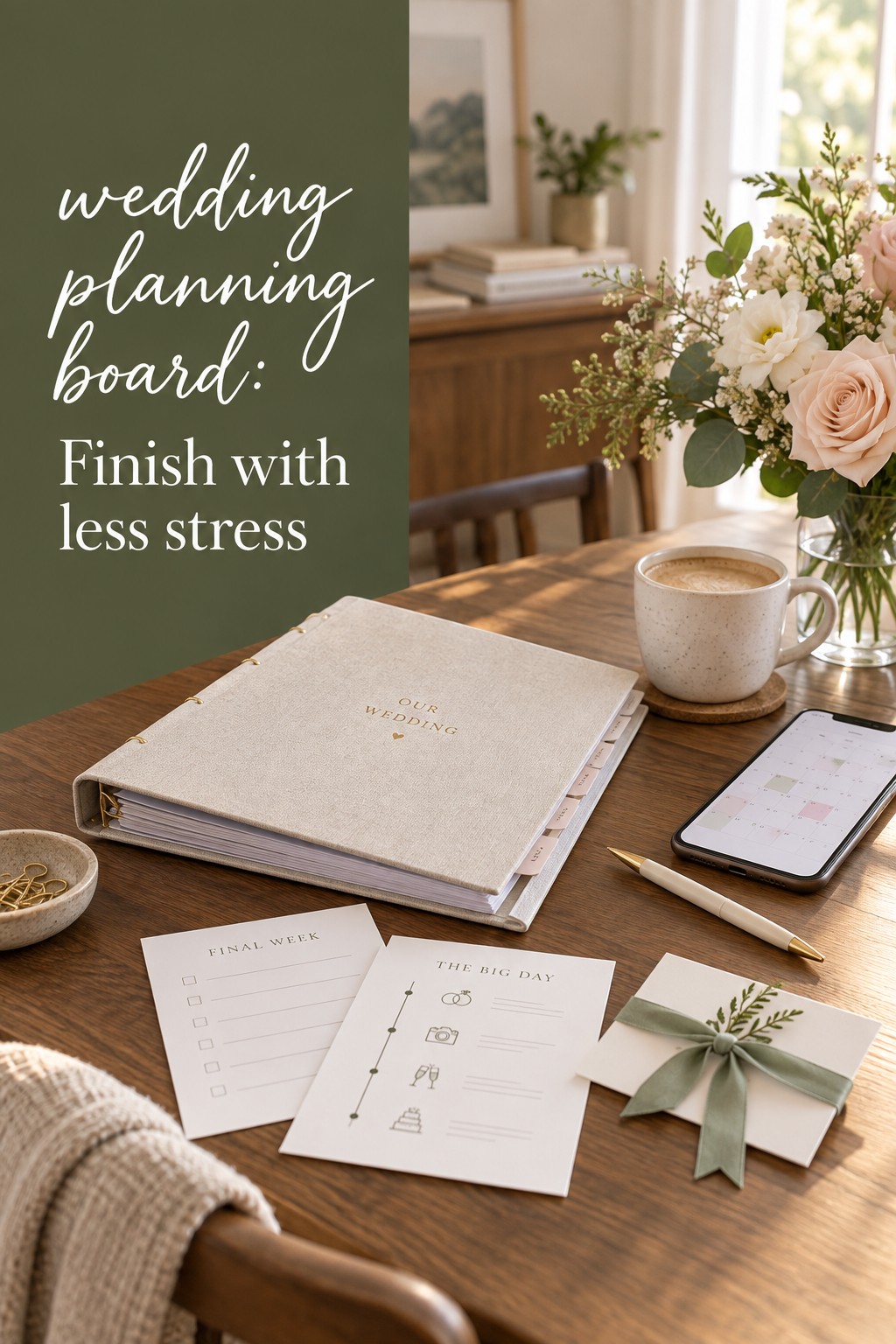
    wedding planning board for a calm final week of wedding preparation
    Finish with less stress using a wedding planning board final-week view.

    Choose the format and maintain it through the finish line

    A physical wedding planning board is tactile, visible, and satisfying to rearrange. It works well for couples who think spatially or want planning to feel separate from a screen. Use color-coded notes for categories, but add words so the system remains understandable. Leave a clear area for current tasks and keep your inspiration section compact.

    A Pinterest board is excellent for collecting visual references and sharing a mood with vendors. It is less effective as the only system for deadlines, contracts, and ownership. Use sections such as venue, florals, attire, paper, tables, beauty, and guest experience. Add a short description that states what you are trying to achieve, then move final decisions into a separate planning space.

    A digital kanban board is a strong choice when you are planning as a team. Columns can follow status, while labels identify category and owner. Keep card titles specific, attach documents privately, and create recurring reminders for payments or monthly reviews. If the board becomes too detailed, archive old cards and return to the next-three rule.

    A binder or planner is ideal when you want a portable record for appointments. Divide it into vision, budget, guests, venue, vendors, attire, ceremony, reception, and final-week details. Put a one-page dashboard at the front with the wedding date, current budget snapshot, next three tasks, and urgent questions. That dashboard becomes your analog home screen.

    Schedule a 20-minute weekly reset. First, remove finished tasks. Second, update anything waiting on a response. Third, check the next four weeks for deadlines. Fourth, choose your next three actions. Finally, look at the vision section and ask whether recent decisions still support the anchor statement. This small ritual catches forgotten details before they become emergencies.

    • Do not save inspiration without recording what you like about it.
    • Do not give one task multiple owners. Choose one person responsible for moving it forward.
    • Do not use due dates as decoration. Tie them to contracts, guest communication, production time, or the wedding timeline.
    • Do not keep every option active forever. Set a decision date and define the information you need before choosing.
    • Do not confuse a full board with a complete plan. A calm, current board is more valuable than a crowded one.

    Your wedding planning board should become quieter as the wedding approaches. Early on, it holds possibilities. Later, it holds confirmed choices, final questions, and a short list of actions. That change is a sign that the system is working. The goal is not to plan every minute of your engagement. The goal is to make the next right decision visible, then give yourself room to enjoy the celebration you are creating.

    Make better decisions with a small set of board rules

    A board becomes especially valuable when several options look equally appealing. Create a decision card for each choice and compare the same criteria every time. For a photographer, you might compare image style, coverage hours, turnaround time, personality, travel cost, and contract terms. For a venue, compare guest capacity, total cost, weather plan, accessibility, catering rules, and setup time. A consistent comparison keeps one exciting photo or one persuasive sales call from deciding the whole wedding.

    Give each decision a deadline that protects a later milestone. Stationery cannot be finalized until the guest list and addresses are stable. The seating plan cannot be finished until RSVPs are in. A floral proposal may need to wait until the venue confirms what rentals and installation time are included. Put these relationships on the board in plain language. “Waiting for final guest count” is more useful than leaving a card in a vague holding area.

    Your budget zone should show priorities, not just totals. Mark the categories that create the biggest guest experience or carry the most emotional value. A couple might prioritize food, photography, and live music, then choose simpler paper goods and fewer floral varieties. Another couple might care most about a ceremony setting, fashion, and a long dinner. The board is not there to tell you what a wedding should cost. It is there to make trade-offs visible before a deposit is paid.

    Use a short “why” note for major choices. Write why you selected the venue, why a particular vendor fits, or why you declined an option. This protects you from reopening settled decisions every time a new idea appears online. It also helps a partner, parent, or planner understand the decision without repeating the entire conversation. When something changes, update the note rather than creating a second unofficial version.

    Delegation also works better when the board defines the finish line. “Ask my sister for help” is not a completed task. “Sister confirms three welcome-table items and returns the list by May 10” is clear. Include the budget limit, preferred style, delivery location, and any restrictions that person needs. Then move the card to waiting and set a follow-up date. This keeps generous offers of help from turning into another source of uncertainty.
    As the wedding gets closer, create a final-week view. Add confirmed vendor arrival times, payment reminders, attire pickups, emergency contacts, packing lists, ceremony materials, and the person responsible for each handoff. Keep this view separate from inspiration so it can be printed or shared with the people who need it. If you have a planner or coordinator, ask what information they want in the final handoff and mirror that structure.

    Finally, preserve a small archive. Save the references that shaped your choices, completed contracts in their private folder, and a record of final versions for menus, programs, seating, and signage. An archive prevents clutter on the active board while keeping useful context available. It can also become a meaningful record of how an early idea became the celebration you actually held.

    wedding planning board with organized tasks and wedding inspiration
    A wedding planning board keeps inspiration, tasks, and decisions together.

    FAQ

    What should go on a wedding planning board first?

    Start with your wedding date or target season, venue constraints, budget priorities, guest-count range, and a short anchor statement. Add only a few visual references that explain the feeling you want. These basics give every later task and design choice a useful context.

    Is a wedding planning board the same as a mood board?

    Not exactly. A mood board focuses on visual direction, while a planning board also tracks tasks, dates, decisions, vendors, and owners. You can combine them in one hybrid board, but keep the inspiration area separate from the action area so neither becomes difficult to use.

    How many images should a wedding vision section include?

    There is no perfect number, but a small edited collection is usually stronger than an endless feed. Keep enough images to show recurring color, texture, shape, light, and energy. If two images communicate the same idea, keep the clearer one and archive the other.

    Can I use Pinterest as my entire wedding planning system?

    Pinterest works well for visual discovery and sharing inspiration, but it is not ideal as the only place for deadlines, contracts, payment dates, or task ownership. Pair it with a checklist, calendar, binder, or shared task board that records confirmed decisions and next actions.

    How often should we update our wedding planning board?

    Use a short weekly reset and update the board whenever a meaningful decision is made. During busy periods, such as invitation production or the final month, review it more often. Keep the process brief and focus on current tasks, waiting items, deadlines, and newly confirmed information.

    What is the best wedding planning board format for a couple?

    The best format is the one both partners will actually check and update. Choose a physical board for visible, hands-on planning, Pinterest for inspiration, a digital kanban board for shared tasks, or a binder for portable records. Many couples get the best results from combining one visual tool with one task and calendar system.

  • Wedding List Planning: A Calm, Practical System

    Wedding List Planning: A Calm, Practical System

    There is a particular moment in wedding planning when a joyful announcement starts to feel like a spreadsheet problem. You and your partner open a blank document, add the people you love, and then discover that the number already exceeds the venue capacity. A parent remembers three cousins. A close friend asks whether a new partner is included. Someone wants to invite every colleague from a department that has changed twice since graduation. Suddenly, wedding list planning feels less like making a list and more like managing a small, emotional community.

    A well-made wedding list can make the rest of the planning process calmer. It gives you a shared view of who is invited, why a decision was made, what information is missing, and which tasks happen next. It also protects the couple from having the same difficult conversation repeatedly. The goal is not to create a perfectly mathematical list. The goal is to create a guest experience that fits your budget, your venue, and the kind of celebration you actually want to host.

    wedding list planning with a couple starting from what matters
    Start wedding list planning with the people and priorities that matter most.

    This guide treats wedding list planning as a living system rather than a one-time exercise. You will see how to set the decisions that constrain your numbers, build an honest first draft, reconcile two different family circles, track practical details, and complete a final review before invitations go out. If you work with a planner, the same structure creates a clear place for professional advice without taking the heart out of the guest list.

    Why wedding list planning becomes the emotional center of the wedding

    The guest list affects far more than stationery. It influences the venue search, catering estimate, bar package, rental order, transportation plan, ceremony layout, seating chart, accommodation advice, and even how much time you can spend with each person during the reception. That is why couples often feel as if one unresolved name is holding up ten other decisions. The list is not just a record of guests. It is an early model of the wedding day.

    It is also where different definitions of family meet. One partner may think in terms of relatives they see every week. The other may include old family friends who were present during childhood. Parents may see the wedding as a reunion, while the couple sees it as an intimate celebration. None of those perspectives is automatically wrong, but they cannot all make decisions at the same time without a clear process.

    The most useful first decision is to separate emotional importance from invitation status. Someone can matter deeply and still not fit the guest count, travel plan, or format of the day. That does not erase the relationship. It simply recognizes that a wedding invitation is a practical commitment with a cost and a limited seat. When couples make that distinction early, list conversations become more honest and less personal.

    Give the list one home. A shared spreadsheet can work well, especially when it includes a clear status column and a notes field. Some couples prefer a planning platform, while others use a document that a planner can review. The tool matters less than the habit. Everyone should know which version is current, who can edit it, and when a change becomes final. A single source of truth prevents duplicate invitations, missing addresses, and arguments based on outdated totals.

    If your planning process includes a central dashboard such as The Wedding Command Center, the guest list can sit alongside the other decisions it affects. That is useful when you want the headcount, invitation timing, vendor commitments, and follow-up tasks to remain connected. The resource should support your decisions, not replace them. Your guest list still needs your values, your boundaries, and your final approval.

    wedding list planning board that makes every name easier
    Make every name easier to discuss with a clear wedding list planning board.

    Start with the decisions that constrain the list

    Many couples begin by naming everyone they might invite and only later ask what the wedding can support. That approach feels generous at first, but it creates a painful reduction exercise. A calmer approach is to decide the boundaries before you debate individual names. Think about the total amount available for the wedding, the venue’s comfortable capacity, the kind of interaction you want with guests, and any travel or accessibility realities that should shape the event.

    Budget and guest count should be decided together. Catering is obvious, but the number of guests can also change the room size, furniture rental, staffing, invitations, favors, transportation, hotel recommendations, and the time required for photos or greetings. If the budget is being shared with parents or other relatives, clarify how much influence their contribution gives them. Financial support does not have to mean unlimited control, but the expectations should be spoken aloud before names are added.

    Venue capacity is not always the same as a comfortable guest count. A room may technically hold 150 people while leaving little space for a dance floor, buffet, accessibility routes, or a quiet area for older guests. Ask how the layout changes when you add a band, a head table, a ceremony setup, or a large bar. Your wedding list should reflect the experience you want, not the largest number printed on a venue brochure.

    Decide the guest experience you are trying to create. An intimate dinner asks for a different list than a lively open-floor reception. If you want to have a meaningful conversation with most guests, a smaller list may serve you better. If a large family celebration is central to your story, you may accept shorter conversations and simplify other parts of the budget. Naming the experience gives you a reason for decisions that is more helpful than saying only that a spreadsheet is full.

    Set policies before exceptions appear. Decide how you will approach children, plus-ones, coworkers, guests who live far away, and people who are not currently part of your daily life. A policy does not need to be rigid or identical in every case, but it should be explainable. Married, engaged, and cohabiting partners are usually treated differently from a brand-new date. Guests traveling alone may need more consideration if they will know no one else. Apply the same reasoning consistently and record the decision.

    It is also wise to name the non-negotiables. These may include accessibility for a family member, a close friend who supported you through a difficult period, or a limit on the number of children because of the venue format. A non-negotiable is not a weapon for winning every argument. It is a small set of principles that keeps the list from changing direction every time a new suggestion arrives.

    wedding list planning details kept together on a practical table
    Keep wedding list planning details together in one calm, practical workspace.

    Build the first list, then reconcile it with care

    Start with separate lists. Ask each partner to write down the people they would genuinely miss on the wedding day, without checking the other person’s choices first. If parents are contributing or have strong family expectations, invite them to make a separate suggestions list rather than editing the couple’s draft. This reveals overlap, forgotten relationships, and different assumptions before the conversation becomes a vote.

    Next, sort every name into a simple relationship category. Immediate family, extended family, close friends, community, work, and family friends are enough for a first pass. The category is not a value judgment. It helps you see whether the list reflects your real life or only the loudest requests. It also makes later checks easier when you need to compare households, invitation types, or travel needs.

    Use a three-level priority system before you use a B-list. Priority one includes the people you cannot imagine celebrating without. Priority two includes people you strongly want there if the budget and venue allow. Priority three includes people you would be happy to see but do not know well enough to prioritize over a closer relationship. This structure gives you a thoughtful way to reduce the list without pretending that every name has the same role.

    Then compare the two partner lists and hold a reconciliation meeting with a time limit. Begin with the names that appear on both lists, because those are the easy yes decisions. Move next to priority-one names that do not overlap. For every difficult name, ask the same questions: How long have we known this person? When did we last have a meaningful interaction? Would we feel their absence on the wedding day? Are we inviting them because we want them there or because we fear their reaction?

    When parents are involved, give each side a defined number or percentage only if that approach suits your family. A fixed allocation can prevent endless negotiations, but it can also feel artificial when one side has a much larger family. Another option is to agree on a small group of parent-requested guests who meet the same criteria as everyone else. The important part is to establish the rule before a single difficult invitation becomes a referendum on the whole list.

    Record a reason for each pending decision, not a long defense. “Need to confirm current relationship,” “check plus-one policy,” or “compare with venue capacity” is enough. This keeps the notes useful and prevents the spreadsheet from becoming a diary of family tension. If a decision is sensitive, discuss it privately and use the list only to record the outcome and the next action.

    A B-list can be appropriate, but it should never be a surprise trap. Use it only when the invitation timeline and venue capacity give you enough room to invite additional guests with dignity. Keep groups together when separating one person would create an awkward situation. Never hint to a guest that they were a second choice. A B-list is an internal planning tool, not a label that should reach the people you care about.

    wedding list planning that fits the guest experience and venue
    Shape wedding list planning around the guest experience you want to create.

    Turn the list into a useful planning system

    A list becomes useful when it answers the questions your future self will have. In addition to the guest’s name, track household grouping, relationship category, priority, invitation type, address status, plus-one details, children, RSVP status, meal choice, dietary needs, accessibility notes, travel or hotel needs, gift information if relevant, and thank-you note status. You do not need every field on day one. Add fields as the planning stage requires them.

    Keep household and individual information separate. A household may receive one invitation, but two adults may need different meal choices. A child may share an address with parents but have a separate seating or dietary need. Tracking only the household total creates problems when invitations, RSVP forms, and place cards are prepared. A good system can count both invitations and people without making either number confusing.

    Use clear statuses such as draft, discussing, approved, invited, RSVP received, attending, declined, and follow-up needed. Avoid vague labels like “maybe” when a more precise next action is possible. If a guest is undecided because the address is missing, the status should point to the missing address. If the couple is still discussing the invitation, record that separately. Clear statuses turn anxiety into a manageable list of tasks.

    Schedule review points instead of checking the list constantly. A useful rhythm is a first review after the venue shortlist, another before save-the-dates, a detailed review before invitations, and a final review after the RSVP deadline. Your planner can join the reviews that affect the floor plan, catering, transportation, or guest care. Between reviews, make only necessary updates so the list does not become a moving target.

    Connect every list field to a real downstream decision. A dietary note matters because the caterer needs it. A hotel need matters because guests may need room-block information. A plus-one decision matters because it changes the headcount and invitation wording. If a column never affects a task, remove it or keep it out of the main view. A smaller, trusted system is more useful than a crowded tracker that nobody reads.

    Protect privacy while sharing access. Guest addresses, phone numbers, dietary information, and relationship notes should not be distributed casually. Give your planner and vendors only the information they need for their work. If several people edit the list, agree on a naming convention and a way to mark changes. Good wedding list planning includes respectful data handling because the list contains real people, not just rows.

    When the list grows complicated, create a clean working view for each planning conversation. A caterer may need names and meal choices, while a stationer needs addresses and invitation households. Your planner may need the full decision history, but a family member may only need the number of invitations available to them. Separate views reduce accidental edits and make meetings shorter.

    Finish with a final review before invitations go out

    The final review should feel less like a dramatic decision and more like quality control. Start by comparing the total number of invited people with the venue plan, catering estimate, rental order, and budget. Check the number of invitations separately from the number of guests. Then review every household for spelling, address, partner names, children, and invitation wording. Small errors are easier to fix before the envelopes are addressed.

    Check consistency. If your policy includes spouses and long-term partners, look for exceptions that do not have a clear reason. If children are invited only in certain circumstances, make sure the wording and seating plan match. If you are using a B-list, confirm that the timing is kind and realistic. Consistency does not mean treating every relationship identically. It means being able to explain why similar situations received similar decisions.

    Prepare a communication plan for the conversations you expect. You may need a short answer about children, a warm explanation of a limited plus-one policy, or a message to a parent about invitation boundaries. Keep the wording simple and avoid blaming the venue, planner, or budget as if they were strangers making the rules. You and your partner are the hosts, so a calm, direct explanation is usually kinder than an elaborate excuse.

    After invitations go out, treat RSVP follow-up as a new stage rather than a continuation of the old debate. Give guests a clear deadline and a straightforward way to respond. Track missing responses, meal selections, accessibility needs, and address changes. Do not use silence as an answer. A polite reminder protects your vendors from late surprises and helps guests feel that their response matters.

    Before the final headcount is sent, run one last check against the seating chart and guest experience. Are elderly guests near a convenient route? Are children seated in a way that helps their families? Does anyone need transportation or a hotel note? Are there conflicts that your planner should know about? This is where the list becomes hospitality. The best wedding list planning does not end when the number is correct. It ends when the people behind the number are considered.

    wedding list planning finished with a kinder invitation check
    Finish wedding list planning with a thoughtful check before invitations go out.

    FAQ

    When should we start wedding list planning?

    Start as soon as you have a rough wedding budget and a general idea of the celebration you want. You do not need final names before choosing a venue, but you do need a realistic range. A preliminary list helps you avoid falling in love with a space that cannot support your family, friends, or desired guest experience.

    Should parents get their own guest-list allocation?

    They can, especially when parents contribute financially or have important family relationships to include. Agree on the number, criteria, and deadline before collecting names. An allocation works best when it sits inside the couple’s total capacity and does not create a second set of rules that conflicts with the rest of the list.

    How should we decide who gets a plus-one?

    Set a policy based on relationship seriousness, guest comfort, travel, and your available capacity. Married, engaged, and cohabiting partners are usually included, while a plus-one for every single guest may not fit the event. Apply your chosen policy consistently, record exceptions, and communicate the invitation exactly as intended.

    Is it rude to have an adults-only wedding?

    No, an adults-only celebration can be a reasonable format when it fits the venue, schedule, budget, or atmosphere. The important part is to communicate the invitation clearly and avoid making guests guess whether their children are included. Some couples make exceptions for immediate family or members of the wedding party, but any exception should be planned rather than improvised.

    What information should a wedding list include?

    At minimum, track names, household grouping, invitation status, address, RSVP status, and total guest count. As planning progresses, add plus-one details, children, meal choices, dietary or accessibility needs, travel notes, and thank-you status. Keep sensitive notes limited to the people who genuinely need access.

    How often should a wedding planner review the list?

    Review it at the milestones that change other decisions: after the venue is chosen, before save-the-dates, before invitations, after the RSVP deadline, and before the final vendor count. A planner may also need a focused review before seating, transportation, or guest welcome materials are finalized. Planned reviews are more effective than constant edits without a clear purpose.

    What is the best way to handle a difficult guest-list conversation?

    Return to the agreed criteria instead of debating the person’s worth. Explain the capacity, budget, or experience constraint, listen to the concern, and state the decision with kindness. If the conversation becomes circular, pause and revisit it with your partner or planner. A clear process cannot remove every disappointment, but it can keep the decision fair and prevent the list from changing under pressure.

  • 6 Month Wedding Planning Timeline: Calm Guide

    6 Month Wedding Planning Timeline: Calm Guide

    Planning a wedding in six months can feel like trying to fit a year of decisions into one crowded calendar. The good news is that you do not need to make every possible wedding choice immediately. You need to make the decisions that affect availability, budget, guests, and other decisions first.

    This 6 month wedding planning timeline gives you a practical order of operations from the first week through the final days. It is designed for couples who want a beautiful, personal celebration without treating every tradition as mandatory. You can adapt it for a small city hall ceremony, a formal evening wedding, a destination weekend, or a larger local celebration.

    6 month wedding planning timeline starts with budget and guest range
    A 6 month wedding planning timeline begins with a shared budget and guest range.

    The central rule is simple: protect the essentials, simplify the extras, and keep one current record of decisions. If you have only six months, flexibility is a planning resource. A weekday date, a smaller guest list, an all-inclusive venue, ready-to-wear attire, or a shorter menu may give you more breathing room without changing what the wedding means to you.

    Before month one: create the foundation

    Before contacting vendors, have one focused conversation with your partner. Agree on the kind of experience you want guests to have, the parts of the day that matter most, and the limits you need to respect. The goal is not to create a perfect vision board. It is to give yourselves a filter for quick decisions.

    Set a working budget

    Write down the total amount you can realistically spend, including contributions from family or other supporters. Clarify whether any contribution has conditions attached. Then divide the budget into broad categories such as venue and food, attire, photography, music, flowers, stationery, transportation, beauty, ceremony, lodging, and contingency.

    Do not use the entire amount in your first quotes. Taxes, service charges, alterations, postage, tips, delivery, overtime, and last-minute replacements can change the total quickly. A small contingency is more useful than a budget that looks precise but leaves no room for real life.

    Choose a guest range

    A preliminary guest range helps you evaluate venues and catering. You do not need a final list on day one, but you should know whether you are planning for 30, 80, or 180 people. Separate the people whose presence feels essential from the wider group you may invite if the budget and venue allow it.

    Choose a planning home

    Keep the budget, guest list, vendor quotes, contracts, payment dates, questions, and decisions in one shared place. Give every open item an owner and a next action. The Wedding Command Center can be useful as a central planning resource when you want both partners to see the same priorities and deadlines. The point is shared visibility, so use the system that you will actually maintain.

    • Budget: total, deposits, remaining balance, and contingency.
    • Guests: names, addresses, RSVP status, meal needs, and travel notes.
    • Vendors: contact details, contracts, payment dates, and arrival needs.
    • Decisions: what was chosen, why, cost impact, and who handles the next step.
    6 month wedding planning timeline for booking the big wedding pieces
    Use a 6 month wedding planning timeline to secure the venue and priority vendors early.

    Month 6: secure the date, venue, and scarce vendors

    The first month carries the most pressure because your biggest decisions are connected. Venue capacity affects guest count. The date affects vendor availability. The venue contract affects catering, rentals, alcohol, access hours, and the rain plan. Work on these decisions as a group instead of treating them as unrelated tasks.

    Book the venue and set the date

    Contact several venues at once and lead with your date range, guest estimate, ceremony plan, and budget. If your preferred Saturday is unavailable, ask about Friday, Sunday, weekday, off-season, or lunch options. A flexible date can protect your preferred location, guest experience, or vendor team.

    Read the contract carefully. Ask about access and cleanup hours, catering rules, bar service, staffing, noise limits, insurance, candles, outside vendors, parking, accessibility, weather backup, and payment deadlines. Compare the full expected cost rather than the rental fee alone.

    Book the vendors that disappear first

    Once the date is firm, contact the vendors whose availability matters most to you. This often includes a photographer, planner or coordinator, officiant, caterer, entertainment, and beauty team. Your exact order may change if the venue includes catering or if the ceremony requires a specialist.

    Send the same short brief to each vendor. Include the date, location, guest range, service needed, priorities, and decision deadline. Ask for the total price, what is included, payment schedule, cancellation policy, substitution policy, overtime rates, and next steps. A quick response is helpful, but a contract you understand is more important.

    Make the attire decision early

    Six months can be enough for attire, but the best path depends on the garment and the supplier. Ask about delivery and alteration timing before ordering. Consider sample gowns, off-the-rack pieces, made-to-measure options, a suit or tuxedo with a reliable local tailor, or a simpler custom design. Schedule alterations when you purchase rather than hoping an appointment will appear later.

    6 month wedding planning timeline for sending invitations on time
    A 6 month wedding planning timeline keeps invitations and RSVPs moving on schedule.

    Month 5: build the guest and event structure

    With the date and venue secured, turn your attention to the people moving through the day. A wedding plan becomes much easier when you know how guests will arrive, what they need to understand, where they will eat, and how they will move between ceremony and reception.

    Refine the guest list and communication plan

    Finalize a working guest list and collect accurate names, mailing addresses, email addresses, dietary information, and accessibility needs. If many guests will travel, publish a simple wedding website or information page with the date, location, lodging suggestions, transportation notes, dress code, and RSVP instructions.

    On a short timeline, you may not need save-the-dates. If you do send them, keep the message simple and send it as soon as the venue and date are certain. Otherwise, move directly to invitations and give guests a clear response deadline that leaves enough time for final counts.

    Confirm food, rentals, and the room plan

    Book or confirm catering, cake or dessert, rentals, and bar service. Ask which items the venue provides and which you must source. Discuss dietary accommodations, children’s meals, service style, staffing, water, coffee, late-night food, and the timing of dinner.

    Sketch the room flow. Mark the ceremony entrance, guest seating, cocktail area, bar, dinner tables, dance floor, restrooms, gift table, accessible routes, and vendor access. You do not need a final floor plan yet, but noticing a problem now is much easier than solving it during the final week.

    Start the ceremony and design direction

    Meet with your officiant and decide what kind of ceremony feels right. Discuss readings, vows, music, family or cultural traditions, length, and who needs to participate. For design, choose a small set of anchors such as color, texture, lighting, and flower shape. A clear direction makes it easier to approve invitations, attire, rentals, and floral proposals without restarting the whole conversation.

    6 month wedding planning timeline for sharing the final handoff
    Share the final schedule with trusted helpers using a 6 month wedding planning timeline.

    Months 4 and 3: convert decisions into guest-ready logistics

    By the middle of your 6 month wedding planning timeline, exploration should give way to confirmation. You can still adjust details, but every change should be tested against the budget, guest experience, and vendor lead time.

    Order and proof the invitations

    Order invitations early enough to proof them, address them, check postage, and mail them with time for responses. Verify names, dates, times, venue wording, website links, meal questions, and any enclosure cards. Order a few extras for mistakes, late additions, keepsakes, and detail photographs.

    Make the RSVP system easy to maintain. Track every invitation, response, meal selection, plus-one, address change, and follow-up in one place. Decide who will contact guests who miss the deadline. A clean RSVP process protects the seating plan and the catering count.

    Finish the visual and personal details

    Finalize flowers, linens, rentals, signage, stationery, music direction, and any personal elements that require production time. Choose wedding-party attire and share ordering instructions. Purchase rings and schedule sizing or engraving. Book hair and makeup trials, then record the agreed look and timing.

    Plan travel and lodging for yourselves and any guests who need help. Reserve wedding-night accommodation and make honeymoon arrangements if you are traveling immediately after the ceremony. Check passport, identification, and marriage-license requirements for your location. Rules differ by state and county, so use the official local source rather than an old checklist.

    Draft the day-of schedule

    Start a working schedule with getting ready, transportation, portraits, ceremony, cocktail hour, dinner, speeches, first dance, dancing, and departure. Ask your photographer, venue, caterer, entertainment, and planner to review the timing. Build in realistic transitions, meal breaks for vendors, and extra minutes for people who need assistance.

    Month 2 through the final week: close the loop and hand off

    The last two months are for closing open loops, not adding a second wedding. Your goal is to make the plan understandable to someone else. That is what protects you from answering operational questions all day on your wedding day.

    Two months out

    • Follow up on missing RSVPs and record dietary or accessibility needs.
    • Confirm the menu, cake, bar, rentals, flowers, and transportation.
    • Schedule fittings and beauty trials, and confirm wedding-party attire.
    • Review the ceremony order, readings, music, vows, and legal requirements.
    • Choose gifts, rehearsal or welcome-event details, and guest communication.

    One month out

    Freeze the guest list when your vendors require the final count. Create the seating chart, finalize the room layout, approve printed materials, and collect all remaining vendor questions. Confirm delivery windows, setup responsibilities, contact people, payment amounts, tips, and emergency procedures.

    Prepare one concise handoff document. Include the final schedule, venue address, vendor contacts, guest count, seating plan, floor plan, ceremony order, family photo list, transportation plan, delivery notes, payment information, and the person authorized to make decisions. Share only the information each person needs.

    Final week

    Confirm the schedule with your venue, planner, coordinator, and key vendors. Pack attire, rings, documents, emergency supplies, ceremony items, and personal details. Prepare final payments according to the contracts. Assign a trusted person to answer questions and protect your attention.

    Most importantly, stop expanding the plan. A short timeline rewards completion more than perfection. Eat regular meals, protect sleep, and make time to be with your partner without discussing logistics. The success of this 6 month wedding planning timeline is not measured by how many optional details you add. It is measured by whether you can arrive at the celebration feeling present.

    Mistakes to avoid on a six-month timeline

    • Waiting for the perfect Saturday instead of considering a workable date range.
    • Comparing dozens of vendors after you already have a strong, available option.
    • Ordering custom attire without confirming delivery and alteration timing.
    • Keeping budget, guest, and vendor information in separate private systems.
    • Adding DIY projects that create work without improving the guest experience.
    • Leaving the final schedule in the couple’s heads instead of handing it to a coordinator.
    6 month wedding planning timeline for finishing the wedding with calm
    Finish a 6 month wedding planning timeline with a calm final week.

    FAQ

    Is six months enough time to plan a wedding?

    Yes, especially when you keep the guest count and design scope realistic, make fast decisions, and stay flexible about dates and vendors. A smaller wedding or an all-inclusive venue can reduce the number of separate decisions. A large, destination, or highly custom celebration may need more compromises.

    What should you book first with six months to go?

    Start with the venue and date, then book the vendors with limited availability, such as a planner, photographer, officiant, caterer, entertainment, and beauty team. The exact order depends on what your venue includes and which parts of the day matter most to you.

    When should invitations be sent for a six-month wedding?

    Many couples send invitations around 10 to 12 weeks before the wedding when planning on a short timeline. Choose an RSVP deadline that gives your caterer and venue enough time for final numbers. For a destination wedding, send information earlier and include travel details as soon as they are confirmed.

    What if the venue I want is not available?

    Ask about weekday, Friday, Sunday, off-season, lunch, or winter dates. You can also keep the date and choose a different venue with a similar guest capacity and atmosphere. Decide which factor is least important before you begin searching, so flexibility feels like a strategy rather than a failure.

    Can I order a wedding dress with only six months left?

    Sometimes, but ask the retailer for a written delivery estimate and confirm that alterations can be completed before the wedding. Sample, off-the-rack, made-to-measure, and suit options may offer more reliable timing. Avoid choosing a garment based only on its appearance without checking the full production schedule.

    How can couples divide planning work fairly?

    Divide ownership of outcomes rather than small errands. One partner might own vendor communication and the other guest communication, while both review contracts and budget changes. Keep the owner, next action, and due date visible. A shared system prevents one person from becoming the only person who knows what is happening.

    How do we keep a short wedding timeline from taking over our lives?

    Set one weekly planning meeting with a clear end time, keep a short list of current decisions, and protect regular time that is not about the wedding. Use your planning system to capture thoughts between meetings instead of turning every conversation into a task review. The purpose of structure is to make room for your relationship.

    Use a weekly rhythm to keep the plan moving

    A monthly timeline is useful for seeing the whole path, but most wedding decisions are completed during ordinary weeks. Choose one planning meeting each week, ideally at the same time. Keep it short enough that you can finish with energy. Begin by checking deadlines, then choose the two or three decisions that genuinely need attention before the next meeting.

    Use a simple three-part agenda. First, review what changed: a vendor reply, a payment, an RSVP, or a delivery estimate. Second, make decisions that are blocking other work. Third, assign the next actions. If a task has no owner or due date, it is not yet part of the plan. This habit prevents open questions from floating through every conversation.

    Prioritize by scarcity and dependency

    When several tasks feel urgent, ask two questions. How difficult will this item be to replace if it falls through? How many other decisions depend on it? A venue has high scarcity and high dependency, so it belongs near the beginning. A welcome-bag ribbon may be easy to replace and affect almost nothing else, so it can wait or disappear.

    This framework also helps when a preferred option is unavailable. You might protect the photographer and change the date, protect the guest count and change the venue, or protect the budget and simplify the flowers. A deliberate trade-off is easier to live with than an accidental one made under pressure.

    Use decision deadlines, not endless research

    For each open choice, set a research limit and a decision date. Compare a small number of strong options using the same criteria. Record the price, availability, what is included, concerns, and the reason for your final choice. Once the decision fits the priorities, close it. Reopening a settled decision should require new information, not a difficult mood on a busy evening.

    Leave space for questions that can only be answered later. You may not know the final seating arrangement before RSVPs arrive, the precise floral recipe before the season is confirmed, or the final schedule before vendors review the room. Mark these as planned later decisions instead of treating them as failures to decide now.

    Protect the relationship inside the timeline

    Six months is a short planning period, but it is not a reason to make the wedding the only subject in your home. Decide which conversations belong in the weekly meeting and which can wait. Keep at least one regular activity that has nothing to do with the wedding. If one partner is carrying most of the invisible work, list the responsibilities rather than assuming the imbalance will solve itself.

    Ask for help in specific ways. A family member may address invitations, a friend may manage a rehearsal dinner detail, and a coordinator may take vendor questions during the final weeks. Give each helper a clear brief and a boundary. Support should reduce decisions, not create a new stream of opinions that the couple must manage.

  • Wedding Planning Book: Which One Is Right for You?

    Wedding Planning Book: Which One Is Right for You?

    A wedding planning book can be the calm center of your engagement or one more pretty object that ends up untouched on a shelf. The difference is whether the book matches the way you make decisions, the complexity of your celebration, and the people who need access to the plan.

    Some couples need a comprehensive binder with pockets for contracts, tabs for vendors, and room for a large guest list. Others need a small workbook that tells them what to do next. A six-month wedding may need a flexible sprint plan, while a destination celebration may need travel and hotel pages. The best wedding planning book is the one that makes the next decision obvious.

    wedding planning book format for choosing the right planning system
    Choose a wedding planning book format that fits your planning style.

    This guide compares the main formats, explains the features that matter, and shows how to combine paper and digital planning without creating two competing versions of your wedding.

    Start with the decision your wedding planning book must solve

    Before comparing brands, ask what currently feels difficult. If you do not know what comes first, you need a guided timeline. If your budget keeps changing, look for estimates, deposits, balances, and contingency tracking. If family members, a partner, and several vendors are involved, a portable notebook may not be enough. You may need a binder or a paper-and-digital hybrid with one shared source of truth.

    Most planning systems manage five connected areas: money, people, time, suppliers, and the wedding day itself. The guest count affects the venue and catering estimate. The venue affects the date, floor plan, rentals, and transportation. The date affects every booking deadline. A useful book makes these connections visible instead of scattering them across random notes.

    • Timeline: deadlines connect to your actual wedding date.
    • Budget: estimates, deposits, balances, fees, and a buffer are visible together.
    • Vendors: contacts, proposals, contracts, questions, and payment dates have a home.
    • Guests: names, RSVPs, meals, addresses, and seating notes stay organized.
    • Handoff: another person can understand the plan when you are unavailable.

    Do not buy the most detailed book simply because it looks complete. Detail is useful only when you will maintain it. Your goal is enough structure to reduce mental load, with enough flexibility to reflect your wedding.

    wedding planning book budget tracker for clear wedding spending
    Keep your wedding planning book budget clear from the first quote to the final payment.

    Compare the four main wedding planning book formats

    There is no universal winner. The right format depends on how much information you need to store, how often plans may change, and whether you enjoy filling in worksheets. Think of the options as different tools for the same project.

    Comprehensive binder: best for detail-heavy planning

    A binder is the strongest choice for couples who expect a large guest count, many vendors, multiple events, or frequent collaboration with family. Dividers can separate the budget, venue, catering, photography, flowers, attire, stationery, guests, ceremony, reception, and honeymoon. Pockets give contracts, swatches, receipts, and printed proposals a physical home. The advantage is expandability. You can add a new vendor page, move a category, or insert a revised floor plan without rewriting the entire book.

    The trade-off is weight and maintenance. A binder can become a mobile archive rather than a planning tool if every document goes inside without a naming system. Choose one with sturdy rings, useful dividers, and room for custom pages. Skip unnecessary decorative sections that take space from the information you will check every week.

    Guided workbook: best for a clear next step

    A guided workbook usually follows an intentional sequence. It may begin with priorities and values, continue through budget and guest count, then move to venue, vendors, design, invitations, and the final month. This format works well when you are newly engaged and want a gentle process rather than a blank notebook. Look for prompts that help you make decisions, not only pages that ask you to record them.

    “What is your budget?” is less useful than a worksheet that separates contributions, estimated costs, deposits, remaining balances, and a protected buffer. “List your guests” is less useful than a page that includes addresses, RSVP follow-up, meal selections, and accessibility notes. The trade-off is that a guided book may feel restrictive when your wedding does not follow a standard sequence.

    Minimalist notebook: best for small weddings and flexible thinkers

    A minimalist wedding planning book is often compact, undated, and easy to carry. It suits a smaller celebration, a couple who prefers a simple plan, or someone who already keeps detailed information in a spreadsheet. Blank space can be valuable for sketches, ceremony ideas, vows, and notes from vendor meetings. The risk is that flexibility becomes inconsistency.

    If you choose this format, create your own recurring page structure on the first spread: next decisions, budget snapshot, vendor contacts, open questions, and deadlines. Use the same headings every time you take notes. Without that small system, a minimalist book can become a collection of attractive but difficult-to-search pages.

    Hybrid paper and digital system: best for shared planning

    A hybrid system uses the wedding planning book for decisions, conversations, and quick reference while a spreadsheet or app stores changing data. The book might hold priorities, budget rules, vendor meeting notes, design direction, and the final handoff plan. The digital system might hold the live guest list, formulas, RSVP updates, and links to contracts.

    This is practical for couples who plan across devices or locations. It works only if you decide which system is authoritative for each kind of information. The spreadsheet can be the source of truth for guest addresses, while the book is the source of truth for decisions. Write the location of every important file inside the book, and update the paper summary after major changes.

    wedding planning book for asking better wedding vendor questions
    Use a wedding planning book to ask better vendor questions before signing.

    Use these criteria to choose with confidence

    Once you know your format, compare individual books by function. A beautiful cover cannot compensate for missing pages that you will need every week. Read sample pages and imagine using them after a long vendor call. A good wedding planning book should make information easier to find, decisions easier to explain, and deadlines easier to remember.

    Timeline and flexibility

    A standard timeline often assumes twelve to eighteen months, a useful starting point for many U.S. couples. It should still let you enter your wedding date and work backward. Check whether deadlines can be written in, whether pages are dated or undated, and whether there is space for a short engagement. A six-month wedding does not remove the need for order. It compresses the time between decisions, so the book must help you see what cannot wait.

    Budget and payment tracking

    At minimum, the budget section should include category, estimate, quoted amount, deposit paid, balance due, due date, tax or service fee, and actual total. Add a contingency line before assigning every dollar. A book that only offers one total number may encourage false confidence, because a wedding budget is a schedule of commitments as much as it is a spending limit. Include a space for who approved each change when several people contribute money.

    Vendor and contract organization

    Vendor pages should make comparison easy. You want room for package details, availability, inclusions, overtime rates, cancellation terms, insurance requirements, payment schedule, and questions. A pocket is helpful, but never rely on storage alone. Write the contract filename or digital location on the summary page, and mark the date when you reviewed cancellation, weather, and meal policies.

    Guest list and event logistics

    Guest pages are most useful when they go beyond names. Look for space for household grouping, mailing address, invitation status, RSVP, meal choice, dietary needs, hotel plans, and seating notes. If your book cannot hold the full list, that is fine if it clearly points to a digital list. For a destination wedding or weekend with several events, choose a system with pages for welcome activities, transportation, rehearsal plans, and farewell details.

    Portability and collaboration

    A planner that stays at home is not necessarily a problem, but know what you need at meetings. A compact book is easier to carry to venue tours. A binder is better for laying out several proposals at once. If a parent or partner helps with planning, consider whether they can read the handwriting, add notes, or access the digital companion. The best system lowers the number of explanations you must repeat.

    Inclusive and personal prompts

    Review the language before buying. A useful wedding planning book should make room for different family structures, pronouns, cultural traditions, religious or nonreligious ceremonies, and celebrations that do not follow a fixed script. It should invite you to define what matters rather than quietly assuming one wedding formula. Flexible prompts produce better decisions for every couple because they keep the planning centered on the people getting married.

    wedding planning book guest list organizer for wedding invitations
    Organize your guest list in a wedding planning book before invitations go out.

    Match the book to your planning situation

    The same book can be excellent for one couple and frustrating for another. Use your situation as the final filter. A DIY couple needs more vendor and handoff structure. A courthouse couple needs legal documents and a short timeline. A destination couple needs travel and guest communication. The book should solve your actual constraints, not the imaginary wedding pictured in its marketing.

    • DIY wedding: choose a guided workbook or binder with vendor questions, payment tracking, and a detailed day-of handoff.
    • Small or courthouse celebration: choose a compact notebook with legal, attire, photography, witnesses, dinner, and budget pages.
    • Six-month engagement: choose an undated system that works backward from the date and highlights the earliest bookings.
    • Family contributors: record who has decision authority, who is paying each contribution, and where approvals are needed.
    • Destination wedding: add travel, room-block, guest communication, passport, local requirement, and time-zone notes.
    • Design-led planning: use space for swatches, sketches, rental inventories, and image references, then connect each idea to the budget.

    If you want an extra layer of coordination, The Wedding Command Center can be a useful planning resource alongside your book. Use it to give the couple, family, and vendors a clear place to find the current plan, while the physical book remains the space where you think through decisions and keep meeting notes. The value is not adding another tool. It is making responsibilities and updates easier to see.

    Whatever format you choose, set up the first five pages before filling in details: priorities, total budget and buffer, wedding date and countdown, next ten decisions, and the location of live guest and vendor files. This turns a purchase into a working system. Review those pages once a week and update the next decisions after every major booking.

    Common mistakes that make a planner book fail

    The most common mistake is buying for aesthetics alone. A linen cover, gold foil, and beautiful illustrations can make a book feel like the beginning of your wedding story, but they do not tell you whether the budget pages will work for your payment schedule. Read sample pages and imagine using them after a long vendor call. If the book looks good but makes you hunt for basic information, it is not doing enough.

    The second mistake is creating duplicate truth. Couples often write one guest count in the book, keep another in a spreadsheet, and mention a third number in a group chat. Pick one live source for changing data. The book should summarize the latest position and note where the live version lives. Every collaborator should know which version wins when numbers disagree.

    Another problem is storing contracts without recording the decisions inside them. A folder full of PDFs does not tell you which package you selected, when the balance is due, or what the vendor promised to bring. After each booking, write a one-page summary and attach the contract reference. Record inclusions and exclusions, because the missing detail is often the one that creates a last-minute cost.

    Do not fill every page too early. Wedding plans change as you learn prices, visit venues, and hear what guests actually need. Leave room for revisions, and use pencil, removable tabs, or a page-numbered index if the book allows it. Finally, appoint a day-of point person and prepare a concise handoff section. A wedding planning book has done its job when you can stop managing every detail during the celebration.

    wedding planning book final details for a calm wedding day handoff
    Use a wedding planning book to hand off final details with confidence.

    FAQ

    When should you buy a wedding planning book?

    Buy one when you are ready to make shared planning decisions, ideally when you set a date or begin serious venue research. Start with priorities, budget, guest-count range, date options, and the next booking deadline. You do not need to complete every page immediately.

    Is a wedding planning book better than an app?

    Neither is automatically better. Paper is excellent for vendor meetings, visual thinking, handwritten notes, and a quick shared overview. An app or spreadsheet is better for searchable data, formulas, live guest updates, and collaboration across locations. Assign each system a clear job.

    What sections should every wedding planning book include?

    Every useful book needs a timeline, budget, guest list, vendor contacts, contract notes, ceremony and reception details, attire, stationery, transportation, and final-week tasks. Add sections for cultural traditions, accessibility, family responsibilities, travel, or multiple events when they apply.

    Can a wedding planning book work for a six-month engagement?

    Yes. Choose an undated book or flexible binder and work backward from the date. Secure the venue, date, photographer, and essential guest communication first. Then run attire, catering, music, flowers, transportation, and invitations in parallel when deadlines allow it.

    How do you keep a wedding planning book organized?

    Use consistent headings for every vendor, record dates and amounts immediately, and keep an index of contracts and digital files. Review the next ten decisions weekly. Remove outdated pages or mark them clearly so an old estimate cannot be mistaken for the current plan.

    What should you hand to a day-of coordinator?

    Prepare a short handoff with the final timeline, vendor contacts, arrival times, floor plan, ceremony cues, guest or accessibility notes, payment instructions, emergency contacts, and the location of contracts. Identify which pages are current and which decisions the coordinator can make.

  • Wedding Planning Tips: A Calm, Practical Checklist

    Wedding Planning Tips: A Calm, Practical Checklist

    Planning a wedding is easier when you stop treating it like one enormous project. It is a series of decisions, each made at the right time, with enough space to talk, compare, and change your mind. The best wedding planning tips do not ask you to control every detail. They help you decide what matters, record what you decided, and give the next person clear information.

    Whether you are newly engaged, planning a celebration in six months, or trying to regain control of a crowded notes app, this checklist gives you a practical starting point. Work through the first decisions in order, keep one shared source of truth, and protect time that has nothing to do with the wedding. A well-planned day should feel like your relationship, not a second full-time job.

    wedding planning tips for a calmer start
    Use wedding planning tips to begin with a calmer shared plan.

    Preparation: Create a plan you can actually use

    Before you compare venues or save hundreds of inspiration images, agree on how you will plan. This small conversation prevents many of the most common problems: one partner carrying every task, family members receiving different information, and important promises disappearing in scattered messages.

    • Name the outcome. Write three words describing how you want guests to feel, such as warm, relaxed, and joyful.
    • Choose your planning rhythm. Set one weekly planning session of 45 to 90 minutes and keep the rest of your week available for normal life.
    • Make one shared home. Store the budget, guest list, contracts, questions, decisions, and deadlines in one organized system.
    • Decide how you will make calls. For each major choice, identify who gathers information, who gives input, and who has the final say.
    • Set a pause rule. If a decision becomes an argument, stop, write down the open question, and return to it at the next planning session.

    A tool such as The Wedding Command Center can be useful when you need one place to connect decisions, deadlines, and details. The value is not having more wedding content. It is having a clear place to return to when a vendor asks a question or you need to see what is next.

    Start with a one-page wedding brief

    Keep your first brief short. Include your preferred season, estimated guest range, general location, three priorities, three things you do not care about, and a rough spending comfort zone. This is not a final contract with yourselves. It is a filter for the choices ahead.

    Separate decisions from tasks

    “Find a photographer” is a task. “We want documentary photographs, a second shooter, and a full gallery within our budget” is a decision. Write the decision first, then create the task. This makes research faster because you know what you are looking for and what questions need answers.

    wedding planning tips that simplify decisions
    These wedding planning tips help simplify decisions from the beginning.

    Decision checklist: Make the choices that unlock everything else

    The order matters. Your budget and guest count shape the venue. The venue shapes the date, logistics, and many vendor needs. Your priorities shape where you spend more and where you simplify. Use this sequence as a first pass, then revisit it as you learn.

    1. Set a working budget, not just a total

    Begin with the amount your household can comfortably spend, the contributions that are genuinely available, and the payment timing attached to each contribution. Then divide the total into categories. Include taxes, service charges, delivery, alterations, stationery, transportation, gratuities, marriage-license costs, and a contingency reserve. A budget that ignores small fees will feel inaccurate even when the main numbers are reasonable.

    Mark each category as protected, flexible, or optional. Protected items support your priorities or your guests’ basic experience. Flexible items can change in style or scale. Optional items are lovely only if they fit without creating pressure. Review the budget whenever the guest count or venue changes.

    2. Build a realistic guest range

    You do not need a perfect guest list on day one, but you do need a useful range. Make an immediate list, a likely list, and a “we would love to include them” list. Add plus-one rules, children, travel expectations, and any family commitments that could affect the number. The range helps you evaluate venues honestly and avoid falling in love with a room that cannot hold the celebration you want.

    3. Choose a date with room around it

    Before selecting a date, check major family events, local festivals, holiday weekends, school calendars, sports weekends, weather patterns, and travel costs. Ask your essential guests about genuine conflicts, but do not try to find a date that works for everyone. A small group of non-negotiable guests is more useful than a survey sent to your entire contact list.

    4. Evaluate venues beyond the room

    Ask about the complete experience: ceremony and reception flow, rain backup, accessibility, parking, hotel access, noise limits, setup windows, cleanup, preferred vendors, power, restrooms, food service, and what is included in the rental. Request a sample floor plan for your expected guest count. Walk the path a guest will take from arrival to departure. A beautiful room is only one part of a workable venue.

    5. Book the vendors who control the calendar

    Once the venue and date are secure, prioritize vendors whose availability is limited or whose work affects many other decisions. This often includes the planner or coordinator, photographer, videographer, caterer, entertainment, florist, and hair and makeup team. Do not compare only the headline price. Compare what is included, response time, cancellation terms, travel fees, overtime, backup plans, delivery, and the exact date payments are due.

    • Ask every vendor what couples commonly forget to budget for.
    • Request the full proposal and contract before paying a deposit.
    • Record the next action, owner, deadline, and open question immediately.
    • Keep signed contracts and receipts in the same shared system.
    wedding planning tips for smarter vendor choices
    Use wedding planning tips to make smarter vendor choices.

    Worked examples: Turn wedding planning tips into a weekly system

    Advice becomes useful when you can apply it on a Tuesday evening. The examples below are intentionally simple. Adjust them for your engagement length, culture, location, and energy.

    Your first week after getting engaged

    1. Celebrate without making bookings.
    2. Write your one-page wedding brief separately, then compare notes.
    3. Have a budget conversation that includes timing, not only the total.
    4. Create a guest range and identify essential guests.
    5. Choose a weekly planning appointment.
    6. Research three venues that could fit your range and priorities.
    7. Write the next five questions instead of opening twenty more browser tabs.

    This sequence creates momentum without pretending that inspiration is a plan. If you already booked a venue, start at the next unchecked decision and work forward.

    A 60-minute weekly planning meeting

    • 10 minutes: review deadlines, payments, and new messages.
    • 15 minutes: make one decision that unlocks another task.
    • 15 minutes: compare no more than three options.
    • 10 minutes: assign owners and dates for follow-ups.
    • 10 minutes: update the budget and write down what remains unresolved.

    End the meeting by choosing the next session’s single priority. This protects you from turning every evening into wedding administration. If relatives want to help, give them a defined task, a deadline, and the information they need. “Can you help with anything?” creates uncertainty. “Can you collect hotel options for guests by Sunday?” creates progress.

    A simple vendor comparison

    Create the same questions for every vendor. Ask about availability, total estimated cost, payment schedule, scope, turnaround, backup coverage, communication, travel, and cancellation. Give each answer a short note and a confidence rating. The goal is not a perfect spreadsheet. The goal is to remember why you chose one option when another attractive proposal appears later.

    wedding planning tips for confident venue visits
    Bring wedding planning tips with you for more confident venue visits.

    Final review: Avoid preventable stress before the wedding day

    The final month is for confirming and handing off, not for discovering the entire plan. Review every vendor arrival time, contact number, balance, meal requirement, delivery, setup responsibility, and rain plan. Confirm the guest list and meal choices, send the final timeline to the people who need it, and appoint someone other than the couple to answer routine questions on the wedding day.

    Common planning mistakes to avoid

    • Booking from a beautiful photo alone. Check logistics, contract terms, and the complete price.
    • Keeping the guest list vague. Even a range must include clear assumptions.
    • Leaving family expectations unspoken. Discuss contributions, invitations, traditions, and decision rights early.
    • Choosing vendors without a backup question. Ask what happens if a person is sick, delayed, or unavailable.
    • Putting every task on one partner. Divide ownership, then trust the owner to complete the task.
    • Changing the plan every time you see inspiration. Return to your brief and priorities before adding a new idea.
    • Forgetting the week after the wedding. Plan returns, rentals, gifts, photos, thank-you notes, and any remaining payments.

    Your final review should answer one question: if the couple were unavailable for two hours, could a trusted person keep the day moving? If not, the plan needs clearer contacts, ownership, and instructions. That is not a sign that you failed. It is a useful signal that the plan is still living in your head.

    wedding planning tips for a smoother final month
    Use wedding planning tips to make the final month feel smoother.

    FAQ

    What is the first thing to do when planning a wedding?

    Start with a short conversation about your priorities, a working budget, and an estimated guest range. These choices shape the venue and most later costs. Give yourselves permission to celebrate before making immediate bookings.

    How early should you start planning a wedding?

    Many couples plan over 12 to 18 months, but there is no universal timeline. A shorter engagement can work when you prioritize the date, venue, guest count, key vendors, and legal requirements first. The less time you have, the more helpful clear decisions and fast communication become.

    How do you make a wedding budget realistic?

    List the total available, payment timing, major categories, taxes, service charges, tips, delivery, alterations, travel, and a contingency reserve. Label expenses as protected, flexible, or optional. Update the budget whenever the guest count, venue, or scope changes.

    Which wedding vendors should you book first?

    Usually begin with the venue, planner or coordinator, photographer, caterer, entertainment, and other vendors whose availability is limited or who affect many later decisions. Your date, location, priorities, and budget should guide the exact order.

    How can couples divide wedding planning tasks fairly?

    Divide ownership rather than assigning tiny pieces of every task. One person can own vendor communication while the other owns guest logistics, for example. Agree on the outcome, deadline, and budget, then let the owner manage the details unless help is requested.

    How do you reduce wedding planning stress?

    Use one shared planning system, hold one protected meeting each week, limit comparison to a few options, record decisions, and schedule time away from wedding tasks. A clear handoff to a trusted coordinator or helper during the final weeks also protects your attention.

    Use a decision log for the details that affect people

    Some choices seem small until they create extra work for another person. Record decisions such as who can approve a replacement, where guests will find transportation information, whether vendors may share images, and who keeps the rings or marriage documents. A decision log should include the date, the choice, the reason, and the person responsible for communicating it. When someone asks the same question later, you can answer consistently instead of reopening the entire discussion.

    Plan the guest experience as a sequence

    Imagine the day from a guest’s point of view. How will they learn where to park, what happens if they arrive early, where can they sit, when will they eat, and how will they get home? Add these questions to your planning list. Guest comfort often comes from small, practical decisions: clear directions, shade or warmth, accessible paths, enough water, a place for coats, and a realistic gap between ceremony and reception. Planning for those moments makes the celebration feel generous without requiring expensive extras.

    Keep inspiration useful

    Inspiration is helpful when it answers a question. Save an image because you like the table shape, the lighting, the ceremony layout, or the way a color works in your season. Add a short note explaining what you want to borrow and what you do not. This turns a large inspiration board into a decision tool. It also gives your vendors better information than a folder of images with no explanation.

    Build a contingency plan that feels specific

    “We will figure it out if it rains” is not a contingency plan. Write the trigger, the decision time, and the person who makes the call. Confirm where the ceremony moves, how guests will be notified, what changes for photography, and whether transportation needs an updated route. Do the same for extreme heat, a delayed vendor, a missing rental delivery, and a power issue. Specific plans are calming because they turn uncertainty into a sequence of actions.

    Protect the relationship while you plan

    Wedding planning can make every conversation feel like a negotiation. Create boundaries that make room for the relationship. Choose regular evenings with no wedding talk. When you disagree, name the concern underneath the preference: cost, family pressure, workload, privacy, or fear of disappointing someone. Then decide whether the answer needs to be solved now. The purpose of your planning system is to give you more time and clarity, not to fill every available hour.

    That balance is one of the most valuable wedding planning tips because it keeps the celebration connected to the life you are building together.

  • Wedding Planning Quotes for a Meaningful Celebration

    Wedding Planning Quotes for a Meaningful Celebration

    Wedding planning quotes can be more useful than a pretty sentence saved to a vision board. The right words give you perspective when the guest list feels impossible, courage when a family opinion gets loud, or a simple reminder that the celebration is meant to support your marriage. They can help you name what matters before the details start competing for attention.

    This collection of wedding planning quotes is organized around the real decisions couples make. You will find ideas for starting with intention, protecting your budget, choosing details with purpose, working with other people, and staying grounded during the final stretch. Use the quotes as prompts rather than rules. A sentence is valuable when it helps you make a decision that fits your relationship, your guests, and your actual life.

    wedding planning quotes for meaningful priorities
    Use wedding planning quotes to keep meaningful priorities visible.

    Some quotations below are familiar lines about love and commitment, while others are original planning prompts written for engaged couples. When a famous quotation is attributed, check the wording and source before printing it on stationery or using it in a ceremony. For your own planning notebook, the most important test is simpler: does the thought help you plan a wedding that feels like yours?

    Why wedding planning quotes can make decisions easier

    Planning creates a strange mix of emotion and administration. You may be choosing a first dance song in the same week that you compare insurance requirements, calculate a catering minimum, and ask relatives to confirm addresses. A thoughtful quote gives the emotional side of the process somewhere to stand. It can turn a vague feeling into a question you can actually answer.

    For example, a reminder to focus on what you will remember can help you decide whether an expensive upgrade is meaningful or merely impressive. A line about partnership can prompt you to divide responsibilities instead of silently carrying a task. A quote about hospitality can move the conversation from how the room photographs to how guests will move, eat, hear, rest, and feel welcomed.

    Keep a small quote list beside your planning priorities. You might choose one sentence for the budget page, one for the guest experience, one for difficult conversations, and one for the final week. This gives each part of the plan a clear emotional purpose. It also prevents inspirational language from becoming another collection to manage.

    A quote should never pressure you to spend more, invite more people, or follow a tradition that does not fit. If a saying makes you feel behind, guilty, or obligated, it is not helping. Replace it with a sentence that restores choice. The most supportive wedding planning quotes create room for a thoughtful yes and a peaceful no.

    wedding planning quotes for a smarter budget
    Use wedding planning quotes to make budget choices with confidence.

    Wedding planning quotes for starting with your priorities

    “The beginning is the most important part of the work.” This line is commonly associated with Plato, and it makes a useful planning prompt even when you are not trying to create a perfect philosophical reference. At the beginning, your work is to define the experience you want. Is it intimate, energetic, traditional, relaxed, formal, local, adventurous, or a combination that only makes sense to you?

    Try finishing this sentence together: “When our guests leave, we hope they feel…” Your answers might include cared for, connected, free to dance, included across generations, or surprised by how personal the evening felt. These words can guide decisions later. If a choice looks beautiful but works against the feeling you named, pause before approving it.

    “Love is composed of a single soul inhabiting two bodies.” This quotation is attributed to Aristotle and is often used in wedding settings. In planning, it can invite a conversation about shared ownership. You do not need identical tastes or equal enthusiasm for every task. You do need a process in which both partners can express preferences, understand trade-offs, and see how the final celebration reflects both of you.

    Create three priority categories before you collect hundreds of ideas. The first category is non-negotiable, such as accessibility, a religious element, a favorite meal, or having specific people present. The second is important but flexible. The third is nice if the budget and schedule allow it. This simple division turns wedding planning quotes about intention into a practical filter.

    Keep your priorities visible in the shared planning workspace. The Wedding Command Center can be useful as a central planning resource when you want the budget, guest decisions, vendor notes, and next steps to stay connected. The goal is not to create more administration. It is to make the reasons behind your decisions easy to find when you are tired or distracted.

    • Choose a sentence that describes the feeling you want guests to carry home.
    • Write down three wedding priorities before choosing detailed decor.
    • Agree on what you will simplify when a category grows too expensive.
    • Revisit the list after booking the venue and setting the guest range.
    wedding planning quotes for clearer decisions
    Use wedding planning quotes to bring clarity to planning decisions.

    Quotes for budget, guest list, and vendor decisions

    “A goal without a plan is just a wish.” This saying is often attributed to Antoine de Saint-Exupéry, although versions of the idea appear in many forms. It is a helpful reminder that a wedding vision needs numbers, dates, owners, and next actions. A budget is not a rejection of beauty. It is the structure that lets you decide where beauty matters most.

    Use one of your wedding planning quotes as the heading on the budget page, then write the practical version below it. For example: “Spend on what guests experience and what you will remember.” Under that line, list the categories that shape those experiences for your wedding. Food, music, photographs, transportation, ceremony support, and accessibility may matter more to you than a trend-driven upgrade.

    Before you compare venues, estimate a realistic guest range. A list of 70 to 85 people is enough to begin a conversation about capacity and cost. Ask which guests are essential, which invitations depend on space, and which family expectations need a kind conversation. The guest list is not only a social document. It affects food, rentals, seating, restrooms, staffing, and the pace of the day.

    “The details are not the details. They make the design.” This quotation is associated with Charles Eames. In wedding planning, it is a reason to examine details for function rather than collecting them for their own sake. A welcome sign should help people know where to go. A menu should answer useful questions. A seating plan should support conversation and movement. Detail becomes meaningful when it serves the experience.

    Ask every vendor the same core questions so your comparisons stay fair. What is included? Which fees are added later? What is the payment schedule? What happens if the event changes location or date? Who will be present on the wedding day? What information is needed from you, and by when? Save the answers beside the proposal and contract rather than trusting memory.

    When a quote or package seems unusually low, look at the complete cost and the work it transfers to you. When a package is much higher, ask which part of the experience it improves. A lower price is not automatically better, and a premium is not automatically worthwhile. The useful decision is the one you can explain in terms of your priorities and your guests.

    For a venue, compare the total expected cost with the same guest count and service assumptions. Include catering, bar, rentals, staffing, ceremony fees, transportation, taxes, service charges, cleanup, and overtime. This protects you from choosing a headline price that does not describe the wedding you would actually host.

    wedding planning quotes for kinder conversations
    Use wedding planning quotes to support kinder planning conversations.

    Wedding planning quotes for partnership and family conversations

    “Coming together is a beginning; keeping together is progress; working together is success.” This quotation is widely attributed to Henry Ford. Its planning lesson is direct: agreement at the engagement stage is not enough. You need a way to keep working together when one person is excited about invitations and the other is comparing contracts, or when family members offer advice that does not match your choices.

    Divide ownership, not just chores. One partner can own vendor communication while the other owns guest information, but both people should know the budget and the major decisions. Write down the owner, the next action, and the due date. A shared list prevents the common pattern where one partner becomes the project manager and the other is asked to approve finished work.

    Set a planning meeting with a beginning and an end. Start with the one or two decisions that matter most, review new information, choose next actions, and stop when the meeting ends. Protect some evenings from wedding talk. The relationship is not the project that planning is meant to complete. It is the reason the celebration exists.

    Family conversations become easier when you separate appreciation from authority. You can say, “We love that this tradition matters to you, and we are deciding how to include it in a way that fits the ceremony.” You can also say, “Thank you for offering to help. Before we accept, we want to clarify the budget, the decision owner, and the deadline.” Warmth and boundaries can exist in the same sentence.

    Choose wedding planning quotes that support the kind of partnership you want to practice. A quote about patience can remind you to ask a question before reacting. A quote about generosity can inspire hospitality without requiring you to overextend yourself. A quote about courage can help you decline a tradition, vendor, or invitation plan that does not work.

    If you disagree, name the actual issue. Is the concern cost, appearance, family expectation, workload, uncertainty, or fear of disappointing someone? Once the concern is specific, you can solve it. Many planning arguments become smaller when the couple stops debating a centerpiece and starts discussing what the centerpiece represents.

    Quotes for the final weeks and the wedding day

    “Happiness is not something ready made. It comes from your own actions.” This quotation is attributed to the Dalai Lama. Near the wedding day, it can help you focus on what you can control. You can prepare a clear schedule, confirm vendor contacts, pack essentials, assign decisions, and build a weather plan. You cannot control every delay, mood, or opinion.

    Turn the final plan into a handoff packet. Include the final guest count, seating chart, vendor contacts, payment notes, delivery windows, floor plan, ceremony order, family photo list, transportation information, emergency contacts, and the person authorized to make decisions. The packet is not a sign that something will go wrong. It is a gift to the people who will protect your attention.

    “The best is yet to be.” This short line from Robert Browning is often used in wedding materials because it looks forward. Use it carefully during the final weeks. Looking forward should not mean treating the engagement as an obstacle course. Make space for a quiet dinner, a walk without planning talk, or a small ritual that marks the relationship before the event.

    On the wedding day, give your support team permission to solve ordinary problems without finding you. A missing boutonniere, delayed delivery, or minor timing change rarely needs to become your emergency. If the decision has already been delegated, let the person handle it. Being present is an active planning choice.

    Choose one sentence for the morning and one for the reception. They might be original prompts such as “We are allowed to be here, exactly as we are” and “Notice the people, not only the schedule.” Put them somewhere private, such as a note in your overnight bag or a message from your partner. The best wedding planning quotes become anchors because you return to them when the day moves quickly.

    After the celebration, let the planning system close gradually. Save contracts, final vendor contacts, photographs, guest notes, and important documents. Send thanks when you have the energy. You do not need to turn every memory into immediate content or complete every administrative task in one weekend. The wedding is an event. Your marriage is the continuing work.

    wedding planning quotes for a calm final week
    Use wedding planning quotes to protect a calm final week.

    FAQ

    How can I use wedding planning quotes without making the wedding feel generic?

    Use quotes as private prompts, not as decoration you must copy. Choose a line that helps you answer a real question about your priorities, guest experience, budget, or partnership. If a quote appears in the ceremony, confirm the wording and attribution, then connect it to your own story.

    What are the best wedding planning quotes for a budget conversation?

    Choose a quote that emphasizes intention, planning, or meaningful details. The wording matters less than the question beneath it: which parts of the celebration are worth protecting, and where can you simplify without losing the experience you want? Use the answer to guide categories and spending limits.

    Can I use a famous quote in my wedding vows or invitations?

    Short quotations are often used in wedding materials, but verify the source, wording, and any permission requirements before reproducing a longer passage. A brief line paired with your own words usually feels more personal than a long quotation standing alone.

    How do I choose a quote for a difficult family conversation?

    Choose one that supports patience, partnership, generosity, or courage, then use it privately to clarify your approach. Do not send a quote as a substitute for a direct conversation. Explain what you appreciate, what you have decided, and where you can offer a practical compromise.

    What quote can help when wedding planning feels overwhelming?

    Use a simple original prompt such as “One decision at a time, one conversation at a time.” Then reduce the plan to the next three actions, assign an owner to each, and schedule a break. If the overwhelm continues, ask a planner, coordinator, or trusted helper to take on a defined part of the work.

    Should wedding planning quotes appear in the wedding decor?

    Only if the quote adds meaning for you or helps guests understand the celebration. A welcome sign, ceremony program, table card, or private note can work well. Avoid adding text simply to fill space. One sincere line is usually stronger than several unrelated sayings.

  • Wedding Planning Ideas for a Calm, Organized Celebration

    Wedding Planning Ideas for a Calm, Organized Celebration

    A wedding planning can feel wonderfully personal, but the property does not automatically function like a wedding venue. A venue usually has power, bathrooms, parking instructions, lighting, a service area, a rain plan, and a team that knows who handles the details. At home, you need to create that system yourself.

    This wedding planning ideas helps you solve the most common problem first: trying to choose decor, vendors, and a guest count before you know what the property can comfortably support. Work through the sections in order, assign each task to one person, and keep a simple planning hub such as The Wedding Command Center for decisions, contacts, deadlines, and the final handoff. The goal is not to make your celebration feel corporate. It is to make sure the home setting feels relaxed for everyone, including you.

    wedding planning ideas Start here
    Wedding planning ideas for starting with a clear vision

    Start by diagnosing the property and the guest experience

    Before you book a caterer or order invitations, walk the property as if you were a guest arriving for the first time. Note the street, driveway, gates, steps, lawn, trees, patio, bathrooms, kitchen, electrical outlets, neighboring homes, and any areas that should remain private. Take photos and measure usable areas. A beautiful yard can still become uncomfortable when guests must cross mud, stand in full sun, or walk down an unlit path to the restroom.

    Start with the realistic guest count, not the maximum number of people you could technically fit. Include the ceremony, cocktail hour, dining, dancing, buffet or bar service, vendor work areas, and clear walking paths. Ask what happens if a guest uses a wheelchair, a cane, or a stroller. Ask where grandparents can sit comfortably and where children can take a quiet break. If a tent is necessary, ask a rental company to measure the site before you make promises about seating.

    • Property audit: Measure the usable lawn and note slopes, roots, low branches, fragile garden beds, pools, ponds, decks, and narrow access points.
    • Guest flow: Sketch arrival, ceremony, drinks, dinner, dancing, bathrooms, smoking, and exit routes as separate zones.
    • Home boundaries: Decide which rooms are open, which are private, and where personal belongings, pets, and valuables will be secured.
    • Comfort check: Identify shade, seating, fans or heaters, bug control, water stations, and a quiet place for anyone who needs a break.
    • Access check: Confirm where delivery trucks can stop, whether a tent can be carried in, and whether the driveway can remain clear for emergencies.

    Now write down three lists: must have, helpful, and not necessary. For example, a covered dining area might be a must have, a lounge corner might be helpful, and a full dance floor might be unnecessary for a brunch reception. This prevents the property from being filled with rentals simply because they are available.

    wedding planning ideas Make your budget work
    Wedding planning ideas for making the budget work

    Solve permits, insurance, access, and neighborhood logistics early

    Residential celebrations can be subject to local rules that vary by city, county, HOA, and property type. Check with the relevant local offices about noise, temporary structures, parking, alcohol service, fire safety, and event limits. Do not assume that a private invitation means no rules apply. Ask what documentation is needed, how long approvals take, and whether the property owner must submit the application.

    Review homeowner insurance and ask whether a special event policy or additional liability coverage is sensible. Vendors may carry their own insurance, but that does not answer every question about the property. Keep copies of permits, vendor certificates, rental contracts, and emergency contacts together. If alcohol is served, clarify who is responsible for service and what the caterer or bartender requires.

    • Confirm local rules for noise, event hours, tents, generators, street parking, and alcohol.
    • Ask whether the property owner or a vendor must obtain permits.
    • Review insurance coverage and any venue or vendor liability requirements.
    • Notify nearby neighbors with the date, approximate hours, parking plan, and a contact person.
    • Create a rideshare and arrival note with the correct address, gate code, driveway instructions, and a safe drop-off point.
    • Keep fire lanes, utility access, and the route for emergency vehicles clear.

    A neighbor message is more useful when it is specific and respectful. Explain when setup begins, when music ends, and where guests should avoid parking. Give one calm point of contact for questions during the event. The couple should not be that contact if possible. This small handoff can prevent a minor concern from reaching you while you are getting ready.

    Access planning also protects the wedding schedule. Ask every vendor how long setup takes, what vehicle they bring, and whether they need a level surface, a dedicated outlet, or a kitchen staging area. Build a delivery sequence so the tent, flooring, tables, chairs, catering equipment, flowers, and entertainment do not compete for the same narrow driveway.

    wedding planning ideas Build a realistic guest list
    Wedding planning ideas for building a realistic guest list

    Build the infrastructure before choosing the finishing details

    This is the part couples most often underestimate. A wedding planning is both a wedding and a temporary venue. The infrastructure checklist comes before the color palette because it determines what the property can support.

    Shelter and weather: Decide whether guests need a tent, a covered patio, indoor access, or a combination. A tent is not a complete rain plan if the ground becomes muddy or the wind makes it unsafe. Ask about sidewalls, flooring, weights, fans, heaters, and the deadline for making a weather call. Write down who has authority to change the plan and when that decision will be made.

    Power: Count the needs of the caterer, band or DJ, lighting, refrigeration, restrooms, heaters, and phone charging. Do not overload household circuits or hide extension cords across guest paths. A licensed professional or qualified rental company can help determine whether distribution equipment or a generator is appropriate. Test the plan with the actual equipment before the wedding.

    Bathrooms: Count the home’s bathrooms honestly and consider guest volume, septic or well limitations, accessibility, and the distance from the event area. Portable units or a restroom trailer may be the more comfortable solution. Place them on stable ground with lighting, a clear path, handwashing supplies, and a restocking plan. Avoid making guests walk through the couple’s private rooms.

    Furniture and flooring: Reserve tables, chairs, linens, cocktail tables, ceremony seating, and any dance floor early. Ask about delivery, pickup, surface protection, and weather exposure. Grass changes the experience of heels and formal shoes, while uneven pavers can affect older guests. A small amount of flooring or a thoughtfully chosen footwear note can solve a real comfort issue.

    Lighting: Plan lighting in layers. Use ambient string lights or lanterns for atmosphere, functional lights at food and drink stations, and bright enough path lighting for steps, bathrooms, and parking. Walk the property after dark to find shadows and trip hazards. Candlelight is lovely, but it should not be the only light on a path.

    Food and service: Give the caterer a dedicated staging area with access to power, water, shade, trash storage, and a route that does not cross the ceremony. Confirm whether food is cooked onsite or delivered, where dishes are washed, and who clears plates. A wedding kitchen may be too small for a full service team, so plan a temporary work area instead of hoping the household kitchen will absorb everything.

    • Tent, shade, sidewalls, flooring, fans, heaters, and weather decision deadline
    • Electrical load, safe cable routes, generator or distribution equipment if needed
    • Restrooms, handwashing, accessibility, lighting, supplies, and servicing
    • Tables, chairs, linens, ceremony furniture, bar, buffet, and dance floor
    • Pathway lighting, parking lighting, tent lighting, and backup batteries
    • Trash, recycling, food waste, rental protection, and end-of-night pickup

    Get written quotes that include delivery, setup, pickup, taxes, labor, damage policies, and weather changes. The lowest rental price can become expensive when delivery is difficult or the setup window is short. Keep a comparison table with the item, quantity, vendor, cost, delivery time, pickup time, deposit, and final confirmation date.

    wedding planning ideas Book your priorities first
    Wedding planning ideas for booking priorities first

    Turn the plan into a timeline, team map, and final review

    Once the property and infrastructure are clear, the ordinary wedding decisions become easier. Set the date, budget, guest list, ceremony plan, attire, photography, music, flowers, invitations, food, and bar around the property’s actual capacity. Keep the order practical: confirm the site and rules, reserve the infrastructure, book core vendors, then finalize the visual details.

    About six to nine months out, confirm the guest range, property owner agreement, key vendors, rentals, insurance questions, and permit timeline. About three to four months out, finalize the layout, menu, ceremony flow, neighbor communication, parking, lodging notes, and accessibility needs. About one month out, confirm the headcount, rental quantities, vendor arrival plans, weather backup, and who controls the house.

    • One week out: Mow and trim at the right time, clear paths, protect delicate areas, confirm deliveries, prepare signage, test lighting, and share the final schedule.
    • One to two days out: Complete the tent and rental setup, place nonperishable supplies, mark vendor zones, prepare the kitchen, charge devices, and check the forecast.
    • Wedding morning: Keep the couple’s getting-ready area quiet, receive vendors through one contact, protect the ceremony zone, stock bathrooms, and complete a safety walk.
    • During the event: A designated host handles vendor questions, timing, guest comfort, parking, weather decisions, gifts, and household boundaries.
    • After the event: Confirm rental pickup, trash and recycling removal, food storage, lost and found, home security, and lawn or deck restoration.

    Assign roles by name, not by group. “Family will help with setup” sounds kind but does not create coverage. Choose a setup lead, vendor contact, guest comfort lead, food and beverage lead, weather decision-maker, gift attendant, and cleanup lead. Pay a coordinator or hire event staff when the property, guest count, or vendor plan is complex. Asking the wedding party to work every stage can quietly change the tone of the day.

    Use a final review that takes less than an hour. Walk the guest route, then the vendor route, then the emergency route. Check the forecast and the backup decision time. Confirm the exact person holding the rings, license, emergency kit, payments, tips, and contact sheet. Make sure the person responsible for cleanup knows where rentals go and what condition the property must be left in.

    Common wedding planning mistakes to avoid

    • Booking the guest list before measuring the property: Capacity is more than lawn space. It includes circulation, service zones, bathrooms, shade, and accessibility.
    • Treating decor as the main plan: Pretty signs cannot solve unsafe cables, an unlit path, missing shade, or nowhere for caterers to work.
    • Leaving weather decisions vague: Decide the trigger, deadline, authority, communication method, and physical backup before the forecast becomes stressful.
    • Assuming the home can absorb every function: Private rooms, household appliances, bathrooms, refrigerators, and trash bins have limits.
    • Making guests find their own way: Share arrival, parking, rideshare, bathroom, footwear, and weather information in advance.
    • Giving the couple the operations phone: The couple should be present for the meaningful parts of the day, not troubleshooting deliveries or neighbor questions.
    • Forgetting the morning after: Rental pickup, food, trash, lawn damage, borrowed items, and thank-you notes belong on the checklist too.

    The best wedding plannings are not the ones with the most decorations. They are the ones where the property, people, and plan work together. If you solve infrastructure first, set clear ownership, and build a realistic backup plan, the personal details can feel effortless instead of fragile.

    wedding planning ideas Final week without panic
    Wedding planning ideas for a calm final week

    FAQ

    Is a wedding planning always less expensive than a venue wedding?

    No. You may avoid a venue fee, but you could add tents, flooring, tables, chairs, restrooms, generators, lighting, landscaping, staffing, permits, insurance, and cleanup. Compare the full event cost, not only the property line. A smaller guest count and an already suitable home usually make the wedding option easier to control.

    How many guests can a wedding planning accommodate?

    There is no universal number. Measure usable areas and subtract space for food service, bathrooms, paths, vendor access, weather protection, and private areas. Ask a tent or event rental professional to review the site. A comfortable guest experience matters more than squeezing in the largest possible list.

    What permits might be needed for a wedding planning?

    Requirements depend on your location and may include noise, temporary structure, parking, alcohol, fire safety, or event permits. Contact local authorities and your HOA if applicable. Ask about processing time and required insurance before sending invitations or signing rental contracts.

    Do I need portable restrooms for an at-home wedding?

    Maybe, but do not decide by guesswork. Consider guest count, event length, home plumbing, septic or well limits, accessibility, and bathroom location. Portable facilities can protect the household and improve guest comfort when placed on stable ground with lighting and handwashing supplies.

    What should the weather backup plan include?

    Include a physical shelter or alternate location, ground and flooring solutions, power, temperature control, a decision deadline, a named decision-maker, vendor instructions, and guest communication. A tent alone is not enough if wind, heat, cold, or mud makes the site unsafe.

    How do I plan power for a wedding planning?

    List every electrical load from catering, refrigeration, music, lighting, restrooms, fans, heaters, and charging stations. Ask qualified vendors how to distribute the load safely. Keep cables away from walking routes, protect connections from weather, and test the actual setup before guests arrive.

    Who should handle setup and cleanup?

    Assign named leads for rentals, vendors, guest comfort, weather, gifts, trash, and the home. Friends and family can help when expectations are clear, but a coordinator or event staff may be worthwhile for a larger or more complex celebration. The couple should not be the default operations team.