Planning a wedding in three months is not the same as taking a twelve-month checklist and trying to do everything faster. The workable approach is smaller and more deliberate: decide what must be true for the ceremony to happen, book the choices that unlock other choices, and simplify anything that does not improve the guest experience.
This planning a wedding in 3 months checklist is built for a couple who needs a clear order of operations. It covers the first decisions, the middle stretch, the final month, and the handoff that keeps wedding-day details from living in one person’s memory. You can use it whether you are planning a celebration from scratch or taking over after a change of date, venue, or circumstances.

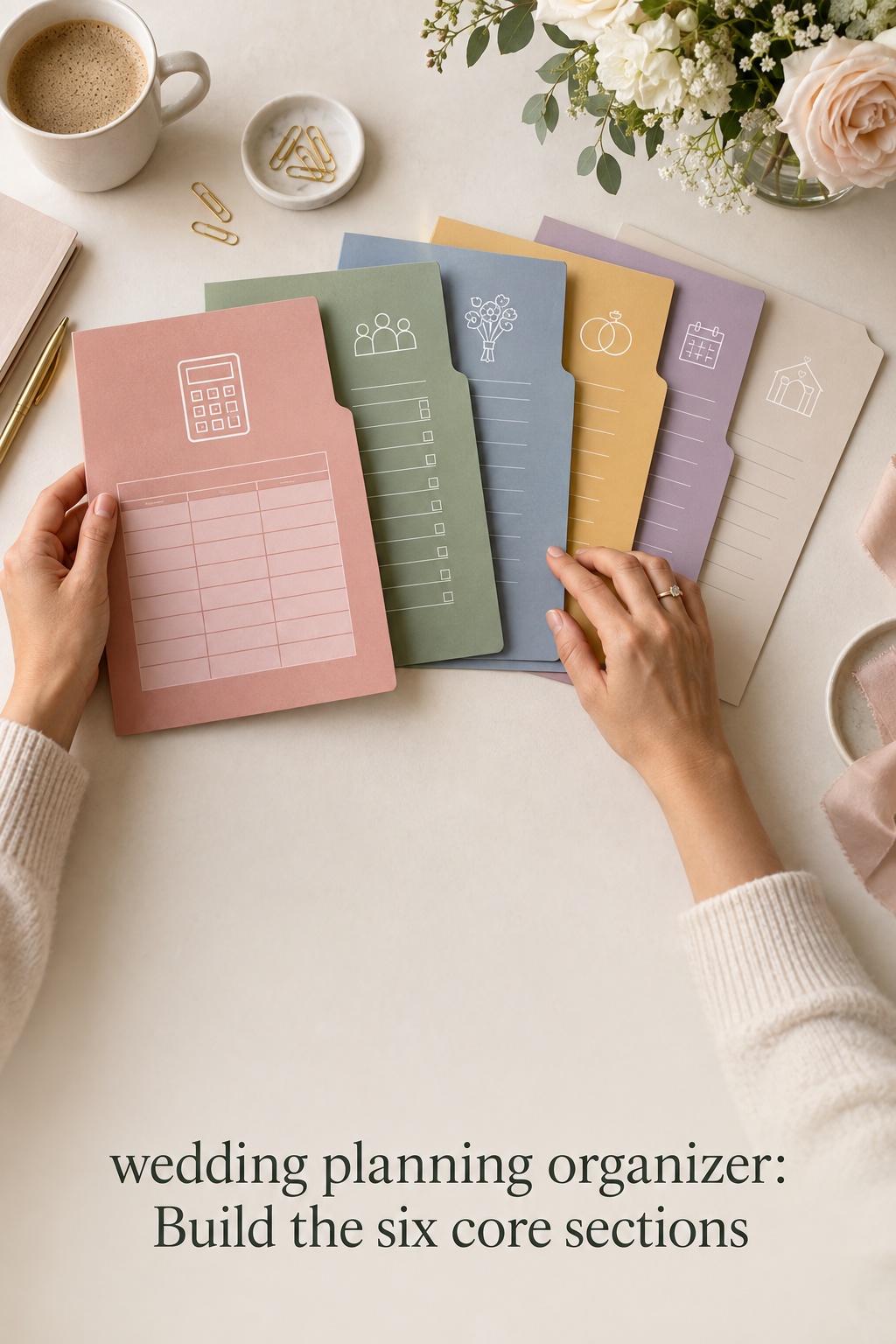
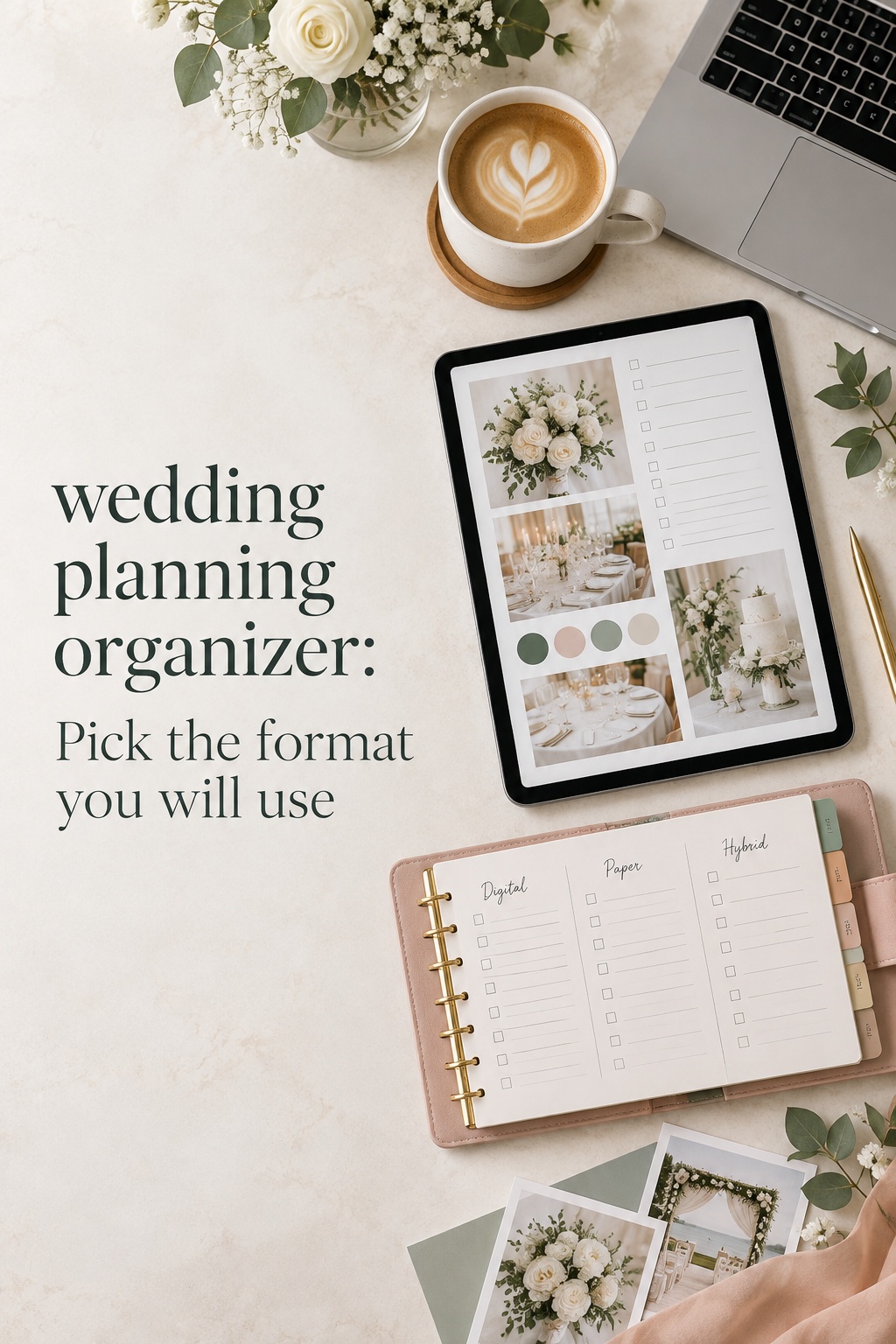
Before you begin, open one shared planning space. It can be a spreadsheet, a digital dashboard, a binder, or a combination that both partners will actually check. A resource such as The Wedding Command Center can be useful when you want one place for decisions, deadlines, contacts, and handoff notes. The tool matters less than the habit: every open decision needs an owner, a next action, and a date.
The 90-day rule: decide what must be true first
Start by separating ceremony-critical decisions from details that can be adjusted later. A venue and date affect almost everything else. Guest count affects the venue, food, rentals, invitations, and budget. The ceremony format affects the officiant, location, legal steps, and timing. Your total budget affects every conversation with a vendor. Those are the decisions that deserve attention before color palettes, favors, or elaborate stationery.
A short engagement rewards flexibility. If the ideal Saturday is unavailable, consider a Friday, Sunday, weekday, or an off-peak date. If a custom gown cannot be produced in time, look at ready-to-wear, a sample appointment, or a simpler silhouette. If a full-service vendor is booked, ask whether a smaller package or trusted colleague is available. The goal is not to accept poor quality. The goal is to protect the parts of the day that matter most while giving yourself more possible paths.
Make a must-have, nice-to-have, and not-now list
Write three short lists before you contact vendors. Must-haves are the conditions that make the wedding feel right or make the event possible, such as a particular ceremony tradition, an accessible location, a meal that works for important guests, or photography you genuinely value. Nice-to-haves are meaningful but replaceable. Not-now items are ideas you can revisit only if the essentials are secure.
- Must have: the date range, legal ceremony plan, realistic guest capacity, total budget, and the vendors or services that protect the guest experience.
- Nice to have: upgraded linens, specialty signage, extra portrait sessions, elaborate favors, or a more complex reception design.
- Not now: anything that requires custom production, multiple rounds of comparison, or a decision that does not affect the next two weeks.
Use the list whenever planning begins to feel scattered. If an item does not affect the ceremony, the guest experience, the budget, or a firm deadline, it probably does not belong in the first sprint. This is how a compressed plan stays calm instead of becoming a frantic collection of tabs.
Give every decision an owner and a finish line
Shared planning does not mean both partners must research every option. Assign one owner to each decision, then agree on the information the owner must bring back. For example, one partner can compare three venues using the same questions, while the other contacts photographers and caterers. A family member might research ceremony requirements, but the couple should make the final decision and record it.
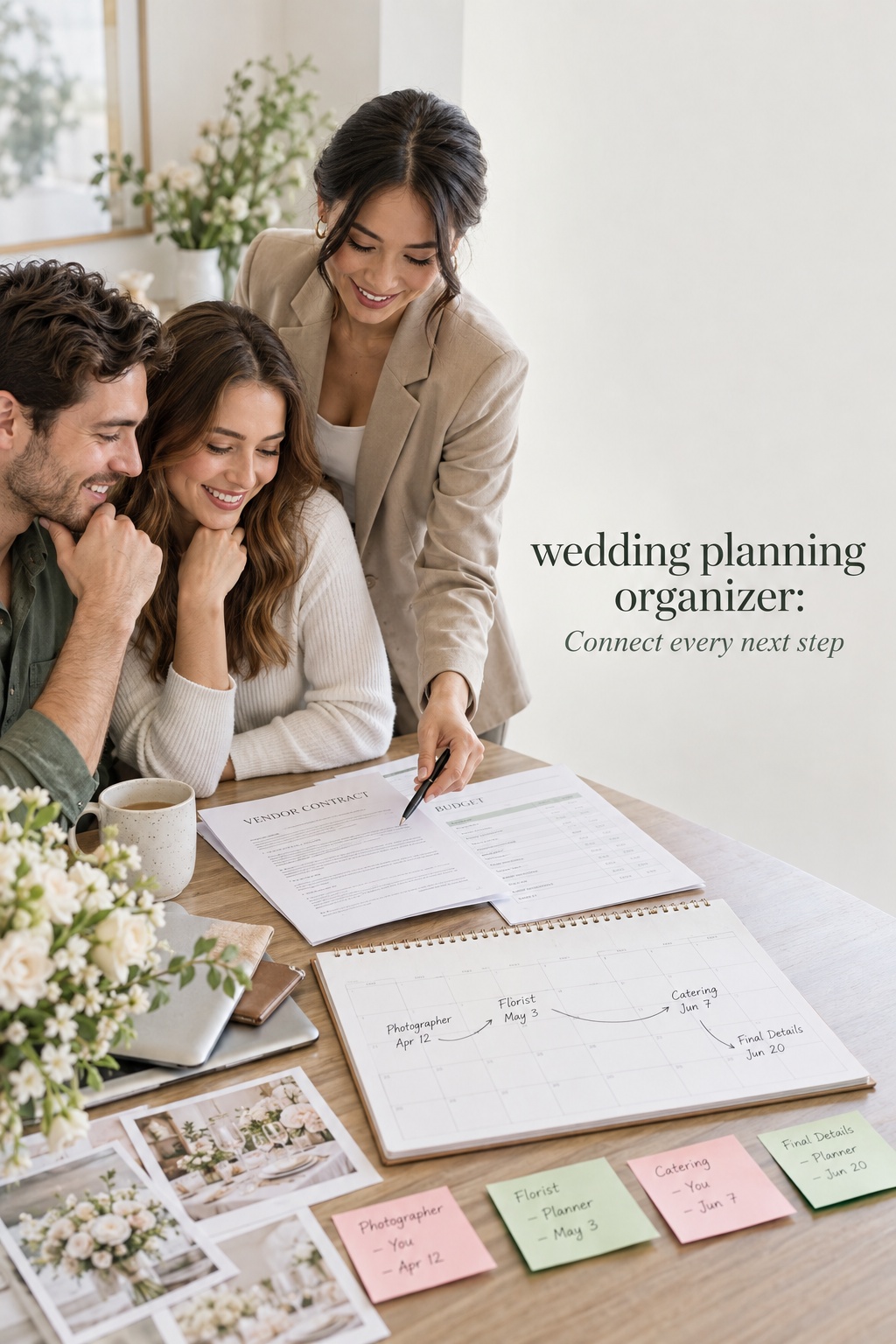
Use a simple decision card: decision, owner, options, deadline, deposit or cost, and next person to inform. If a vendor is waiting for your answer, record that too. The point is to make invisible work visible. A five-minute weekly review can then focus on decisions that are due, blocked, or waiting for someone else.

Weeks 12 to 9: secure the decisions that unlock everything else
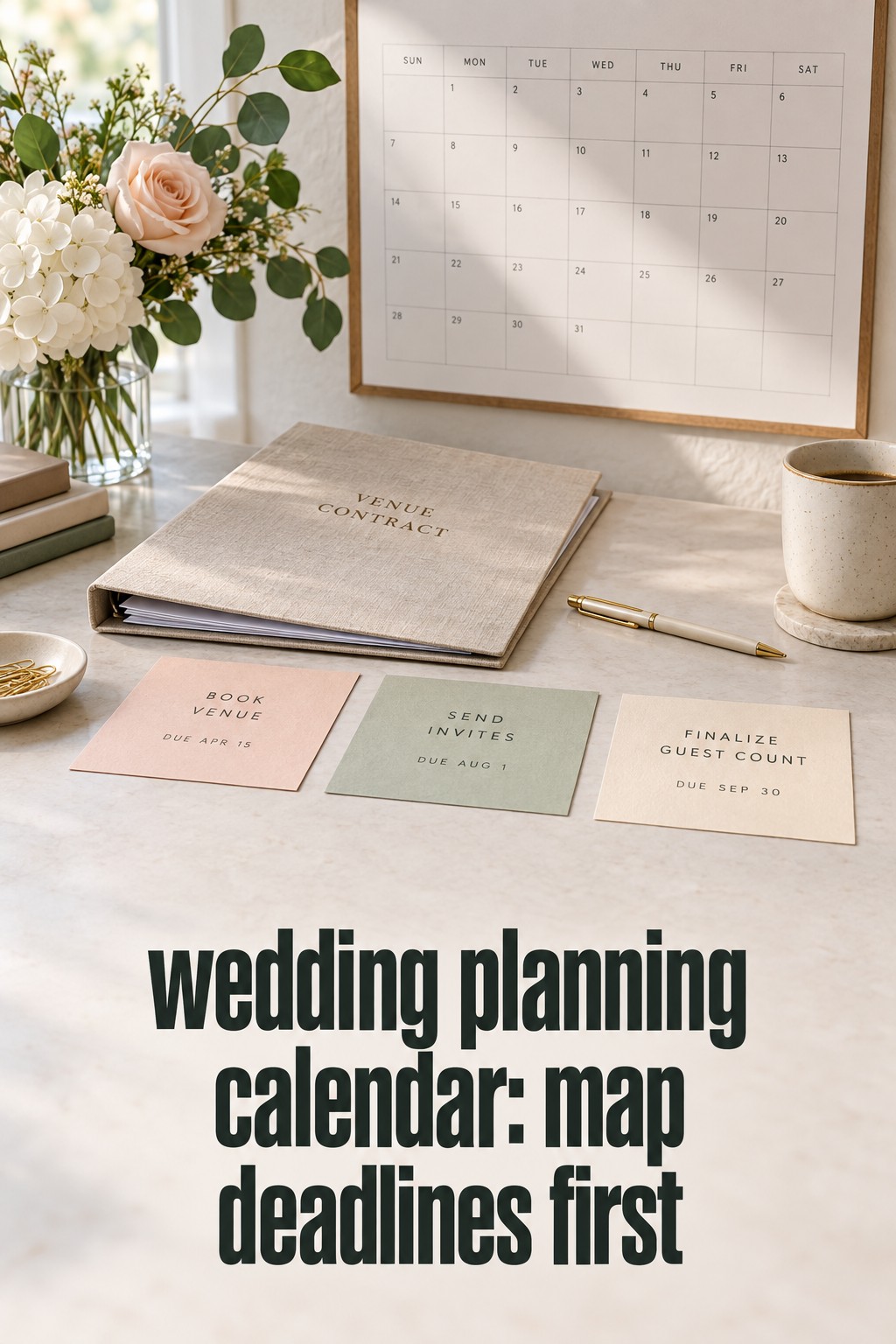
The first four weeks are a booking sprint. Do not spend them making the entire wedding look finished. Spend them making the wedding possible. The short-timeline guidance from The Knot also places the venue, date, budget, and essential suppliers at the front of the process. That order is useful because later decisions become easier once the foundation is real.
Week 12: confirm the date, venue, ceremony, and budget
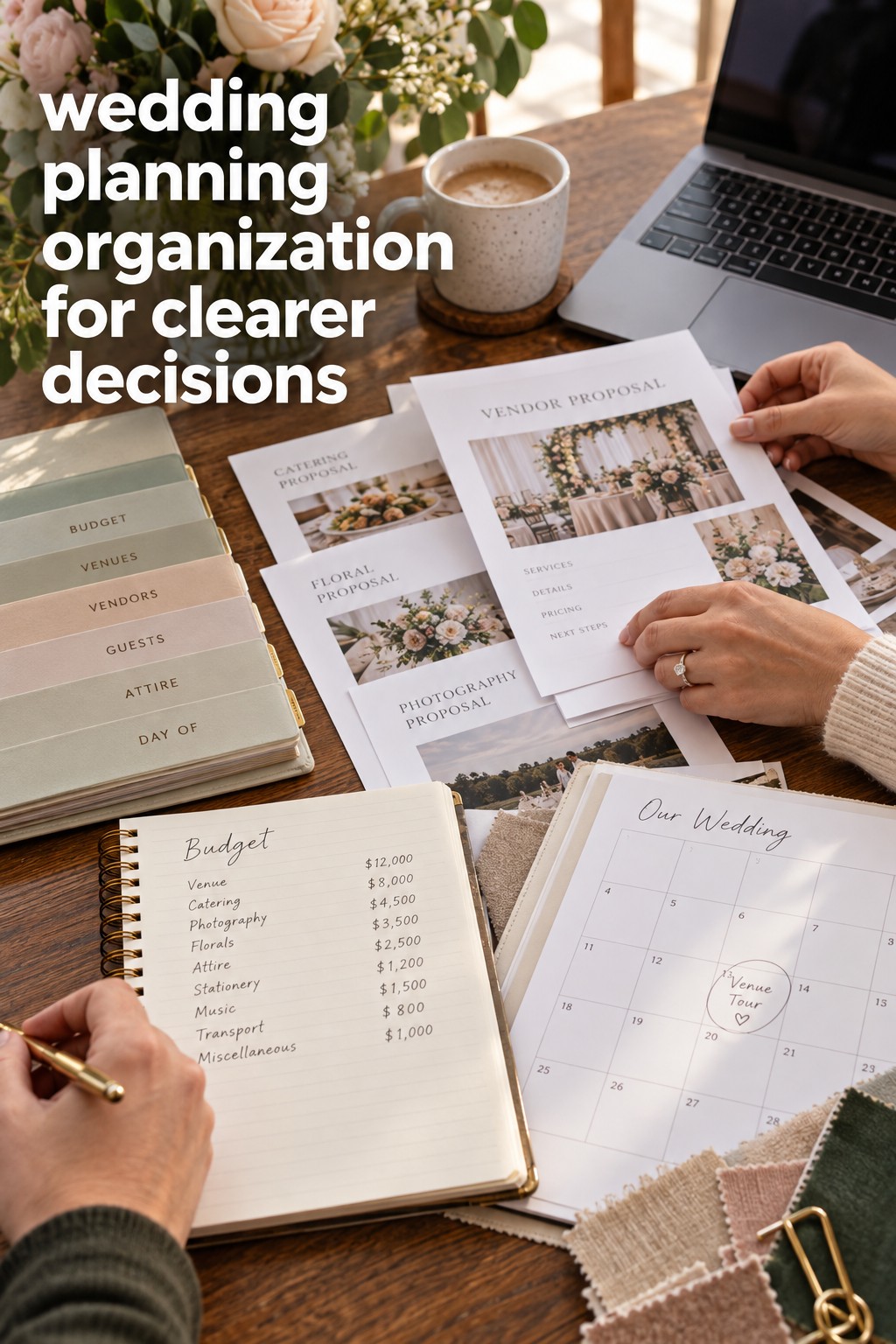
Begin with a realistic total budget, including taxes, service charges, attire alterations, transportation, tips, marriage-license costs, rush fees, and a small contingency. If family members are contributing, clarify whether the contribution is a gift, a fixed amount, or connected to specific expectations. That conversation is easier before deposits are made.
Next, confirm the venue and ceremony plan. Ask about availability, guest capacity, rain or weather procedures, required vendors, payment schedule, setup time, cleanup, accessibility, parking, and what is included. An all-inclusive venue can be helpful when time is short, but compare the full cost and contract terms rather than assuming included services are automatically the best value.
Contact the officiant or ceremony authority early. Requirements differ by location and ceremony type, so treat legal information as a local question to verify with the relevant government office or officiant. Record what documents are needed, when an appointment is required, and who is responsible for each step.
Weeks 11 and 10: book the essential vendor team
Contact the vendors that can limit the date: photographer, caterer, DJ or musician, florist, rentals, hair and makeup, transportation, and coordinator or planner. You may not need every category, but you do need a clear answer for each one. If the venue includes catering, ask what remains to be arranged. If you are using a restaurant, backyard, community hall, or other nontraditional space, rentals and logistics may become more important than décor.
- Send the same short brief to each vendor: date, location, guest estimate, service needed, budget range, and response deadline.
- Compare proposals using the same columns: total cost, inclusions, overtime, deposit, cancellation terms, arrival time, and decision deadline.
- Ask what the vendor needs from you next and record the answer in the shared planning space.
- Move on when a vendor cannot respond within the window your timeline allows. A slow response may create a bigger problem later.
Do not let a beautiful portfolio hide an unclear contract. In a three-month plan, clarity is part of quality. You need to know who arrives when, what they bring, what you supply, and how changes are handled.
Week 9: close the guest and communication loop
Finalize the guest list enough to communicate clearly. You may still have a few names to resolve, but avoid keeping the entire list open. Send invitations as soon as the date, location, ceremony timing, and response method are dependable. Digital invitations can be a practical choice when speed matters. Printed invitations can still work when the design is simple and production is available quickly.
Create a guest information page or message with the address, parking, hotel details, dress guidance, meal response instructions, and a contact for questions. The more useful information guests receive early, the fewer one-off messages the couple will need to answer later.

Weeks 8 to 5: turn decisions into a guest-ready wedding
Once the major bookings are secure, the work changes. You are no longer proving that the wedding can happen. You are making the guest experience easy to understand and the vendor team easy to coordinate. Keep a weekly planning appointment, but limit it to three questions: what must be decided this week, what is waiting on someone else, and what can be removed?
Use one review for attire, beauty, ceremony, and reception
Order or select attire with the actual timeline in mind. Ask about alterations, delivery, shoes, accessories, undergarments, and backup options. Schedule hair and makeup trials only if they will help you make a decision. A trial is not useful when it creates another open-ended search. Bring the final look into the day-of schedule, including time for dressing, travel, photos, and a buffer.
For the ceremony, choose the officiant, readings, music, vows, participants, and processional order. Keep the program intentional and short enough for the setting. For the reception, decide the meal format, bar plan, seating approach, key music moments, toasts, and any accessibility or dietary needs. You do not need to design every minute, but the people responsible for each transition need to know what happens next.
Make the guest list operational
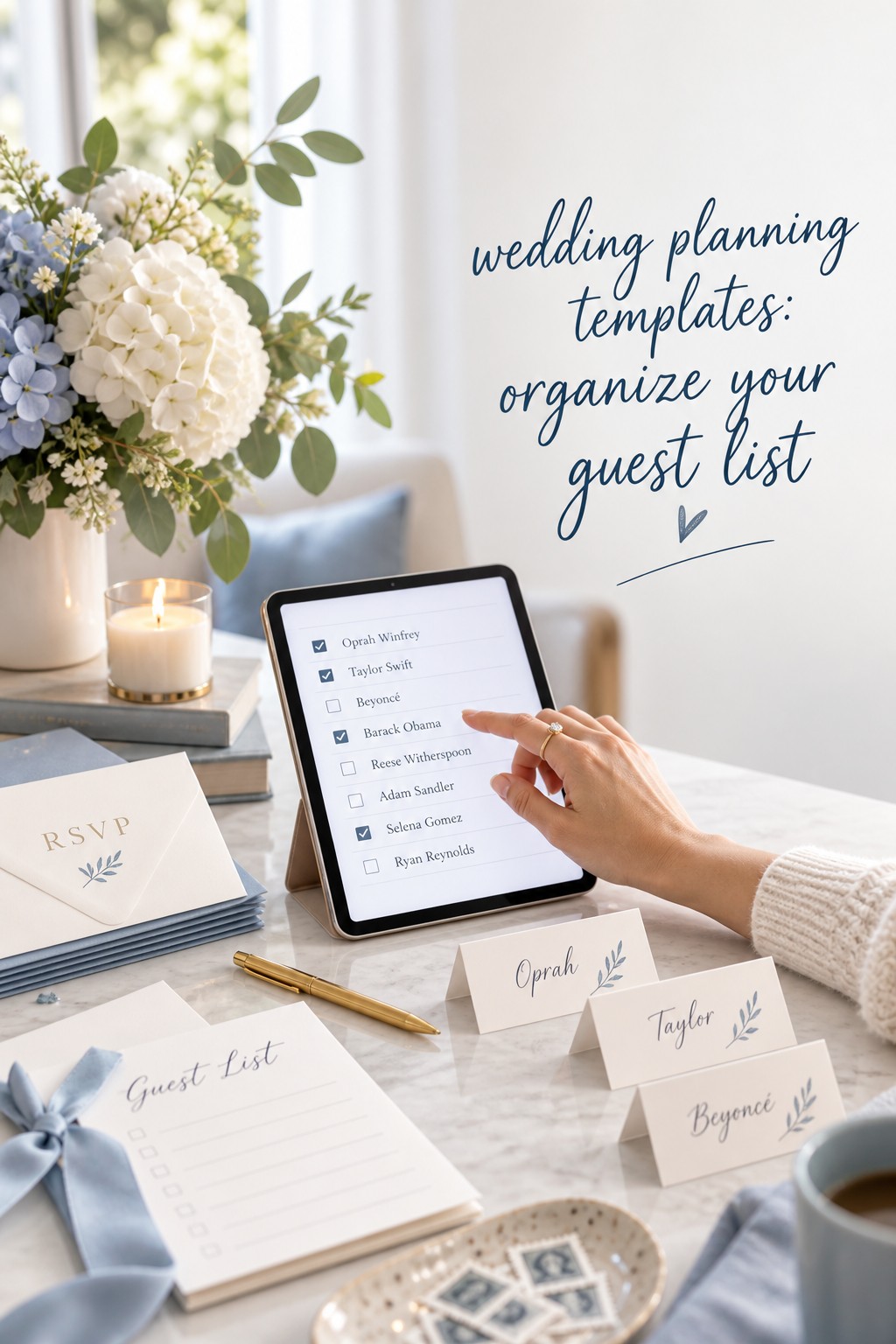
A guest list is not finished when names are typed into a document. It becomes operational when you know who has responded, who needs a follow-up, who has dietary or mobility needs, who needs accommodation information, and who should not be placed together. Keep these notes private and share only what each helper needs.
- Set a response deadline that gives you time to confirm food, seating, rentals, and printed materials.
- Assign one person to follow up with missing responses so the couple is not carrying every conversation.
- Track meal needs and accessibility notes beside the guest record, not in scattered messages.
- Start a seating draft before every response arrives, then mark uncertain seats clearly.
If the guest list remains larger than the venue or budget can support, return to the priorities rather than trying to hide the problem in the final week. A clear conversation now is kinder than a rushed compromise after menus and rentals are ordered.
Build a vendor brief instead of repeating the story
Create a two-page vendor brief with the date, addresses, arrival windows, contact list, layout, ceremony order, meal notes, photography priorities, music cues, payment status, and emergency contacts. Add a short section called “what matters most to us.” This gives vendors context without forcing them to search through a long message history.
Send the brief as a working draft, not a final document. Ask each vendor what is missing or unclear. Then make one controlled update rather than changing the plan in five different conversations. This small habit reduces contradictory instructions and helps a coordinator or trusted helper step in later.

Weeks 4 to 1: close loops and hand off the day
The final month is for confirmation, not constant invention. Freeze the big choices early. New ideas are allowed only when they solve a real problem or make the guest experience clearer. A beautiful extra that creates another vendor, payment, delivery, or setup dependency is not free. It consumes attention at the moment your plan needs reliability.
Four weeks out: confirm the facts
Review the response count, meal needs, seating draft, attire status, ceremony wording, transportation, hotel information, rentals, weather plan, and vendor arrival times. Confirm every balance and due date. Ask vendors to confirm the date, location, service, headcount assumption, and best day-of contact. If a contract or permit is still incomplete, make that the week’s first task.
Schedule fittings, beauty appointments, final menu decisions, rehearsal details, and any necessary walkthrough. Keep buffers in the calendar. A short timeline does not mean every hour should be assigned. It means the important tasks must have somewhere to land.
Two weeks out: make the plan usable by someone else
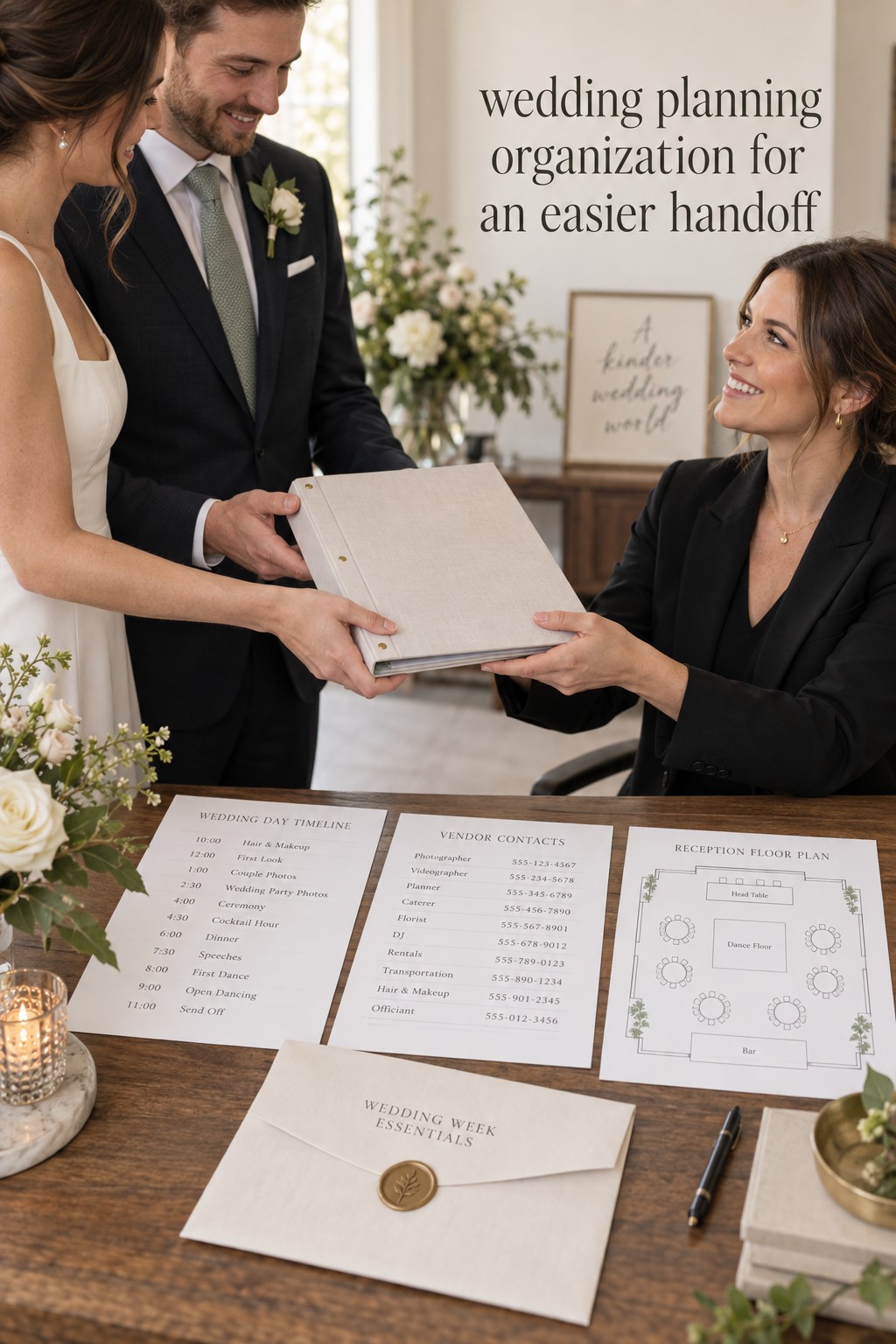
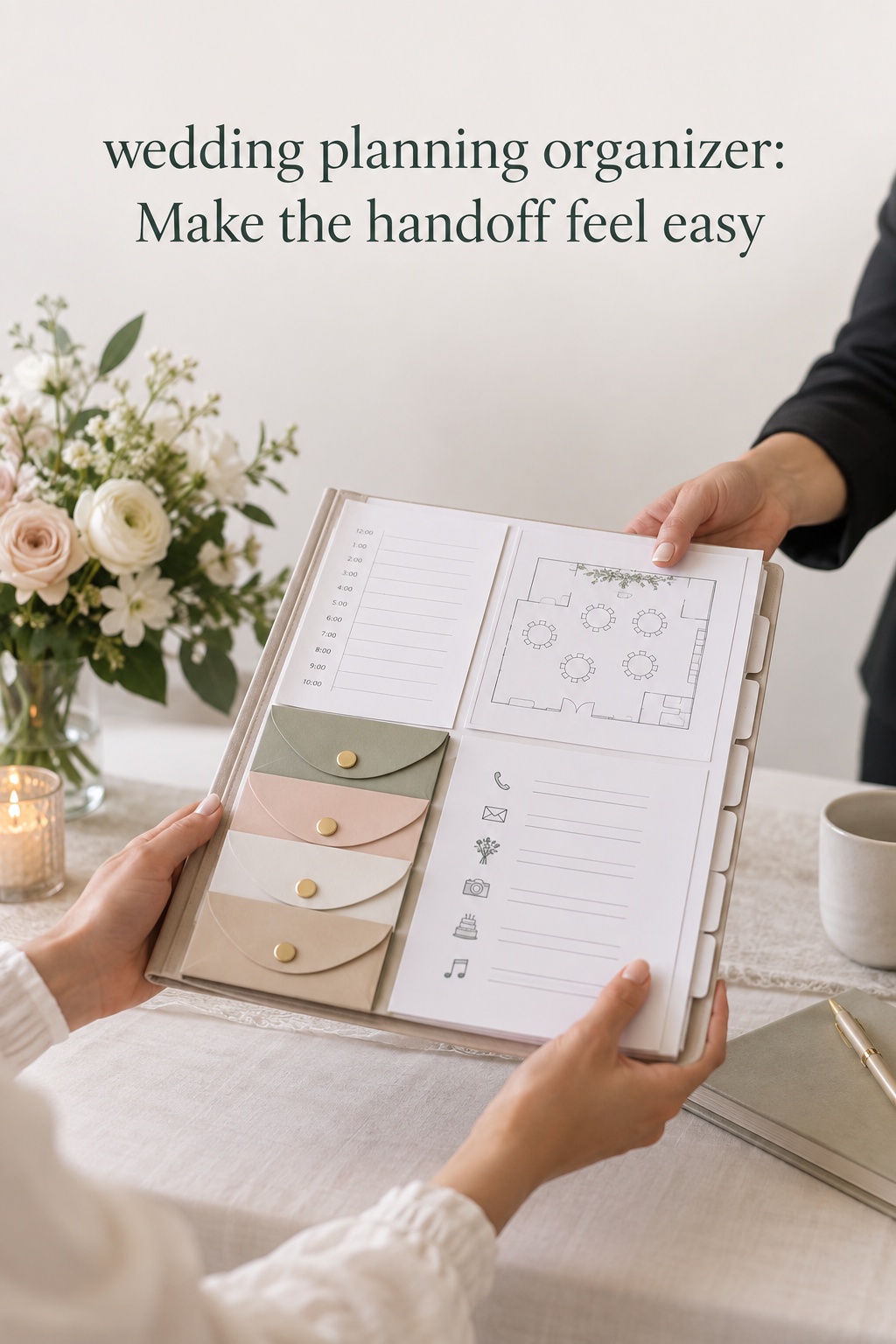
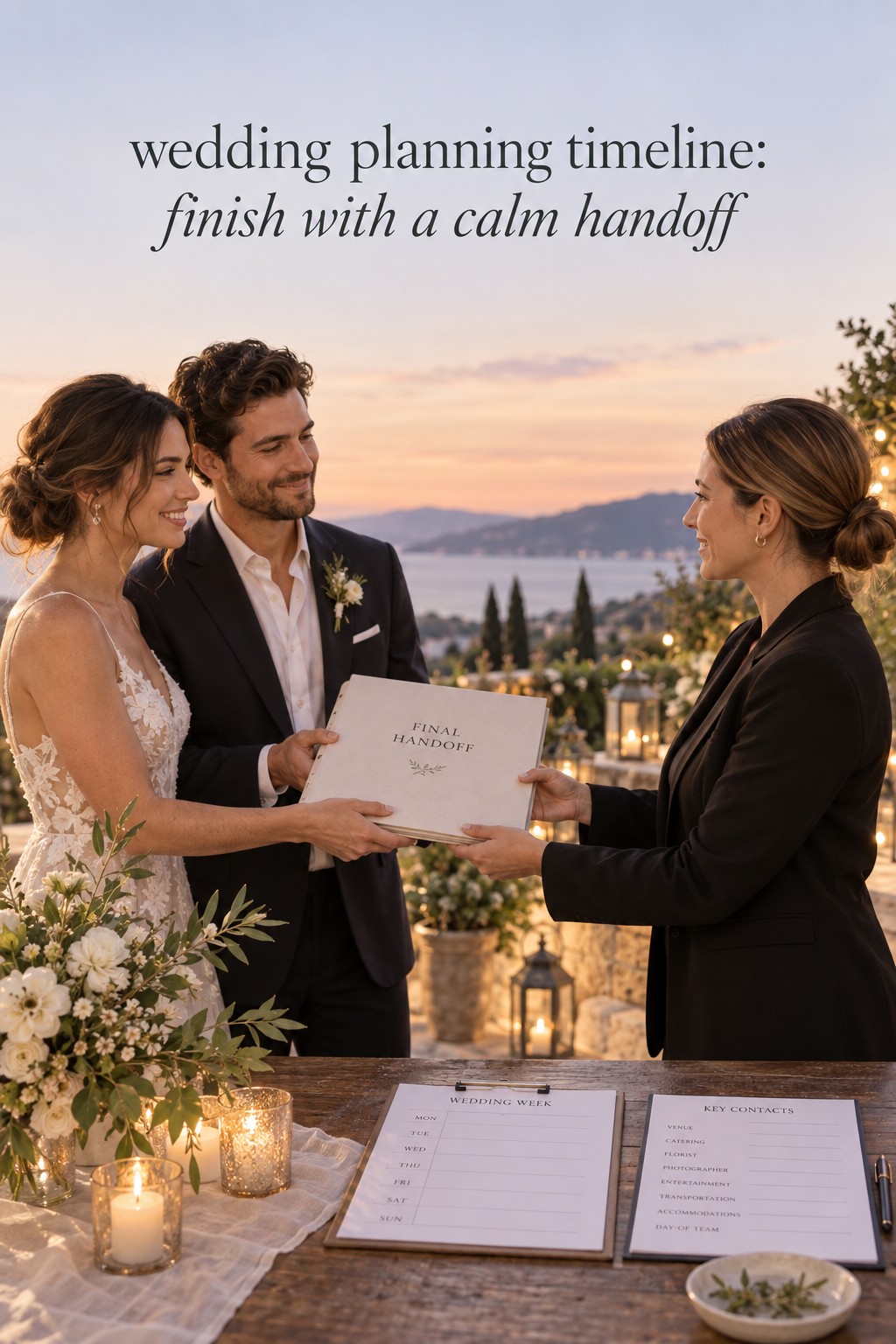
Choose the person who will answer questions on the wedding day. This may be a coordinator, planner, family member, friend, or venue contact. It should not automatically be the couple. Give that person the vendor brief, timeline, contact list, payment notes, floor plan, seating information, ceremony details, transportation plan, and the list of decisions they are authorized to make.
Walk through the day in order. Ask: where does each person need to be, what arrives, who receives it, who moves it, and what happens if the original plan changes? This is where a simple handoff system becomes more valuable than another inspiration board. A planner or tool can store the information, but a human owner still needs to know that the handoff exists and how to use it.
One week out: protect attention
Complete the final guest and vendor confirmations, prepare tips or final payments according to your contracts, pack personal items, confirm transportation, and share the final schedule. Put the rings, license documents, attire accessories, vows, emergency supplies, and important contact details in clearly labeled places. Keep copies of essential documents where the handoff person can reach them.
Stop making low-value changes. If a small detail is imperfect but does not affect safety, timing, comfort, or the meaning of the ceremony, let it be. The best final-week checklist protects the couple’s energy as carefully as it protects the schedule.
Use a final handoff packet
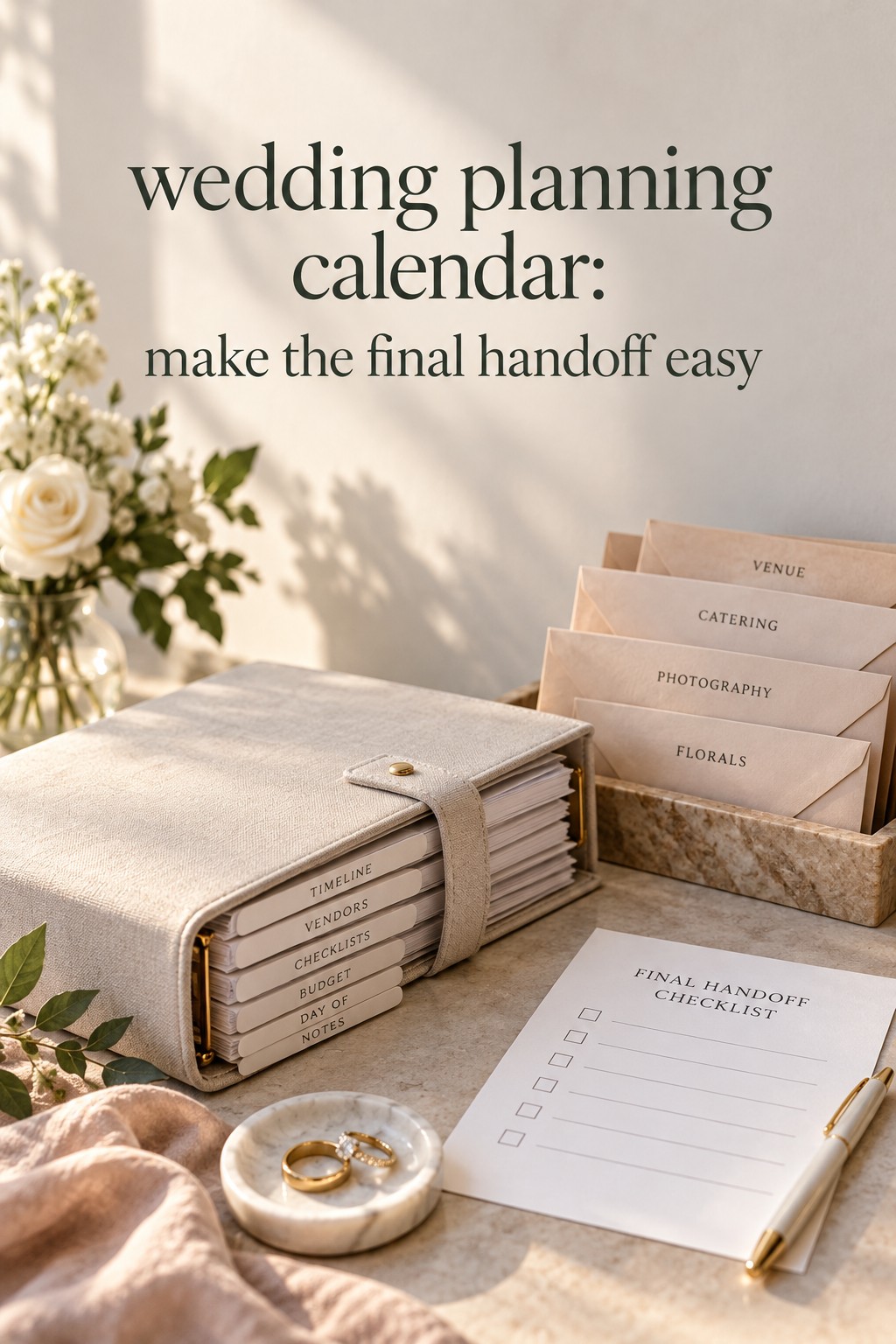
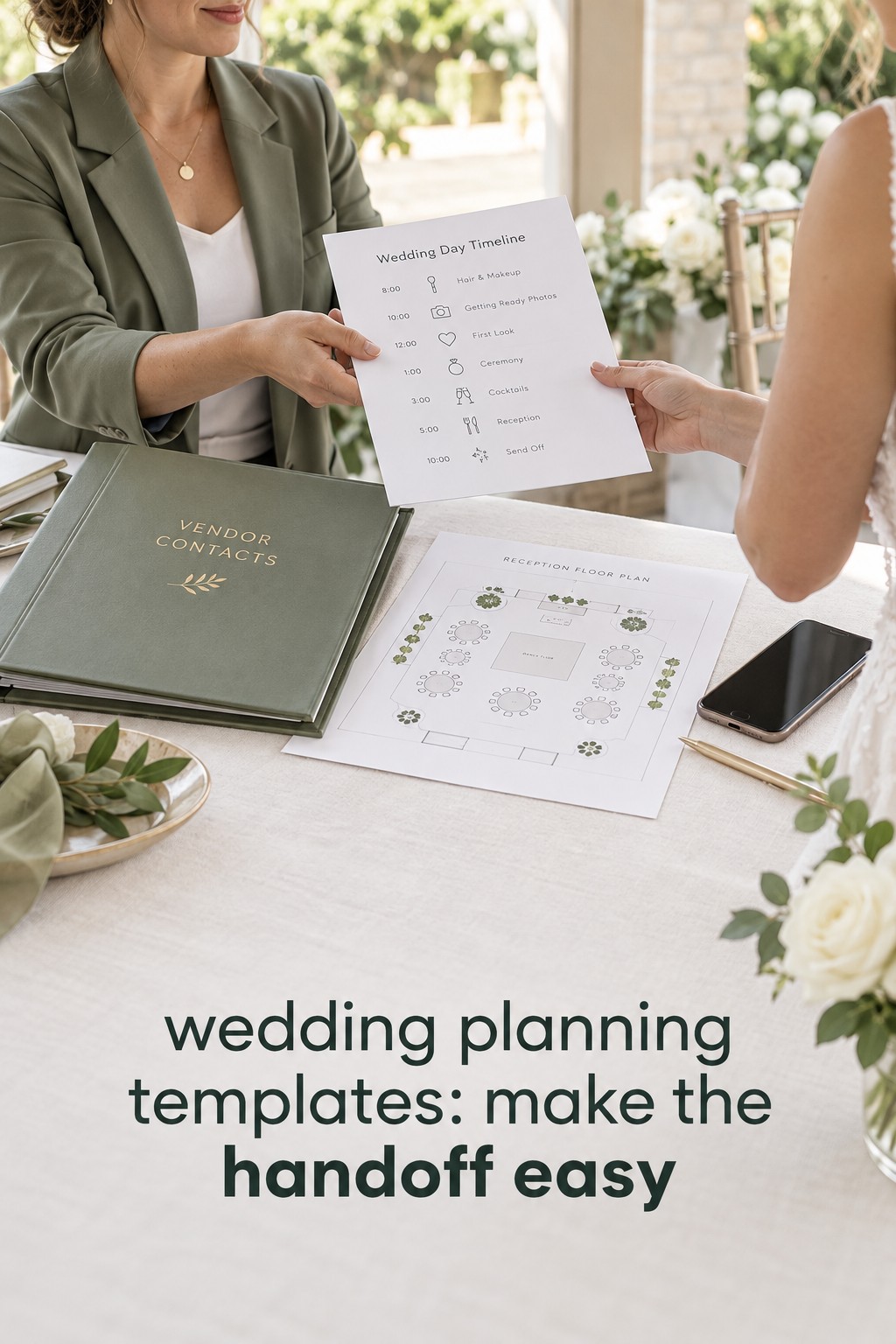
Your final handoff packet can be digital, printed, or both. Keep it concise enough that a helper will open it under pressure. Include the final timeline, venue map, vendor contacts, guest count, seating plan, ceremony order, meal notes, transportation, payment reminders, weather decision, setup responsibilities, cleanup responsibilities, and the couple’s emergency contact preferences.
- One page for the timeline: include locations, arrival windows, transitions, and buffers.
- One page for contacts: list the person to call for each category and the order for urgent questions.
- One page for people: include guest count, seating notes, meal needs, wedding party, family contacts, and ceremony participants.
- One page for money and items: list final payments, envelopes, rentals, personal items, and who receives each item.
Give the packet to the handoff person during a short meeting, not in a last-minute text. Ask them to explain the first three actions they would take if the couple became unavailable. If the answer is clear, the plan is ready. If it is not, simplify the packet until the next action is obvious.

FAQ
Can you really plan a wedding in three months?
Yes, when you accept that the plan must be selective. A three-month wedding is most manageable when the couple confirms the date, venue, ceremony, budget, guest communication, and essential vendors first. Flexibility with the day, location, format, attire, and décor creates more workable options.
What should be booked first for a three-month wedding?
Start with the venue and date, then confirm the ceremony route, budget, and vendors whose availability can limit the wedding, such as photography, catering, music, rentals, beauty, and transportation. The exact order can change by event, but book anything that unlocks multiple later decisions before optional details.
How do you simplify wedding planning when time is short?
Use a must-have, nice-to-have, and not-now list. Choose flexible dates, reduce custom production, use digital communication when helpful, select a venue or vendor package that removes logistics, and limit the number of options you compare. Simplifying the process does not mean making the wedding generic. It means protecting the choices that carry meaning.
Should you hire a wedding planner for a three-month timeline?
A planner or coordinator can be especially helpful when the venue, vendor team, guest count, or family logistics are complicated. If a full planning service is outside your budget, ask about partial planning, a month-of package, or day-of coordination. The useful question is not whether you need a particular title. It is whether someone besides the couple can own the final schedule and vendor communication.
When should invitations go out for a wedding in three months?
Send them as soon as the date, location, ceremony timing, and response method are dependable. With a compressed timeline, a simple printed or digital invitation can be more practical than waiting for a highly customized design. Give guests clear travel, lodging, meal, accessibility, and response information so they can act quickly.
What is the most common mistake in a 90-day wedding plan?
The most common mistake is treating every task as equally urgent. That creates busywork while a venue, contract, guest count, or legal step remains unresolved. Keep asking which decision unlocks the next group of decisions, assign an owner, and put the final details into a handoff packet before the wedding week.