
There is a particular moment after the congratulations, the champagne, and the first round of excited phone calls when wedding planning becomes real. You open a notebook, save a venue, and suddenly the celebration has a budget, a guest count, a date, and hundreds of small decisions waiting behind them.
That moment can feel thrilling and strangely heavy at the same time. A good wedding planning guide should not make you feel as if you have failed because you do not have a color palette by Tuesday. It should help you see the order beneath the noise. The best plans are not the ones that contain the most tasks. They are the ones that make the next important decision clear.

This guide is designed for couples who want a beautiful, personal wedding and a planning process that still leaves room for ordinary life. You can use it for a twelve-month engagement, a shorter timeline, a destination celebration, or a wedding that does not follow every traditional pattern. Start with the decisions that unlock everything else, then let the details arrive at the right time.
1. Begin with the decisions that shape the whole wedding
Before you look seriously at napkins, signage, or favors, agree on the experience you are trying to create. This is not a demand for a perfect vision board. It is a short conversation about what you want your guests to feel and what you want to remember when the day is over.
Each of you can answer three questions privately, then compare your answers. What matters most about the day? What would make the celebration feel unlike anyone else’s? What are you willing to simplify or skip? One person may care most about a long dinner with family, while the other imagines a packed dance floor and a dramatic outdoor ceremony. Neither priority is more correct. Naming both helps you spend intentionally.
- Choose three priorities that deserve time and money.
- Name two traditions you genuinely want to keep.
- List two elements you can release without regret.
- Write one sentence describing the atmosphere you want guests to remember.
Next, create a rough guest-count range rather than pretending you already know the final number. A list of 80 to 100 people is more useful than an anxious argument over whether a cousin’s new partner belongs on a list that has not yet been built. The range helps you evaluate venues, catering estimates, and the overall scale of the event.
Budget and guest count belong in the same early conversation because they influence each other. A larger guest list may change your venue, menu, rental needs, and bar costs. A limited budget may require a smaller celebration, a different season, or a shorter reception. Treat these facts as design information, not as a verdict on how much your wedding means.
Build a budget in categories before you chase quotes. Include the venue, food and beverage, photography, attire, flowers and decor, music, stationery, transportation, beauty, ceremony costs, gifts, tips, taxes, and a contingency reserve. Keep the reserve visible. A plan that spends every available dollar before the first contract is signed is already under pressure.
If family or friends may contribute, discuss whether the money comes with expectations. It is kinder to clarify the guest list, ceremony format, or spending conditions at the start than to discover them after deposits have been paid. Keep the conversation factual and calm. Contributions can be generous while still needing clear boundaries.
2. Turn your foundation into a realistic planning timeline
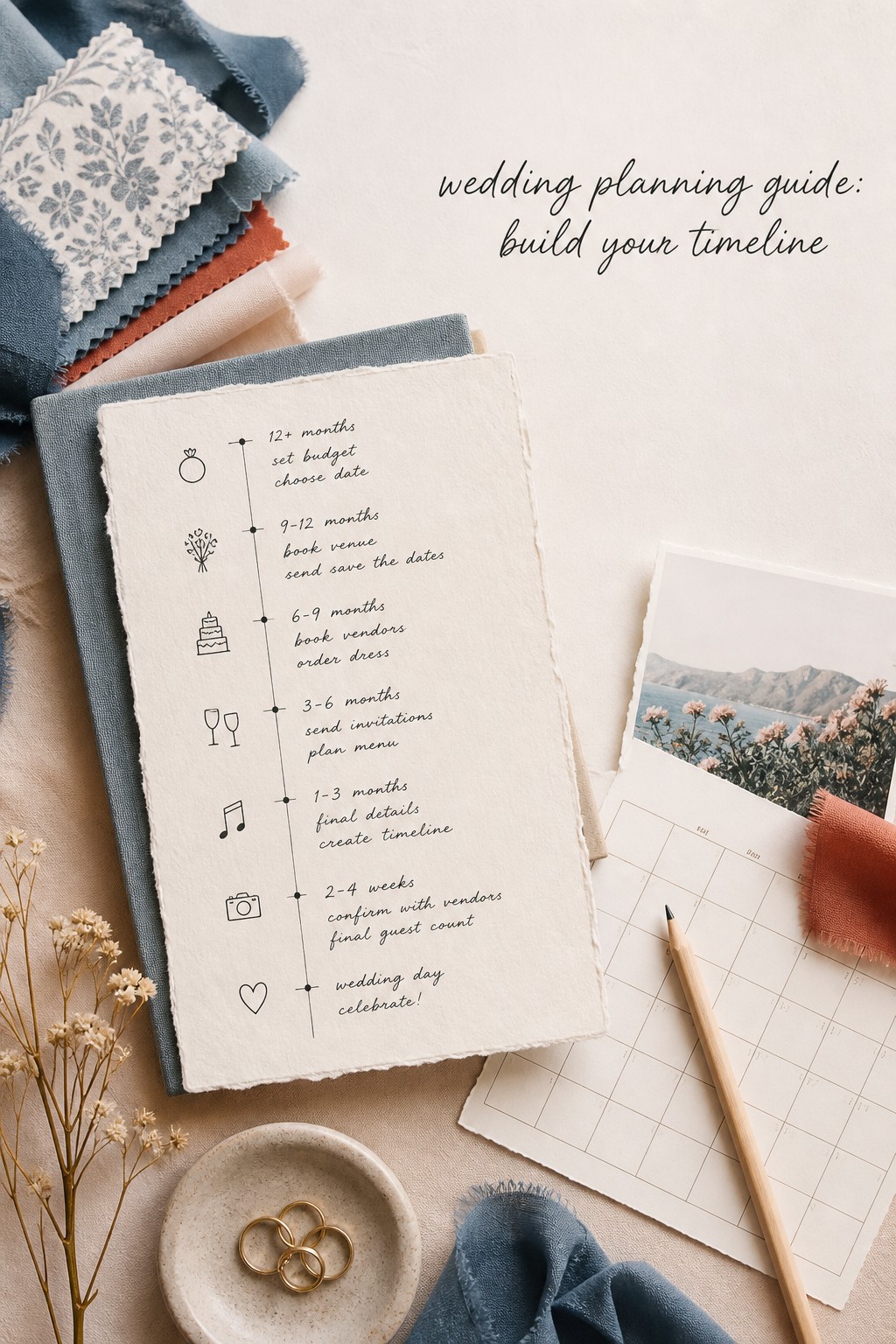
Once you understand your priorities, guest range, and financial limits, choose a date strategy. Some couples have one meaningful date. Others need two or three possible dates to make venue and vendor availability easier. A flexible date can open better options, especially if your engagement is shorter or your preferred season is popular.
Think of your timeline as a chain of dependencies. You cannot finalize invitations until the venue address and ceremony timing are known. You should not order a cake based on a guest count that is still changing. You cannot create a helpful wedding-day schedule until you know how long the ceremony, portraits, travel, dinner, and formalities will take.
- First layer: priorities, budget, guest range, location, date, and celebration format.
- Second layer: venue, planner or coordinator, photographer, caterer, entertainment, and attire.
- Third layer: ceremony structure, florals, rentals, invitations, website, and guest logistics.
- Final layer: seating, playlists, signage, beauty schedule, vendor confirmations, and emergency supplies.
This layered approach is more useful than copying a twelve-month checklist line by line. A checklist gives you a starting map, but your actual pace depends on your location, season, guest count, and vendors. If your wedding is six months away, keep the order of decisions and compress the calendar. If it is eighteen months away, do not manufacture urgency around details that will change.
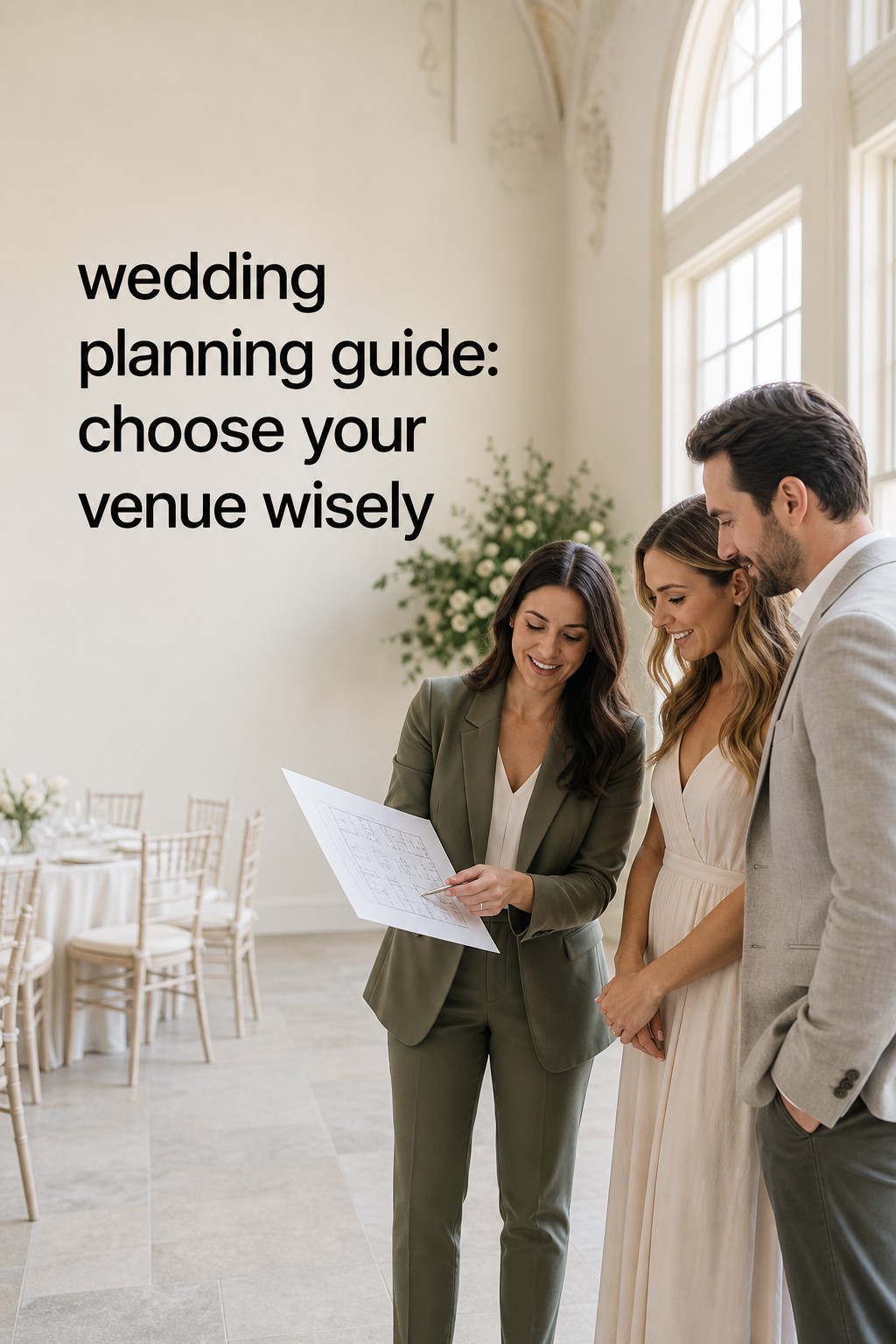
Venue research should answer more than whether the room looks beautiful in photographs. Ask about capacity, rain plans, accessibility, parking, load-in rules, curfew, included rentals, catering restrictions, bar policies, insurance, setup time, cleanup, and payment deadlines. A venue that supports your practical needs will make every later decision easier.
Book vendors according to demand and dependency. The venue usually comes first, followed by the vendors whose availability is limited in your area, such as the photographer, caterer, band, or planner. That does not mean you must sign every contract immediately. It means you should understand the booking windows before spending your energy on low-risk details.
Read every contract for the same basic information: what is included, what is optional, when payments are due, how changes are handled, what happens if the vendor is ill, and which costs are not included in the headline price. Save signed contracts and invoices in one shared location. A beautiful mood board cannot protect you from a missed payment deadline.
When choosing a planner or coordinator, be specific about the help you need. Full planning support can be valuable when you want someone to manage research, design, and logistics. Partial planning can help when the foundation is set but decisions are multiplying. A month-of coordinator can take ownership of final confirmations and wedding-day flow. The right level of support is the one that solves your actual friction.
3. Shape the guest experience from ceremony to reception
With the major bookings underway, move from structure to experience. Start with the ceremony because it gives the day its emotional center. Decide who will officiate, how formal the language should feel, whether you want readings or cultural elements, and what parts of the ceremony should be explained for guests who may not know the tradition.
Personalization does not require a long ceremony. A short story about your relationship, a meaningful reading, a family ritual, or a welcome in more than one language can make the moment feel considered. Choose elements because they connect to you, not because a wedding website says every ceremony needs them.
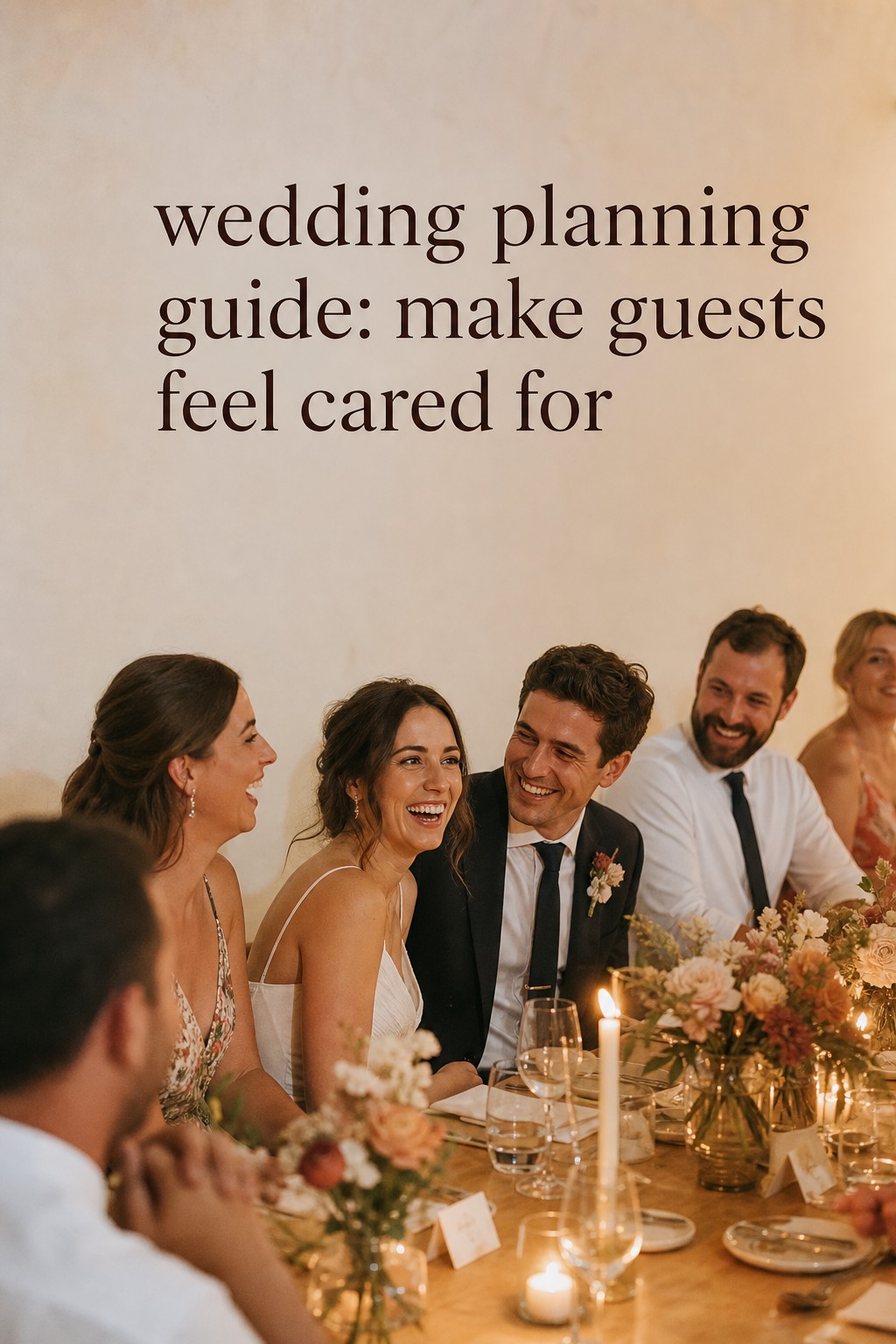
Then trace a guest’s day from arrival to departure. Where do they go when they arrive? Can they find the ceremony without asking? Is there enough time between ceremony and reception for portraits and a drink? Will older guests have comfortable seating? Are food, water, restrooms, and transportation easy to understand? These practical questions are a form of hospitality.
- Make the arrival path obvious with a welcome person, sign, or venue team member.
- Offer a clear plan for guests who need shade, seating, quiet, or step-free access.
- Tell guests what will happen during a long transition between events.
- Keep essential information on the wedding website and invitation suite.
- Give the wedding party a simple answer for common questions.
Your design decisions should support that experience. Choose a small set of repeatable materials, colors, and textures instead of treating every surface as a new project. A table can feel intentional with linens, candles, and a thoughtful menu card. It does not need a separate concept for the welcome table, bar, dessert table, gift table, and every corner of the room.
Attire deserves its own timeline because alterations, accessories, shoes, and fittings often take longer than expected. Build in room for comfort as well as photographs. The most successful look is one you can move, eat, hug, and dance in. If members of the wedding party are choosing their own outfits, provide clear guidance on color, formality, and ordering deadlines without requiring identical results.
Stationery is another place where decisions connect. Your invitation should communicate the tone and the information guests actually need: names, date, location, response instructions, dress guidance, and relevant travel details. Confirm wording, addresses, postage, meal choices, and accessibility information before ordering. Ask one detail-focused person to proofread the final file with fresh eyes.
As RSVPs arrive, keep the guest list connected to the seating plan, meal preferences, transportation, and welcome details. Avoid maintaining separate versions in multiple notebooks. If a guest changes their response, update the central record and note who made the change. A reliable record protects you during the busy final weeks.
4. Build a shared command center and finish with confidence
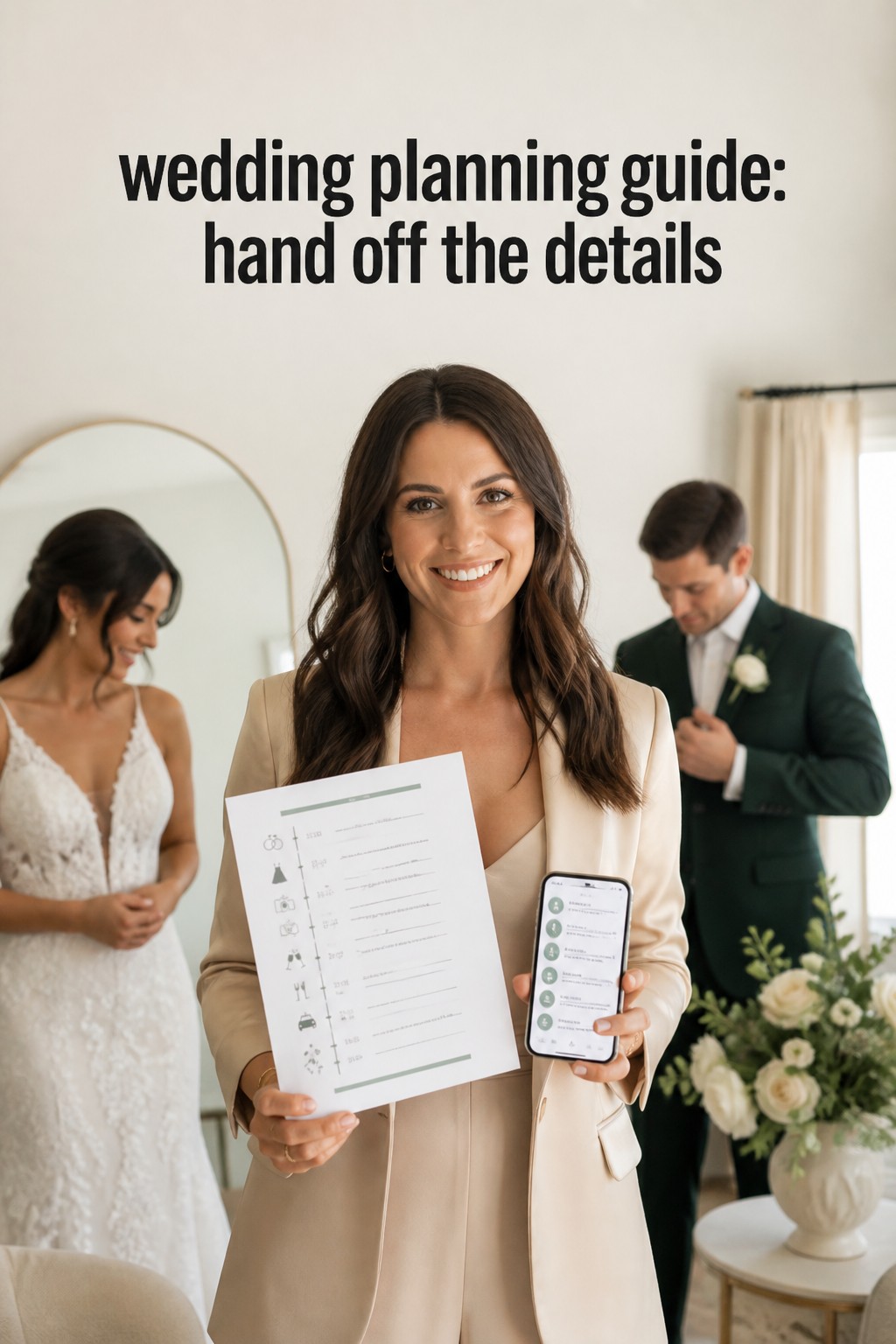
Planning becomes easier when information has a home. Create one shared command center for your budget, guest list, vendor contacts, contracts, payment dates, design references, and questions. The Wedding Command Center can be a useful planning resource when you want one place to make responsibilities visible and reduce the amount of information living in someone’s head. Use it as a practical coordination aid, not as another project to maintain perfectly.
Give each task an owner and a next action. “Flowers” is not a task. “Ask florist whether bud vases are included in the proposal by Friday” is a task. “Wedding website” is not a task. “Add hotel block details after the venue confirms the room code” is a task. Specific next actions make it much easier for two people to plan together.
- Hold a short weekly planning meeting with a written agenda.
- End every meeting with three priorities and one decision that can wait.
- Record decisions, not just ideas, so you do not reopen the same question repeatedly.
- Keep a “later” list for details that matter but are not ready to be decided.
- Share only the information each helper needs to do their part well.
About six to eight weeks before the wedding, move into confirmation mode. Check final guest numbers, meal choices, transportation, ceremony wording, rental quantities, attire, beauty appointments, music cues, and photo priorities. Confirm arrival and departure times with every vendor. Put the final schedule in writing and ask the venue or coordinator to identify conflicts.
Write a short contingency plan for the situations most likely to affect your day. Decide who handles rain, a delayed delivery, a missing boutonniere, a guest who needs help, or a vendor question while you are getting ready. This is not pessimism. It is a way of making sure a small problem reaches a prepared person instead of reaching you during your vows.
In the final week, stop adding major ideas. Pack ceremony items, rings, licenses, invitations, tips, medication, comfortable shoes, and anything sentimental. Give the schedule and contact list to the people who will use them. Eat regular meals, sleep where you can, and let some details be good enough. The purpose of the plan is to create room for the day, not to keep you working through it.
The most common planning mistakes are not a lack of taste. They are trying to decide everything at once, underestimating the guest count, forgetting taxes and gratuities, booking without reading contracts, keeping information in separate places, and assigning wedding-day questions to the couple. Each one has a simple countermeasure: work in layers, keep a realistic range, budget the full cost, document agreements, use one command center, and appoint a decision-maker for the day.
A wedding planning guide cannot tell you what your celebration must look like. It can help you protect the parts that matter, make decisions in a humane order, and know when enough planning has been done. Start with the experience, build the foundation, choose the people and place that support it, and let the details follow. Your wedding does not need to look effortless. It needs to feel like it belongs to you.
FAQ
What should we do first after getting engaged?
Celebrate before you start making decisions. Then discuss your priorities, a realistic guest-count range, and the total budget. These three pieces shape the venue, date, vendor choices, and scale of the celebration.
How far in advance should we start planning a wedding?
Twelve to eighteen months gives you comfortable choice, but it is not the only workable timeline. A shorter engagement can succeed when you keep the decision order clear, stay flexible about dates and locations, and book high-demand vendors promptly.
What is the most important part of a wedding budget?
The most important part is the complete picture. Include taxes, service charges, gratuities, attire alterations, stationery postage, transportation, and a contingency reserve, not only the prices shown in initial proposals.
Should we hire a wedding planner or coordinator?
Consider professional help when research, design, logistics, or family coordination is creating ongoing stress. Full planning, partial planning, and month-of coordination solve different problems. Choose the level that matches your actual needs and read the scope of services carefully.
When should we book our wedding venue?
Book the venue after you understand your approximate guest count, budget, preferred locations, and date flexibility. Before signing, confirm capacity, catering rules, rain plans, accessibility, setup time, cleanup, payment deadlines, and all additional fees.
How can we make wedding planning less overwhelming?
Use one shared planning system, work in layers, assign an owner to every next action, and keep a list of decisions that can wait. A short weekly meeting is usually more effective than checking dozens of tasks whenever anxiety appears.
What belongs on a wedding-day timeline?
Include vendor arrival, setup, getting ready, transportation, ceremony, portraits, cocktail hour, dinner, speeches, dances, cake or dessert, final song, guest departure, and cleanup. Add buffer time and identify one person who can adjust the schedule without involving the couple.
How do we personalize a wedding without adding too many details?
Choose a few meaningful moments and repeat a simple visual language. A personal ceremony reading, a family recipe, a thoughtful welcome, or music connected to your story can create more impact than adding a new decorative idea to every table.
Leave a Reply