
A wedding planner book can make a complicated season feel easier to approach, but only when the pages match the way you actually make decisions. A beautiful cover does not tell you whether you will use a dated schedule, whether the prompts will help when you feel stuck, or whether there is room to write what matters to your celebration.
Before choosing a wedding planner book, decide what job you want it to do. Then spend ten minutes testing a few sample pages against one real decision, such as comparing venues or deciding what kind of help you need from a vendor. This small test can tell you more than a long product description because it lets you see how the book works when it meets your plans.
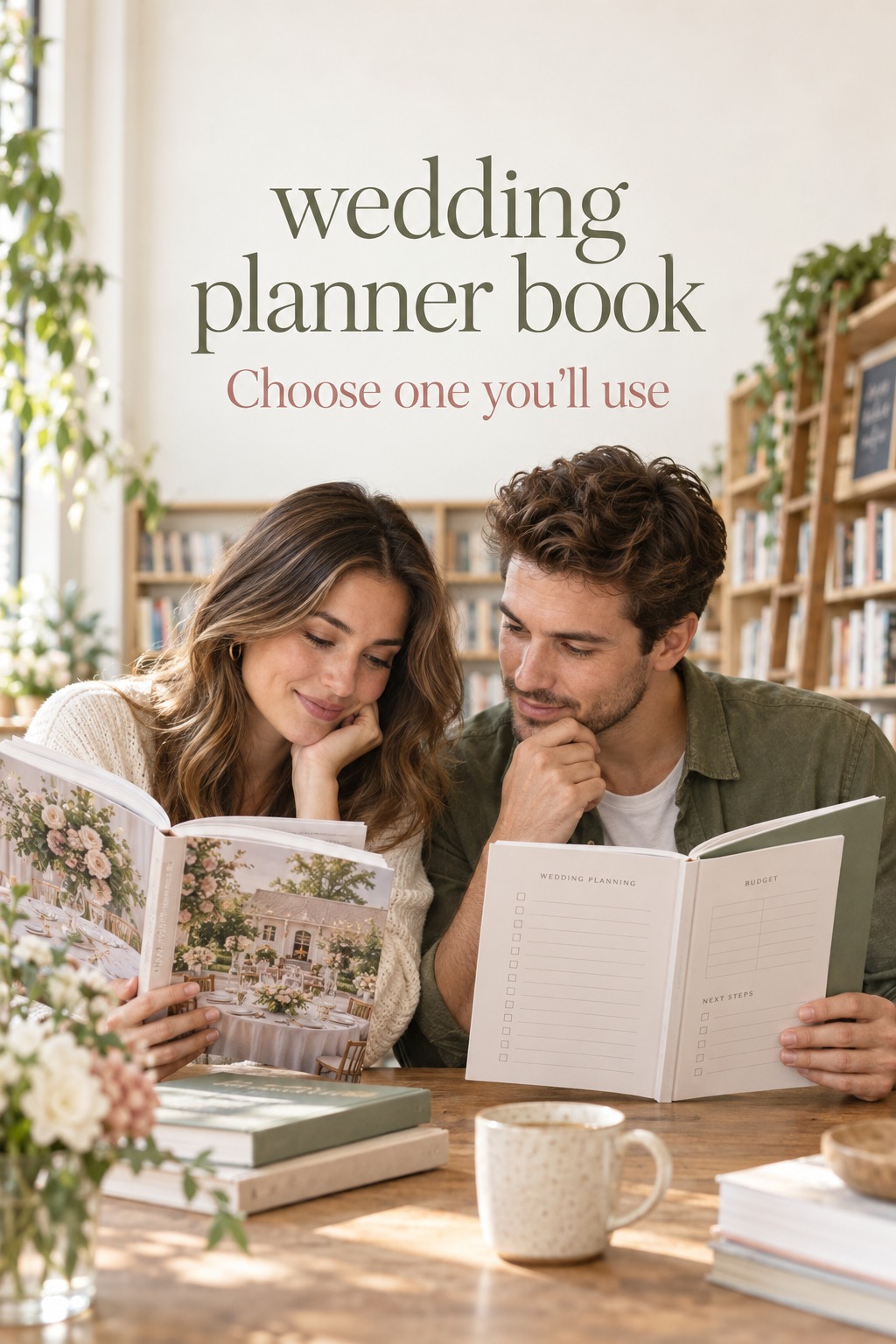
Decide What You Want the Wedding Planner Book to Do
Start with a sentence, not a shopping list: “I want this book to help us ______.” The answer may be to understand the process, make decisions, keep track of tasks, or save ideas and memories. A book can support more than one job, but it helps to know which one matters most. Otherwise, it is easy to choose a planner with many pages that look useful while missing the pages you would return to each week.
If you need instruction
A reference guide explains terms, choices, and the order in which decisions may affect one another. This can suit couples who are new to planning and want context before they fill anything in. Look for advice that gives you a reason behind a prompt, so you can adapt it when your event does not follow a standard timeline. A reference book can answer “What should we think about?” without necessarily becoming your active tracking tool.
That difference matters. You may enjoy reading an inspiring chapter but still need a separate place for current deadlines, confirmed appointments, or vendor details. Decide whether you want the book to teach you, to hold working information, or to do both. If the book tries to do both, check whether the practical pages are easy to find after you have read the guidance.
If you need prompts to make decisions
A guided workbook asks questions and gives you a sequence for thinking through a choice. This can be useful when you know a decision is coming but do not know where to begin. A strong prompt helps you name the options, compare what matters, and capture the next question. A weak prompt may simply leave a blank line under a broad heading such as “dream wedding,” which may not help you turn a feeling into a practical choice.
Look for prompts that allow uncertainty. At the beginning, you may have a guest range, an approximate budget, or several possible dates rather than one final answer. A planner that assumes every detail is already decided can make normal early planning feel like a failure. You should be able to write “still deciding” and continue using the page.
If you need to track tasks
A task focused planner gives you places to note deadlines, appointments, payments, or responsibilities. It is most useful when you can quickly see what is due and what action follows. Check whether its pages make room for the wedding date you have, not just the timeline the publisher assumes. Some books use a month-by-month sequence. Others use undated spreads you fill in yourself.
A dated timeline can create helpful structure if its pace resembles your engagement. It can feel awkward if you are planning on a shorter schedule or if the book starts at a point you have already passed. For example, the publisher describes one compact guide built around a twelve-month countdown that can be adjusted. Treat any printed schedule as a proposed route, then check whether the book lets you adapt that route comfortably.
If you want a journal or keepsake
A journal gives you space to record ideas, reactions, notes, or memories. That can be meaningful if writing helps you notice what you want from the celebration. It may not be enough if you expect it to remind you about appointments or show which tasks are unfinished. A journal and a task tracker are different tools, even when both have “planner” in the title.
Some wedding books combine instruction, worksheets, checklists, and inspiration. That variety can be useful, but more content is not automatically better. The Knot’s overview of wedding planner books shows how wide the range is, from hands-on workbooks to books that focus more on inspiration. Use that variety as a reason to inspect the pages, rather than assuming that a larger book will cover your needs.
Compare the Main Types of Wedding Planner Books
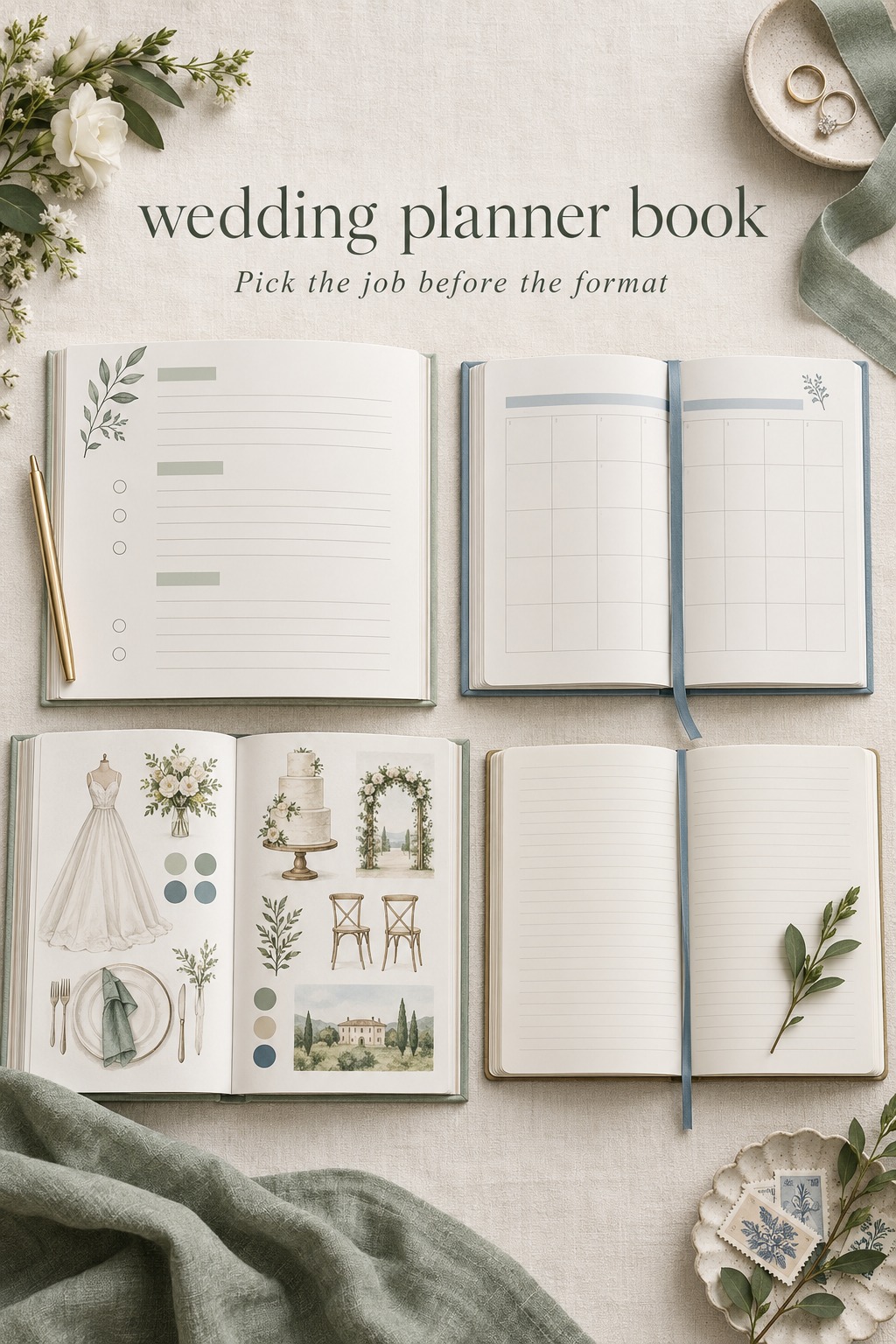
Once you know the main job, compare formats by the work they ask you to do. This quick guide is about the role of each format, not a ranking of specific products.
- Guided workbook: best when questions and structured exercises help you clarify priorities. Check that the questions fit your choices and that you can write in ranges or add your own prompts.
- Undated planner: useful when your timing is uncertain or you want to choose your own pace. Check whether the pages still provide enough guidance to help you get started.
- Dated planner: useful when you like a ready-made schedule and its timeline matches your engagement. Check where the schedule begins, how it handles missed dates, and whether you can move tasks without losing the sequence.
- Reference book: useful when you want explanations or inspiration. Check whether it includes practical exercises if you expect it to help you make decisions.
- Journal: useful when you want room to think, record ideas, or keep a personal account. Check whether you need another tool for deadlines and confirmed details.
- Printable or fillable book: useful when you want to type, print selected pages, or replace a page after a decision changes. Check what software and printing steps the seller requires before you buy.
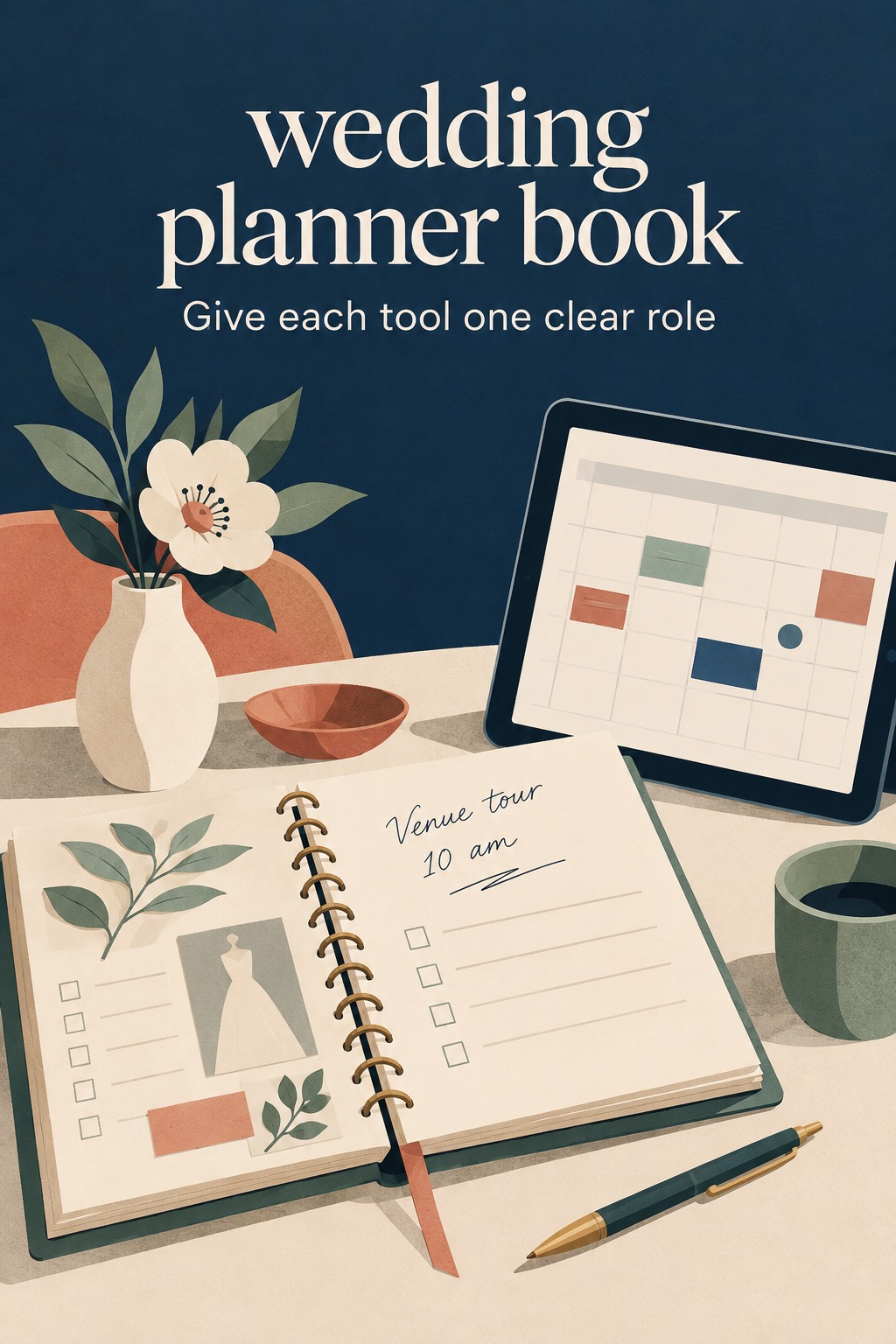
It is fine to choose one primary book and use a small supporting tool for a different job. For example, a guided book can help you think through decisions while your calendar holds appointment times. The aim is to give each tool a clear purpose. If the same deadline, total, and guest count need to be updated in several places, the arrangement may create more work than it removes.
Run a Ten-Minute Sample-Page Test
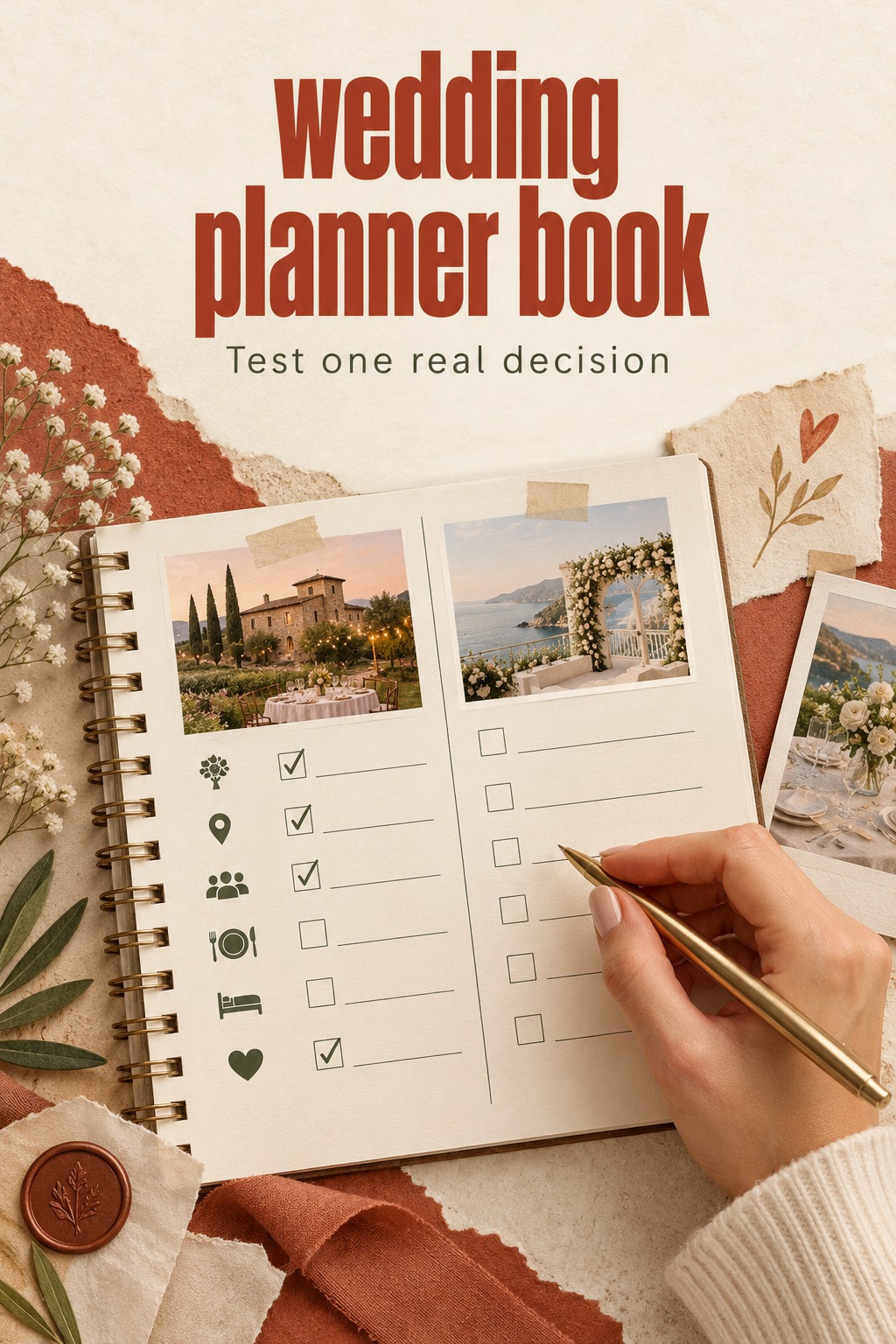
When a product page offers previews, use them. If you can browse a physical copy, flip through it before deciding. Choose one real planning question and follow the book’s pages as if you were using it today. Comparing two venues is a useful example because it involves facts, preferences, unknowns, and a next step. You can use another decision if that is more relevant to where you are.
Test the sequence, not just the page design
Begin at the first page connected to your decision. Can you see what to do first, what information to gather, and what the next page is for? A workbook may have attractive worksheets but leave you unsure how one connects to another. A clear sequence lets you move from a question to a comparison to a decision, without hunting through the book for the next instruction.
Imagine that you are comparing a city venue with a garden venue. The first page should help you identify what matters for your celebration, such as travel, guest comfort, available dates, or the atmosphere you want. The next step should help you collect comparable information. If you cannot tell which facts matter or where to record them, the book may be better as a source of inspiration than as your main working planner.
Check whether the prompts allow honest answers
Can you write a range when you do not know an exact number? Is there room for a note about a condition, such as “available only if transportation works”? Are you allowed to leave an answer open without making the rest of the page unusable? Real planning includes estimates and questions. A book should make those visible instead of pushing you to fill every box with a guess.
For the venue example, the couple might know that they want a comfortable indoor option but still be unsure about the guest count. The book should let them record that uncertainty and identify what would clarify it. If the page only accepts a final guest number and a fixed budget, it may fit better later in planning than it does now.
Measure the writing space with a realistic note
Preview pages can appear roomy on a screen. Think about what you would actually need to write. A vendor conversation might produce a price, a restriction, a question, and a reminder to follow up. A tiny blank line may be enough for a short label, but it will not hold a useful comparison. If you write by hand, consider whether the spaces are comfortable for your normal handwriting and whether the paper feels suitable for your preferred pen.
Also look for room to add context. “Venue B” is not a useful note by itself several months later. A short explanation such as “better guest access, but date is not confirmed” preserves the reason you are still considering it. You do not need pages of prose. You need enough space to understand your own notes when you return to them.
Follow the page through to a next action
After the comparison, what does the book help you do? Can you record a decision, the reason behind it, and the next task? Does the layout leave you with a natural point to pause? If the book gives you a place to list features but no way to mark a follow-up, you may need a calendar reminder or another simple tool. Notice the gap before you purchase so you know what the book will and will not handle.
Use the test on one page for each major job you expect the book to do. If it is a task planner, preview a schedule page. If it is a workbook, try a decision exercise. If it is a journal, check whether the page invites the kind of reflection you want. Ten focused minutes can help you avoid buying a book because one appealing section distracts from the pages you will use most often.
Check the Timeline and Physical Format
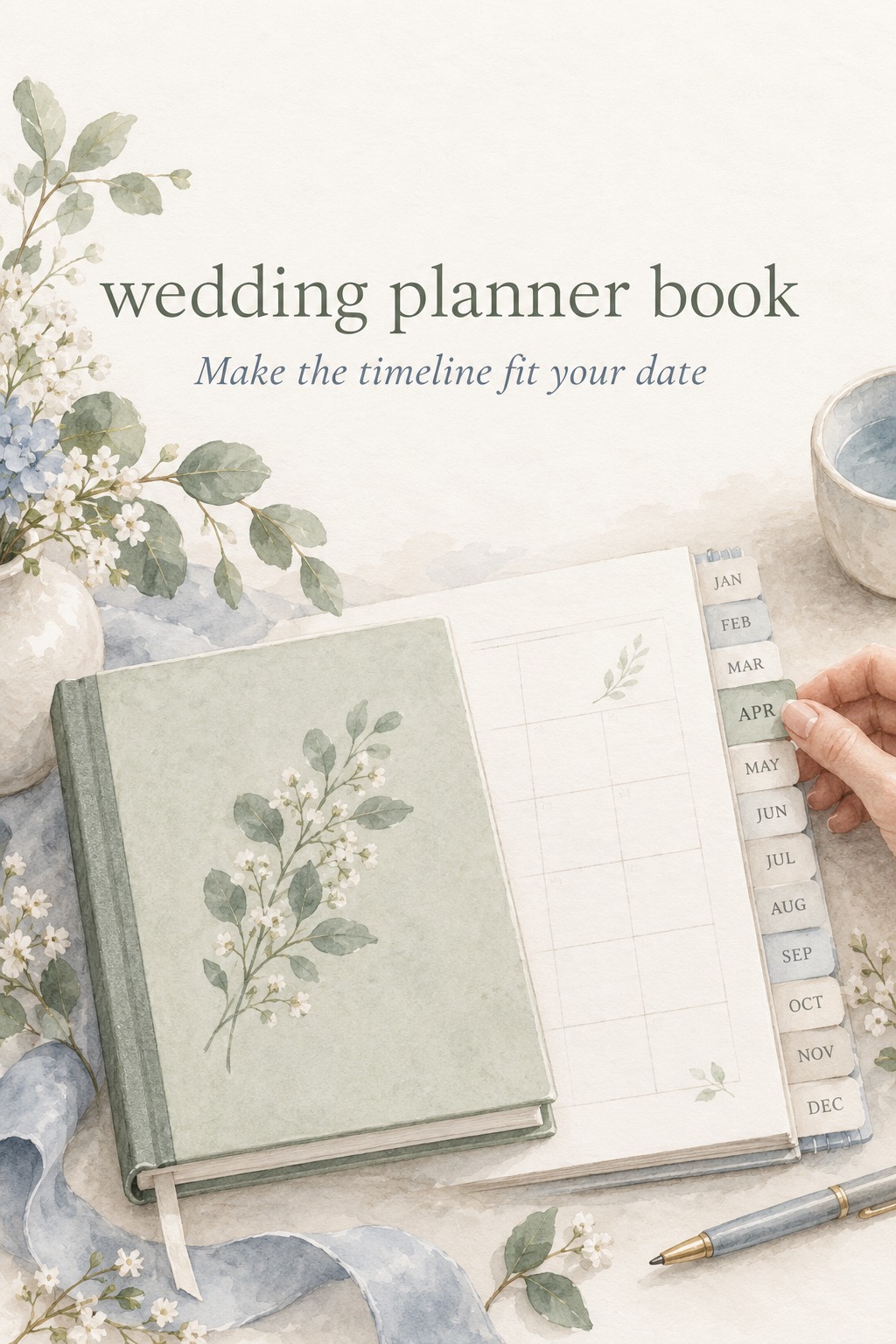
A planner’s format affects when and where you can use it. Check the month or week structure, page size, binding, paper, printability, and whether the pages can be removed or copied. These details are practical, but they only matter in relation to your habits. A large workbook can be comfortable on a desk and cumbersome to carry to an appointment. A compact book can fit in a bag but leave too little room for notes.
- Timeline: Does the book count backward from a fixed date, use calendar months, or let you create your own order? Can you adjust if your engagement is shorter or longer than the printed schedule?
- Writing space: Are the boxes large enough for actual notes, not just one-word answers? Can you add a page or continue a note without losing its context?
- Readability: Are the labels and instructions easy to scan? Do colors, icons, or decorative elements make it easier to find a section, or do they compete with the writing?
- Portability: Will you use it at home, at appointments, or both? Consider whether it can lie open on a table and whether loose papers will stay with it.
- Format: Is it a printed book, a fillable PDF, a printable file, or a combination? Confirm whether typing, printing, or downloading is supported before purchase.
Do not assume a book’s “twelve-month plan” means you must follow each month exactly. Treat a printed schedule as a prompt to ask what decisions come next. If you already have a venue or a photographer, mark those steps as complete and move on. If a task depends on a decision you have not made, write the dependency beside it so you can see why the timing may shift.
For a digital file, check the practical steps as well as the content. Can you save a copy and find it later? Can you print only the pages you want? Are instructions available for completing the file on your device? A fillable PDF may suit a couple who likes typing and selectively printing, while a bound notebook may suit people who want one physical place to write. Each option can work if its everyday use matches yours.
Choose a Book That Can Handle Change
A wedding planner book is used while decisions are still changing. A date may move, a guest estimate may grow, or a venue may not offer the room you expected. Inspect how the book handles a crossed-out answer, a postponed choice, or a new question. If every page assumes a final decision, the book may feel outdated as soon as reality changes.
Look for a simple way to show status. You might mark a choice as researching, waiting, decided, or booked. The exact words do not matter as much as the distinction between an idea and a commitment. If a printed planner has no status field, see whether there is a margin or notes area where you could add one. A flexible page is easier to keep useful than one that makes every entry look equally final.
Try a small change during the sample-page test. Pretend you preferred Venue A but learned that your date is unavailable. Can you cross out the option and record what the new information changed? Can you keep the useful comparison without rewriting the entire section? This helps you see whether the layout supports thinking, or whether it only looks tidy when every plan goes exactly as expected.
Some books include pockets for receipts or business cards, while others use tabs, removable pages, or blank notes. These features are helpful only if they match what you already carry and use. If you will scan contracts and keep them digitally, pockets may matter less than a clear place to write a vendor’s name and the date of a conversation. If you prefer paper at appointments, a folder or pocket may be convenient. Choose based on a real habit rather than on the number of extras listed.
Give the Book One Clear Role Beside Digital Tools
A paper book can be valuable even if you also use a calendar, shared file, or planning service. Decide what belongs in the book and what should live in the current digital record. For instance, you might use the book to reflect on priorities and take notes during an appointment, then transfer a confirmed date or payment deadline to the place you already check. This keeps the book useful without making it a second copy of every detail.
For each kind of information, choose one current home. If you write a venue quote in the book and later update a spreadsheet or app, label the book note as a meeting note rather than the final price record. If you decide to change the date, update the place where you expect to look before making other plans from the old date. A book is easier to trust when it is clear whether an entry is a thought, a question, or a confirmed detail.
Keep this arrangement small. You do not need to build a complex filing system just because you bought a planner. A short note such as “appointment notes, transfer confirmed details to calendar” may be enough. The right book should reduce friction in the way you already plan, not create a weekly chore of copying every line into another tool.
Avoid Common Wedding Planner Book Mismatches
Choosing by cover alone: A cover can make a book pleasant to carry, but it cannot show whether the prompts are useful. Inspect the pages before deciding, especially the sections connected to your main planning job.
Buying a workbook when you want a reference guide: Worksheets ask you to do something. If you want explanations and examples first, choose a guide with enough context to make the exercises meaningful.
Buying a journal when you need reminders: Open writing space can be lovely for reflection, but it may not show what is due. Check whether task tracking is a main goal and use a calendar for deadlines if the book does not support that job.
Assuming more pages mean better support: A large planner may include many categories that do not apply to your event. A smaller book can be a better fit if you can find the useful pages quickly and write enough to make them meaningful.
Ignoring the schedule: A beautiful dated planner can be frustrating if its assumed timeline does not resemble yours. Check how easy it is to skip, move, or relabel tasks before you decide.
Expecting one book to be the only source for everything: If you have a paper book, a calendar, and a shared digital tool, give each one a job. Put the current deadline where you will actually check it and use the book for the work it handles well.
After the sample-page test, write down the two features you need and one feature you can happily skip. That short list will help you compare options without getting pulled toward decorative extras. If no book passes the test, it is reasonable to wait, choose a simpler notebook, or use a printable sample before committing to a larger planner.
Sources and Methodology
This article was informed by a review of ten US search results about wedding planner books, including publisher descriptions, wedding planning publications, and planning resources. The sources show a mix of guided workbooks, timelines, journals, and digital or printable formats. Recommendations here are a practical selection method, not a product endorsement. Check the current listing for the exact format, page previews, and timeline before purchasing.
FAQ
What should I look for in a wedding planner book?
Start with the job you want it to do, such as explain planning, prompt decisions, track tasks, or preserve ideas. Then inspect sample pages for a useful sequence, enough writing space, a timeline that fits, and room to show when a detail is still uncertain.
Is a wedding planner book worth buying?
It can be worth buying if the pages help you think or keep information in a way you will actually use. A book is less useful when it duplicates a tool you already maintain or includes prompts that do not fit your planning stage. Previewing pages before you buy can help you judge the difference.
What is the difference between a wedding planner book and a journal?
A planner book often includes instructions, worksheets, timelines, or task pages. A journal usually gives you open space to record thoughts, ideas, and memories. Some books combine both. Check the sample pages to see whether the format supports the practical job you need.
Should I choose a dated or undated wedding planner?
A dated planner can help when its schedule matches your engagement and you like a ready-made pace. An undated planner gives you more control over when to begin and how quickly to move. Check whether either format lets you adjust if a decision takes longer than expected.
How can I tell if a wedding planner book has enough writing space?
Use a sample page and imagine a real note, not just a label. A venue conversation may need a price, a restriction, an open question, and a next action. If the page cannot hold that information clearly, see whether it provides a notes area or a way to add a page.
Can I use a wedding planner book with a digital planning tool?
Yes. Give the book a distinct purpose, such as appointment notes or guided exercises, and keep confirmed dates or current totals in the digital tool you already check. This reduces the chance that you will maintain two conflicting versions of the same detail.
What if the wedding planner book I bought does not fit my wedding?
Use the pages that are useful and mark prompts that do not apply as skipped. Add a short note or removable page where you need more room. Keep the book’s role narrow, and move time-sensitive confirmed information to the place you use as your current record.
Leave a Reply