
A first meeting with a wedding planner can feel like an audition. You might wonder whether to arrive with a color palette, a full guest list, a finished budget, and answers to every question. You do not need a finished wedding to have a useful conversation. You need a clear picture of what you know, what is still open, and what matters enough to protect.
That small distinction changes the meeting. Instead of trying to impress a planner with a polished vision, you can show the real starting point and see how the planner helps you think. A one-page brief, a few meaningful references, and a short set of questions are usually more useful than a large folder of ideas.
The First Meeting Works Better as a Shared Working Session
A consultation has two purposes. The planner learns enough about the event to understand the scope and respond thoughtfully. You learn enough about the planner’s communication, process, and way of thinking to decide whether a working relationship could fit. It is a conversation between people considering a partnership, not a test you pass by knowing wedding vocabulary.
Compare two ways to prepare:
- Bring a finished-looking pitch: many images, a fixed style label, and decisions presented as final even when you are unsure. The planner may respond to the surface details while missing the experience or constraint underneath them.
- Bring an honest starting brief: the things you know, the questions you want help with, and the details that cannot change. The planner can respond to the actual planning problem and identify what should happen next.
The second approach is helpful whether you are meeting a full-service planner, someone offering partial support, or a coordinator for a later stage. The exact services vary, so the aim is not to decide in advance what the planner should do. It is to explain your situation clearly enough that both sides can discuss fit and scope.
For example, “We want a relaxed celebration” gives a broad feeling, but it does not show what you are choosing between. “We want guests to have time to talk, and we are deciding between a seated dinner and a more flexible meal” gives the planner something concrete to explore. A good starting brief turns a preference into a decision without pretending the answer is settled.
Both partners should have a voice in the conversation when possible. That does not require complete agreement on every detail. It does help the planner hear the different priorities directly, notice where they overlap, and ask useful follow-up questions before a proposal is shaped around only one person’s assumptions.
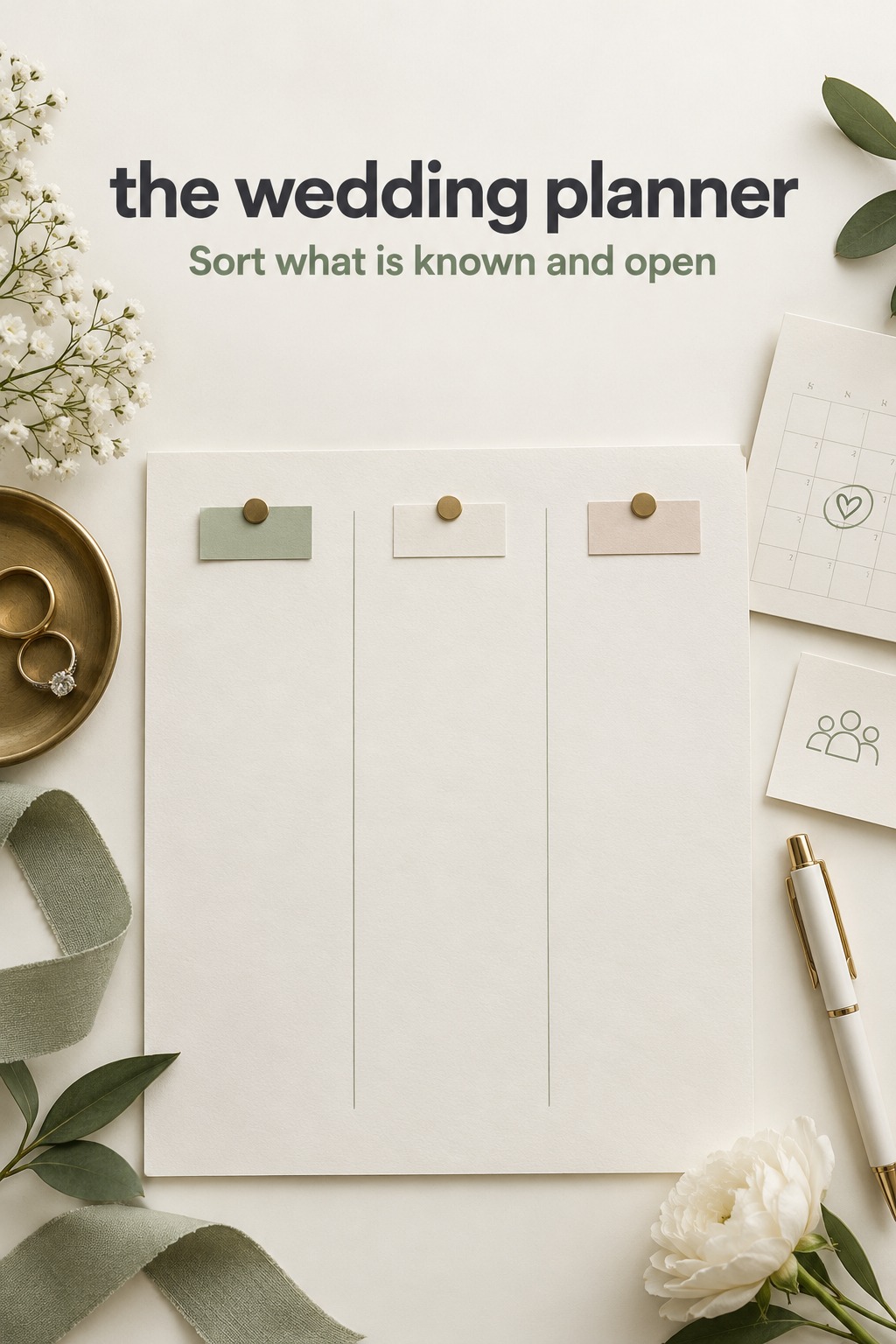
Build a One-Page Brief With Three Lanes
Before the consultation, open one shared note or sheet and divide it into three headings: known, open, and fixed. Keep it to one page if you can. The goal is not to document the entire wedding. It is to help the planner see the decisions that matter now and the information that may affect a recommendation.
Known: what is true today?
List the date or date range, approximate guest-count range, location or venue status, estimated budget comfort range, and any vendors already booked. Add a short note about what has already been paid or promised if that affects the next steps. Use ranges when the exact number is not known. “About 80 to 100 guests” is more honest than an exact count that is still changing.
Label the status of each item. “Venue booked” is different from “venue on hold,” and “photographer selected” is different from “we like their work.” These small labels help a planner avoid treating research as a commitment or revisiting a decision you have already made.
Budget language deserves the same care. If you have a range, share the range and clarify what it includes. If you have not agreed on a number, write that down. The first meeting can help you understand which planning questions depend on the budget, but neither partner should feel pressured to invent certainty just to keep the conversation moving.
Open: where would help be valuable?
Write down the decisions you are not ready to make. Perhaps the ceremony location is undecided, you are unsure whether to host a welcome gathering, or you are not sure how much planning support you need. Add one sentence about what makes each question difficult. It could depend on venue availability, family input, cost, travel, or simply not knowing the options.
Choose two or three open questions for the meeting. An exhaustive question list can turn the hour into a quiz and leave little room for the planner to understand your priorities. A short list lets you see how the planner reasons through your actual choices. You can always ask for clarification about an answer or request more details in a follow-up.
Fixed: what should the plan protect?
Use this section for non-negotiables and real constraints. These might include a cultural or religious element, an accessibility need, a family member who must be included, a date that cannot move, a booked venue, or a spending boundary. Separate a true requirement from a strong preference. The planner can help you explore alternatives only if they know which details have flexibility.
Give each fixed item a plain explanation. “We need an indoor backup” is more useful when you add that the ceremony is planned outdoors and a key guest has limited mobility. Share only personal information that is relevant to the planning decision, and ask how sensitive details will be handled if you are unsure.
The three lanes also make differences between partners easier to discuss. One person may care most about a small guest experience, while the other is focused on keeping the date flexible. Put both priorities on the page without forcing a quick ranking. Ask the planner to help you understand the trade-offs before you decide which one leads.
If you already use The Wedding Command Center to organize wedding decisions, the brief can serve as a concise conversation starting point. A simple shared note works just as well. Keep this page focused on the consultation rather than copying every detail from your planning space.
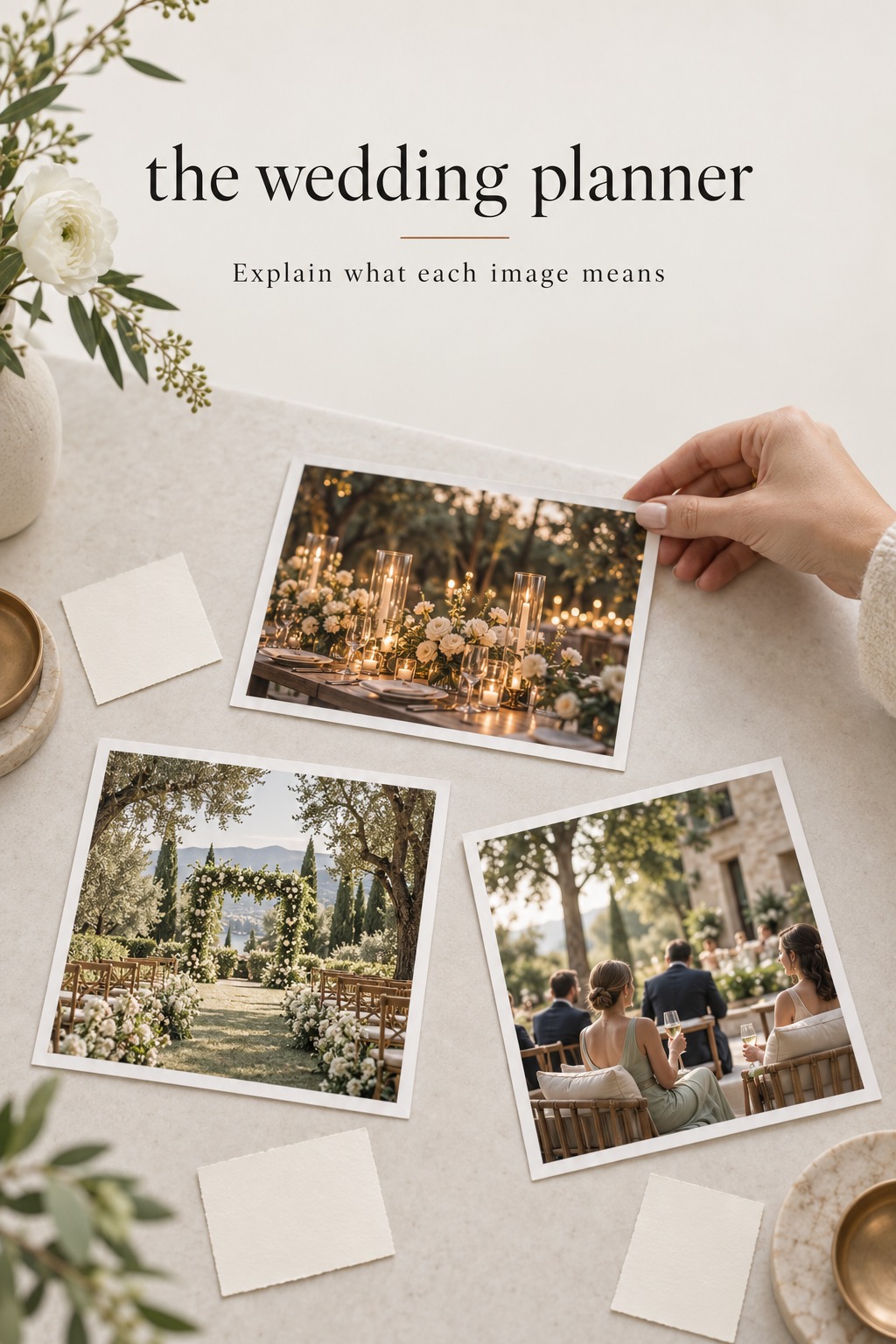
Bring Inspiration That Explains, Not Decides
Visual references can help a planner understand the mood you are describing, but a large image board can be difficult to interpret. Select a few examples that show different things you care about, such as the room feeling, guest experience, floral shape, or level of formality. Add one short note under each image: what appeals to you and what you would change.
Try prompts like these:
- “We like the long-table conversation and candlelight, but we would prefer a brighter room.”
- “We saved this ceremony because it feels personal, not because we need the same flowers.”
- “We like how the schedule leaves room to talk, but the event itself can be more formal.”
- “We dislike a crowded transition between ceremony and dinner, so guest movement matters to us.”
This makes inspiration easier to discuss as information rather than instruction. Two photographs can look similar and support different priorities. One may be about the way guests are seated. Another may be about the color, lighting, or pace. Naming the part that matters gives the planner room to suggest an option that fits your venue, budget, and guest needs.
You do not need to settle a visual direction before the first meeting. You can bring a handful of saved references, a few words about the atmosphere you want, or no images at all. The key is to separate what you are drawn to from what you have already chosen. If an image is a fixed commitment because you have booked a designer or florist, identify that separately.
Existing decisions belong in the known lane. If you have already booked a venue, list it and note what is included or still under discussion. If a photographer or caterer is confirmed, include their name and the service you have contracted. That context helps a planner respond to the actual team and avoids treating an existing agreement as an open suggestion.
Many standard consultation guides recommend sharing broad event details and asking questions. The planner-meeting guidance from The Knot also encourages couples to attend together and be ready to discuss their general budget, guest count, location, and style. Use your brief to gather those details into a shared starting point instead of memorizing a long list.
Use the Consultation to Test Understanding and Working Fit
A planner consultation is not only a chance to present information. It is also a chance to notice how the conversation works. Does the planner ask follow-up questions about your priorities? Can they explain their process in plain language? Do they distinguish what they know from what they would need to confirm? Do both of you have room to speak?
There is no single correct consultation style. Some planners may begin with your event details. Others may first explain how they work or ask what brought you to the meeting. Keep the purpose in view: you are trying to understand whether the planner heard you and whether their proposed next step fits your needs.
Use the one-page brief as a loose agenda:
- Start with the known facts. Give the planner enough context about date, guest range, location, budget, and existing commitments.
- Describe the experience you want. Use your own words and a few references, not a borrowed style label you do not understand.
- Share the open questions. Explain where you would value guidance and what decision depends on the answer.
- Name the fixed requirements. Make constraints visible early so the discussion stays realistic.
- Ask about the working process. Clarify communication channels, update rhythm, how decisions are recorded, and what the next step would be if you move forward.
When a planner offers an idea, ask what need it is responding to. This is especially helpful if the idea surprises you. It may address a logistical issue you had not considered, or it may simply be a suggestion to explore. You can say, “Can you explain which part of our brief led you to that recommendation?” The answer helps you understand both the idea and the planner’s way of thinking.
You can also notice whether the conversation changes when both partners contribute. A planner does not need to agree with every preference to be a good fit. They should be able to reflect what they heard, explain their professional reasoning, and make space for the couple’s priorities. If one partner feels talked over, raise that before assuming it will resolve later.
Communication expectations belong in the conversation too. Ask which channel is used for everyday questions, how urgent issues are handled, when you can generally expect a reply, and where final decisions are recorded. A wedding may involve several people, but you should understand how your planner intends to keep the main conversation clear and manageable.
The consultation should not require you to decide on the spot. If you need time to compare proposals, discuss the options privately, or read the written terms, say so. A useful conversation can end with a clear proposal date or a list of information needed from you, rather than an immediate yes.
For a real example of a consultation flow, Dantus & Co. Events recommends that both partners attend, share starting details such as date, guest count, venue, and budget, ask about the planner’s process, and agree on next steps. The specifics will vary by planner, but leaving with an understood next action is useful across different meeting formats.
Close the Meeting With a Written Next-Step Recap
Before the call or meeting ends, summarize what you think you heard. This can take two minutes. Name the main needs, the questions that remain open, and the next thing each side will do. Ask the planner whether they understood the brief correctly and whether anything important is missing.
After the meeting, send a short recap with five points:
- Understood: the event facts and priorities the planner repeated back.
- Still open: the decisions that need more information or a conversation between partners.
- Proposal: what services and timing the planner will put in writing, if that is the agreed next step.
- Owner: who will provide each missing item or answer.
- Decision point: when you expect to review the proposal or reconnect.
Keep the recap factual and short. It is not a contract and should not be treated as a replacement for the planner’s written agreement. Its job is to show whether you and the planner left with the same understanding. If an important point is missing or phrased differently from what you meant, correct it before you review a proposal.
When the proposal arrives, compare it with the brief and your notes. Check the services, meeting cadence, communication expectations, payment schedule, and any limits or exclusions. Ask the planner to clarify language you do not understand. If the proposal does not match the priorities discussed, request an explanation before signing or paying.
The eventual contract should state the scope and other terms in writing. A consultation recap is useful because it makes your questions easier to ask, but it does not guarantee what a contract will say. Take time to review the agreement and confirm that the actual terms reflect what you want to hire.
If you decide not to move forward, close the conversation politely. You can thank the planner, explain that you chose another direction, or let them know that you need more time. If you want to continue, ask what information they need and when the date or service will be confirmed. Clear next steps are kinder than leaving either side to guess.
Adapt the Brief to the Stage You Are At
Different couples arrive at a first meeting with different amounts of planning already done. The brief should reflect your actual stage. Do not add work merely to make it look complete.
If you have not chosen a venue
List the locations or venue types you are considering, how flexible the date is, and what you know about the guest range. Add the parts you are unsure how to compare, such as access, guest experience, or how one venue choice affects the rest of the plan. You do not need to bring a final layout or a complete vendor list.
If you have already booked several vendors
Share a concise list of who is booked, what they are providing, and which details remain open. Bring contract or proposal information only when it is relevant to the question. A planner needs enough context to understand commitments and gaps, not a full archive of every email you have received.
If you and your partner are not aligned yet
Write each partner’s top two priorities separately. Mark the overlap and the disagreement without labeling one person unreasonable. If you know the reason behind a preference, note it in a few words. The planner may help you understand the options, but the meeting should not force a private decision before you are ready.
If the event includes several days or locations
List each gathering, its likely location, and the people you expect to attend. Mark what is fixed and what may change. This helps the planner see that the consultation covers a connected set of events, while keeping the brief short enough to discuss the broad shape before each detail is planned.
In every case, the brief is a starting snapshot. You can update it after you learn more. The first meeting is successful if you understand one another better and know what information or decision comes next, even if the wedding itself still has many open questions.
Avoid Preparation That Makes the Conversation Less Useful
Do not build a full design plan before you know the constraints. Inspiration can help explain a feeling, but a finished set of choices may cause the conversation to skip venue, budget, schedule, or guest needs. Keep early preferences open to revision unless you have already committed to them.
Do not substitute an exact number for an honest range. If the guest list is a rough estimate, say so. If your budget has a firm ceiling or includes only certain expenses, explain that. The planner can respond more accurately when uncertainty is visible.
Do not bring every image you have saved. A large board can make it difficult to know which details matter. Pick the few examples that explain your priorities and annotate them. Save the longer collection for later if the planner asks for it.
Do not turn the meeting into a long interrogation. Ask questions connected to your situation and leave room for the planner to ask about you. A question list can help you remember the essentials, but the conversation should still respond to what you learn together.
Do not assume silence means agreement. If a recommendation is unclear or one partner feels uncertain, say so before the meeting closes. You can ask for time, request a written explanation, or identify the question that needs to be answered next.
The best preparation is small enough that you can review it together and flexible enough to change. A page with clear facts, open questions, and fixed needs gives the wedding planner a stronger starting point than a perfect presentation. It also lets you leave the first meeting with a shared sense of what happens next.
Sources and Methodology
This article was informed by a review of ten US search results about wedding planner consultations, including planner guidance, wedding industry resources, and contract information. Recommendations are framed as preparation ideas rather than universal rules because consultation formats and services vary by planner. Review the planner’s own written scope and agreement before deciding what to hire.
FAQ
What should we bring to a first meeting with the wedding planner?
Bring a short shared brief with your date or date range, approximate guest count, venue status, budget comfort range, booked vendors, priorities, open questions, and non-negotiables. A few visual references with notes can help, but you do not need a finished design or an exact guest list.
Should both partners attend the first wedding planner consultation?
When possible, yes. Both partners can explain what matters to them and hear the same information directly. If one person cannot attend, agree in advance on the priorities and questions to bring, then share the written recap before making a decision.
Do we need a firm wedding budget before meeting a planner?
No. A realistic range or a clear statement that the budget is still being discussed is more useful than a number you do not believe. Explain what you expect the budget to cover and which costs are already committed, if you know.
Do we need to have our wedding style decided?
No. Bring a few words about how you want the celebration to feel, along with a small number of images if they help. Describe what you like about each reference rather than treating the image as a complete design instruction.
What questions should we ask the wedding planner?
Prioritize questions about services, communication, decision-making, proposal timing, and what the planner needs from you next. Add questions that relate to your open items, such as an existing venue or a multi-day event. Ask for written clarification when an answer affects the scope or fee.
Should we sign a contract at the first meeting?
You do not need to decide during the consultation unless you already have the written terms and feel ready. Take time to review the services, dates, payment schedule, cancellation terms, and responsibilities in the contract. Ask about anything that differs from what you discussed before signing.
What should happen after the first consultation?
Send or review a brief recap of what was understood, what remains open, who owns each next action, and when you will reconnect. If the planner is preparing a proposal, compare it with your priorities and clarify its scope before you accept.
Leave a Reply