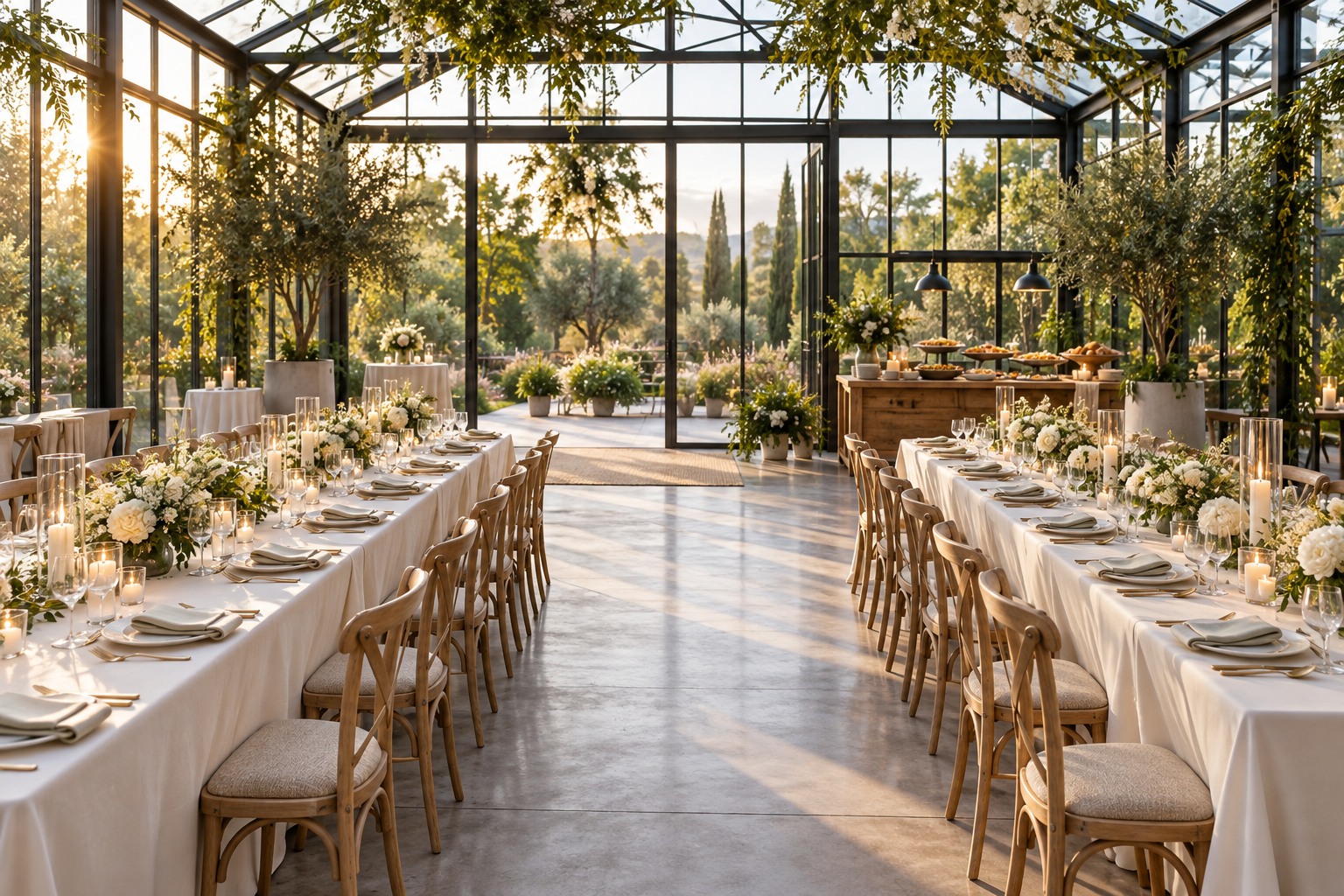
Wedding reception planning works best when you choose how guests will eat, sit, and move before filling in the evening’s schedule. A plated dinner, a buffet, and a reception built around food stations can all create a welcoming celebration. They ask different things of your room, catering team, seating plan, and microphone announcements.
Start with the experience you want: a shared dinner with everyone seated, a relaxed meal with choices, or an evening of circulating and conversation. Then compare the practical requirements below. You will finish with a reception format, a sequence your vendors can review, and clear instructions for the moments when guests move from one activity to the next.
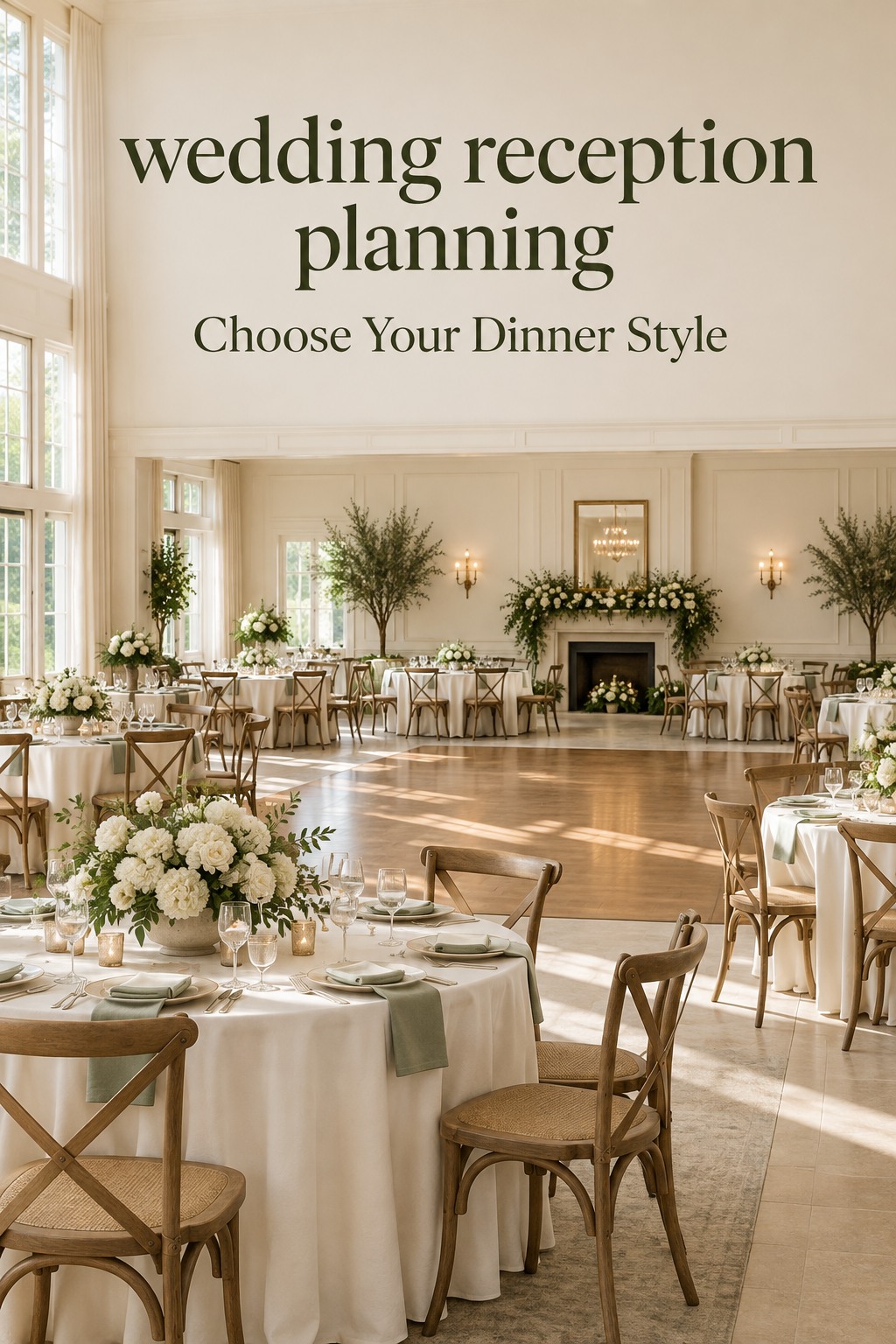
Choose the reception format before building the schedule
Before requesting detailed proposals, write down your estimated attendance, reception spending limit, available event hours, and three priorities. Keep those priorities specific to the party. You might want a substantial meal, time to talk with relatives, and a long uninterrupted dance set. Those choices give your planner a stronger brief than a general request for an elegant evening.
Ask the venue which service formats work in the room you are actually booking. A photograph of an empty ballroom cannot show what happens after tables, a bar, food stations, and entertainment equipment are installed. Request a proposed layout with your guest count and meal style represented together. Keep an attractive option provisional until that combination works.
Plated dinner: choose it for a shared seated experience
A plated reception centers the meal at assigned tables, with the catering team bringing food to guests. Consider it when conversation over dinner and a clearly defined meal period matter to you. Ask how the team collects entree choices, identifies each guest’s selection, and handles any meal that requires separate preparation.
The planning trade-off is precision. Guest names, table assignments, meal totals, and the catering list need to agree. If someone changes tables, a server may need updated information. Establish a discreet way for the service team to find the correct guest instead of making meal identification an announcement across the room. A beautiful place card should also be useful to the people serving dinner.
Buffet: choose it for choice with an organized return to tables
A buffet lets guests select food at a shared service point before returning to their seats. Consider it when offering choices is a priority and the room can accommodate the service area and a queue. Ask the caterer to explain how guests will be released, how the line will be replenished, and how anyone who needs assistance will receive a meal.
The trade-off is guest movement. The buffet must work while chairs are occupied and people carry plates back to tables. Do not assume that placing food along an empty wall solves the layout. Test where the line begins, where it ends, and whether it crosses the bar or the route from the kitchen. A buffet still needs a seating plan for the meal you are hosting.
Food stations: choose them for a more fluid reception
Food stations distribute service around several points in the room. They can suit a reception focused on mingling, but first clarify what the food actually provides. A few passed appetizers and a full dinner served from stations are different offers. Your invitation or wedding website should describe the meal accurately so guests know what to expect.
The trade-off is coordinating several activities at once. Ask whether stations open together, how popular items are replenished, and where used plates go. Provide suitable places to sit and eat rather than treating standing tables as a complete seating plan. If you want speeches, decide how to gather everyone’s attention while food service is active. The room will need a deliberate transition into that shared moment.
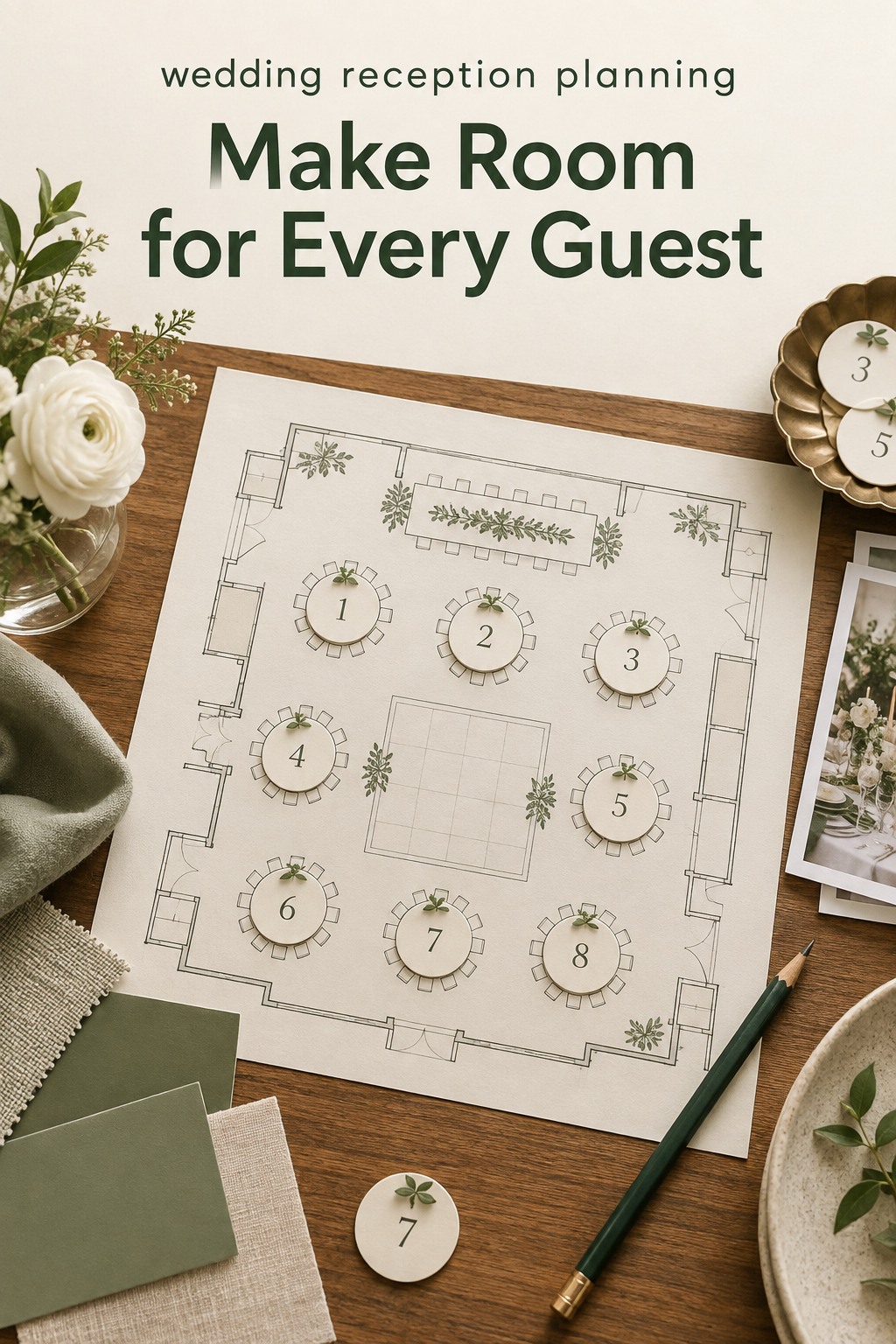
Compare the room, food, and staffing requirements
Compare proposals against the same event brief. A menu price alone does not tell you which reception offers better value for your celebration. Ask each provider to identify food, staffing, equipment, rentals, delivery, setup, clearing, and removal in its proposal. Have the provider clarify any additional charges before you treat two totals as equivalent.
Avoid assuming that one format is always less expensive or faster. Instead, request comparable proposals for your attendance and service window. Ask what changes if attendance rises, if dinner moves later, or if the room requires a different layout. These questions produce information about your actual event without relying on national averages that may not fit it.
Use the same questions for all three formats
- Seating: Where can every guest comfortably eat, and which seats or tables are assigned?
- Service: Who serves, replenishes, clears, and assists guests throughout the meal?
- Movement: Where do guests queue, and where do staff carry food and used dishes?
- Meal information: How are individual selections and dietary requests communicated to the right team member?
- Timing: What must be ready before service begins, and when can the next activity safely start?
- Equipment: Which tables, linens, dishes, glassware, service pieces, and preparation facilities are included?
Give the catering lead the information guests have supplied about their meals and ask that team to confirm what it can provide. Do not promise a particular accommodation based on a menu label alone. Decide who will speak privately with the guest if clarification is needed. The final guest list should record the agreed arrangement without scattering sensitive details across decorative seating displays.
Food and hospitality belong in the same conversation. Hampshire House’s reception advice connects prompt food and drink service with guest comfort and recommends discussing dietary needs with the catering team. Apply that principle by asking what guests can eat or drink when they first arrive, including those who do not want alcohol.
Walk three routes through the proposed room
First, follow a guest from the entrance to the seating display and then to a table. The display should be readable without requiring a crowd to block the doorway. Check whether table identifiers are visible from the direction people approach. Include a place for someone to pause while a companion looks up their assignment.
Second, trace the food route. For plated service, ask the catering lead to review access between preparation space and guest tables. For a buffet, trace a person holding a plate from the queue back to a chair. For stations, look at the movement between the most appealing food points. Ask the venue to approve the layout and required clearances; do not use a decorative sketch as a capacity assessment.
Third, follow the route to the bar, restrooms, and exit. Keep those paths usable when the dance floor is active. Place optional attractions only after the essential routes work. A guest book, dessert display, or photo backdrop should earn its location by serving guests without obstructing the rest of the evening.
Review the tables at their actual planned size. Family-style serving platters, if you choose that variation, compete with flowers, candles, glassware, and personal items for space. Ask for a sample place setting or tabletop mockup before approving the centerpiece design. This small review can resolve a conflict that would be difficult to fix after rentals arrive.
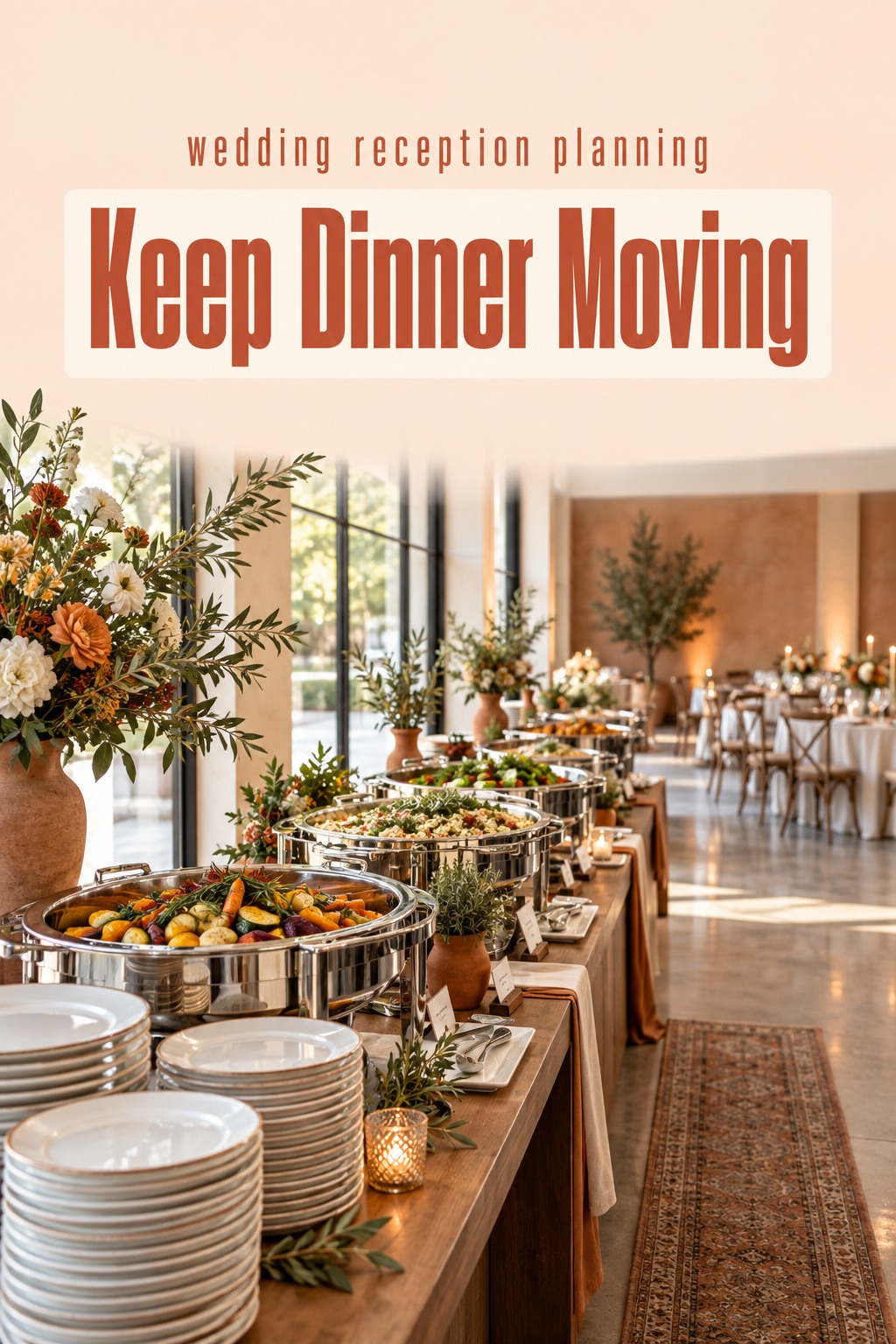
Build a reception sequence that fits your meal service
Create the schedule with the venue, catering lead, and entertainment provider. Add the photographer to decisions about moments you want documented. Start with the agreed arrival time, meal window, entertainment finish, and venue departure requirements. Then decide which optional events deserve a place between them. A grand entrance, cake announcement, or formal dance belongs on the plan because you want it there.
Write each important moment with both a target time and a readiness condition. For example, seating can begin when tables are complete and the venue releases the room. Dinner can begin when guests are ready and the catering lead gives the service cue. The clock remains useful, but an announcement should not send people toward an unfinished room.
An illustrative evening reception
The following is a planning example, not a standard duration or a promise about catering speed. It assumes one venue, a 5:00 p.m. reception arrival, dinner at 6:15 p.m., and a 10:00 p.m. guest departure. Ask your own team to replace these times with workable estimates before using it.
- 5:00 p.m., welcome drinks and food: The arrival area, refreshments, and guest directions are ready before guests enter.
- 5:45 p.m., move toward dinner: The coordinator checks the dining room before the emcee invites guests to find their places.
- 6:00 p.m., welcome and optional entrance: The couple and anyone being introduced are present, and the microphone is ready.
- 6:15 p.m., meal service: The catering lead authorizes service or the release of tables to the buffet.
- 7:15 p.m., selected toasts: The team confirms that the room can give attention and that food service will not conflict.
- 7:35 p.m., optional special dances and open dancing: The entertainment lead receives the agreed cue.
- 8:30 p.m., dessert available: The serving team, utensils, plates, and any desired photographs are accounted for.
- 9:45 p.m., final music and departure guidance: Guests receive practical information about their exit and transport.
- 10:00 p.m., guests depart: The named team handles belongings and removal within the separately agreed access window.
Adjust the sequence for the service you chose
With a plated meal, discuss toast placement around the catering team’s service sequence. Do not schedule a speech merely because a template places it between courses. Ask when servers need to move, when the kitchen needs an uninterrupted service period, and where the microphone can be heard. Share the speakers’ names and the length you have agreed with them.
With a buffet, make the release order explicit. The emcee should know whether the catering lead or coordinator directs that order, and guests should know when it is their turn. Before starting speeches, confirm that the final tables have had an opportunity to receive food. Looking at the couple’s table alone will not reveal whether the entire room is ready.
With stations, decide whether there will be a short coordinated pause for remarks or a different arrangement agreed with the team. Do not surprise station staff with an announcement that changes their service plan. If uninterrupted conversation is the main priority, you can choose a brief welcome and leave out additional formalities. Fewer scheduled events can be a considered choice.
The transitions deserve their own notes. The Butterfly Pavilion’s guidance on reception flow highlights pathways, guest directions, and coordinated cues between activities. Translate those ideas into a named person who checks the next area and a named person who invites guests to move. Those are separate jobs, even when one person handles both.
Test the plan with realistic reception scenarios
Use a short planning conversation to test the format against your guest count and room. The examples below are hypothetical. They show which questions to bring to your vendors, rather than suggesting that a particular number of guests requires one kind of meal. Your room, staffing, and priorities determine the answer.
A 45-guest reception centered on conversation
Imagine a couple who want dinner to feel like hosting their closest people at a restaurant. A plated meal is one option to compare because it allows everyone to stay at the table during service. A buffet could also work if the room has a suitable route and the couple enjoy a more casual pattern of movement.
Ask for both layouts before deciding. If a buffet removes a comfortable table or puts the queue beside the only doorway, the food choices may not justify the compromise. If plated service requires a menu-selection process the couple dislike, ask whether the caterer offers another workable approach. Choose using the real proposal, not an assumption about what a small wedding should look like.
A 120-guest reception with a buffet and dancing
Here the couple want menu variety and a substantial dance period. Ask the catering lead to show how the buffet will serve this attendance and how long the team expects the process to take. Discuss whether more than one service point is workable, what staffing it requires, and how replenishment will happen. Do not add another station to the floor plan without that discussion.
Then test the transition into dancing. Can the buffet remain open without drawing a line across the dance floor? Where will guests put plates when they leave the tables? Who tells the DJ that the final tables have been served? These questions connect the meal to the party and expose missing work before the evening begins.
A room flip or a late dinner
If the ceremony and dinner use the same room, ask who clears the first layout, who installs the second, and who approves the finished space. Confirm where guests wait and what service is available there. Do not assume that the people decorating the ceremony are also contracted to move chairs, set tables, and relocate flowers.
If dinner runs late, have the coordinator speak with the catering lead before moving speeches or extending cocktails. Establish what is actually ready and what the revised service time means for the rest of the evening. The couple can decide in advance which optional activity may be shortened or omitted. That gives the coordinator a practical choice without asking the couple to redesign the reception during the party.
Protect the confirmed venue finish time while reviewing the delay. A later dinner does not automatically create extra venue access, entertainment coverage, or transport availability. Check those arrangements with the providers instead of pushing every later item back by the same amount. The best recovery may be a simpler program with the meal and guest departure kept clear.
Finish with a reception handoff that names every owner
Prepare a concise reception document showing the approved floor plan, guest and meal totals, vendor contacts, service sequence, and cue responsibilities. Give it a version date. Ask each provider to confirm the details relevant to their work, including anything still unresolved. An emailed document is useful only when the people carrying out the plan understand their parts.
Separate the guest-facing schedule from the working instructions. Guests need to know where to arrive and what the evening includes. The service team needs arrival access, equipment positions, meal information, cue ownership, and removal arrangements. Keeping those purposes distinct makes both versions easier to use without maintaining contradictory times.
Reconcile the guest count before the final deadline
Compare the seating plan with the catering count and any individual meal selections. Account for children, vendors, and anyone with a different meal arrangement according to your provider’s categories. Ask how late changes should be reported. If a guest moves tables after the final list is issued, make sure the person responsible for service receives the correction.
Check the physical items against the plan as well. Table numbers should match the seating display; place cards should match the final list; the dessert station should have its agreed service pieces. Treat this as a practical reconciliation, not another round of design decisions. A coordinated set of ordinary details is more useful than an additional decorative item with no owner.
Assign the moments that are easy to overlook
- Room release: Who confirms that tables, lighting, and guest routes are ready?
- Meal cue: Who authorizes service, and who communicates with the emcee?
- Microphone handoff: Who finds each speaker and returns the microphone afterward?
- Dessert service: Who cuts, portions, serves, and clears, whether or not there is a formal announcement?
- Belongings: Who collects gifts, personal decorations, and items the couple want returned?
- Departure and removal: Who guides guests out, checks the room, and handles each rental pickup?
Confirm these responsibilities in the providers’ agreed scopes. A venue contact, planner, catering captain, and DJ may each handle different parts of the reception. Ask directly where one person’s responsibility ends and another person’s begins. If a friend volunteers to take personal items home, confirm the items, vehicle space, and collection time rather than leaving them with an undefined cleanup role.
If you are considering The Wedding Command Center as your planning resource, use this reception brief to assess whether it suits the way you want to organize your work. Keep the practical questions in view: can you find the latest decisions, and can the right people get the instructions they need? Whatever resource you choose, the vendors still need to confirm the operational details themselves.
Sources and methodology
This guide compares reception service choices and guest transitions using venue-authored advice, planning publications, and an HGTV reception segment. The two linked venue guides support the discussion of hospitality and event flow. The comparison questions, hypothetical scenarios, and sample schedule are editorial planning examples, not reports of weddings we organized. Confirm costs, timing, capacity, and service arrangements with your own providers.
FAQ
What should we decide first when planning a wedding reception?
Agree on attendance, spending limit, available hours, and the experience you want guests to have. Then compare the venue and meal format together. Choosing food service before finalizing the room layout helps you identify seating, equipment, staffing, and movement requirements while there is still time to adjust them.
Is a buffet better than a plated wedding dinner?
Neither is the better choice for every reception. A plated dinner keeps guests seated for service, while a buffet lets them choose food at a shared point. Compare the complete proposals and proposed layouts. Pay particular attention to meal tracking for plated service and queue management for a buffet.
Does a cocktail-style reception need seats for guests?
Plan suitable seating and eating surfaces for the people you invite. Describe the food offering clearly, and discuss the layout with the venue and caterer. A reception designed for mingling should still give guests comfortable ways to eat and rest; a collection of standing tables may not meet those needs.
Should wedding speeches happen before or after dinner?
Choose a point that works with your catering sequence and the attention you want guests to give the speakers. Confirm it with the service team. Avoid beginning a speech while some tables are still being called to the buffet or while a planned course requires active service across the room.
How do we prevent a buffet line from disrupting the reception?
Have the caterer and venue review the queue and return routes on the actual floor plan. Agree on table release, replenishment, assistance, and clearing. Keep the emcee informed about who gives the service cue. Confirm the proposed arrangement for your guest count rather than assuming that an extra table will solve congestion.
Who should manage the wedding reception timeline?
Choose a coordinator or designated lead whose agreed responsibilities include managing the sequence. That person needs current instructions and direct contact with the venue, caterer, and entertainment team. Make clear who checks readiness and who makes announcements, so the couple are not the default contact for every transition.
Can we skip a grand entrance or formal cake cutting?
Yes, if those moments do not suit the celebration you want. Tell the emcee, photographer, and catering team what will happen instead. Skipping a public cake-cutting moment still requires a plan for dessert preparation and service. Remove the ceremony around an activity without accidentally removing the work that guests depend on.
Leave a Reply