
Wedding planning is more flexible and more digital than it used to be, but the decisions that keep a celebration manageable are still familiar. Couples need a realistic guest count before comparing venues, a working budget before signing contracts, and a clear way to hand information to trusted people. A checklist should therefore show relationships between decisions, not simply collect every possible task.
Use this comprehensive wedding planning checklist as a living plan. Give every task a time range, an owner, a dependency, and proof of completion. A due date tells you when to act, an owner prevents silent assumptions, a dependency explains what must happen first, and proof might be a contract, receipt, confirmation, approved proof, or final decision.

Modern planning tools can make collaboration easier, but more tools do not automatically create more calm. Keep one shared source of truth for budget, guests, vendors, payments, documents, and decisions. The Wedding Command Center can be a useful planning resource when couples need a central place to keep progress visible. Use it to support conversations, not to create another complicated project.
Foundation decisions: budget, guest count, date, and priorities
Set a working budget before you fall in love with details
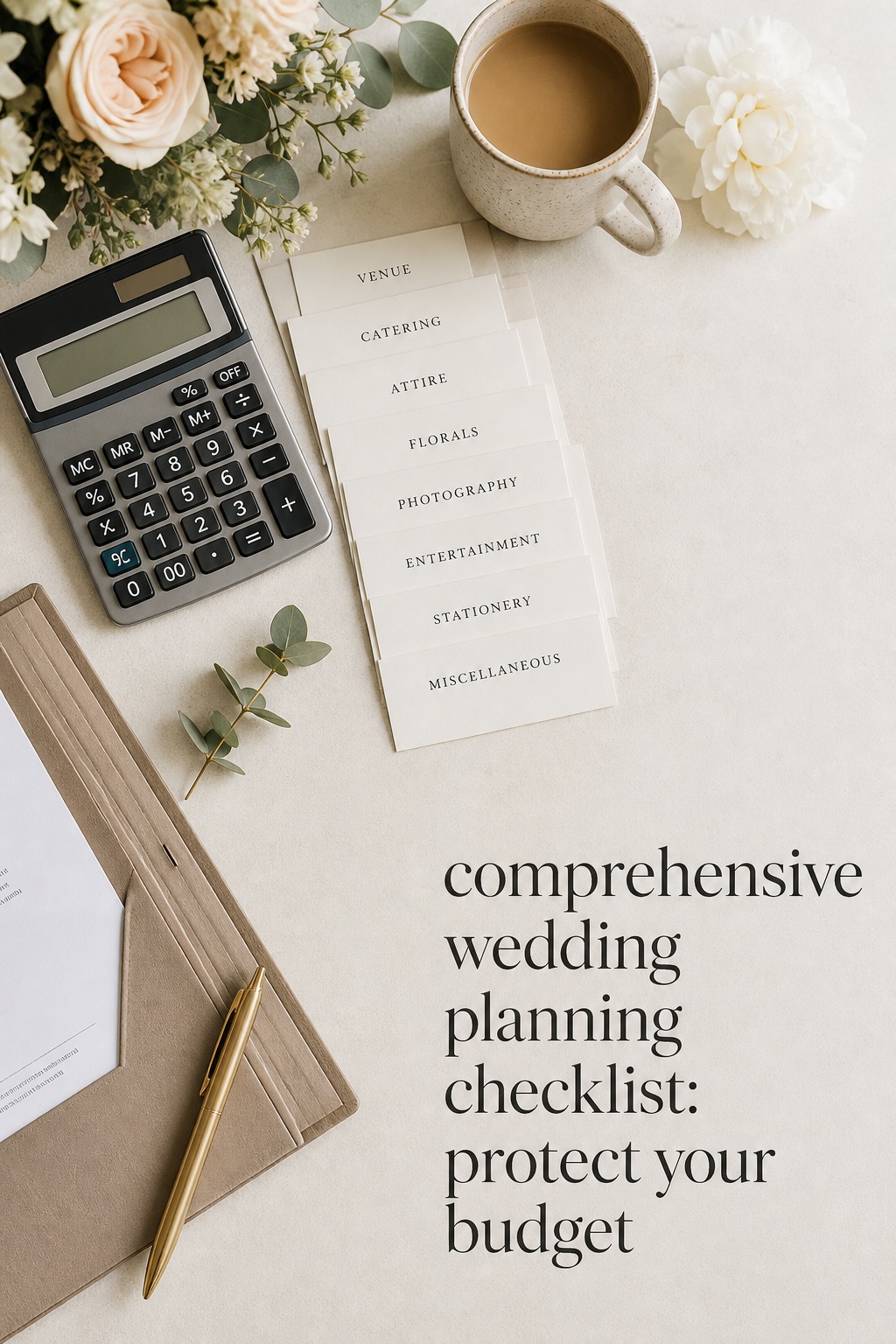
Write down the total amount you can responsibly spend, who is contributing, and whether each contribution is fixed or flexible. Divide the budget into categories that match your wedding: venue and catering, photography, attire, flowers, music, stationery, transportation, ceremony costs, beauty services, lodging, rings, permits, taxes, gratuities, and a contingency reserve. Keep the target, committed amount, balance, due date, and payment method visible for every category.
Write down the total amount you can responsibly spend, who is contributing, and whether each contribution is fixed or flexible. Divide the budget into categories that match your wedding: venue and catering, photography, attire, flowers, music, stationery, transportation, ceremony costs, beauty services, lodging, rings, permits, taxes, gratuities, and a contingency reserve. Keep the target, committed amount, balance, due date, and payment method visible for every category. Review this item during a short weekly planning meeting, record the next action, and move the conversation forward only when the decision is clear enough for the next dependent task.
Build a guest-list range, not a single wish number
Start with a range while researching, such as ninety to one hundred ten guests. Organize people by household, note children and plus-one expectations, and flag travel or accessibility needs. Guest count affects room size, catering, rentals, stationery, transportation, and sometimes the ceremony plan. A range lets you compare options honestly without pretending the first draft is final.
Start with a range while researching, such as ninety to one hundred ten guests. Organize people by household, note children and plus-one expectations, and flag travel or accessibility needs. Guest count affects room size, catering, rentals, stationery, transportation, and sometimes the ceremony plan. A range lets you compare options honestly without pretending the first draft is final. Review this item during a short weekly planning meeting, record the next action, and move the conversation forward only when the decision is clear enough for the next dependent task.
Choose a date strategy that leaves room to adapt
Select a preferred date, two alternatives, and a season you both enjoy. Check holidays, family commitments, school calendars, local events, weather patterns, and vendor availability. If the venue or photographer is the priority, let availability shape the date. If the date is fixed, begin with vendors who can confirm it before you spend time on unavailable options.
Select a preferred date, two alternatives, and a season you both enjoy. Check holidays, family commitments, school calendars, local events, weather patterns, and vendor availability. If the venue or photographer is the priority, let availability shape the date. If the date is fixed, begin with vendors who can confirm it before you spend time on unavailable options. Review this item during a short weekly planning meeting, record the next action, and move the conversation forward only when the decision is clear enough for the next dependent task.
Define priorities and flexible areas
Name three elements that deserve the most attention, such as a welcoming meal, natural photography, or a meaningful ceremony. Then name three flexible areas, such as the exact flower recipe, the quantity of printed pieces, or the shape of the tables. This decision rule helps you evaluate new ideas, family requests, and unexpected quotes without reopening every choice.
Name three elements that deserve the most attention, such as a welcoming meal, natural photography, or a meaningful ceremony. Then name three flexible areas, such as the exact flower recipe, the quantity of printed pieces, or the shape of the tables. This decision rule helps you evaluate new ideas, family requests, and unexpected quotes without reopening every choice. Review this item during a short weekly planning meeting, record the next action, and move the conversation forward only when the decision is clear enough for the next dependent task.
- Mark tasks as must-do, should-do, or optional.
- Record who owns the next action, not just who attended a meeting.
- Keep a decision log for choices that affect several vendors.
- Review balances and deadlines separately from inspiration and ideas.
Booking the venue and core vendor team
Compare venues by total experience
Ask what the quoted price includes and excludes. Confirm capacity for the ceremony and reception, catering rules, bar service, rentals, setup and cleanup windows, parking, accessibility, power, restrooms, weather backup, noise limits, insurance requirements, and preferred-vendor policies. Ask for a sample event timeline so you can understand when the room must be ready and when suppliers may load in.
A vendor record is complete only when the contract is signed, the payment is tracked, the next decision is known, and the person responsible can find the current event information. Add buffer for holidays, shipping, approvals, and the possibility that a preferred supplier becomes unavailable.
Score every venue against the same criteria
Record the emotional impression, but also capture concrete facts. A beautiful space with a short setup window may require more coordination than a simpler room with generous access. A venue that includes tables and chairs may be better value than a lower fee that leaves you responsible for every rental. Consistent notes make comparisons easier when the initial excitement fades.
A vendor record is complete only when the contract is signed, the payment is tracked, the next decision is known, and the person responsible can find the current event information. Add buffer for holidays, shipping, approvals, and the possibility that a preferred supplier becomes unavailable.
Book vendors with a contract review habit
Before signing, confirm the service date, arrival and departure windows, deliverables, overtime rules, payment schedule, cancellation terms, replacement plan, meal requirements, insurance, and communication expectations. Save the signed contract, invoice, receipt, and contact details together. Ask who will be present on the day, especially when a business has a larger team.
A vendor record is complete only when the contract is signed, the payment is tracked, the next decision is known, and the person responsible can find the current event information. Add buffer for holidays, shipping, approvals, and the possibility that a preferred supplier becomes unavailable.
Build a vendor communication rhythm
Give vendors the information they need, then avoid sending scattered revisions across several message threads. Schedule a confirmation window for open questions and record answers in the shared workspace. Track the last confirmation date, the next decision they need, and any item that depends on a final guest count or floor plan.
A vendor record is complete only when the contract is signed, the payment is tracked, the next decision is known, and the person responsible can find the current event information. Add buffer for holidays, shipping, approvals, and the possibility that a preferred supplier becomes unavailable.
- Venue and caterer, including the final guest-count deadline.
- Planner or coordinator, with written scope and decision authority.
- Photographer and videographer, including delivery expectations.
- Entertainment, officiant, florist, rentals, and transportation.
- Hair, makeup, attire, stationery, and specialist services.
Building guest, ceremony, reception, attire, and stationery systems
Keep guest information accurate
Use one master guest record for names, households, addresses, invitation status, RSVP response, meal choice, accessibility need, hotel information, and notes. Do not maintain separate final versions in messages, notebooks, and spreadsheets. If family members collect addresses, give them a deadline and merge updates into the master record on a predictable schedule.
When this system changes, update every related record. A new guest count may affect catering, rentals, seating, transportation, stationery, and the timeline. A venue rule may affect music, decor, setup, and vendor selection. The value of a shared checklist is that it makes those effects visible before they become last-minute surprises.
Turn the ceremony into decisions
Confirm the officiant, format, readings, music, processional order, vows, license requirements, rehearsal plan, and who will hold important documents. Religious and cultural ceremonies may require meetings, classes, approvals, or venue rules. Ask what must be approved and who has authority to make changes before the final program is printed.
When this system changes, update every related record. A new guest count may affect catering, rentals, seating, transportation, stationery, and the timeline. A venue rule may affect music, decor, setup, and vendor selection. The value of a shared checklist is that it makes those effects visible before they become last-minute surprises.
Design the reception around guest movement
Plan how guests move from arrival to ceremony, cocktail hour, dinner, dancing, transportation, and departure. Consider older guests, children, weather, coat storage, restroom access, bar placement, sound levels, and distance between spaces. Build a first-pass floor plan, then revise it after the final RSVP count.
When this system changes, update every related record. A new guest count may affect catering, rentals, seating, transportation, stationery, and the timeline. A venue rule may affect music, decor, setup, and vendor selection. The value of a shared checklist is that it makes those effects visible before they become last-minute surprises.
Order attire and stationery with buffer
Record measurements, ordering deadlines, alteration appointments, delivery dates, and backup plans. For stationery, confirm wording, proofing responsibility, postage, addressing, inserts, and the date invitations must enter the mail. Order a few extras and keep one final paper set with your event records.
When this system changes, update every related record. A new guest count may affect catering, rentals, seating, transportation, stationery, and the timeline. A venue rule may affect music, decor, setup, and vendor selection. The value of a shared checklist is that it makes those effects visible before they become last-minute surprises.
Make design choices serve the plan
Choose colors, flowers, signage, paper, lighting, and personal details after you understand the venue, guest movement, and budget. A design decision is successful when it supports comfort, timing, accessibility, and the atmosphere you want. Keep inspiration separate from approved details so a saved image never becomes an accidental commitment.
When this system changes, update every related record. A new guest count may affect catering, rentals, seating, transportation, stationery, and the timeline. A venue rule may affect music, decor, setup, and vendor selection. The value of a shared checklist is that it makes those effects visible before they become last-minute surprises.
Create a decision window
Instead of reopening every choice whenever a new idea appears, review budget on one evening, guest information on another, and vendor questions during a short weekly meeting. Keep a parking-lot note for ideas that are not urgent. This protects attention and makes it easier to enjoy the creative parts of planning.
When this system changes, update every related record. A new guest count may affect catering, rentals, seating, transportation, stationery, and the timeline. A venue rule may affect music, decor, setup, and vendor selection. The value of a shared checklist is that it makes those effects visible before they become last-minute surprises.
Final logistics, payments, and the wedding-day handoff
Confirm final numbers and balances
Confirm the final guest count, meal choices, table plan, transportation needs, vendor arrivals, remaining balances, gratuity plan, and delivery schedule. Separate confirmed facts from questions still awaiting an answer. Do not assume that a vendor has the latest version simply because you sent an earlier message.
Review this section with the person who will help on the wedding day. Ask whether they can understand where to be, when to arrive, who to call, and what has already been paid. If they cannot, improve the handoff before adding another decorative detail.
Build the final timeline
Include getting ready, transportation, ceremony, portraits, cocktail hour, dinner, speeches, dancing, vendor breakdown, and departure. Add realistic transition time, water and meal breaks, weather alternatives, and a clear point person for every handoff. A timeline is easier to follow when it explains the purpose of each block, not only the clock time.
Review this section with the person who will help on the wedding day. Ask whether they can understand where to be, when to arrive, who to call, and what has already been paid. If they cannot, improve the handoff before adding another decorative detail.
Create a wedding-day handoff packet
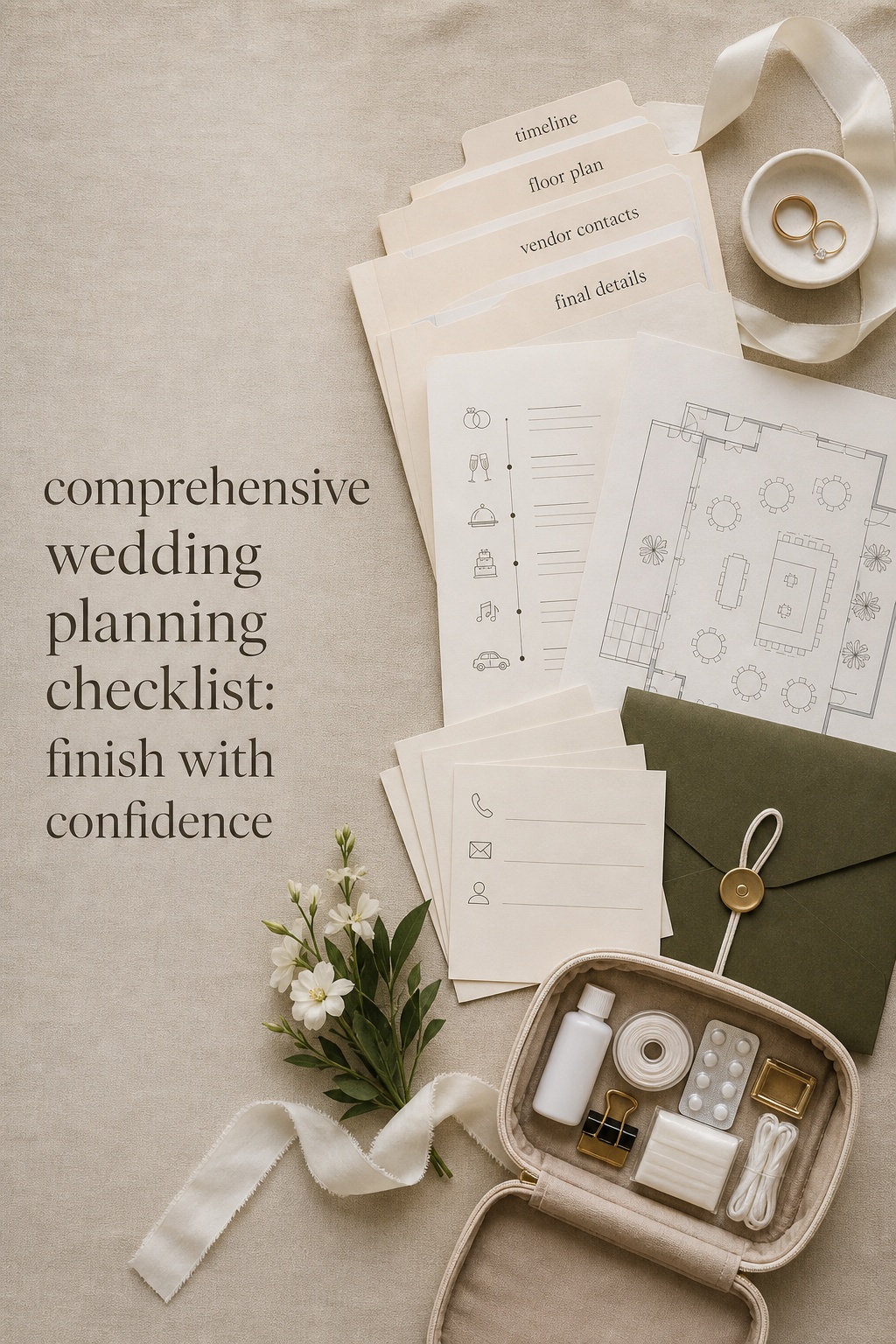
Include the timeline, floor plan, vendor contacts, payment notes, ceremony order, special instructions, guest issues, delivery details, emergency decisions, and legal-document responsibility. Add a page explaining which decisions the coordinator can make without contacting you and which situations require approval. This is one of the most valuable tasks in a comprehensive wedding planning checklist.
Review this section with the person who will help on the wedding day. Ask whether they can understand where to be, when to arrive, who to call, and what has already been paid. If they cannot, improve the handoff before adding another decorative detail.
Prepare the final week
Check weather and transportation, confirm deliveries, pack rings and documents, prepare vendor meals or tips, complete final fittings, and protect time for rest. Stop adding optional projects unless they solve a genuine problem. The best final week has fewer decisions in the couple’s hands, not a fuller inbox.
Review this section with the person who will help on the wedding day. Ask whether they can understand where to be, when to arrive, who to call, and what has already been paid. If they cannot, improve the handoff before adding another decorative detail.
Review common mistakes
Mark must-do, should-do, and optional items. Track balances instead of only the total budget. Move final choices out of private messages and into the shared record. Include returns, rentals, gifts, payments, and thank-you notes after the event. Add buffer for traffic, weather, vendor setup, and human tiredness.
Review this section with the person who will help on the wedding day. Ask whether they can understand where to be, when to arrive, who to call, and what has already been paid. If they cannot, improve the handoff before adding another decorative detail.
Adapt the timeline honestly
A twelve-month sequence is guidance, not a law. With a short engagement, keep the dependency order and run phases in parallel. With a long engagement, use early months for foundations and vendor research, then avoid filling every quiet week with new tasks. Your celebration, location, season, ceremony, and availability should shape the order.
Review this section with the person who will help on the wedding day. Ask whether they can understand where to be, when to arrive, who to call, and what has already been paid. If they cannot, improve the handoff before adding another decorative detail.
Comprehensive does not mean endless. It means the list covers decisions that could affect guests, vendors, legal requirements, budget, and your ability to be present. Remove tasks that do not fit your celebration, assign the rest clearly, and use the final review to create confidence rather than more work.

FAQ
When should we start using a comprehensive wedding planning checklist?
Start when you are ready to discuss budget, guest count, date options, and priorities. Even if the wedding is more than a year away, recording those foundations helps you research venues and vendors with better information.
Can we use this checklist for a short engagement?
Yes. Keep the order of dependencies, then run phases in parallel. Confirm the date, budget, guest range, and venue first, and flag vendors with limited availability. Move attire, stationery, and legal requirements earlier when delivery or appointments are tight.
What should be tracked for every wedding vendor?
Track the contact, service scope, arrival time, deliverables, contract, payment schedule, balance, cancellation terms, meal needs, insurance, and backup plan. Add the last confirmation date and the next decision they need from you.
How often should couples review their wedding checklist?
Use a short weekly review during active planning and a deeper monthly review for budget, contracts, guest information, and upcoming deadlines. Focus on what changed, what is blocked, and who owns the next action.
What belongs in a wedding-day handoff packet?
Include the final timeline, venue and vendor contacts, floor plan, guest sensitivities, ceremony order, photography priorities, delivery schedule, payment notes, transportation, emergency supplies, and instructions for decisions that can be handled without the couple.
Is a printed checklist better than a digital one?
Use the format that makes updates and shared ownership easiest. Digital records work well for links, dates, and collaboration. Printed pages help during venue visits, fittings, and the final handoff. Many couples use a digital master record and print only pages needed for a meeting.
Leave a Reply