
At first, wedding planning can feel wonderfully small. You choose a date, save a few ceremony photos, and text someone you love about the possibility of a garden reception. Then the tabs multiply. A venue asks for a guest estimate, a photographer wants to know your date, a parent has a spreadsheet, and your own notes app contains three different versions of the same idea.
The solution is not to become a different kind of person who enjoys managing nineteen tabs. The solution is to create a planning system that makes the next decision visible. When you know what belongs together, who owns it, and when you will review it, the wedding starts to feel like a sequence of manageable conversations instead of one enormous project. This guide explains how to organize wedding planning around that principle.

What organized wedding planning actually looks like
Organization is not a perfectly color-coded binder. It is the ability to answer a few important questions without searching through every message you have received: What have we decided? What still needs a decision? What will this cost? Who is waiting for an answer? What happens next?
A useful wedding plan has one source of truth, a clear decision order, and a regular review rhythm. The source of truth can be a shared Google Sheet, a planning platform, a physical binder, or a combination of those tools. The format matters less than the rule that everyone uses the same current version. If the guest count lives in a text thread, the budget in a notebook, and vendor contracts in three email accounts, every small decision becomes a scavenger hunt.
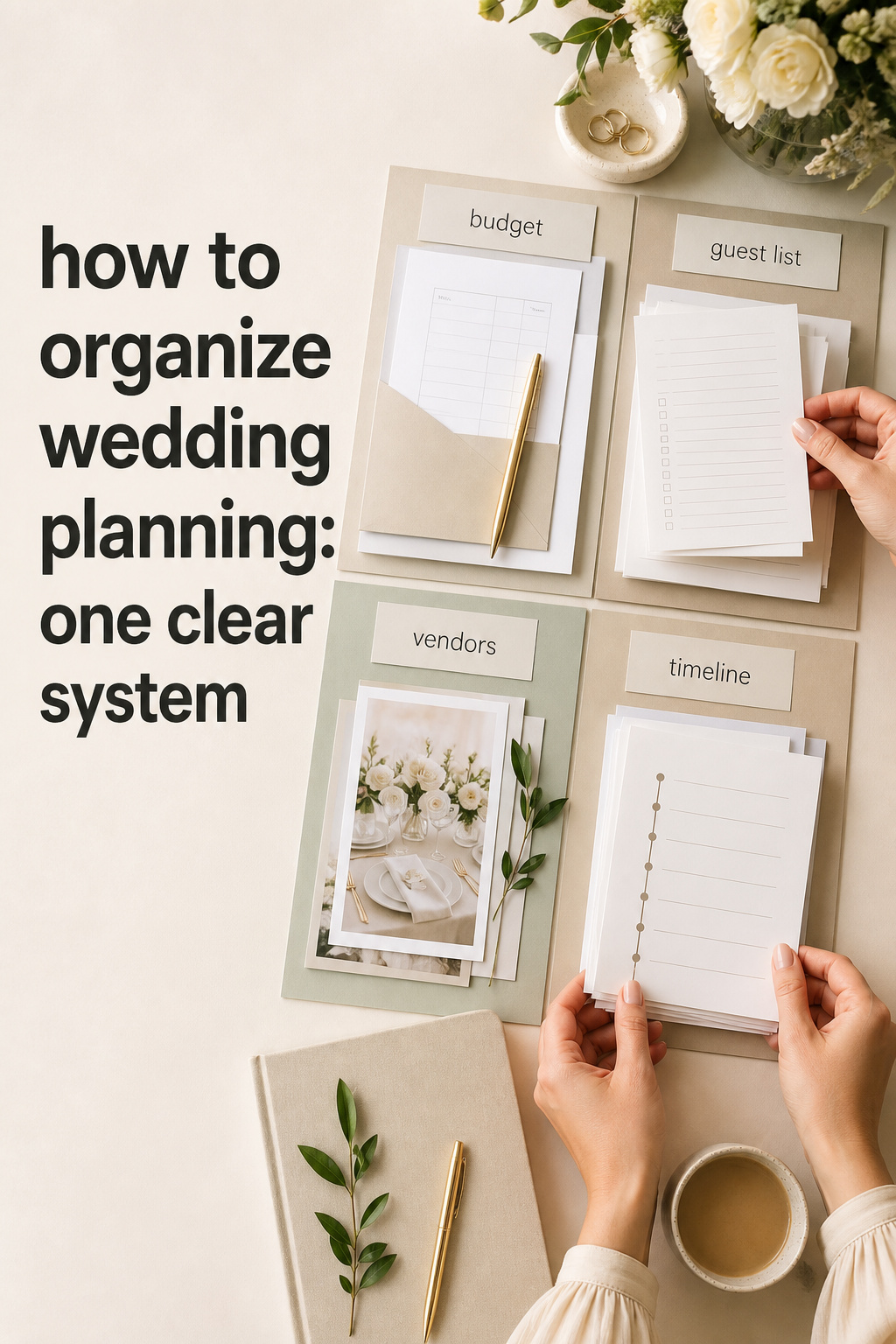
Keep the system small enough to maintain. A practical starting point is one home page with links to five working areas:
- Dashboard: the wedding date, current phase, next three decisions, and the next planning meeting.
- Budget: estimated cost, contracted cost, amount paid, remaining balance, due date, and who is responsible for payment.
- Guest list: names, household grouping, address, invitation status, RSVP, meal needs, and notes that affect seating or travel.
- Vendors: contact details, quote, contract status, payment schedule, arrival information, and open questions.
- Timeline and documents: planning deadlines, ceremony and reception flow, contracts, inspiration, floor plans, and final instructions.
Use plain names and consistent dates. A file called “Venue Contract – Signed – 2026-08-16” is easier to find than “final final venue.” Keep a short Read Me note at the top of the system explaining which tab is current, how costs are entered, and when the plan is reviewed. This tiny habit prevents well-meaning family members from updating an old copy.
Build your planning system in the right decision order
The most calming wedding plans are organized by dependency, not by whichever task happens to look exciting. Inspiration is fun, but a beautiful invitation cannot solve an uncertain guest count. A florist cannot give you a useful proposal if the venue, season, and ceremony size are unknown. Begin with decisions that constrain other decisions.
1. Agree on the financial boundaries
Start with an honest conversation about the total amount you can spend without creating a problem after the wedding. Include savings, monthly contributions, and confirmed family help. Treat uncertain contributions as uncertain until they are clearly agreed. Then set two numbers: the working budget you intend to use and the absolute maximum you will not cross.
Leave room inside the working budget for costs you cannot yet name. Service charges, taxes, transportation, alterations, overtime, weather protection, postage, and last-minute rentals are easy to miss. A buffer is not a sign that your plan is weak. It is what lets the plan survive contact with reality.
2. Create a useful first guest count
You do not need a finished seating chart before touring venues, but you do need a realistic range. Make three groups: guests you cannot imagine celebrating without, guests you would love to invite if the budget and capacity allow, and guests who are still under discussion. A range such as 80 to 95 is more useful than a vague feeling that the wedding will be “around 100.”
Record assumptions beside the number. Are children included? Are partners invited? Will most guests travel? Could a parent’s list grow? The answers affect capacity, catering, rooms, transportation, and the shape of the day. This is also the moment to agree on a process for additions. No one should be surprised by a new list of twenty names after the venue contract is signed.
3. Choose the date and venue together
Choose a target season and two or three workable dates before you fall in love with one unavailable venue. When you compare spaces, record more than the rental price. Note capacity, catering rules, alcohol requirements, end time, setup access, rain plan, parking, accessibility, restrictions on candles or amplified sound, required vendors, and what the package actually includes.
Put each venue in the same comparison table. A single row should make it possible to see whether a lower rental fee is offset by required rentals or outside catering. Mark every answer as confirmed, estimated, or still open. This protects you from treating a friendly conversation as a contract.
4. Book the vendors that shape the experience
Once the venue and date are secure, prioritize vendors whose availability is limited or whose work affects the rest of the day. Depending on your celebration, that may include a planner or coordinator, photographer, caterer, entertainment, officiant, and florist. Add attire, beauty, cake, rentals, transportation, stationery, and lodging in the order that makes sense for your location and season.
For each vendor, track the next action rather than only the status. “Photographer: booked” is useful. “Photographer: send family photo list by October 4” is actionable. Store the signed contract, payment schedule, insurance information, and communication notes in one linked folder. Your future self should not have to search an inbox for the cancellation clause on a stressful week.

Turn the plan into a weekly rhythm
A planning system only works if it is used. You do not need to think about the wedding every day. A short weekly meeting is usually enough during ordinary months, with longer sessions when invitations, seating, or final logistics are due. Put the meeting on the calendar before the week becomes crowded.
Begin each meeting by looking at the dashboard, not by opening the newest vendor email. Review the budget total, the next deadlines, and the open questions from last week. Then choose no more than three meaningful outcomes. A meeting that ends with “we will compare two caterers and confirm the hotel block” is more effective than one that produces a long list of vague intentions.
- Review: What changed since the last meeting? Did a quote, invoice, RSVP, or contract arrive?
- Decide: Which choices are now ready, and what information is still missing?
- Assign: Who owns each next action, and what does finished look like?
- Schedule: When will the action happen, and who needs the result?
- Record: Update the shared system before ending the meeting.
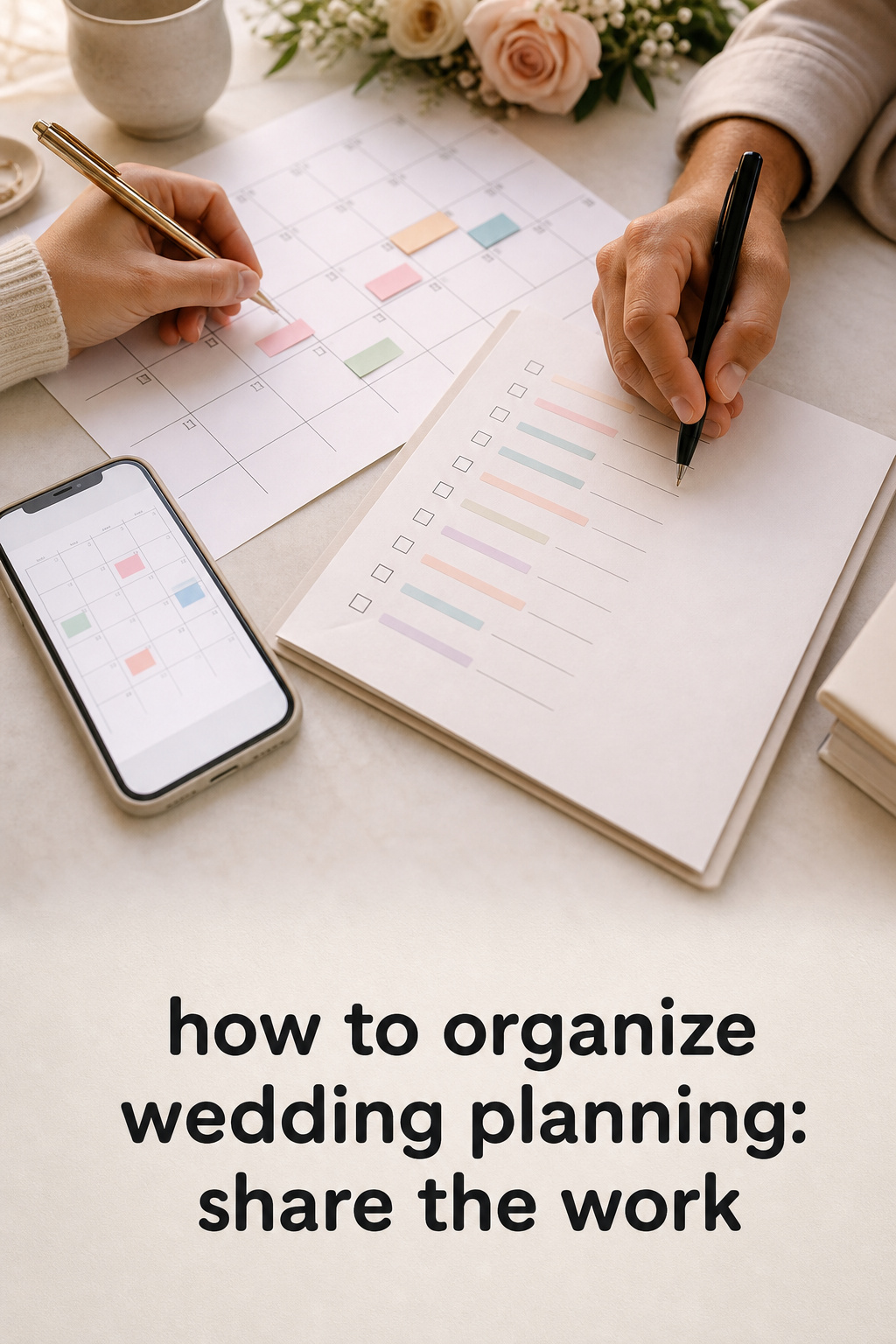
Share the invisible work. One person might enjoy vendor research while the other prefers budget tracking, but do not let one partner become the only person who knows the plan. Rotate meeting leadership or give each person a clear area of ownership. Family and friends can help too, as long as the couple decides the brief, deadline, and boundaries.
Use a simple status vocabulary: Not started, Researching, Decision needed, Booked, Waiting, Complete, and On hold. Avoid ten shades of “almost done.” If a task is waiting on someone else, write down who and the date of the follow-up. Organization becomes much easier when stalled work is visible instead of quietly aging in an inbox.
Organize the details that matter later
The early plan is mostly about choices. The later plan is about handoffs. Start organizing those handoffs before the final month, when every vendor is asking for information at once.
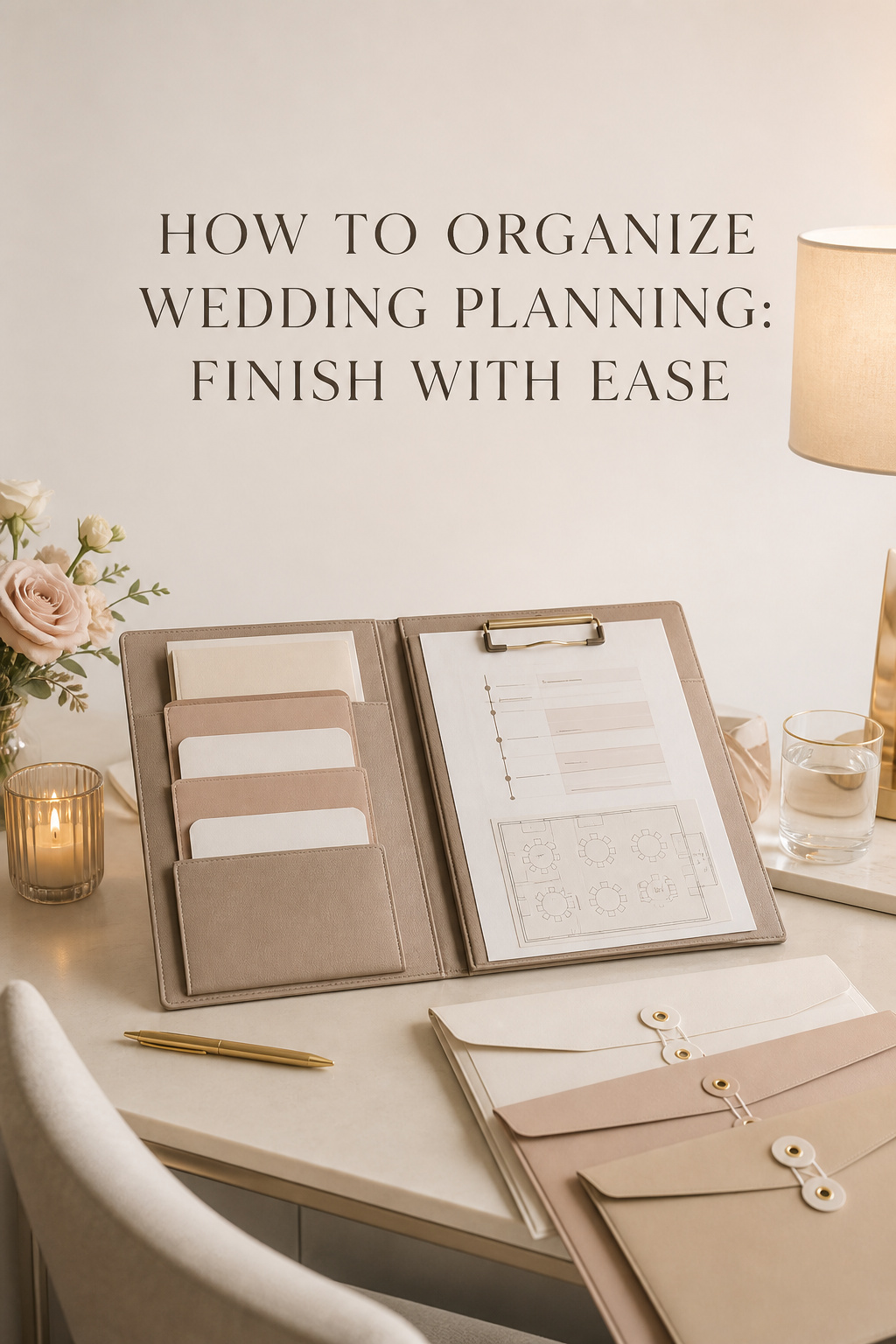
Create a document folder with separate sections for contracts, invoices, guest information, stationery, design references, floor plans, transportation, lodging, ceremony details, and the wedding-day timeline. Keep inspiration separate from confirmed decisions. A saved photo is an idea; a signed rental order is an instruction. Mixing them can lead to expensive assumptions.
Build a vendor contact sheet that includes the person arriving on the wedding day, not only the sales contact. Add arrival time, setup needs, parking or loading instructions, meal requirements, final payment status, and the person who will answer questions during the event. If you have a coordinator, make sure they can access the current version and know where the contracts live.
Your final timeline should show movement, not just ceremony start and dinner start. Include getting ready, photography, transportation, setup, vendor arrival, guest arrival, ceremony, family photos, meal service, speeches, dancing, teardown, and who takes personal items home. Add a few minutes of breathing room. A schedule that only works if every person is early and every photograph takes exactly as long as expected is not a reliable schedule.
- Give the timeline to vendors who need it, the wedding party, immediate family, and the person handling questions.
- Make a short guest-facing version that includes only useful information such as arrival, transportation, and dress guidance.
- Keep private details such as payment balances, room assignments, and emergency contacts in the coordinator version.
- Choose one person other than the couple to handle routine questions on the wedding day.
If the planning process is becoming too large for the two of you, a wedding planner or coordinator can be an organizing resource, not merely a luxury. The Wedding Command Center can also be a useful planning reference when you want a central place to understand decisions, deadlines, and details. Use any resource that reduces repeated searching and helps you keep the plan current. The goal is a calmer wedding, not a more impressive planning apparatus.
Common organization mistakes and quick fixes
Starting with the prettiest details. Inspiration can help you name your priorities, but it should not outrun your budget, guest count, or venue rules. Fix this by keeping a small inspiration page and labeling each idea as must-have, nice-to-have, or reference only.
Tracking only the total budget. A total can look healthy while several large deposits are due next month. Add estimated, contracted, paid, remaining, and due date columns. Review cash flow, not just the grand total.
Giving tasks to “someone.” If no person owns an action, it is not assigned. Write one name beside each task and define the handoff. “Partner: send the venue questions after we agree on the guest range” is clear. “Ask the venue” is not.
Making the system too complicated. More tabs do not automatically create more control. Remove fields you never update. If a spreadsheet feels heavy, keep the dashboard, budget, guest list, vendor list, and timeline, then link to everything else.
Never revisiting old decisions. A date change, guest-count increase, or venue restriction can affect many downstream tasks. Start each weekly meeting with a quick change check. When something important moves, update the dependent rows immediately.
Waiting until the final weeks to make a handoff plan. Even if you are handling most details yourselves, someone should know where the timeline, contracts, emergency contacts, and final vendor instructions are stored. Give that person authority to answer routine questions so you can be present at your own celebration.
FAQ
What should you organize first when planning a wedding?
Start with your financial boundaries, a realistic guest-count range, and a target season or date range. Those choices shape venue capacity, catering, travel, and nearly every later cost.
How do you organize wedding planning with your partner?
Use one shared source of truth, schedule a short weekly meeting, and assign each action to one person. Discuss priorities together, then let each partner own clearly defined tasks rather than asking both people to track everything.
Do you need a wedding planning spreadsheet?
No. You need a current, shared system. A spreadsheet is helpful because it can track budget, guests, vendors, and deadlines in one place, but a planning platform or binder can work if everyone knows where the current information lives.
How often should you review your wedding plan?
A weekly review is a good default during active planning. You can use shorter reviews during quiet months and longer sessions before invitations, final payments, seating, and wedding-day logistics.
How do you organize wedding planning when the wedding is less than six months away?
Use the same decision order but compress the time between actions. Confirm the budget, guest range, date, venue, and essential vendors first. Then create a weekly task list, mark anything that depends on a vendor, and ask for help with research, errands, and day-of logistics.
What should be in a wedding-day handoff folder?
Include the final timeline, vendor contacts, arrival and loading instructions, floor plan, ceremony details, transportation information, emergency contacts, payment notes, and instructions for personal items. Keep private financial details in a version shared only with the coordinator or designated lead.
Make changes easy to absorb
Every wedding plan changes. A preferred photographer may be unavailable, the guest count may rise, or a family conversation may reveal that a traditional part of the day is not right for you. An organized system does not prevent change. It helps you see what the change touches. When you update one decision, scan the related rows: budget, venue capacity, catering, invitations, transportation, lodging, seating, and the timeline.
Keep a short decision log for changes that affect the wider plan. Write the date, the decision, who agreed to it, the reason, and the next action. This is especially helpful when several people are contributing money or advice. You do not need to defend every choice, but you do need a calm record of what is current. It also prevents the couple from reopening a decision every time a new idea appears online.
Set a stopping rule for research. For example, compare three vendors using the same questions, choose one by a specific date, and archive the alternatives once the contract is signed. Endless research can look productive while delaying the decisions that make the rest of planning possible. Give each research task a definition of done, such as three comparable quotes, a complete contract review, or a final list of questions for the venue.
It is also useful to separate planning time from relationship time. Decide when you will talk about the wedding, then protect evenings or weekends that are completely wedding-free. This boundary is part of organizing wedding planning because a system should support your life, not occupy every conversation. A plan that creates room to enjoy the engagement is doing its job.
Leave a Reply