
Wedding planning on a budget is not a contest to make every line item as small as possible. It is a process of choosing what deserves your money, time, and attention before excitement turns into expensive commitments. A beautiful wedding can be intimate, simple, relaxed, or highly personal. The common thread is that the couple makes deliberate choices instead of allowing package upgrades, guest expectations, and last-minute purchases to make the choices for them.
This guide is designed for couples who want a celebration that feels generous without borrowing for it. Use the framework with any total budget and in any region. The dollar amounts will change, but the sequence is dependable: agree on the ceiling, understand the guest-driven costs, decide which experiences matter, compare complete vendor prices, and leave room for ordinary surprises. When those decisions are visible, the budget becomes a planning tool rather than a source of shame or conflict.

The most useful comparison is rarely cheap versus expensive. It is often larger guest list versus more detail, Saturday versus Friday, full-day coverage versus focused coverage, or a blank-canvas venue versus a venue with useful inclusions. Each option can be right. Your job is to understand what changes, what it costs, and whether the change supports the wedding you actually want.
Compare the budget decisions that shape the whole wedding
Start with a total number that your household can responsibly provide. Add current wedding savings, a realistic monthly contribution, and confirmed family gifts. Keep possible gifts separate until the amount, timing, and expectations are clear. A contribution that arrives late or comes with conditions is not the same as cash you can use for a deposit today. Also decide whether the budget includes rings, attire, beauty appointments, the marriage license, rehearsal events, transportation, lodging, tips, and a honeymoon. If those costs are outside the wedding budget, write that boundary down.
Next, create a reserve before assigning every dollar. Five to ten percent is a useful starting range, although an outdoor wedding, a complicated venue, or a long engagement may justify more. This money is not a permission slip to spend more. It protects the plan from the costs that appear after a contract is signed, such as service charges, taxes, alterations, extra rentals, overtime, weather changes, vendor meals, postage, or a higher final guest count.
Then compare guest count scenarios. The guest list affects more than invitations. It changes the venue size, food and drink, rentals, staffing, cake, transportation, restroom needs, favors, and sometimes photography coverage. Make a simple table for 40, 70, and 100 guests. Ask each venue and caterer for an all-in estimate at those counts. This turns an emotional question into a visible trade-off. If inviting 30 additional guests costs more than the extra experience is worth to you, the smaller celebration may be the more generous choice for your future.
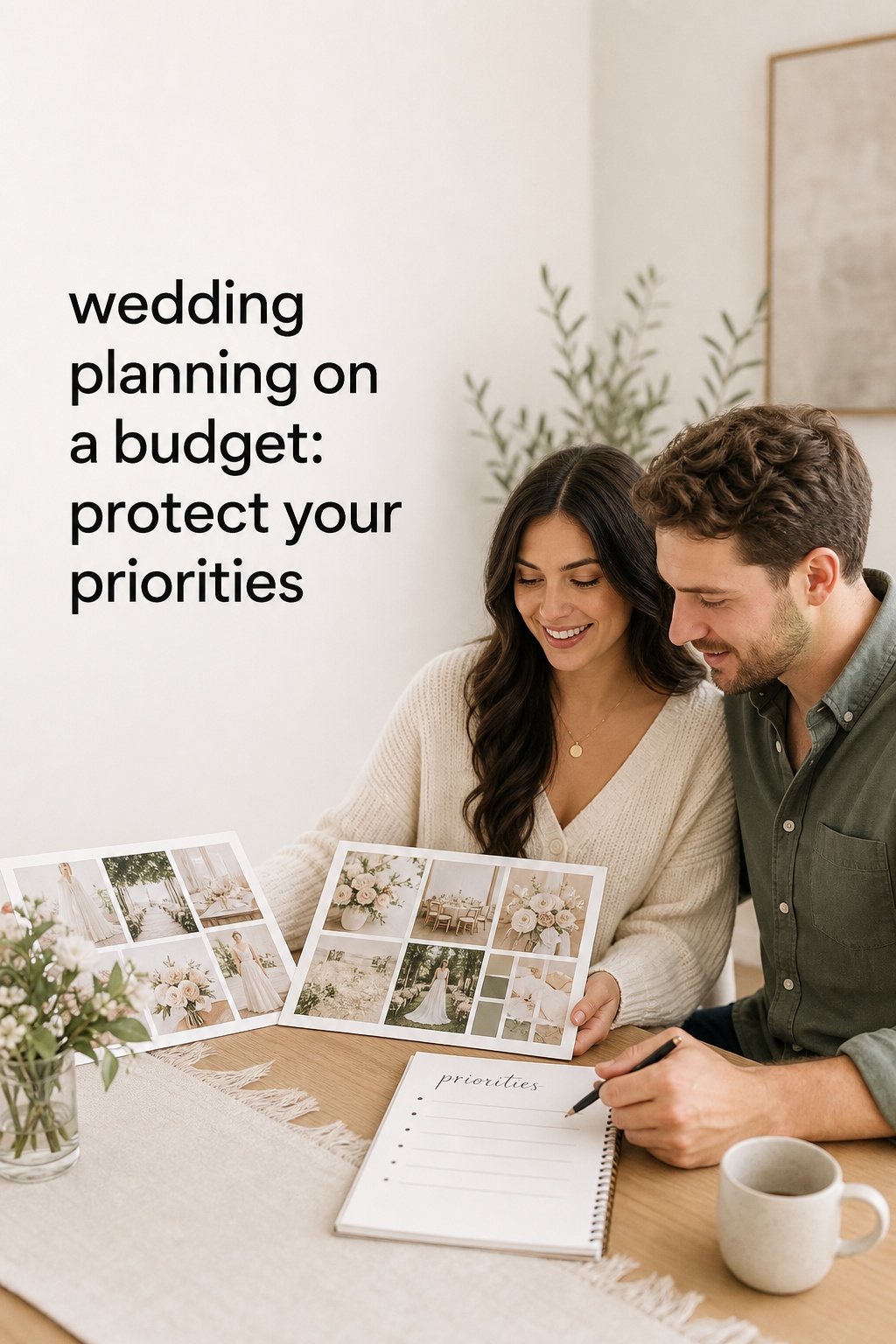
- Protect: the parts of the day that carry the most meaning for both of you.
- Adapt: items that can change in scale, timing, format, or quantity.
- Release: details that are attractive but do not improve the guest experience or your memories.
- Review: every decision after taxes, fees, labor, delivery, setup, cleanup, and overtime are included.
Choose between the biggest cost levers
Venue and catering usually deserve the earliest comparison because they can consume the largest share of the budget. Do not compare rental fees alone. A low rental price can hide a food and beverage minimum, required rentals, preferred vendors, staffing, security, cleanup, or a strict bar package. A higher rental fee may include tables, chairs, lighting, getting-ready rooms, and a coordinator. Ask for the complete price of the guest experience, not the most attractive number on the first page of a proposal.
Date and time are powerful alternatives to reducing quality. Friday, Sunday, weekday, brunch, lunch, and off-season celebrations may open different price points. The correct option depends on your location and your guests, so request actual quotes rather than assuming a discount. A date change can also affect hotel rooms, travel, childcare, and time off work. Consider the cost for guests as part of the planning decision, especially when many people will travel.
Photography is another comparison that should focus on coverage and fit rather than a single hourly rate. Decide which moments you want documented, how much getting-ready time matters, whether you need a second photographer, and whether you value an album now or later. Ask to see a complete gallery from a comparable wedding. A short, thoughtful package may protect the moments you care about more effectively than a long package filled with hours you do not need.
Flowers, decor, music, attire, and stationery can flex in different ways. Seasonal flowers, candles, reusable rentals, digital invitations, sample-sale attire, a curated playlist, or a smaller cake can lower cost without making the day feel careless. Avoid treating every category as equally important. If food and photographs are your priorities, let decor and paper carry less of the budget. If dancing is central, choose music before purchasing decorative upgrades. A budget works when it reflects your values instead of copying a standard percentage chart.
DIY belongs in this comparison too. It can be worthwhile for small projects that use a skill you already have, can be completed early, and do not create wedding-day labor. It is not automatically cheaper once supplies, tools, storage, transportation, setup, cleanup, failed attempts, and family time are included. Compare the complete DIY cost with a vendor quote and with the value of your free time. Choose place cards, a simple welcome sign, or playlist curation before attempting a large installation that must be finished under pressure.

Build savings around the guest experience
The best budget cuts are often invisible because they remove complexity rather than warmth. Start with a clear guest list policy for children, plus-ones, and distant acquaintances. Apply it consistently and communicate early. A smaller guest list can allow a better meal, more comfortable seating, a more convenient venue, or a photographer whose work you genuinely love. The point is not to make guests feel excluded. It is to host the people you can welcome well within the resources you have.
Look for venues that solve several needs at once. A restaurant private room may include food, staff, tables, and a rain plan. A community hall may offer flexibility if you can coordinate rentals. A backyard can be personal, but it may require tents, power, restrooms, lighting, insurance, parking, and a weather decision. A park may be affordable but require more transport and setup. Compare the work and risk each setting transfers to you. The least expensive room is not necessarily the least expensive wedding.
Use food and drink choices thoughtfully. A buffet, family-style meal, brunch, food truck, limited bar, beer and wine service, or signature drink can fit certain celebrations well. The decision should consider service flow, dietary needs, weather, venue rules, and guest comfort. Ask whether staffing, glassware, ice, mixers, cake cutting, and vendor meals are included. Saving on the menu is successful when guests still know what to expect and can eat comfortably.
Reduce paper and decorative duplication. One invitation per household, online RSVPs, a simple ceremony program, reusable signage, and ceremony flowers moved to the reception can reduce waste. Choose a small number of visual elements and repeat them intentionally. A consistent color, candlelight, foliage, or thoughtful table number can do more than a collection of unrelated purchases. The result often feels more designed because the choices are edited.
Protect the moments guests actually experience. They notice whether the schedule is clear, the ceremony can be heard, the food arrives at a reasonable pace, the temperature is comfortable, and there is a simple way to move between locations. They remember conversation, dancing, and how welcomed they felt. A budget should fund logistics before novelty. When you are deciding between an upgrade and a practical need, ask which one improves the day for more people.
Do not forget the costs that make a saving idea possible. An outdoor ceremony may need umbrellas, heaters, fans, mats, lighting, or a backup space. A secondhand dress may need alterations and cleaning. A friend photographing the wedding may need a clear shot list, meals, equipment, and permission to enjoy the day. A playlist needs speakers and someone responsible for transitions. Every lower-cost option is a package of benefits, responsibilities, and risks. Price the whole package before deciding.

Run the plan as a shared system
Choose one shared source of truth for the budget, guest list, vendor directory, payment calendar, decision log, and wedding-day handoff. A spreadsheet, planning app, or shared workspace can work if both partners know where the current information lives. Do not let final prices remain in text messages, screenshots, email threads, and memory. Store the proposal, contract, deposit, balance, due date, cancellation terms, and open questions together.
Give each budget line five useful fields: target amount, quoted amount, committed amount, amount paid, and amount still due. Add tax, service charge, gratuity assumptions, delivery, setup, cleanup, overtime, and payment dates. When a vendor says something is included, record the exact wording and where it appears in the contract. This habit helps you compare proposals fairly and prevents a pleasant conversation from being mistaken for a guaranteed inclusion.
Set a weekly fifteen-minute money meeting. Review the current total, the next four payments, new quotes, unresolved questions, and one decision that needs attention. Keep the meeting short and specific. If the conversation becomes tense, return to the protect, adapt, and release lists. The goal is not to win a debate. It is to make the next responsible choice while both partners can still see the whole picture.
Use a simple upgrade rule. Before adding an expense, ask what changes for guests, how many people benefit, whether it supports one of your priorities, and which funded category will pay for it. If the answer is unclear, pause for a day. If you still want the item, identify a specific trade-off before approving it. This keeps a series of small upgrades from quietly becoming a large overage.
The Wedding Command Center can be useful as a planning resource when you need a shared place to keep decisions, deadlines, and wedding details visible to both partners. Treat it as part of your operating system, not as a reason to add more purchases. The value is in reducing scattered information and making conversations easier to have. Any tool should serve the budget, not become another category that competes with it.
As the wedding approaches, prepare a handoff packet. Include the timeline, venue access information, vendor contacts, final headcount, floor plan, meal notes, payment envelopes, emergency contacts, weather decision, and who has authority to answer questions. A coordinator, trusted friend, or family member can manage this information while you focus on getting married. A calm handoff is a budget decision because it can reduce delays, overtime, duplicate purchases, and last-minute panic.
Common mistakes to avoid before final review
Do not start with inspiration and work backward from a price you cannot support. Begin with the total ceiling and the guest count range. Do not count family help before confirming the amount and expectations. Do not compare base prices while ignoring service charges, taxes, rentals, staffing, delivery, setup, cleanup, overtime, alterations, and tips. Do not assume that a venue coordinator is providing the same service as a wedding coordinator. Ask what each person owns on the wedding day.
Do not use averages as a promise. National figures can help you understand the scale of wedding spending, but local market, season, guest count, venue rules, and your priorities matter more. Request current quotes in your area and keep a record of what each quote includes. Review the contract before paying a deposit. If the proposal is difficult to understand, ask the vendor to explain the total in writing.
Do not spend the contingency before the wedding exists. If you use part of it, make a replacement plan or reduce another commitment. Do not let a low price justify poor communication, missing insurance, unsafe food handling, or an unreliable timeline. Value includes competence and peace of mind. Sometimes the most affordable choice is the vendor who clearly explains limits and helps prevent an expensive problem.
Before the final review, check that the guest list matches the catering count, the venue plan matches the rental order, the schedule includes setup and cleanup, and every vendor knows the final contact person. Confirm what is paid and what is due. Confirm where tips, licenses, attire alterations, transportation, and rehearsal meals sit. Then ask one last question: does the plan still reflect what matters to us? If yes, you are using the budget well.
FAQ
What is the first step in wedding planning on a budget?
Set a total spending ceiling based on money you can responsibly access without harmful debt. Separate confirmed contributions from possible gifts, include overlooked costs, and reserve five to ten percent for surprises before comparing venues or vendors.
How can we decide what to prioritize?
Each partner should independently name three parts of the wedding that matter most, then compare the lists. Protect shared priorities, adapt items that can change in scale or format, and release details that do not improve the experience or carry personal meaning.
Does reducing the guest list really save money?
Usually, yes. Fewer guests can reduce catering, drinks, rentals, venue size, invitations, cake, staffing, and transportation. Build two or three guest-count scenarios and request complete estimates so you can see the actual savings instead of guessing.
Is a weekday wedding always cheaper?
No. Weekdays and off-season dates may cost less at some venues, but pricing varies by market and demand. Ask for real quotes and consider guest travel, time off work, lodging, and the possibility that some people cannot attend.
When does DIY actually save money?
DIY can save money when the project is small, materials and tools are affordable, the skill already exists, and it can be completed early without wedding-day labor. Include storage, transport, setup, cleanup, failed attempts, and the value of your time before deciding.
What hidden wedding costs should we track?
Track taxes, service charges, gratuities, vendor meals, overtime, delivery, setup, cleanup, rentals, alterations, hair and makeup trials, postage, marriage license fees, transportation, insurance, weather plans, and final guest-count changes.
How do we stop a wedding budget from growing?
Hold a short weekly review, keep one shared source of truth, and require every upgrade to name the category that will fund it. If an expense does not support a priority or improve the guest experience, pause before approving it.
Leave a Reply