
The text arrives while the couple is choosing between a garden and a restaurant. One venue offers an open Friday, a sibling asks about travel, and the photographer needs an answer tomorrow. Quick wedding planning can make every decision feel urgent because some choices really do control the next ones. The solution is not to recreate a year-long plan in a few weeks. Decide what the celebration must include, settle the choices that unlock other work, and give every remaining task one owner and a next step.
A shorter engagement can still feel personal and considered. You may need to select from available dates, invite fewer people, or skip details that take too long to source. Those are practical tradeoffs, not proof that the day matters less. Protect the experiences you and your guests will notice, and remove work that consumes time without changing the meaning of the celebration. This guide offers a focused system for setting priorities, maintaining momentum, and sharing clear information.

Start with the clock, not a perfect wedding vision
Write down the date range, location, budget ceiling, likely guest count, and any legal or family requirements. Mark each as fixed, flexible, or undecided. A relocation may fix the month but leave the weekday open. A small ceremony may be essential while the reception format can change. This first pass keeps you from comparing options that were never realistic. Share the list with everyone whose approval is genuinely required, then move forward with decisions you can control. Keep the notes factual and short so they can guide actual vendor inquiries.
Agree on two or three must-haves before browsing more inspiration. Make each specific enough to guide a choice. “A relaxed day” might mean fewer than fifty guests, a seated meal, and no long gap between ceremony and dinner. “Photos we love” could mean booking one photographer whose style feels right, even if that means choosing simpler flowers. Must-haves help you judge options when availability forces a compromise. If a venue fits the budget and guest limit but conflicts with a true priority, reject it without reopening every other decision.
Create a short “not now” list beside your must-haves. Custom favors, multiple outfit changes, elaborate printed stationery, and extra events can be lovely, but they add sourcing, approvals, deliveries, and payments. Putting them aside is not a judgment about whether they matter. It keeps them from competing with choices that unlock the event. Revisit the list only after the essential bookings and guest information are under control. If an optional idea still fits the budget and schedule then, add it with a clear view of the work involved.
Use different decision speeds for different risks. Reversible choices, such as a welcome sign color, can be made quickly. For a large payment or a contract that is difficult to change, take time to read what is included, when money is due, and what happens if plans change. Fast planning should remove needless indecision, not skip basic review. If you cannot tell whether a choice deserves more time, ask what it affects, what it costs to change, and whether waiting one day will close a useful option.
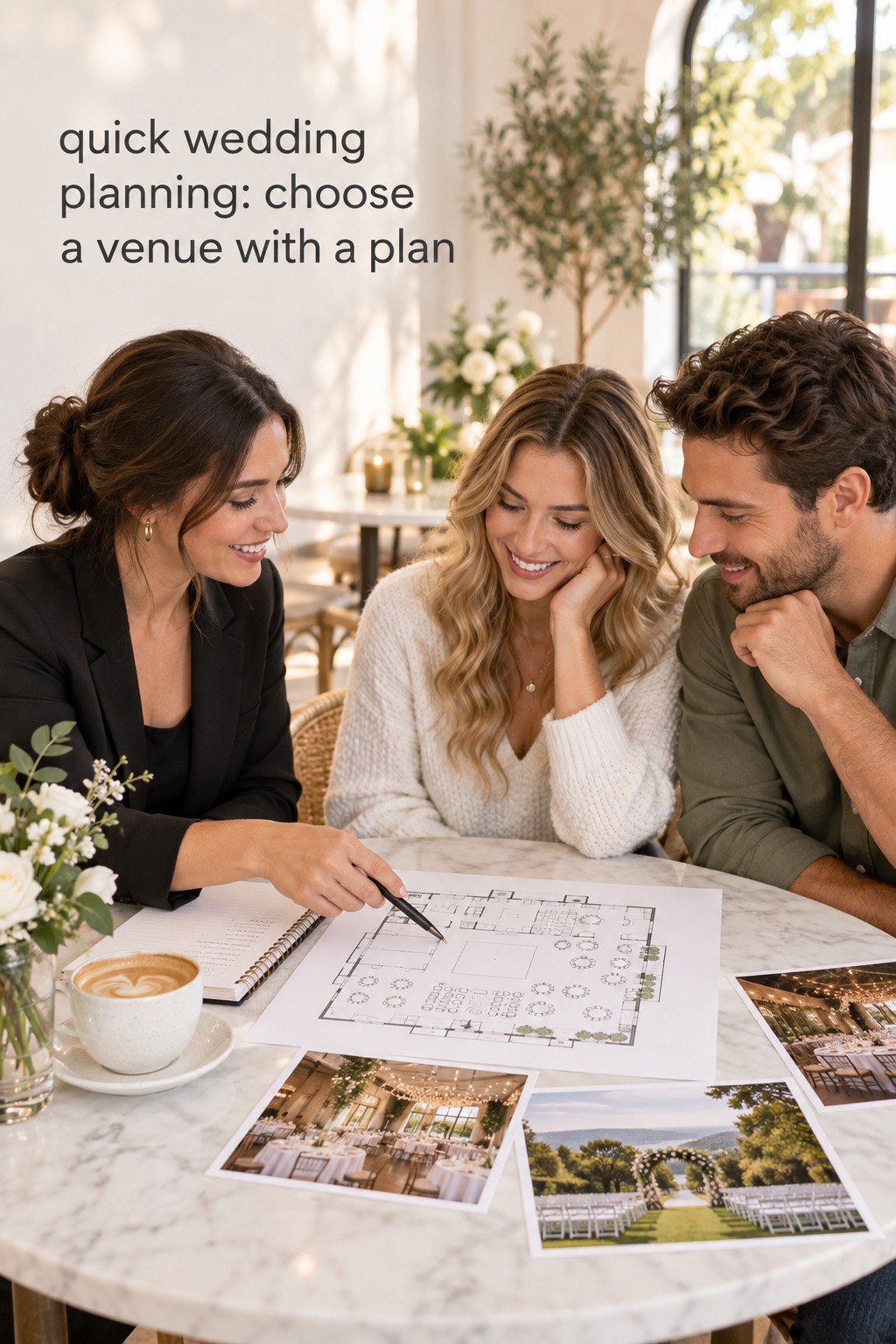
Use the first 72 hours to unlock the plan
Set one focused conversation with your partner and anyone whose financial approval is required. Begin with a budget ceiling you can fund, not an optimistic number based on hoped-for contributions. Include a reserve for taxes, service charges, delivery, alterations, and other items that appear in full proposals. If relatives are contributing, agree on an amount and conditions before counting it as available. Write the figure in a shared record. A clear ceiling makes vendor conversations faster and prevents a low starting quote from quietly becoming an unaffordable commitment.
Draft the guest list in circles. First name the people whose presence matters most, then add the next group only if the venue and budget allow it. You do not need every address immediately, but you do need a credible maximum before comparing spaces. Guest count affects capacity, food, seating, transportation, invitations, and the feel of the ceremony. Assign one person to maintain the list. If family expectations could change the number, write down the question and who will have that conversation instead of treating the count as settled.
Choose several acceptable dates or time windows, not one ideal Saturday. Check the availability of the people who must attend, then contact venues and officiants. If your first choice is unavailable, decide what can flex: weekday, season, start time, guest number, or event format. Flexibility works best with boundaries. “Any date is fine” creates another debate, while “Friday or Sunday during this six-week window, with a ceremony before five” gives suppliers something concrete to answer. This conversation makes priorities visible before a deposit is involved.
End the first conversation with a one-page decision brief: date range, location, guest ceiling, budget ceiling, must-haves, and who can approve a contract. Add the next three actions, each with an owner and deadline. One partner can request venue availability while the other confirms guest addresses and checks the officiant’s process. This page is the starting point for the plan. It lets you send accurate inquiries right away and catches assumptions before they spread to a vendor, guest, or family member.
Check the marriage-license process for the jurisdiction where the ceremony will take place. Requirements, appointment availability, waiting periods, and documents differ by location, so confirm them with the relevant government office or officiant. Put the responsible person and a date to verify details on your board. Do not rely on a generic checklist or a friend’s experience in another state. The task may be quick to confirm, but it deserves a firm place in the plan because a missed requirement can affect the ceremony itself.

Book the choices that control the rest
Date and venue usually depend on each other. Begin with spaces that fit your guest ceiling, budget, location, and must-haves. Ask for available dates and a written list of inclusions. Tables, chairs, food service, staffing, setup, and cleanup affect how many separate decisions remain. A package can save coordination, but “all-inclusive” does not automatically cover your needs. Ask about access hours, restrictions, overtime, weather arrangements when relevant, and costs excluded from the quote. Compare the complete written offer rather than choosing from photographs or a headline price.
After identifying a viable date and place, contact the vendors whose work most affects the day. That may be an officiant, photographer, caterer, coordinator, or musician, depending on your priorities. Send a concise inquiry with date and location, guest estimate, service needed, budget range, and the time by which you need to decide. Ask for availability, a complete proposal, and a contract. Use consistent questions so responses are easy to compare. Close the loop with suppliers you do not select, which keeps communication clear and avoids leaving them waiting.
Compare a small number of options against the same criteria: total price, inclusions, payment dates, cancellation terms, travel, setup, overtime, insurance requirements, and response time. A polished website cannot answer those questions for a specific booking. A fast decision can still be thoughtful if the comparison is consistent. When a supplier fits your budget, meets a must-have, and answers practical questions, choose and move forward rather than restarting the search for an imagined perfect option. Record the decision and link the signed agreement in the same planning space.
Set a fallback rule before a deadline is missed. If your first-choice venue has not confirmed availability by a set time, contact the next suitable option. If the preferred weekend is full, try the weekday or format you already agreed could work. If a vendor cannot deliver on schedule, choose an available alternative rather than redesigning the whole celebration. A written fallback turns a delay into a manageable branch. For major payments, verify the supplier, read the agreement, and confirm exactly what the deposit secures before sending money.
Keep attire, flowers, rentals, and printed goods tied to real lead times. Ask what is in stock, what can be altered, and when an item must be ordered or approved. Do not build other plans around a rush promise unless timing and terms are written down. If the custom choice cannot arrive with a sensible buffer, select an available option that still feels like you. A simple arrangement chosen early often creates less stress than an elaborate idea dependent on several late deliveries.

Run planning from one short decision board
Use one shared planning space that both partners can open easily. A spreadsheet, document, or planning tool can work. Keep the main view practical: task, owner, due date, status, next action, dependency, cost, and link to the relevant contract or file. Write one outcome per row. “Confirm ceremony start time” is easier to assign than a broad task called “ceremony.” Break work down until the next action can be completed without another planning meeting. A modest board that stays current is more useful than a complicated system no one wants to update.
Separate tasks from decisions. A task is work someone can complete, such as requesting a quote or confirming an appointment. A decision requires the couple or authorized person to choose between options. For each open decision, list the choices, what matters most, who has a say, and the date it must be made. When settled, record the outcome and tell anyone whose work depends on it. This avoids a task list full of questions nobody owns and prevents a settled choice from being debated again without new information.
Hold one short weekly check-in, perhaps twenty minutes, and add another conversation only when a real deadline requires it. Review what changed, what is blocked, what needs a decision, and what can wait. End by assigning the next actions and confirming the next check-in. Keep inspiration browsing outside the meeting unless it answers a current question. The point is not to discuss every detail each week. It is to keep important choices visible, avoid duplicate research, and notice a missed deadline while there is still time to choose a fallback.
When the board feels crowded, sort work in a consistent order. Handle legal and contract deadlines first. Next settle choices that unlock bookings or guest communication. Then address budget, access, food needs, transportation, and the event schedule. Only after those needs have owners should optional design details take time. Reapply the same order whenever someone proposes a new idea. If it does not support a must-have or solve a practical need, it can stay on the “not now” list. This filter protects attention as much as the budget.
Store files with names another person can understand, such as supplier name, document type, and date. Keep signed contracts, payment proof, latest floor plan, guest information, and current schedule easy to find. Link to original documents rather than copying sensitive information into a broadly shared view. Decide who may edit the master plan and who receives a read-only copy. A tidy file structure makes a handoff possible and lowers the chance that a helper acts on an old version. It is practical groundwork, not a reason to spend an evening designing folders.
Simplify the celebration without creating new problems
A short runway is a reasonable moment to reduce moving parts. You might consider a smaller guest list, a venue with services already arranged, a weekday, a shorter reception, digital invitations, or attire that is available now. Choose changes that suit your priorities and guests. Do not make every compromise at once. Start with the option that removes the most coordination, then see whether the remaining plan works. Simplicity should make the event easier to deliver, not add workarounds or make an important guest feel excluded.
Before dropping a detail, ask whether it is required by law or contract, important for access or safety, necessary for a guest to participate, or essential to the flow of the day. If yes, keep it and assign an owner. If not, ask whether it supports one of your must-haves. Guests need accurate date, location, timing, travel, and response information more than they need a custom paper suite. A long list of decorative extras is rarely more valuable than getting those practical facts right. Make the decision together and record it once, so it does not return as guilt.
Include practical guest needs early. Confirm routes, seating, restroom access, dietary requirements, and transportation information with the venue or caterer. Provide a clear way for guests to ask privately about what they need. You do not have to guess every situation; ask relevant guests directly and share confirmed arrangements with the people responsible. These details are part of hosting well. They are easier to manage when they appear on the same board as the other important logistics instead of being remembered during the final week.
Protect the budget while simplifying. Ask how attendance changes affect the price, what taxes or service charges apply, whether staffing is included, and when each payment is due. Compare the full commitment rather than the deposit alone. If the budget is tight, reduce scope before accepting terms you do not understand. Replacing a decorative element is usually easier than resolving an unclear payment schedule late in the process. Keep an updated total of booked amounts, remaining balances, and reserve. That gives both partners a shared view before they agree to another expense.
Give yourselves permission to stop adding tasks once the essential plan works. The event does not need every tradition, printed piece, or photo opportunity to feel complete. Keep a short “nice if possible” list and revisit it only after the venue, ceremony, food, core vendors, guest information, and schedule have owners. If an optional idea becomes available without displacing those needs, decide together. If it requires another supplier, delivery deadline, or payment, count that effort before agreeing. A small, finished plan can feel more generous than a large plan that leaves everyone rushing.
Give guests and helpers clear information early
As soon as the date and location are firm, share the essential facts with guests and say when formal invitations or further details will follow. Digital communication can help when time is short, but use a format guests can access and provide a contact for questions. Set a response deadline that gives the venue or caterer enough time to prepare. Track replies in one place and follow up politely with anyone who has not answered. Do not assume a group message reached everyone who needs to make travel plans.
Create a guest-facing page or message with the address, start time, travel details, parking or transportation notes, dress guidance, and access information. Assign one person to check it whenever something changes. If the time or location moves, notify guests directly instead of assuming they will notice an updated page. For a short engagement, clear information matters more than elaborate stationery. People can plan around concise, accurate details. Vague or changing information creates questions that the couple may have to answer repeatedly.
Choose a trusted person to handle routine questions on the wedding day. Give them the latest schedule, vendor contacts, venue access notes, floor plan, payment responsibilities, emergency contact, and a list of decisions they may make without calling you. Mark which situations should be escalated. Confirm this role before the final week and tell vendors who the point of contact is. A helper needs useful instructions and clear authority, not a folder of inspiration pictures without context. This handoff protects time for the couple to be present at their own celebration.
Run a final confirmation with the venue and each vendor. Verify arrival and access times, setup responsibilities, remaining balances, guest count, meal information, equipment, ceremony cues, transportation, weather contingency where relevant, and the person responsible for each handoff. Send the current schedule only to people who need it and replace outdated copies in shared folders. Set aside time to rest and eat. A wedding plan depends on the people carrying it, so the last step is making the day workable for them too.
For couples who want one place to keep the working plan, The Wedding Command Center can be a relevant planning resource for organizing wedding details. Decide what information you need together before choosing any tool, and use a system only if it makes your next steps easier to see. The plan should serve your decisions, not become another project that needs constant styling. You can begin with a simple shared document and add structure only when the number of tasks makes that worthwhile.
Sources and methodology
This guide combines short-engagement planning coverage with broader wedding-planning guidance, then organizes the advice around dependencies, scope, and ownership. For related reading, see The Knot’s three-month planning guide and Inside Weddings’ short-engagement advice. Venue availability and legal requirements vary by location, so confirm details with relevant offices and suppliers before making a commitment.

FAQ
How do you plan a wedding quickly?
Agree on a budget ceiling, guest range, date flexibility, and must-haves first. Then book the venue and vendors whose availability controls the rest. Use one shared board with an owner and due date for each task, and simplify details that do not affect the ceremony, guest experience, or logistics.
Can you plan a wedding in three months?
It may be possible, depending on location, guest count, budget, vendor availability, and legal requirements. Check dates and essential services first, then choose a format that fits what is actually available. Do not assume every vendor or custom item can meet a compressed timeline.
What should we book first for a quick wedding?
Start with decisions that unlock other work: date, venue, ceremony requirements, and priority vendors. The order can vary. Confirm the guest ceiling and budget before signing a venue contract, and contact a planner or officiant early if either is essential.
What can we skip when planning a wedding on short notice?
You can often simplify optional extras such as custom favors, elaborate printed stationery, extra events, or numerous design details. Keep anything required by law or contract, and protect guest access, food needs, clear communication, and a workable event schedule.
How can we make quick wedding planning less stressful?
Limit decisions to a few options that meet your requirements, set a deadline for each choice, and record who owns the next action. Hold a short weekly check-in and keep inspiration browsing focused on a current decision. Let a trusted helper handle routine questions.
Should we hire a wedding planner for a short engagement?
A planner may help if your budget allows and you need support comparing vendors, coordinating logistics, or managing a complex event. Ask what services are included, how soon they can begin, and whether they have relevant experience. For a simple wedding, a coordinator or trusted helper may fit better.
How do we tell guests about a short-notice wedding?
Share the date, location, start time, travel information, response deadline, and a contact as soon as core details are firm. Use a format guests can access, and send direct updates if anything changes. Track replies in one place so vendors receive accurate numbers.
Leave a Reply