
Wedding planning can feel like a second full-time job because every decision seems connected to five others. The guest count changes the venue, the venue changes the date, the date changes vendor availability, and the growing list of choices can make it hard to know what deserves attention first. The most useful wedding planning tips and tricks are not about doing more. They are about creating a small, dependable system that helps you make the right decision at the right time.
This guide is built for couples who want a beautiful, personal wedding without letting planning take over their relationship. Think of it as a capsule system for your wedding: a few clear priorities, a realistic budget, a shared workspace, a repeatable weekly rhythm, and a final handoff plan. You can scale every idea for an intimate celebration, a large reception, a destination wedding, or a short engagement.

Build the planning system before collecting inspiration
Inspiration is enjoyable, but it can also create noise. Before you save hundreds of ceremony photos or compare invitation fonts, decide how the two of you will make choices. A planning system does not need to be complicated. It needs to be easy enough to use when you are tired, busy, or disagreeing about a detail.
Choose three wedding priorities
Start by naming three outcomes that matter most to both of you. Your priorities might be an excellent meal, a relaxed guest experience, meaningful photography, live music, a specific location, or time with family. They are not a list of everything you like. They are the three things you would protect if the budget, timeline, or venue forced you to simplify.
Write each priority as an outcome rather than a category. “Food” is vague. “Guests eat well and have flexible options” is useful. “Photos” becomes “we have enough unhurried time for candid portraits and family photographs.” This language will help you evaluate packages and say no to attractive extras that do not support the day you actually want.
Create one home for every wedding detail
Set up a dedicated email address and one shared planning workspace. Keep contracts, quotes, inspiration, guest information, payment dates, questions, and decisions in predictable folders. A folder structure can be as simple as Budget, Guests, Vendors, Venue, Design, Attire, Ceremony, Reception, and Wedding Day. Use the same naming pattern for files so you can find a document months later.
- Decision log: record what you chose, why you chose it, and when to revisit it.
- Question list: collect questions for vendors instead of sending scattered messages.
- Payment tracker: list deposits, balances, due dates, taxes, service fees, and gratuities.
- Contact sheet: keep names, phone numbers, arrival times, and responsibilities in one place.
- Inspiration board: save references that explain your desired feeling, not just pretty images.
If you want a more structured planning resource, The Wedding Command Center can be useful as a central place to turn scattered wedding details into a clearer working plan. Use it because it supports the planning problem you are solving, not because you need another place to collect inspiration. Your system should reduce duplicate work and make the next action obvious.
Set a weekly planning rhythm
Choose one or two regular planning sessions each week and protect the rest of your time. A ninety-minute session is often enough when you arrive with an agenda. Begin by reviewing deadlines, then choose the three most important actions, then assign owners and finish by recording decisions. Keep one evening free from wedding talk so your relationship still has ordinary space.
Use a simple rule for incoming ideas: save them first, decide later. You do not need to respond to every trend, family suggestion, or social media recommendation immediately. A short pause gives you time to ask whether the idea supports your priorities, fits the budget, and makes the guest experience better.

Set the decision order: guests, money, date, and venue
Many planning problems begin when couples make decisions in an order that creates expensive changes later. You do not need a rigid formula, but a sensible sequence prevents avoidable rework. Confirm the shape of the celebration before committing to details that depend on it.
Estimate the guest list before touring venues
Make a working guest list early, even if it will change. Separate must-invite guests, important guests, and guests you would invite if the budget and space allow. Include children, plus-ones, parents’ guests, vendors who need meals, and people connected to cultural or family traditions. A rough number is much more useful than a wish that everyone might fit.
Ask every venue for capacity by room layout, not just a headline maximum. A space that holds 180 people for a cocktail reception may feel crowded with a dance floor, buffet, band, lounge furniture, and a ceremony setup. Guest count also affects transportation, restroom needs, rentals, bar staffing, meal costs, stationery, and the amount of time required for photographs.
Build a priority-based budget
Start with the total amount you can spend without creating financial strain, then list confirmed contributions and the date those funds will actually be available. Keep a separate line for a contingency reserve. A budget is not only a collection of category percentages. It is a set of trade-offs that should reflect your priorities.
- Write the ideal version of each priority and a simpler version that still feels good.
- Ask vendors for complete pricing, including taxes, delivery, setup, overtime, service charges, and gratuity guidance.
- Track what is paid, what is contracted, what is estimated, and what is still unknown.
- Keep a hidden-cost section for postage, alterations, meals for vendors, transportation, cleanup, permits, and tips.
- Review the budget after every major booking instead of waiting for a monthly surprise.
Do not use a low quote as proof that a vendor is affordable. Compare the scope of work and the assumptions behind the number. A cheaper package may exclude setup, a second photographer, delivery, staffing, or the exact service hours you need. Clear questions now are kinder to your future selves than an uncomfortable renegotiation later.
Choose the date and venue as a connected decision
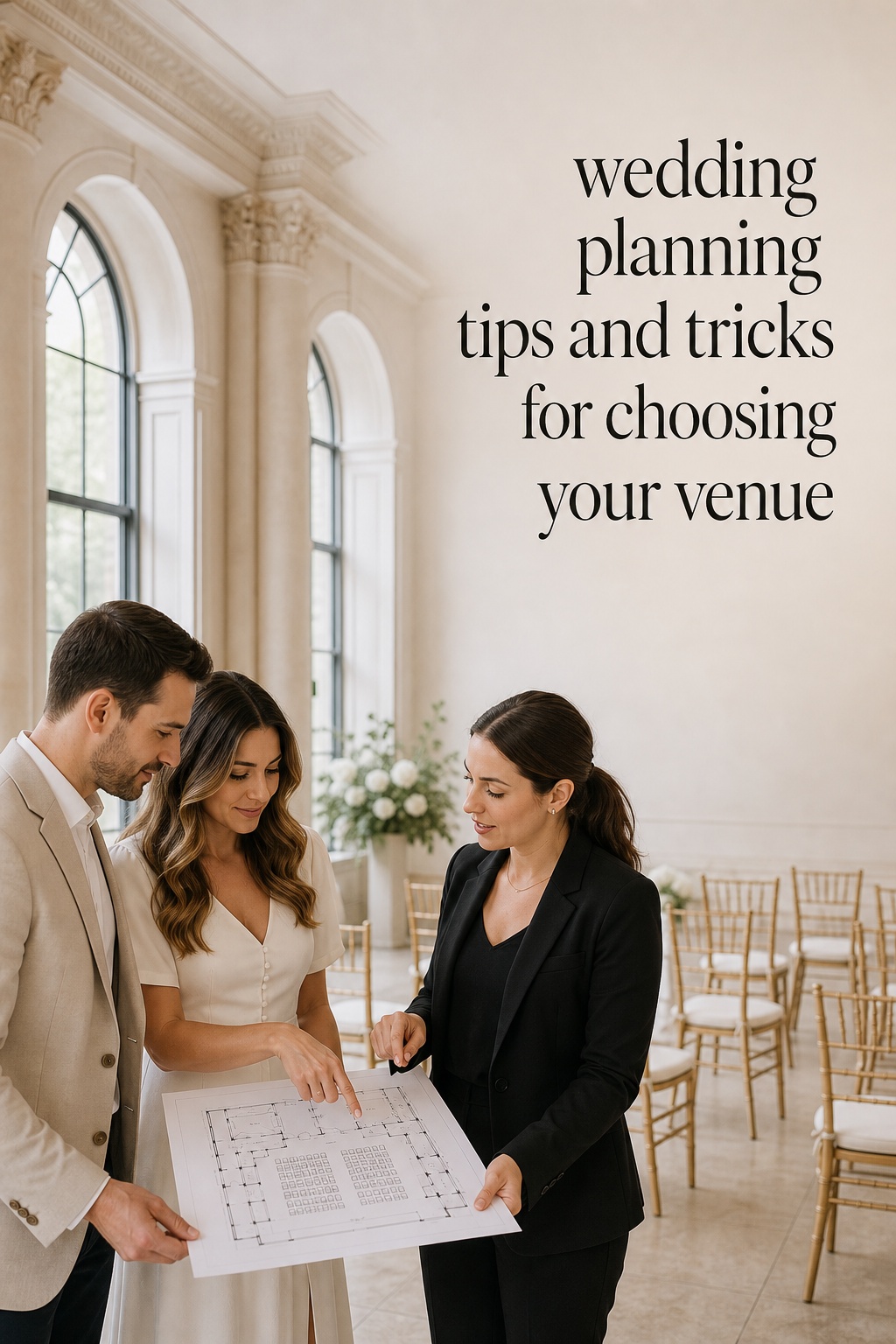
Before you fall in love with one date, list the flexibility you have. Consider season, weather, travel, school calendars, holidays, local events, daylight, and the availability of your most important guests. Then compare venues using the same questions every time: total cost, included rentals, rain plan, vendor restrictions, end time, accessibility, parking, getting-ready areas, and cleanup responsibilities.
Ask what happens when plans change. Read cancellation, rescheduling, force majeure, overtime, damage, and payment terms before signing. Keep the answer in your decision log. It is easy to remember the romantic parts of a venue tour and forget the practical terms that shape your risk.
Use a capsule set of tools for vendors, design, and guests
Once the foundation is set, choose tools that support execution. The goal is not to create a separate app for every category. It is to give each kind of information a clear home and each person a clear responsibility.
Ask vendors questions that reveal fit
Vendor research should compare working style as well as portfolio. Ask how they communicate, who will be present, what happens if they are ill, when they need final information, and which parts of the package are flexible. Request a sample timeline or description of a typical wedding day when that is relevant to the service.
For photographers, ask about backup equipment, image delivery, family-photo planning, and how they handle difficult light. For caterers, ask about tastings, dietary needs, rentals, staffing, vendor meals, and late-night food. For florists, ask about substitution policies, setup access, strike time, and what happens if seasonal flowers are unavailable. For entertainment, ask about sound limits, emcee duties, announcements, breaks, and backup plans.
Make the design cohesive without making it rigid
Choose a small design vocabulary: two or three colors, one or two materials, a floral direction, and a feeling you want guests to experience. This gives your stationery, attire, tables, signage, and florals a relationship without requiring every element to match perfectly. Your wedding will look more intentional when you edit the number of competing ideas.
Use inspiration to communicate scale, texture, and mood. Do not assume a single image represents a real budget or a complete rental list. Before saving a reference, write one sentence explaining what you like. “Soft candlelight and long-table conversation” is more helpful than saving a photograph with no context.
Design the guest communication journey
Guests should not have to search through multiple messages to understand what is happening. Your wedding website, invitation suite, confirmation email, and day-of signage should answer the same core questions: when and where to arrive, what to wear, how to travel, where to stay, whether children are invited, and who to contact with accessibility or dietary needs.
Keep a change log for guest-facing information. If the ceremony time, shuttle plan, hotel block, or dress code changes, update every location and assign someone to check that the old information is not still being shared. This small habit prevents confusion in the final weeks.
Assign ownership without turning planning into management
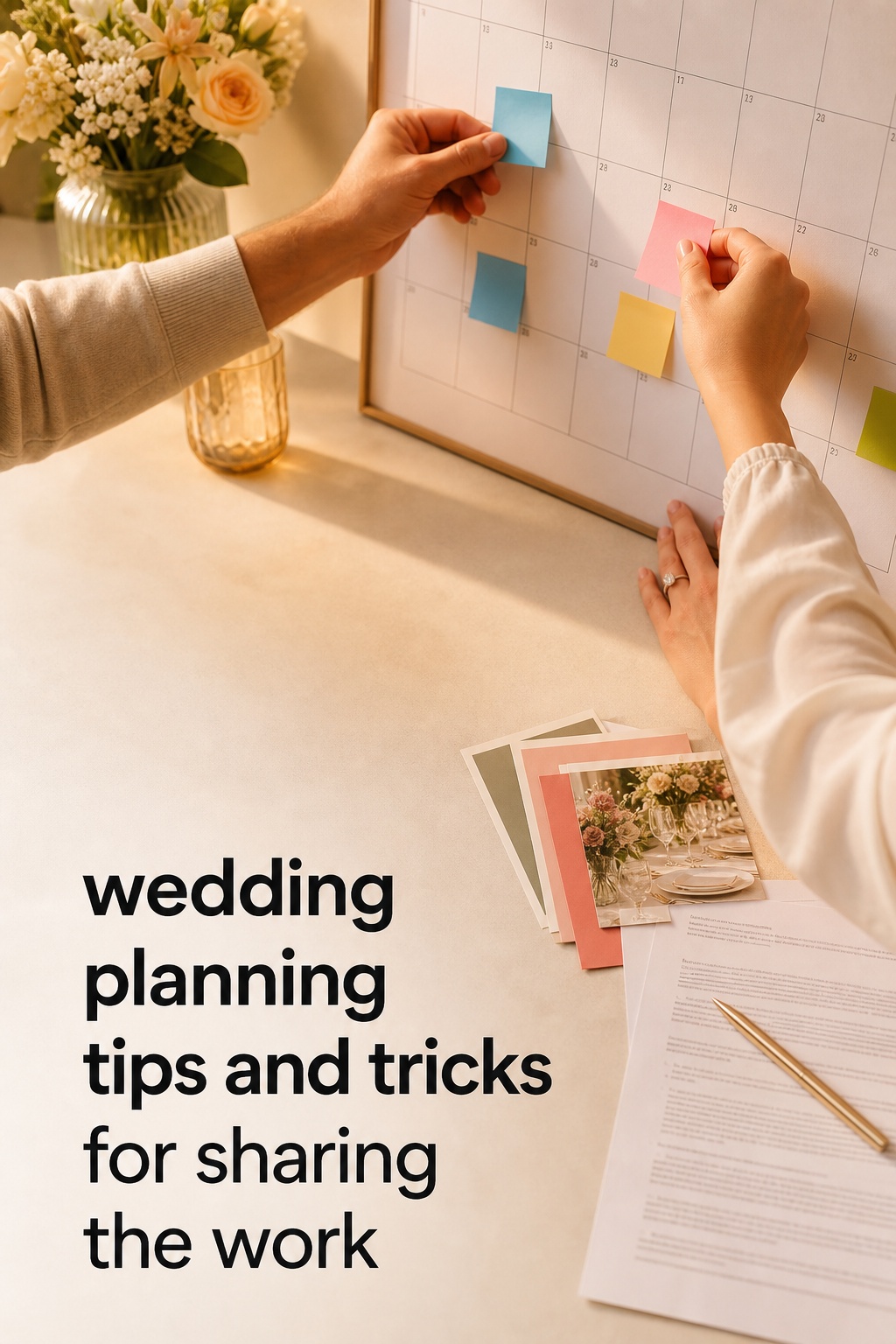
Shared planning works best when ownership is specific. “We need to think about flowers” is not an action. “Alex will collect three florist proposals by Thursday, and both partners will choose which questions to ask on Sunday” is an action. Make space for both partners to own meaningful decisions, even if one of you enjoys logistics more.
Family and friends can help when their role is clear. Give them bounded tasks such as collecting addresses, hosting a welcome event, assembling favors, or managing a shuttle list. Avoid giving someone responsibility without access to the information they need. Also avoid asking five people to approve one decision. A small decision committee keeps feedback useful.
Review the details, protect your energy, and prepare the handoff
The final stage is not about adding more decorations. It is about closing loops, testing assumptions, and making sure the couple is not still acting as the operations team on the wedding day.
Run a hidden-cost and contract review
Six to eight weeks before the wedding, review every contract and payment tracker from the same starting point. Confirm final guest-count deadlines, balance dates, delivery windows, setup access, meal counts, overtime rates, insurance or permits, and who is authorized to approve changes. Then create a list of every cash or digital payment needed on the wedding day.
- Postage, address corrections, and extra stationery.
- Dress, suit, and accessory alterations.
- Vendor meals, transportation, parking, and hotel rooms.
- Late-night snacks, water, coffee, and accessibility needs.
- Cleanup, trash removal, restroom service, heaters, fans, or rain-plan rentals.
- Gratuities, tip envelopes, and last-minute purchases.
These items are not evidence that you planned badly. They are normal parts of a complex event. Naming them early gives you choices, while discovering them during the final week removes choices.
Schedule quiet moments on purpose
Put time with your partner on the official timeline. A short private pause after the ceremony, a meal you can actually eat, and ten minutes to see the reception space can make the day feel like yours. If these moments are not assigned a time and protected by another person, they will disappear into greetings, photographs, and questions.
Do the same during the planning process. Keep some weekends free from errands. Plan a date that is not a venue tour. If a decision can wait one week without changing your options, let it wait. A calm couple usually makes clearer choices than a couple trying to eliminate every uncertainty at once.
Prepare a day-of handoff folder
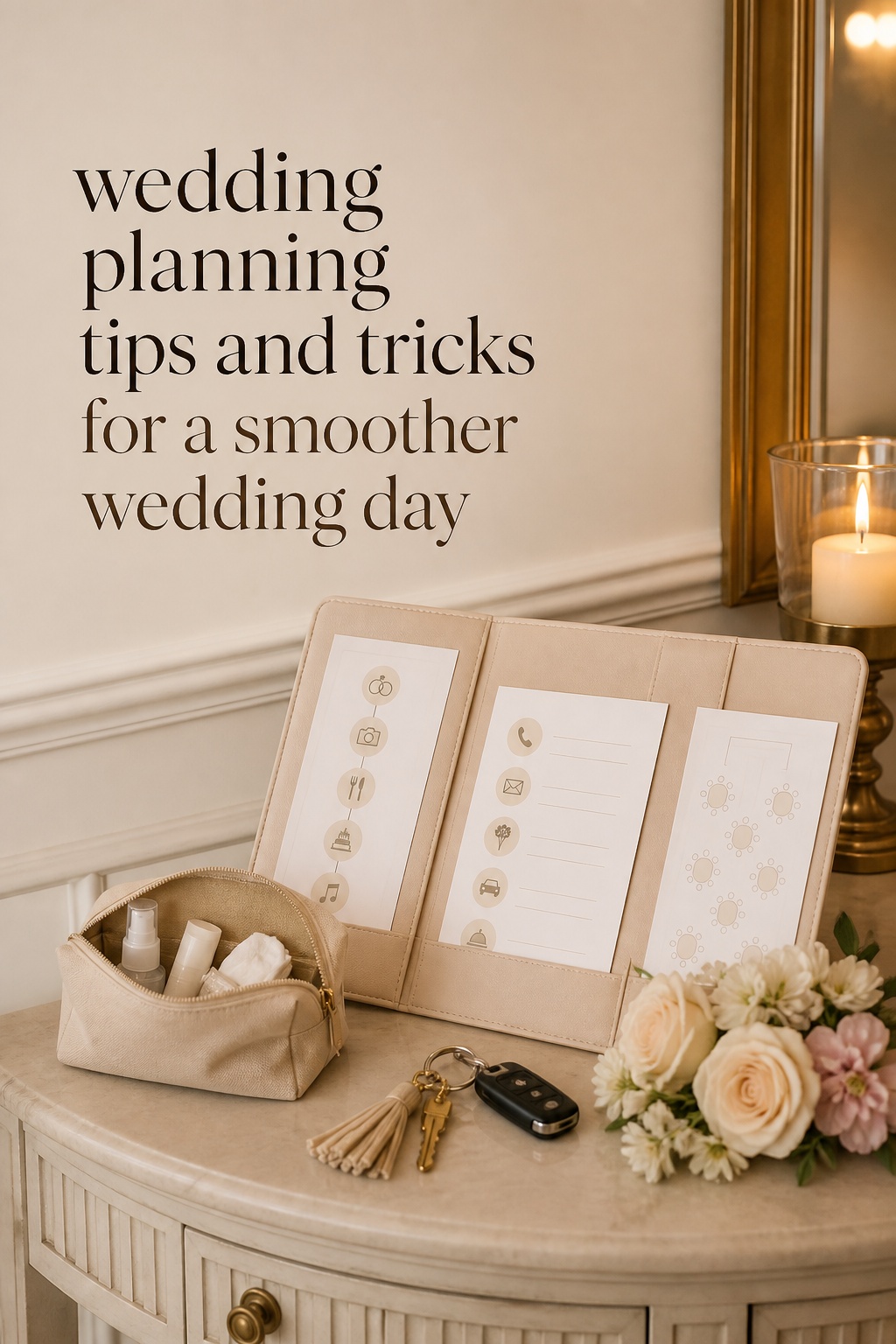
One week before the wedding, create a concise handoff folder for the planner, coordinator, trusted friend, or venue contact who will answer questions. Include the final timeline, vendor contacts, floor plan, seating chart, payment notes, emergency contacts, transportation details, ceremony cues, family-photo list, meal notes, rain plan, and a list of decisions that are already final.
Do not hand over every conversation you have ever had. Give the person running the day the information they need to act. Mark the documents with version dates. Walk through the folder in a short call and identify which decisions they can make without contacting you. Your goal is not to control every minute. It is to give the right person enough context to protect the experience.
The best wedding planning tips and tricks create confidence through repetition. When your guest count is visible, your budget reflects your values, your vendors understand the plan, and your final details have an owner, the celebration has room to feel personal. You do not need a perfect plan. You need a shared plan that is clear enough to adapt.
FAQ
What should we do first after getting engaged?
Give yourselves a short pause, then agree on a rough guest count, three wedding priorities, a realistic spending limit, and the way you will store planning information. Those decisions create a foundation for venue and vendor research.
How can we keep wedding planning from becoming overwhelming?
Use one shared workspace, plan in one or two scheduled sessions each week, and choose only three next actions at a time. Keep at least one regular period free from wedding conversations so your relationship is not reduced to logistics.
Should we choose a venue before finalizing the guest list?
Create a working guest list before touring venues. It can change, but a realistic estimate helps you compare room layouts, catering costs, transportation, rentals, and the overall guest experience.
What is the most important wedding budget trick?
Separate confirmed costs, estimates, and unknown costs, then keep a contingency reserve. Ask vendors for itemized totals that include taxes, fees, delivery, setup, overtime, and gratuity guidance before comparing packages.
How do we know whether we need a wedding planner or coordinator?
Consider help when you are unsure what to ask vendors, coordinating many locations, hosting more than your trusted helpers can manage, or struggling to protect your own time. A coordinator is especially valuable when someone needs to run the timeline and answer questions on the wedding day.
What should be included in a wedding day handoff?
Include the final timeline, vendor contacts, floor plan, seating chart, transportation, payment notes, family-photo list, meal information, emergency contacts, rain plan, and clear decision authority. Use dated files so everyone knows which version is current.
Can these wedding planning tips and tricks work for a short engagement?
Yes. Keep the same decision order, but shorten the review cycle. Make the guest estimate, budget, priorities, date, and venue your first decisions, then use a shared tracker to identify deadlines and delegate tasks immediately.
Leave a Reply