
A two-year engagement can feel wonderfully spacious until every month starts looking like an empty box that needs to be filled. You may hear that you should book everything immediately, choose your wedding party years ahead, or make every design decision before the excitement settles. That pressure can turn useful breathing room into a second job.
This two year wedding planning timeline is designed for couples who want a clear path without manufacturing urgency. It separates decisions that protect your date and budget from choices that become better when made closer to the wedding. The goal is not to stay busy for 24 months. The goal is to create a sequence that gives important decisions enough attention, leaves room for life to change, and keeps the wedding connected to the people getting married.

Use the month markers as planning windows rather than strict deadlines. A popular Saturday, destination wedding, religious ceremony, large guest list, or custom attire may require earlier action. A weekday celebration, intimate guest count, or flexible location may give you more time. Let your date, location, guest experience, and priorities shape the pace.
Why a two-year engagement can solve common planning problems
The most common wedding-planning friction is not a lack of ideas. It is having too many decisions compete for attention at once. Couples try to estimate the guest count before discussing family expectations, compare venues before defining the kind of celebration they want, and choose details because a deadline feels close. A longer timeline creates space to put those decisions in the right order.
Two years can also help with availability. Popular venues and sought-after photographers may open their calendars far ahead, especially for peak-season Saturdays. If your date is flexible, you may not need to move so early. If your date is emotionally or logistically important, the extra time gives you a better chance of securing a strong fit instead of accepting the first available option.
The extra months are most valuable when they become buffer, not pressure. Use them to compare proposals, understand contracts, build savings, accommodate travel, and revisit choices after you have more information. Do not use them as a reason to make every small decision twice.
Before you begin, agree on three planning principles. First, decide which parts of the wedding matter most to both of you. Second, choose where planning information will live so neither partner has to become the human filing cabinet. Third, set a meeting rhythm that protects ordinary relationship time. A timeline should support your life together, not take it over.
Months 24 to 19: define the wedding before you shop
At the beginning of a two-year wedding planning timeline, resist the urge to start with decor. Start with the shape of the celebration. Talk about whether you imagine a large gathering, a small dinner, a destination weekend, a religious ceremony, a civil ceremony, or something less traditional. The answer does not need to be polished. It needs to be shared.
Draft a preliminary guest range rather than a perfect guest list. A range such as 60 to 80 guests is more useful than a spreadsheet full of unresolved names because it helps you evaluate venues and costs without pretending that every social question is already settled. Note the guests whose attendance is essential, the guests who may require travel support, and any family expectations that could affect the number.
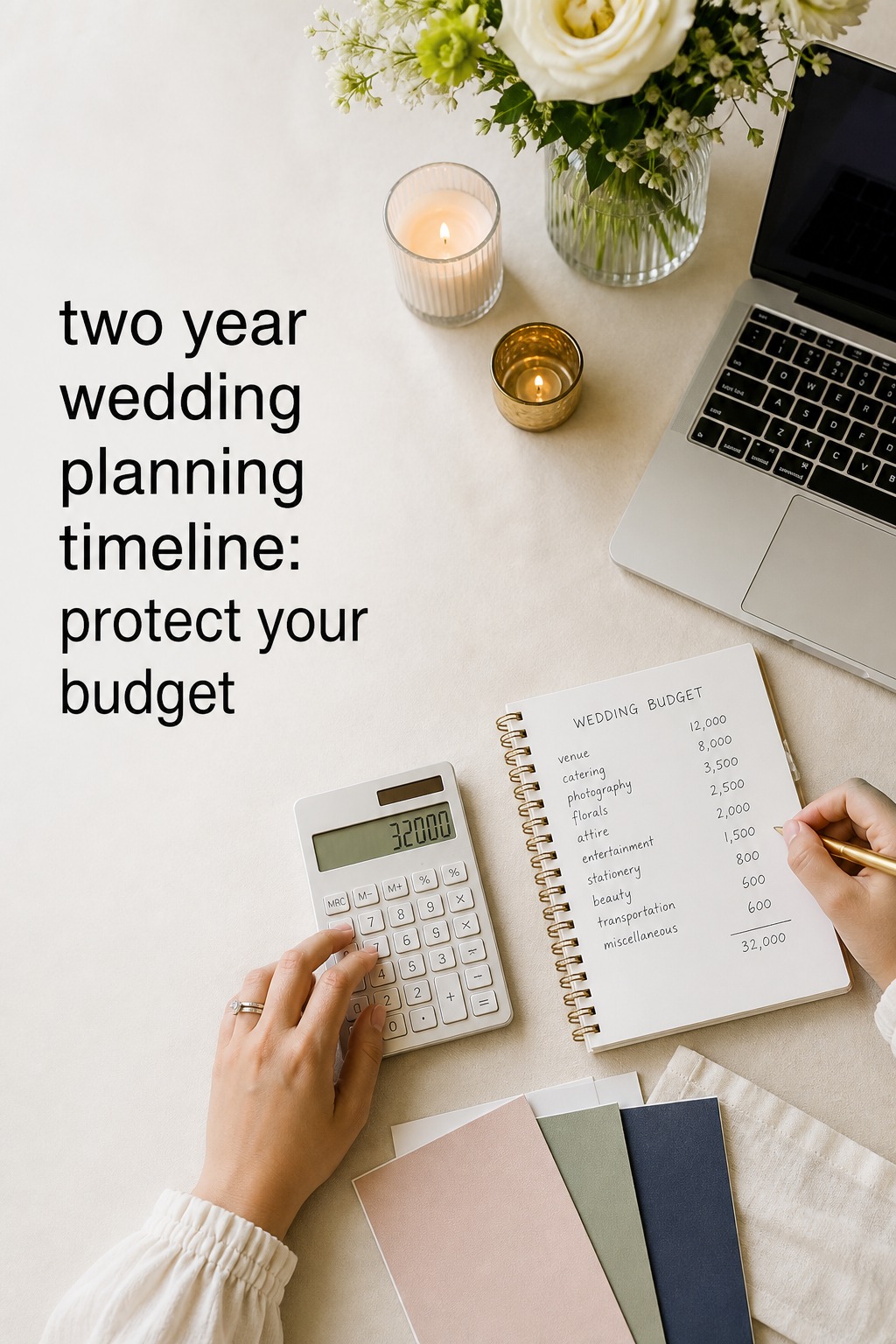
Build a working budget from priorities, not from a single number found online. List the categories that are most important to you, then identify the areas where you are comfortable simplifying. Include taxes, service charges, attire alterations, stationery postage, transportation, tips, welcome events, and contingency money. A budget that leaves no room for surprises is not a realistic budget.
Choose a short list of possible seasons and locations. Think about weather, travel time, family calendars, school schedules, holidays, local events, and the light you want for photographs. If your wedding will be outdoors, investigate the backup plan now. A beautiful idea becomes much easier to evaluate when you know what happens if the weather changes.
This is also a good time to create a shared planning workspace. Keep the budget, guest range, venue research, questions for vendors, decision notes, and timeline together. The Wedding Command Center can be useful here as a central planning resource when you want both partners to see the same priorities and next steps. The point is shared visibility, not adding another app for its own sake.
Do not choose every member of the wedding party at this stage unless the decision is already clear and stable. Two years is a long time, and friendships, work schedules, living arrangements, and family circumstances can change. You can discuss the kind of support you want without treating an early conversation as a final announcement.
Months 18 to 13: secure the date, venue, and core team
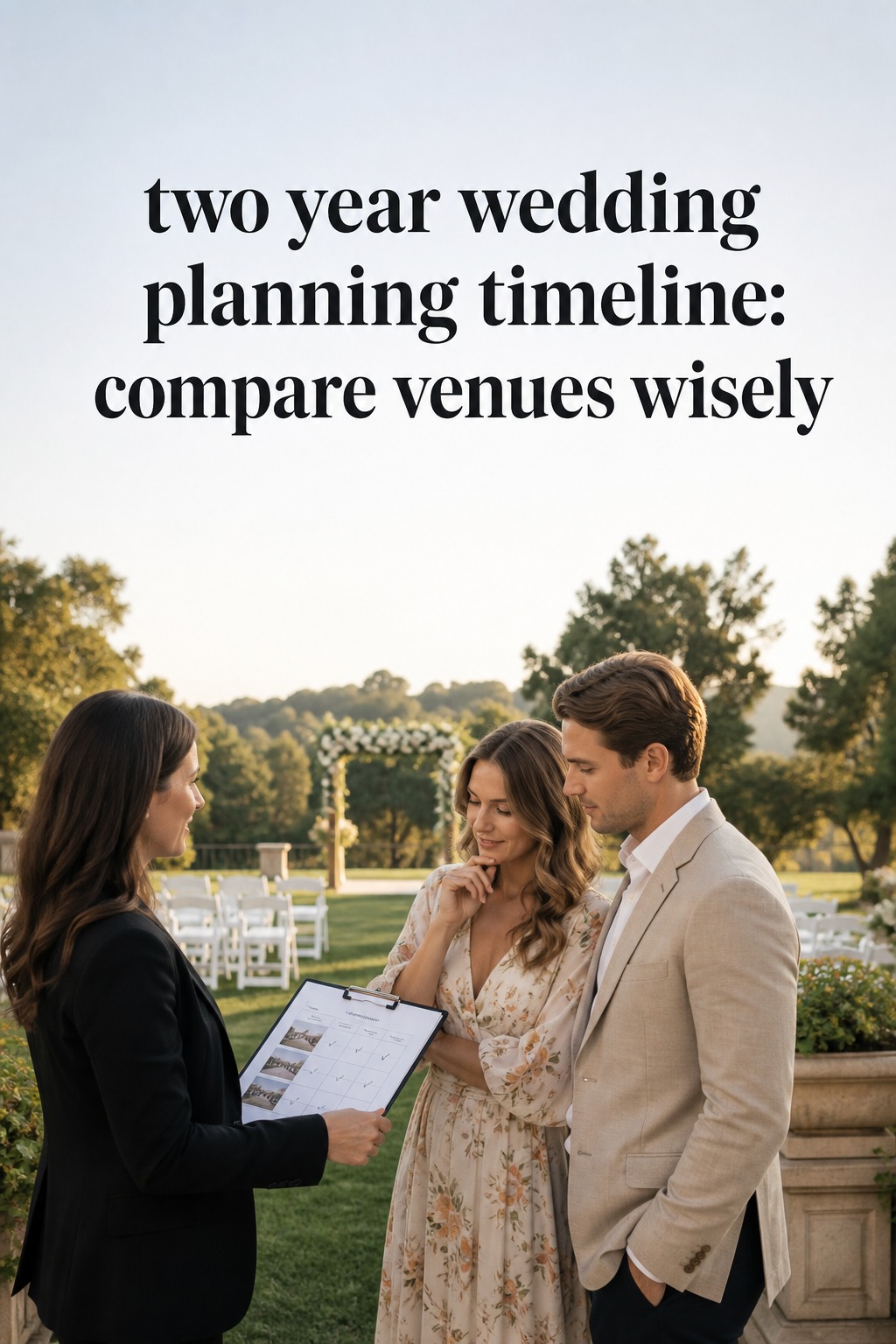
Once you know the approximate size, style, location, and budget, begin venue research. Read the full contract, not only the brochure. Ask about access hours, rain plans, noise limits, catering rules, staffing, cleanup, insurance, payment dates, and restrictions on candles, amplified music, or outside vendors. A venue is not only a backdrop. It determines many of the decisions that follow.
Compare venues using the same questions and the same estimated guest count. Record the total expected cost, not just the rental fee. Include required catering, bar service, rentals, ceremony fees, transportation, and overtime. A consistent comparison makes it easier to notice when a lower headline price creates more work or more spending later.
After the venue and date are secured, book the vendors whose availability matters most to you. For many couples, that may include a photographer, videographer, planner or coordinator, caterer, entertainment, and officiant. The right order depends on the venue contract and your priorities. A planner can be especially valuable if the celebration involves multiple locations, complex logistics, or a large guest experience.
Review every vendor agreement for the same basic information: services included, payment schedule, cancellation terms, substitution policy, overtime rates, delivery details, and what happens if the event must move or be postponed. Save the signed contract and payment record in the shared workspace. Put reminders on the calendar before the due dates arrive.
During this phase, you can begin a mood board, but keep it broad. Save references for ceremony atmosphere, dinner tables, flowers, attire, paper goods, and photography. Look for repeated patterns rather than copying one image. You are trying to identify what feels consistent, not lock yourself into a centerpiece before you know the room.
If you plan a destination wedding or a multi-day celebration, start guest communication earlier. A simple announcement with the date, location, and expected travel needs may be more helpful than a detailed design update. Give guests time to think about passports, childcare, lodging, and time away from work.
Months 12 to 7: turn the plan into guest and design decisions
At the one-year mark, the wedding should have a stable foundation. Now you can make decisions that depend on the venue, season, guest range, and core vendor team. Review the budget against actual contracts and deposits. Update the expected total whenever a new quote arrives. If a category is trending higher, adjust an intentional priority rather than quietly hoping the difference disappears.
Refine the guest list and prepare save-the-dates when the date and location are firm. Check names and addresses carefully, especially for guests who have moved or who will receive a single invitation as a household. If many guests will travel, include accommodation information as soon as it is useful. Good communication reduces the number of urgent questions later.
Begin attire shopping with the lead times that apply to your choices. Custom garments, made-to-order dresses, suits, international shipping, and multiple alterations may require more time. Keep the final fitting schedule in view, but do not treat the earliest possible purchase as automatically better. Buy when the design, budget, and body-change expectations are understood.
Develop the ceremony and reception experience in layers. Decide what guests need to know, what they need to feel, and what they need to do. This can guide choices about seating, signage, music, food service, transportation, accessibility, and the flow between locations. A design decision is stronger when it solves a guest problem as well as looking attractive.
Use this middle period for vendor meetings and questions, not endless browsing. Prepare a short agenda before each call. Ask what information the vendor needs from you, what decisions can wait, and what deadlines are genuinely important. Keep a decision log with the choice, date, reason, cost impact, and person responsible for the next step.
Choose the wedding party when you are ready to discuss real responsibilities. Explain the expected time, costs, travel, attire, and emotional support before anyone says yes. Clear expectations are kinder than a vague role that later becomes a surprise bill or a second job.
Months 6 to 0: finalize, hand off, and protect your energy
Six months before the wedding, shift from exploration to completion. Finish the vendor team, confirm attire orders, refine the ceremony, review transportation, and decide which paper goods or signage need production. You do not need every tiny detail finished on the first day of this phase. You do need a reliable list of what remains, who owns it, and when it becomes urgent.
As invitations approach, check the wording, schedule, venue address, response method, meal questions, and any useful travel information. Build a system for tracking responses and follow-up. Avoid relying on memory for dietary requirements, accessibility needs, plus-one decisions, or guest transportation. These details affect real people and often affect the final vendor count.
Three months out is a practical time to finalize the major visual and experiential choices. Confirm the menu, flowers, rentals, music direction, ceremony readings, and photo priorities. Schedule attire alterations and beauty trials with enough room for adjustments. If you have been waiting on a decision because it depended on another vendor, resolve the dependency rather than letting the item remain open.
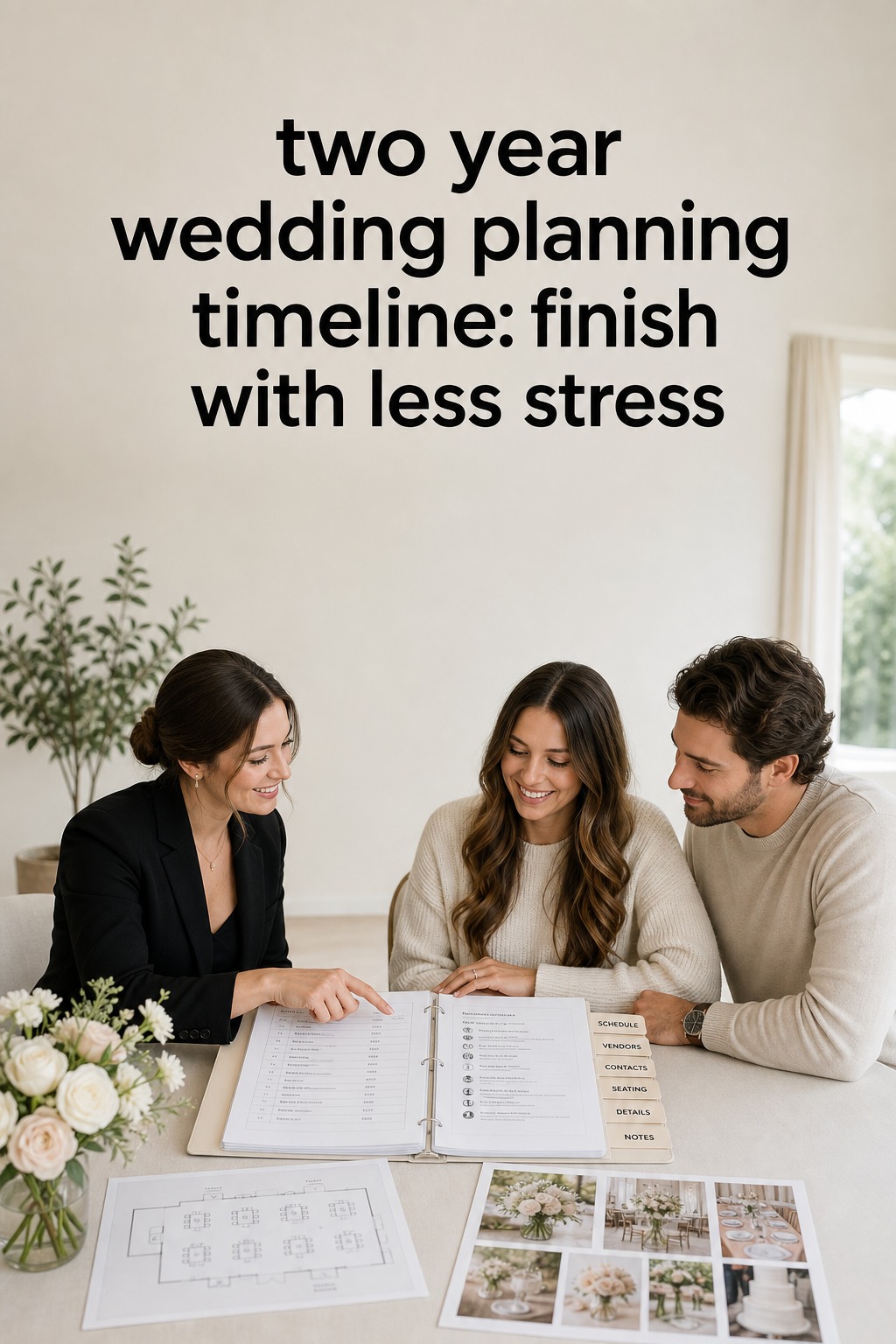
One month out, the plan should become a handoff document. Include the final guest count, seating plan, vendor contacts, payment notes, delivery windows, floor plan, ceremony order, family photo list, transportation details, emergency contacts, and the person authorized to make decisions on the day. Share the version that vendors actually need, with sensitive personal information limited to the people who require it.
In the final two weeks, confirm rather than redesign. Check the final schedule with the planner, coordinator, venue, and key vendors. Complete the marriage-license research for your location because requirements, waiting periods, and validity windows vary. Prepare tips and final payments according to your contracts. Assign questions to someone else whenever possible.
During the final week, protect sleep, food, movement, and time with your partner. A two year wedding planning timeline is successful if it gives you a calm finish, not if it produces a perfect archive of decisions. Let your support team carry the operational details so you can be present for the people and moments you planned to celebrate.
After the wedding, save the final vendor contacts, contracts, photographs, guest notes, and important documents in one place. Send thank-you messages while the memories are fresh, but do not expect yourself to complete every post-wedding task immediately. The planning system can close gradually. The marriage does not need another deadline.
FAQ
Is two years too long to plan a wedding?
Two years is not too long if you use the extra time for availability, savings, travel planning, and thoughtful decisions. It may be unnecessary for a flexible, intimate wedding. The best timeline is the one that matches your date, location, guest needs, and priorities without creating busywork.
What should you book first when planning two years ahead?
Start with the wedding date and venue, then book the core vendors whose availability is important to you. Before signing, compare full costs and contract terms. The exact order may change for destination weddings, religious ceremonies, or celebrations that require a specialist vendor.
When should you make the guest list?
Create a preliminary guest range at the beginning so you can evaluate venues and budget. Refine the actual list after the date and location are secure, then check names and addresses before save-the-dates and invitations. Keeping a clear range early is more useful than forcing every decision immediately.
What wedding details should wait until closer to the date?
Many couples can wait on exact floral recipes, final seating, detailed signage, beauty appointments, guest meal selections, and the day-of schedule. These choices depend on the final guest count, season, venue layout, and vendor advice. Research early, but commit when the information is strong enough to make the decision useful.
How can couples divide wedding-planning responsibilities?
Divide ownership rather than assigning occasional errands. One partner can own vendor questions while the other owns guest communication, for example, with both partners reviewing budget changes and major contracts. Write down the owner, next action, and due date so responsibility does not remain invisible.
How do you avoid wedding planning taking over your relationship?
Set a regular planning meeting with a clear end time, keep a shared list of open decisions, and protect conversations that are not about the wedding. Use your two-year timeline to pause between major choices. The purpose of more time is to make room for your relationship, not to fill every evening with research.
Leave a Reply