
At the first family meeting, the wedding can feel less like a single event and more like a room full of open doors. One relative is thinking about the traditional ceremony. Another is already discussing the white wedding reception. Someone is asking which guests should receive aso ebi, while a cousin is wondering whether the couple will host everyone in one city or divide the celebration across several days. That lively abundance is part of what makes a Nigerian wedding meaningful, but it also makes a clear plan essential.
This Nigerian wedding planning checklist is designed for couples, families, and wedding planners who need a practical sequence without flattening different cultures into one formula. Yoruba, Igbo, Hausa, inter-tribal, Christian, Muslim, civil, and diaspora celebrations can follow different customs. Use this guide as a conversation framework, then confirm the details that belong to your families, elders, religious leaders, venue, and legal authorities. A checklist should protect the celebration, not replace the people who give it meaning.

Read the checklist from beginning to end once before assigning tasks. Then return to the section that matches your planning stage. Mark each action with one owner, one next step, and one date. A shared workspace such as The Wedding Command Center can help partners and trusted family leads see the same decisions, especially when some people are planning in Lagos, Abuja, London, Toronto, Atlanta, or another city. The value is a visible source of truth, not another place to hide unfinished work.
Start with the shape of the celebration
Before you compare venues or choose colors, name the events you are actually planning. A couple may have an introduction, a traditional engagement, a church or mosque ceremony, a court wedding, a reception, a welcome dinner, or a post-wedding gathering. Some couples combine events on one day. Others separate them so each family can participate fully. There is no universal correct sequence. The useful first decision is to list every proposed event and state whether it is essential, optional, or still under discussion.
Ask both partners to describe the experience they want guests to remember. One person may care most about honoring an elder, while the other may prioritize an intimate ceremony, generous food, dancing, fashion, or a smooth guest journey. Write both answers down before negotiating the details. This short exercise turns abstract expectations into planning priorities. It also gives you a respectful way to explain why a choice matters when conversations become crowded with other people’s ideas.
Create a preliminary guest range rather than a final list. Separate essential guests, family invitations, community invitations, work contacts, and plus-ones. Note guests who may need travel, lodging, childcare, accessibility support, or a remote option. In a large Nigerian celebration, the difference between 250 and 400 guests changes the venue, catering, security, transport, seating, and budget. A range lets you make early decisions without pretending every family conversation is already complete.
Set a decision rule for cultural questions. If a custom is specific to one family, ask the relevant elders rather than searching for a generic internet answer. If the couple comes from different backgrounds, list which elements each person hopes to include and where compromise is possible. Keep the language curious and concrete: what happens, who leads it, what items are needed, how long it takes, and which parts are private. This approach prevents a ceremony from becoming a performance of assumptions.
Choose a working date window and location strategy. Consider the dry and rainy seasons, travel time between cities, religious calendars, school schedules, major holidays, and vendor availability. If guests will fly from abroad, share the likely city and month as soon as it is responsible to do so. A date is not only a pretty square on a calendar. It is a promise about transport, weather, family energy, and the time everyone needs to participate.
Build a budget and guest system that families can trust
Begin the budget with actual sources of money and clear responsibilities. List the couple’s contribution, each family’s expected contribution, gifts that are confirmed, and amounts that are still hopes. Then divide the plan into the traditional event, ceremony, reception, attire, food and drinks, venue, decor, photo and video, music, beauty, transport, stationery, accommodation, security, legal requirements, and contingency. Use the same categories for every new quote so the total remains visible.
Ask every contributor what they are comfortable funding and whether the money is intended for a specific category. A relative may want to cover the traditional attire, while another family member may prefer to pay for food. Record the agreement in neutral language and revisit it when prices change. This is not about turning affection into accounting. It is about preventing a last-minute expectation from becoming a crisis for the couple or the planner.
Keep a contingency reserve from the beginning. Large celebrations often reveal costs that are easy to miss in an early conversation: overtime, generator power, extra chairs, rain protection, security, last-minute transport, additional food, tailoring changes, delivery fees, and currency movement. A reserve is not money waiting to be spent. It is permission to solve a real problem without taking money away from a more important promise.
Give the guest list a clear owner and a reliable process. Use one master list with household names, phone numbers, email addresses, city, invitation group, response status, meal information, transport needs, and notes about privacy. Do not allow several family spreadsheets to become competing versions of the truth. If a family lead must collect names, give that person a deadline and a format. The couple or planner should then consolidate the information before it reaches vendors.
Decide how you will handle unexpected guests with dignity. Nigerian weddings can attract people who feel connected to the families, and a strict gate can create its own tension. Talk with the venue, caterer, ushers, security lead, and family representatives about capacity and escalation. Build a modest food and seating buffer where the budget allows, but do not promise unlimited access. A clear, calm process protects guests and the hosts at the same time.
Choose a payment and recordkeeping method that works for the people involved. Keep receipts, deposits, contract copies, and delivery confirmations together. If you are planning across currencies, record the currency, exchange assumption, date, and who bears any change. A weekly budget review can be short. It should answer three questions: what changed, what is due next, and which decision needs the couple’s attention.

Coordinate vendors, attire, aso ebi, and ceremony roles
Book the vendors whose availability protects the experience you care about most. Depending on the celebration, that may include a planner or coordinator, venue, caterer, photographer, videographer, makeup artist, gele stylist, tailor, decorator, DJ, live musicians, MC, officiant, ushers, security, transport, and rental team. Do not choose solely from a beautiful image. Ask how the vendor handles timing, power, weather, family communication, payment, substitutions, and a busy event with several moving parts.
Read contracts as an operating document. Highlight arrival time, access hours, setup responsibility, meal requirements, overtime, cancellation, postponement, replacement staff, delivery, cleanup, insurance, and final payment. Confirm which person may approve a change on the wedding day. If a vendor is working from another city or country, agree on a communication rhythm and identify a local backup. A contract cannot remove every risk, but it can make responsibility visible before the pressure rises.
Plan attire with enough time for fabric sourcing, tailoring, fittings, shipping, alterations, and weather. Create a measurement record and photograph the chosen fabric, trim, lining, and accessories. If several outfits are planned, label each look by event and wearer. Build a small buffer for a missed fitting or a delayed package. The most beautiful outfit plan is still a logistics plan, and the bride, groom, wedding party, parents, and children all need a realistic path to being ready.
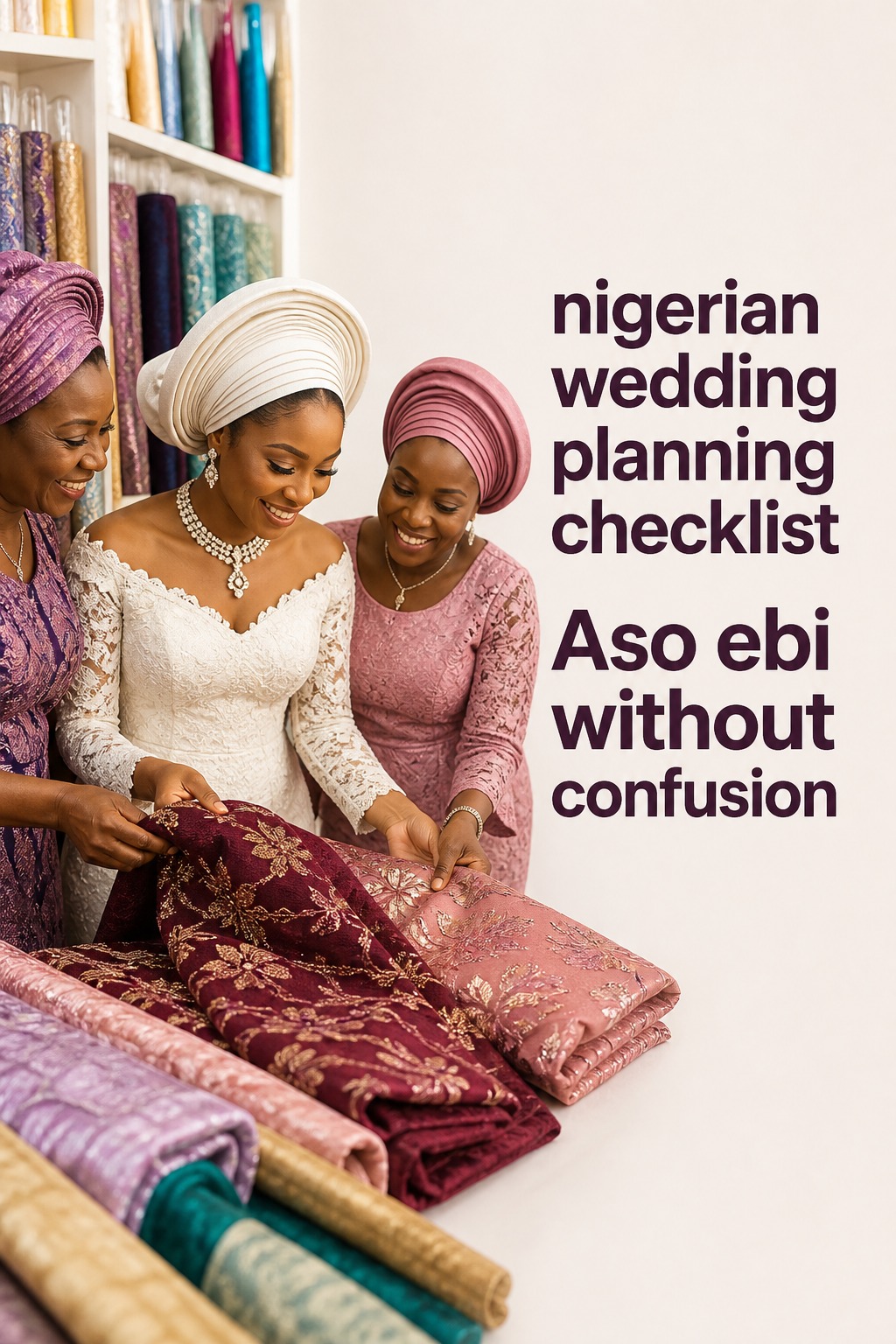
Aso ebi deserves its own mini project. Decide who may participate, the fabric or color family, the payment deadline, the supplier, the distribution method, and what happens if a person cannot pay or receive fabric on time. Share a clear reference for acceptable tailoring while leaving room for individual style. Keep an inventory of payments and deliveries. Early, kind communication prevents the fabric conversation from becoming a source of embarrassment or avoidable family friction.
Write the ceremony roles down. Depending on your traditions, you may need family representatives, an Alaga or MC, elders, readers, singers, bridal party leads, item carriers, gift coordinators, money stewards, ushers, and people responsible for welcoming guests. Ask each person to confirm the role, arrival time, attire, contact person, and any items they must bring. A role is not complete until the person knows what success looks like and who supports them.
Design the guest experience from arrival to departure. Map parking, drop-off, registration, seating, food service, bathrooms, prayer or quiet areas, vendor access, and transportation. If traditional and white ceremonies happen in different places, include a realistic transition plan. Add shade, water, seating, and clear signs where guests may wait. Thoughtful logistics are a form of hospitality. They let the celebration feel generous instead of confusing.

Run the final countdown with a calm handoff
At three months out, stop collecting endless inspiration and begin closing decisions. Confirm the menu, decor direction, music, ceremony order, attire schedule, guest communication, venue layout, and transport. Compare the current budget with the signed contracts and paid deposits. If something is over budget, make a deliberate trade rather than allowing small changes to accumulate invisibly. Your planner should be able to explain what is fixed, what is flexible, and what is still a risk.
At two months out, send or confirm the information guests need. Include the correct venue address, ceremony times, dress guidance, accommodation details, transport instructions, response deadline, and a contact for practical questions. Check the spelling of names and the wording of cultural or religious elements with the people who know them best. If guests are traveling internationally, repeat the information in a simple format that is easy to save on a phone.
At one month out, create the handoff packet. Include the final guest count, seating plan, vendor contacts, payment status, floor plan, run of show, photo priorities, family roles, transport schedule, emergency contacts, delivery windows, and weather plan. Give vendors only the personal data they need. Put one trusted person in charge of updates so the couple is not answering the same question from ten directions.
Confirm final fittings, beauty appointments, rehearsal or walkthrough, marriage-license requirements, family travel, and vendor arrival times. Prepare envelopes for tips or final payments according to contract terms. Pack an emergency kit with sewing supplies, stain remover, comfortable shoes, chargers, medication, water, snacks, copies of important numbers, and any ceremony items. Assign the kit to a person who will be present and calm enough to use it.
During the final week, confirm rather than redesign. A short meeting with the planner, venue, MC, caterer, decorator, photo team, beauty team, transport lead, and family representatives should identify the last open questions. Share the final schedule and ask each person to repeat their arrival time and responsibility. If a decision is not essential, let it go. The purpose of a checklist is to protect attention for the wedding, not to create a new test of perfection.
On the day, let the assigned leads lead. The couple should have a way to receive urgent information, but they should not be the default solution for every missing item or late guest. Encourage the family to enjoy the ceremony and ask the planner or coordinator to absorb operational noise. Build small pauses for water, food, photographs, prayer, and private time. These pauses help the day feel lived rather than merely managed.
After the celebration, settle vendors, collect contracts and media, return rentals, send thank-you messages, and store the final documents. Ask for copies of important legal records according to local requirements. Make a short note about what worked and what you would change, while memories are fresh. Most importantly, allow the wedding to become a memory rather than another project. The checklist has done its job when the people are more present than the paperwork.
FAQ
How early should we start a Nigerian wedding planning checklist?
Start as soon as you know the likely event format and date window. Begin with family conversations, guest range, budget, cultural guidance, and venue research. Popular dates, travel, custom attire, and multiple ceremonies may require a year or more. A shorter engagement can work when the couple narrows the guest count, hires experienced support, and makes decisions in a clear order.
Do Yoruba, Igbo, and Hausa weddings use the same checklist?
They can share project tasks such as budget, guest communication, vendors, transport, and legal paperwork, but cultural details should not be treated as interchangeable. Confirm ceremony roles, required items, family negotiations, attire, language, and sequence with the relevant elders and religious leaders. An inter-tribal wedding can create a thoughtful combined plan when both families explain what is meaningful to them.
When should we choose aso ebi?
Choose the fabric and participation plan early enough for supplier availability, payments, delivery, tailoring, and fittings. The exact timing depends on the fabric, number of groups, location, and event date. Share one written brief with color guidance, payment deadlines, distribution instructions, and a contact person. Keep an inventory so the family can solve missing deliveries before the final week.
How do we budget for unexpected Nigerian wedding guests?
Begin with a realistic guest range, then discuss capacity and food buffers with the venue and caterer. Use ushers and a family lead to manage arrival questions with warmth and consistency. Set aside contingency money for extra meals, seating, transport, or security where the budget allows. Do not promise unlimited access if the venue, safety plan, or contract cannot support it.
What should a wedding planner own on the wedding day?
The planner or coordinator should own the schedule, vendor communication, setup timing, transitions, issue escalation, and handoff between ceremony and reception. Family members can lead cultural roles, hospitality, money stewardship, and personal traditions. Write the boundaries down before the event. The couple should know who to contact for an urgent decision without becoming the person every vendor calls.
How can couples planning from abroad stay organized?
Choose a local lead, schedule regular video calls, and keep contracts, budget, guest data, and decisions in one shared workspace. Ask vendors for clear photos, measurements, delivery confirmations, and written updates. Plan an in-person walkthrough when it will change an important decision. Build extra time for travel, customs, currency, power, weather, and local substitutions so distance becomes a known planning factor rather than a surprise.
What is the most important final-week task?
The most important task is a clear handoff. Confirm the final schedule, guest count, vendor contacts, payments, transport, ceremony roles, emergency kit, and weather plan with the people responsible. Then protect the couple’s rest and attention. A calm team with a shared plan can solve small problems. An exhausted couple carrying every detail cannot enjoy the celebration they worked to create.
Leave a Reply