
After the proposal, wedding planning advice can arrive faster than you can absorb it. One person tells you to book a venue immediately. Another sends a color palette. A relative asks for a guest list before you have agreed on a season. If you are wondering how to start planning a wedding, the answer is not to open every checklist at once. Start by choosing the decisions that make the next decisions easier.
Modern weddings are less tied to one format than they once were. Couples may plan a courthouse ceremony, an intimate dinner, a large traditional celebration, a destination weekend, or a blend of several ideas. That flexibility is good news, but it also means there is no single correct order for every couple. A useful beginning establishes a shared direction, a responsible spending boundary, a realistic guest range, and a planning home where both partners can see what is happening.

This guide focuses on the early choices that protect your time, money, and relationship. It also shows what can wait. Inspiration is valuable, but inspiration should inform a decision rather than quietly become a commitment. Treat the first month as a period for alignment and evidence. You are not late because you have not chosen napkin colors.
What is changing about the way couples begin
Wedding planning used to be presented as a fixed ladder of traditions. Today, couples are more likely to design an experience around their values, family structure, location, accessibility needs, and financial goals. That shift changes the starting question. Instead of asking which task comes first in a universal checklist, ask which constraint will affect the most people and the most money.
For some couples, the date is the emotional anchor. For others, a guest’s travel needs, a religious calendar, a family contribution, or a limited budget matters more. A venue may be the first practical decision when it has a short availability window, yet researching venues before discussing guest range and budget can create expensive disappointment. The order should follow dependencies, not pressure.
There is also a growing preference for planning systems that show relationships between tasks. A list saying “book photographer” is less useful than a record showing the photographer’s fee, payment dates, contract terms, preferred style, arrival time, and the decision that must happen before booking. The Wedding Command Center can be a useful planning resource when you want a shared view of priorities and next actions. Use any system that makes ownership visible and conversations easier.
A calmer start is not a slower start. It is a start that reduces rework. When you agree on what matters before shopping, you can recognize a good fit more quickly and decline attractive options that would create strain later.
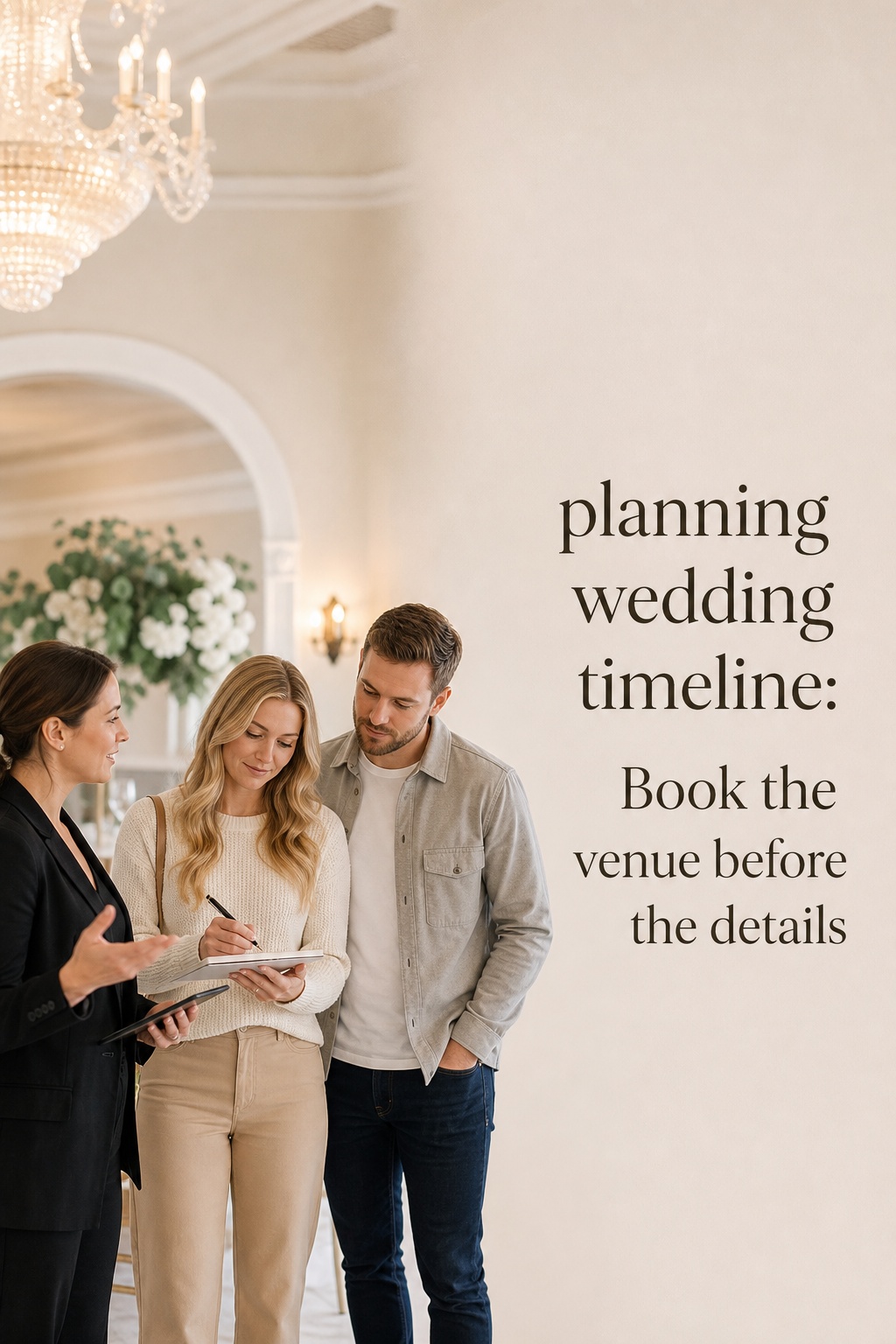
Begin with one honest conversation, not a mood board
Set aside an hour when neither of you is rushing. Do not try to solve the whole wedding. Talk about what you want the day to feel like, who you need in the room, and what you do not want the celebration to demand from you. One partner may picture a lively weekend with extended family while the other imagines a quiet ceremony and dinner. The difference is information, not a failure.
Ask each person to answer the same questions privately first, then compare notes. What are the three moments you most want to remember? Which guests are essential? What would make the day feel unlike you? Which traditions feel meaningful, optional, or uncomfortable? What logistical needs must be respected, such as mobility, sensory, dietary, cultural, or childcare considerations? These answers create a design brief that is more useful than a collection of saved images.
Turn the conversation into a short priority list. Use categories such as must protect, would love, and can simplify. “Must protect” might include a particular ceremony, a photographer whose work you trust, or a meal that welcomes a mixed-diet group. “Would love” could include a live band or a late-night snack. “Can simplify” might be favors, elaborate stationery, or a second outfit. This list will help you respond when a beautiful idea competes with a core value.
Discuss how decisions will be made. Some couples divide categories. Others research together and alternate final calls. Either approach can work if you agree which decisions require both partners, which person owns the next action, and how you will resolve a genuine disagreement. Write this down. A small decision log prevents the same conversation from restarting every weekend.
Keep inspiration in a temporary folder during this stage. Label each image with the reason you saved it: candlelight, family-style meal, accessible layout, relaxed portraits, or a color relationship. If you cannot name the reason, it may be a distraction rather than direction. Trends can be useful signals, but they should not outrank your actual guest experience.
Set a starter budget and guest range before venue research
A starter budget is not a promise that every category is already accurate. It is a boundary for responsible research. List the money you and your partner can contribute, any family contributions, the timing of those contributions, and the amount you want to keep as a contingency. Ask whether a contribution is fixed or dependent on a particular guest list, location, or tradition. Clarity now is kinder than a surprise condition after a contract is signed.
Build the first version by categories rather than by decorative details. Include venue and rentals, food and beverage, photography, music, attire and alterations, flowers and decor, stationery and postage, transportation, ceremony costs, beauty, lodging, insurance, taxes, service charges, gratuities, and a contingency reserve. Some vendors bundle services, so the purpose is not perfect categorization. The purpose is to see the full cost of the experience.
Create a guest range with tiers. Tier one is the people whose absence would change the meaning of the day. Tier two includes guests you would be delighted to invite if the venue and budget allow. Tier three is a wider circle for a later decision. A range such as 60 to 80 people lets you compare venues without pretending that every family question is settled. Record likely travel, children, plus-ones, and accessibility needs alongside the names.
Budget and guest count are connected. Food, rentals, tables, staffing, invitations, transportation, and accommodation support may all rise with the list. Do not use an average wedding cost as your personal target. Compare the amount to your other goals, your monthly cash flow, and the time you are willing to spend earning, saving, or managing the event. A wedding can be meaningful at many sizes, and a smaller plan is not a lesser plan.
Agree on a rule for new ideas. For example, every new expense must either support a top priority, solve a guest problem, or replace another planned cost. This gives you a calm way to evaluate upgrades. It also prevents a series of small, emotional purchases from quietly consuming money reserved for something important.
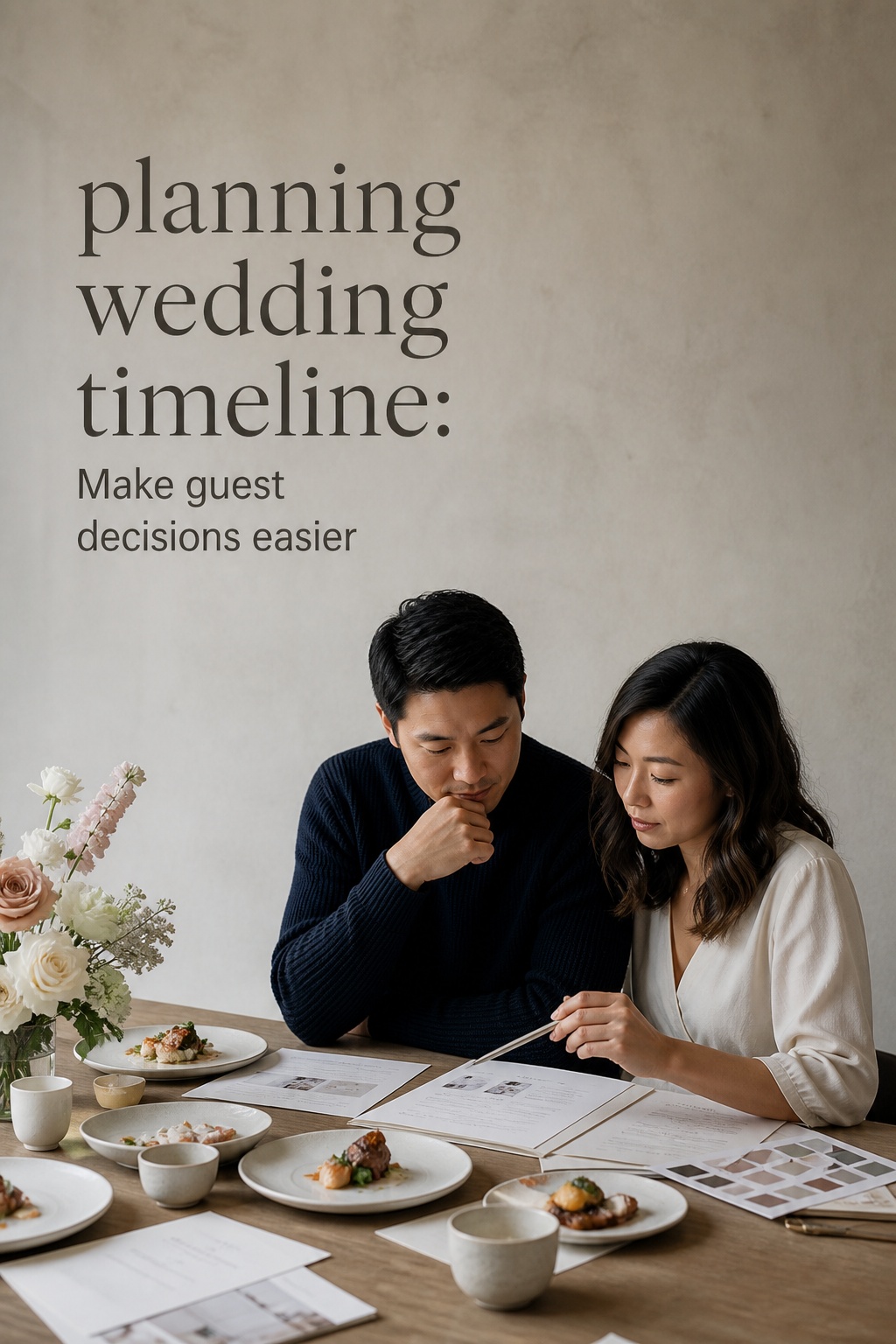
Choose a planning home, season, and decision sequence
Before you collect more information, decide where the information will live. A shared spreadsheet, folder, notebook, or planning platform can work. Keep the budget, guest tiers, vendor contacts, quotes, contracts, payment dates, questions, and decisions connected. Use consistent labels for “researching,” “waiting for reply,” “ready to decide,” and “booked.” The system should be easy enough to update after a five-minute phone call.
Choose a few possible seasons and locations rather than a single date immediately. Consider weather, daylight, travel, school calendars, holidays, cultural or religious dates, local events, and the type of photography you want. If the celebration is outdoors, investigate the rain or heat plan at the same time as the beautiful version. If many guests will fly, look at airport access and lodging before falling in love with a remote setting.
Now create a decision sequence. A practical early order is: shared vision, budget boundary, guest range, season and location, venue research, core vendor priorities, legal requirements, and then design details. This is not a rigid timeline. A destination wedding may require lodging research sooner. A venue with limited availability may require a faster inquiry. The sequence simply keeps you from making downstream decisions with missing information.
When researching a venue, compare the same questions for each option. Ask about capacity, accessible routes, ceremony and reception spaces, exclusive use, catering rules, bar service, rentals, setup and cleanup, access hours, noise limits, candles, outside vendors, insurance, payment schedule, cancellation terms, weather plans, parking, transportation, and overtime. Request a realistic estimate for your guest range, including mandatory charges.
Research vendors with a short brief. Include your date window, guest range, location, priorities, budget range where appropriate, and the questions that would change your decision. Read the contract before treating a friendly conversation as a booking. Save the signed agreement, invoice, payment receipt, and next deadline in your planning home. Put reminders on the calendar before a due date becomes urgent.
Check legal requirements early enough to matter. Marriage-license rules, waiting periods, identification, officiant requirements, and validity windows vary by location. Your venue and vendors may be flexible, but legal deadlines are not. Add a link to the relevant local authority in your planning record and note when you will verify the information again.
Move from research to action without rushing
Use a seven-day starter plan to turn uncertainty into movement. On day one, have the priority conversation. On day two, draft the guest tiers. On day three, write the budget boundary and contingency rule. On day four, choose the planning home and create the decision log. On day five, shortlist seasons and locations. On day six, send a small number of venue inquiries. On day seven, review what you learned and choose the next two decisions.
Limit the number of open tabs and appointments. Three strong venue inquiries are more useful than twenty copied forms. After each response, record what changed: total cost, availability, guest capacity, contract risk, travel impact, or fit with your priorities. This turns research into evidence. It also gives you a reason to stop browsing when you have enough information to choose.
If you and your partner disagree, return to the priority list before arguing about the object itself. A disagreement about a venue may actually be about guest access, family expectations, spending anxiety, or the wish to feel celebrated. Name the underlying need, then look for two or three options that address it. If a decision affects the budget, guest experience, or legal plan, give both partners time to review it before signing.
Ask for help when the complexity is real. A planner or coordinator can be especially valuable for multiple locations, a large guest count, a destination weekend, complex cultural requirements, or a schedule with many vendors. Support can also be informal. A trusted person may own guest questions or help compare quotes. Define the role, access, and boundaries so help does not become another source of opinions you must manage.
Protect your relationship with a planning rhythm. A weekly meeting with a start time, an end time, and a short agenda is usually more sustainable than daily background stress. End by naming one next action for each person. Keep some evenings and conversations wedding-free. The goal of a planning system is to hold the details so your relationship does not have to.
Early mistakes that make planning harder than it needs to be
The first mistake is shopping before defining constraints. A venue tour can create a powerful emotional reaction, but the room cannot tell you whether its catering rules, capacity, or payment schedule fits your life. Research with your budget and guest range visible.
The second mistake is treating a rough guest count as a final list. Early estimates are allowed to change. What matters is that you understand which names are essential, which invitations depend on capacity, and which guests may need travel or accessibility support.
The third mistake is confusing saved images with decisions. A mood board can show a direction, but it does not account for the venue’s light, the season’s flowers, the rental inventory, or your actual budget. Revisit inspiration after you know the room and the people.
The fourth mistake is keeping ownership in your head. If a task has no owner or next date, it is not truly planned. Use a simple table with task, owner, dependency, due date, status, and proof. Proof might be a signed contract, a payment confirmation, an approved menu, or a final guest response.
The fifth mistake is allowing every family opinion to become a requirement. Listen respectfully, especially when someone is contributing money or care, but distinguish input from authority. Agree with your partner which decisions are yours, which are shared with family, and which are non-negotiable.
The final mistake is never revisiting the plan. A budget, guest range, and date window are living assumptions until the venue and core vendors are secured. Schedule a monthly reset to check what changed, what is blocked, and whether a new choice still supports the original priorities.
FAQ
What should you do first after getting engaged?
Start with a private conversation about the kind of celebration you both want, the people who need to be there, and the priorities you want to protect. Then create a rough budget boundary and guest range before researching venues. This order gives you useful filters without forcing every detail to be decided immediately.
How early should you start planning a wedding?
Start when you are ready to make the first few foundation decisions, not when you have every detail resolved. A longer engagement can help with venue availability, savings, and travel. A shorter engagement can work when the date, guest range, and priorities are clear and you make dependent decisions efficiently.
Should you choose a wedding date or venue first?
Research them together. If the date is emotionally fixed, ask venues about that date first. If the location or venue is the priority, compare available dates there. In either case, understand your guest range and budget before signing, because capacity and total cost shape whether the date is genuinely workable.
How do you make a wedding budget when you do not know the costs?
Begin with the amount you can responsibly spend, expected contributions, and a contingency reserve. Use broad categories and collect comparable estimates from venues and vendors. Update the working budget when you learn more. A useful first budget is a decision boundary, not a claim that every line is already precise.
How can couples plan a wedding when they have different priorities?
Each partner should name a few must-protect priorities, then compare the overlap and the trade-offs. Ask what need sits underneath a disagreement, such as family connection, privacy, financial safety, or a particular guest experience. Record the decision and the reason so you do not reopen it without new information.
What should be tracked in a shared wedding planning system?
Track the budget, guest tiers, venue and vendor contacts, quotes, contracts, payment dates, questions, legal links, decisions, and next actions. Give each task an owner and a status. Keep sensitive personal information limited to people who need it, especially when sharing documents with family or vendors.
When should you hire a wedding planner?
Consider a planner or coordinator when the logistics are complex, the guest count is large, the wedding includes multiple locations, or you want help comparing contracts and building a realistic sequence. You can also hire partial support for a specific phase. Ask what is included, what decisions remain yours, and how the fee fits your priorities.
Leave a Reply