
A venue says its event coordinator will help on the wedding day. A planner’s proposal promises partial planning. The caterer will manage meal service, and the couple expects someone to keep the whole timeline moving. Everyone sounds involved, yet one practical question remains: who is actually responsible when a decision or task crosses between them?
The phrase wedding event planner can suggest a broad role, but the title alone does not tell you which decisions, vendors, or hours are included. The most useful way to compare support is to list the work your celebration needs and assign each item a lead, a support person, an approver, and a place for the final confirmation. That map makes different service packages easier to compare and helps reveal gaps before the wedding week.

This approach is useful whether you are hiring full planning, adding a coordinator to a mostly self-planned wedding, or deciding whether the venue’s included support covers enough. The goal is not to give every task to one person. It is to make sure every important task has a clear owner.
The Wedding Event Planner Label Covers Different Starting Points
Wedding planning professionals may describe their services through labels such as full-service planning, partial planning, month-of coordination, day-of coordination, design, or event management. These labels help you understand the general shape of an offer, but each business can package work differently. One planner may help source vendors; another may expect the couple to hire them. One coordinator may build a timeline; another may review a timeline the couple has already made.
The Knot’s overview of wedding planner service types describes a range of planning and coordination approaches and advises couples to read the contract and package details. That is the useful principle to carry into any inquiry: compare the duties and the timing of the work, not just the name of the package.
Begin by listing what you still need help with. You might want someone to shape the budget, compare venues, source vendors, review proposals, develop a design, build a timeline, coordinate a rehearsal, direct setup, cue the ceremony, manage guest movement, or close the event. You may already have completed some of those tasks. Others may matter only if your plan changes.
Separate the work into stages so that “help with the wedding” becomes more concrete:
- Early planning: budget framework, venue search, vendor research, and decisions about the overall event.
- Design and production: visual direction, rentals, layouts, lighting, setup plans, and approval of samples or mock-ups.
- Final planning: confirmations, timeline, floor plan, rehearsal details, and coordination across suppliers.
- Event execution: access, setup, cues, guest flow, schedule changes, and breakdown responsibilities.
A wedding event planner may cover many of these stages or only selected parts. A coordinator may concentrate on final planning and execution. An event designer may lead visual decisions without managing every logistics question. A venue coordinator may be responsible for the property and the services the venue has agreed to provide. These are helpful starting descriptions, not guarantees about a particular contract.
Also identify who employs or contracts each professional. A venue coordinator usually works for the venue. An independent planner is hired by the couple. A vendor is responsible for the service in that vendor’s agreement. The difference matters when interests or responsibilities meet: a venue contact can clarify access rules, while a couple’s planner may coordinate the event’s wider schedule. Ask each person to describe their role in the actual event rather than inferring it from a title.
This first step prevents a common comparison mistake. A broad label can sound like more help than the written scope provides, while a modest-sounding label can include the specific work you need. Write down the outcome you want, then check whether the proposed service names the work that produces it.
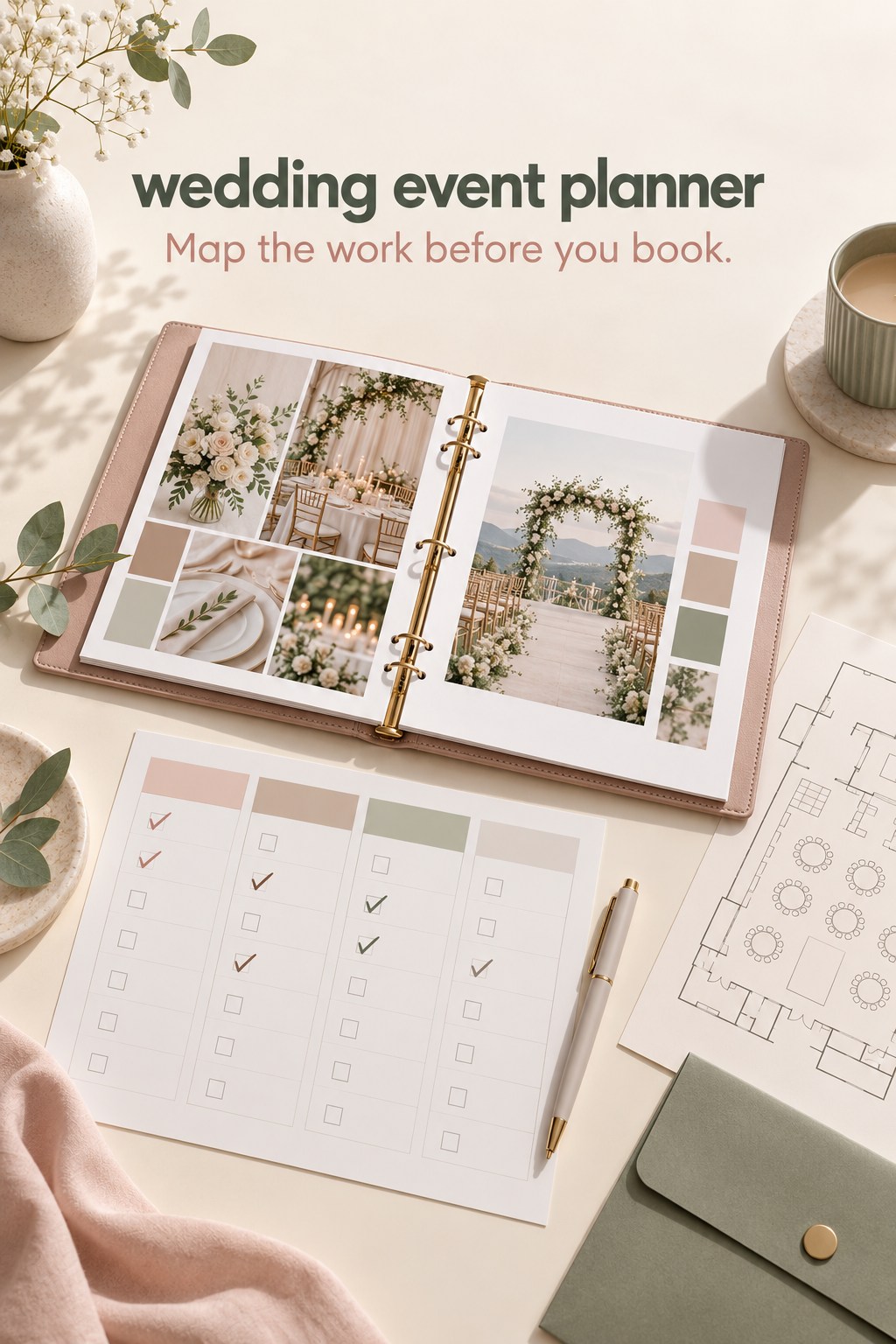
Why Role Boundaries Matter Once Venue and Vendor Agreements Are Involved
Responsibilities often overlap at the edges. The venue may provide tables, but the planner may create the room layout. The caterer may manage dinner service, while the planner places dinner within the timeline. The photographer may request a portrait list, but the couple decides which family groupings matter. If nobody agrees who owns each step, a task can be assumed, repeated, or missed.
Start with the contracts already in hand. For the venue, mark what is included, what is restricted, and what requires an outside supplier. For each vendor, note the deliverable, timing, access needs, and any information the couple must provide. For a planner, find the services, meeting schedule, communication method, hours on site, staffing, and exclusions. A proposal may summarize an offer, while the agreement contains the operative terms. Keep the distinction clear.
A venue coordinator’s responsibilities are often tied to the building, house rules, venue staff, and services the property has promised. Zola’s guide to deciding whether to hire a wedding planner distinguishes the venue coordinator from an independent planner and notes that the venue contact is not automatically responsible for the couple’s outside vendors or personal logistics. Your own venue’s contract and written explanation are the sources to rely on for the specific scope.
Look for work that crosses agreements. If the venue controls when suppliers can enter, the venue needs to provide the access window. The planner may collect that information and fit it into the timeline. Each supplier needs to know its own arrival time and setup requirements. The couple or authorized planner confirms the final schedule. Several people contribute, but one person should lead the coordination step.
Use a simple four-part distinction:
- Lead: owns making sure the task reaches completion and follows up if information is missing.
- Support: supplies a specific input, service, or recommendation.
- Approve: has authority to choose, spend, or accept a change.
- Confirm: records the final answer in the current contract, schedule, email, or other agreed source.
Do not assume the person who provides input also has authority to approve. A planner may collect options and recommend a florist, while the couple chooses and signs the vendor agreement. A venue may tell you that a decor installation needs approval, but the couple or designer may need to revise it. The map should show who makes the decision and who is simply helping it happen.
This becomes especially useful when an event includes several locations, separate ceremony and reception teams, guest transportation, or more than one gathering. A wedding weekend might involve a welcome dinner, ceremony, reception, and farewell brunch. Some vendors may serve only one event, while the planner coordinates the shared schedule and guest experience. Ask explicitly whether the proposed scope covers each gathering, each address, setup, transitions, and the final handoff.
If two contracts appear to assign the same work to different people, ask for a clarification before relying on either assumption. If no contract names the task, assign it to the couple or ask the planner whether the service can be added. A written scope is more useful than a reassuring phrase such as “we’ll handle everything,” because it tells all parties what “everything” includes.
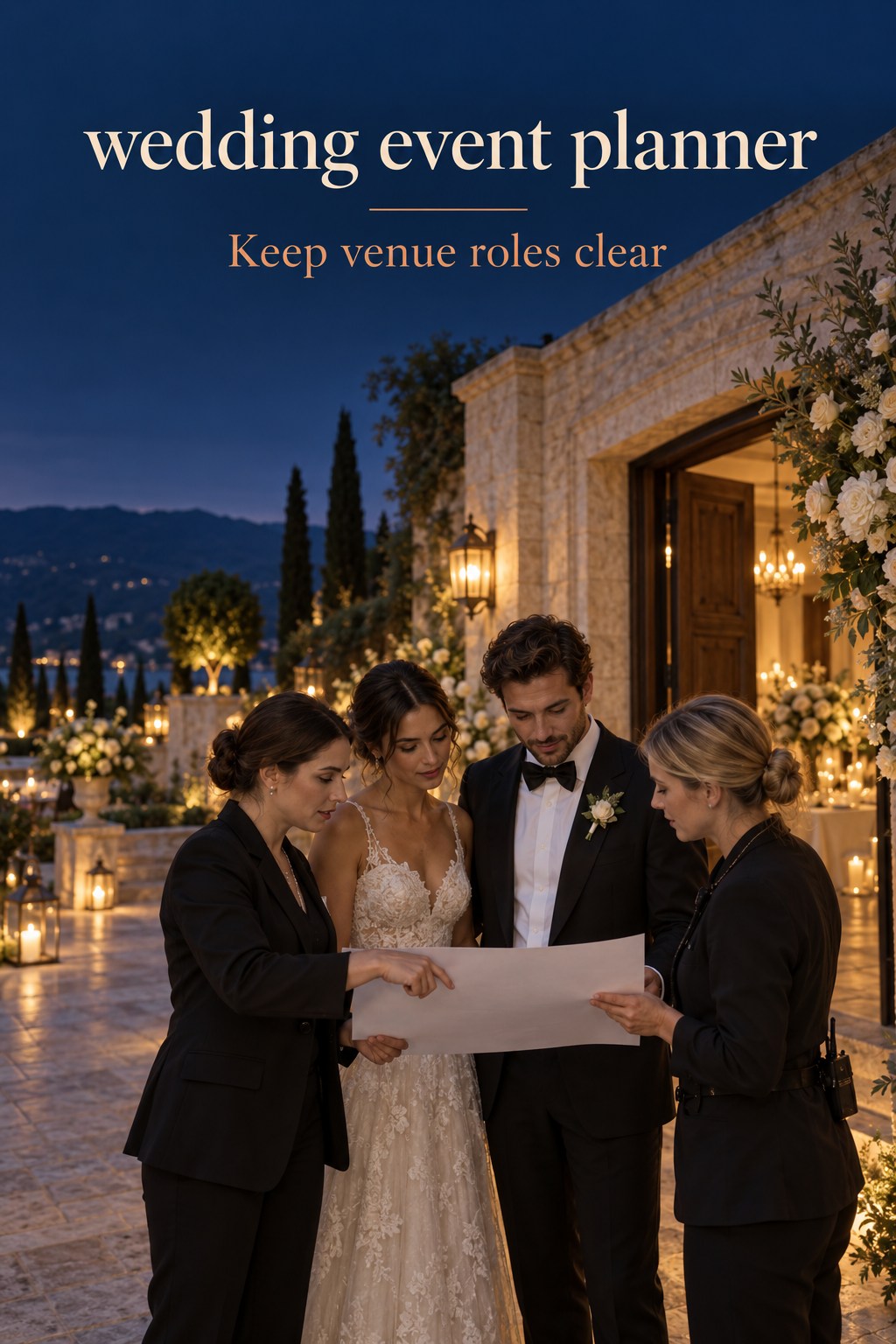
Translate Each Package Into a Responsibility Map
Make one page with five columns: task, lead, support, approver, and confirmation source. You can add a timing column if the work has a deadline. Keep the page focused on work that could affect cost, schedule, guest experience, access, or coordination. You do not need to inventory every decorative choice before deciding which professional to hire.
For example, the map might show that the venue leads on providing its room access rules, the planner supports by collecting those rules, the couple approves a layout that affects guest experience, and the final floor plan is stored in the venue’s current event file. For transportation, the couple may select the service, the vendor supplies routes and timing, the planner coordinates pickup times with the schedule, and the confirmation lives in the transportation agreement or final itinerary.
Use verbs that reveal what each person will actually do. “Venue logistics” is too broad to compare. “Venue manager sends the loading window and approved entrance to the planner” describes an action. “Planner” is not a task. “Planner assembles the vendor arrival schedule from confirmed access times” makes the responsibility clearer.
As you read a planner’s proposal, sort each service line into the map. Put an “ask” beside anything vague, such as “vendor coordination,” “setup assistance,” or “event management.” Ask which vendors are included, when contact begins, who makes the calls, what is shared with vendors, and what happens if a supplier does not respond. For setup, ask whether the planner directs venue staff, places personal items, manages outside rental delivery, supervises teardown, or only checks that the room is ready.
Review decision authority as carefully as task ownership. Can the planner approve an overtime charge, add a rental item, or change the schedule without reaching you? If so, what is the spending limit and how will the decision be reported? If the planner cannot approve changes, who will be available to decide during the event? Your map should identify the person to contact and the preferred route for urgent questions.
Clarify the timeline for support. A coordinator who begins a few weeks before the wedding may still need time to review existing contracts, meet at the venue, contact vendors, and develop a working schedule. If you expect help selecting vendors or refining the design much earlier, check whether that work is included or whether the contract starts later. The calendar is part of the service scope.
Count the people as well as the hours. Ask who will be on site, who the lead contact is, whether assistants are included, and how many event areas they can cover. If one person is expected to supervise setup in one location and cue the ceremony in another, ask how those responsibilities will be staffed. Do not infer staffing from the package title.
Finally, include a confirmation source for every significant item. It could be a signed agreement, updated proposal, venue event order, approved timeline, floor plan, or email that records the final decision. The source does not have to be the same for every task, but it must be easy for the people involved to find the current answer.
Once the map is filled, compare planners using the rows you care about most. One candidate may cover vendor research, while another focuses on design and execution. One may attend a rehearsal; another may charge separately. The best fit is the offer that clearly covers the work you need or makes its gaps easy to assign elsewhere.
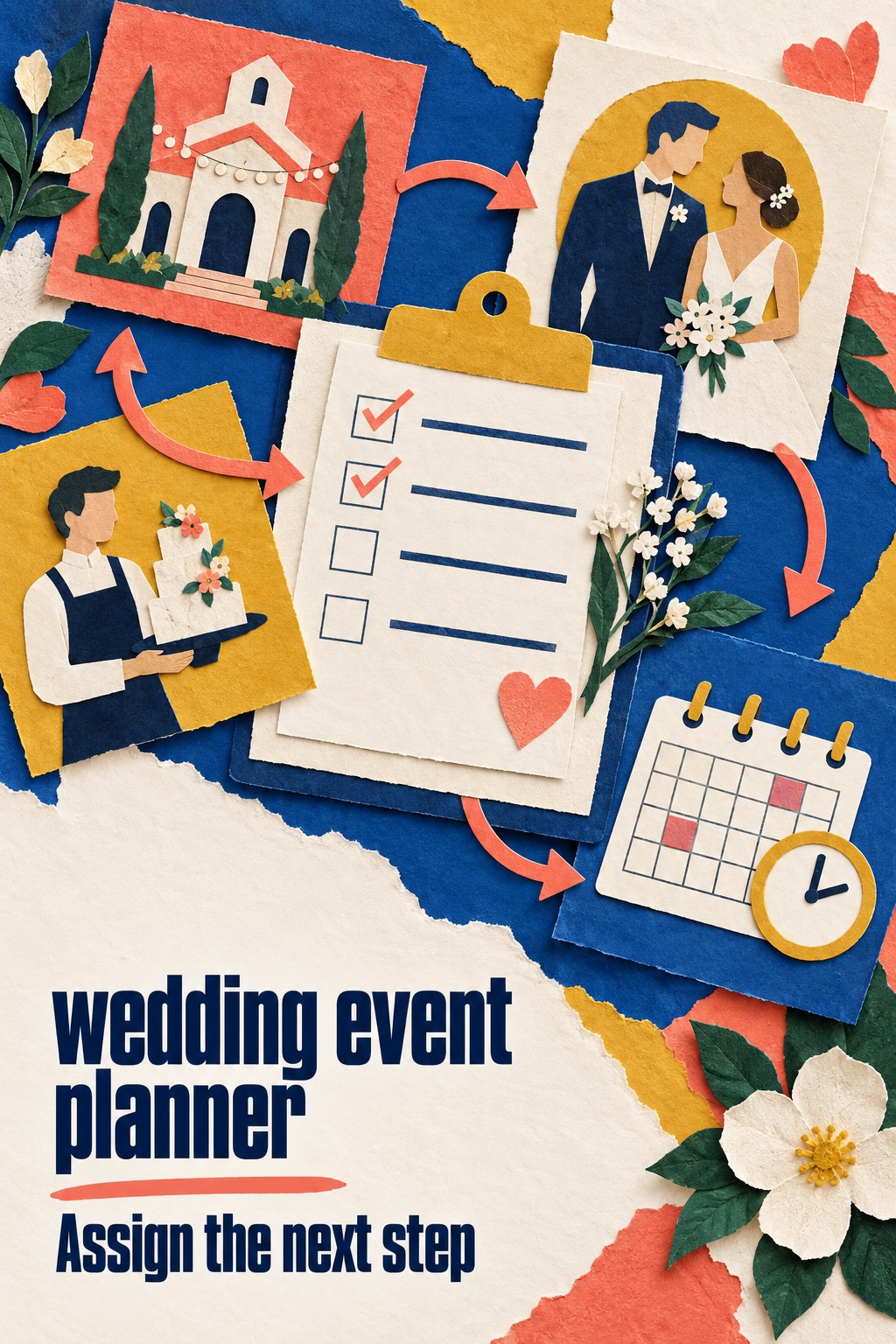
Match Support to the Actual Wedding Setup
The right arrangement depends on the event you are planning and the tasks you want to hand off. These examples are starting points for the responsibility map, not fixed rules about what a planner or venue must provide.
At an all-inclusive venue, the venue may provide catering, furniture, some rentals, and an event contact. Start with the venue’s written list of inclusions. Mark who manages house staff and in-house services, then list outside needs such as photography, personal decor, transportation, or guest instructions. If those outside tasks matter, ask whether the venue coordinator handles them or whether you need an independent planner or another named lead.
Check that “included coordinator” is tied to specific outputs. Does that person coordinate only venue staff and meal service, or also contact outside vendors and manage the couple’s timeline? Are they present for the rehearsal? Who confirms the final setup and handles a schedule change? If the venue says the role varies, ask for a written summary for your booking.
For a mostly self-planned wedding, you may have selected the venue and vendors but want professional support for the final weeks and event day. Map the work you have already completed separately from the work still open. Ask the coordinator when they begin, what they review, whether they contact vendors, who builds or approves the final timeline, and whether setup or breakdown is included. If your timeline or vendor agreements still need substantial development, ask whether the proposed package covers that work or whether you need partial planning.
For a multi-event weekend, create one map for the full schedule and note which professional covers each gathering and location. The welcome event may use a different venue and caterer from the wedding reception. Transportation and guest communications can span more than one day. Ask who coordinates transitions, who receives updates, whether one lead planner is present throughout, and what additional staffing or travel work is included. A package defined only around the wedding day may leave other events outside its scope.
For a design-heavy celebration, separate visual decisions from installation logistics. An event designer may develop the look, source decor, or prepare a layout. A florist, rental company, or production vendor may provide and install particular elements. The planner may coordinate timing and dependencies. The couple approves the direction and budget. Write who signs off on mock-ups, what the vendor will deliver, who handles setup, and who removes items after the event.
For a destination wedding or multiple locations, include travel and guest movement in the scope conversation. Ask whether the planner supports accommodation coordination, transportation schedules, local vendor communication, and events around the ceremony. Clarify which party handles guest questions and where the most current itinerary will live. Do not assume that destination experience automatically includes every travel service.
After walking through the relevant scenario, identify the three most important uncovered tasks. You may decide to add them to a planner’s scope, assign them to a trusted helper, simplify the event, or accept that the couple will own them. The map makes each choice visible before a task becomes a last-minute surprise.
A planning resource such as The Wedding Command Center may be useful for coordinating the tasks you choose to keep with yourselves. If you use a shared planning tool, decide which person owns updates and where vendors will receive their final instructions. The tool can support your workflow, while responsibility for a decision still belongs to a named person.
Keep Decisions, Approvals, and Handoffs Clear
Before you sign, ask the planner or coordinator to confirm the map’s most important rows. Put scope, start date, meeting count, included events, on-site hours, staffing, travel, setup, teardown, vendor contact, and exclusions in writing where they apply. Ask how changes to the scope or schedule are approved and documented. If an answer is “it depends,” ask what information will determine the final answer and when you will know.
Agree on one route for routine decisions and another for urgent event-day issues. Routine questions might go through email or a planning meeting. A time-sensitive issue during the event may need a direct phone number and an alternate contact. The agreement or final schedule should show who is allowed to contact the couple, who can approve a change, and who should be contacted first.
Keep a short decision log. Record the choice, the approver, the date, and any contracts or plans that must be updated. If a vendor changes a delivery time, the planner may update the timeline, but the venue and affected vendors need the current version. If the couple changes the ceremony layout, the designer or rental company may need the new plan. One change can touch several responsibilities, so list everyone who needs to receive it.
Before the event, compare the final timeline and vendor instructions with the responsibility map. Every task should have one lead, even when several people support it. Make sure the people who need to know receive the current version and can identify it by date. If a duty moved from the couple to the planner, tell the vendor who will now lead that communication.
After the event, the planner may coordinate breakdown, return rentals, collect personal items, or close out vendor questions if those tasks are included. Confirm the handoff before the final day. Identify who retrieves cards, gifts, decor, or documents, who checks the venue, and who follows up on any remaining vendor matter. An end-of-event plan protects the work you assigned throughout planning.
A clear wedding event planner arrangement does not require the planner to do every job. It requires the couple, planner, venue, and vendors to understand where their responsibilities begin and end. When the map, contract, and current schedule agree, everyone has a more reliable route from a decision to the finished event.
Sources and Methodology
This guide reviewed US wedding planning articles, venue coordination resources, and planner interview materials. The sources describe a range of service labels and point couples toward package and contract details. Because roles and inclusions differ by provider, the responsibility map here is a planning aid, not a universal definition or legal interpretation of any contract.

FAQ
What does a wedding event planner do?
A wedding event planner may help with planning, design, vendor coordination, logistics, or event execution, depending on the service agreement. Review the specific package to see which tasks, dates, meetings, events, and on-site hours are included.
Is a wedding event planner the same as a coordinator?
The titles can be used differently by providers. A planner often supports a broader part of the planning process, while a coordinator may focus on final logistics and execution. Compare actual responsibilities, timing, and staffing in the proposed agreement.
Does a venue coordinator replace an independent wedding planner?
Not automatically. The venue coordinator may focus on the property, venue staff, house rules, and included services. An independent planner may cover the couple’s broader event plan. Ask the venue what its coordinator handles and assign any remaining work to a named person.
What should I ask a wedding event planner before booking?
Ask what tasks are included, when service begins, which events and locations are covered, who will attend, what authority the planner has, and what is excluded. Also ask who owns vendor communication, setup, teardown, and urgent decisions.
How do I compare wedding planner packages?
List the work you need, then mark who leads, supports, approves, and confirms each task under every proposal. Compare timing, staffing, meetings, event coverage, and exclusions. Ask providers to clarify vague terms before comparing offers.
Should a wedding planner handle setup and breakdown?
It depends on the agreement and staffing. Ask whether the planner directs venue staff, manages outside rentals, places personal decor, supervises cleanup, or only coordinates the schedule. Put the assigned responsibilities and time window in writing.
Do I need a planner for a multi-day wedding?
You may find broader planning support useful when several events, venues, vendor teams, or guest movements need coordination. Map each event and ask whether the planner’s package covers its schedule, staffing, travel, communications, and setup.
Leave a Reply