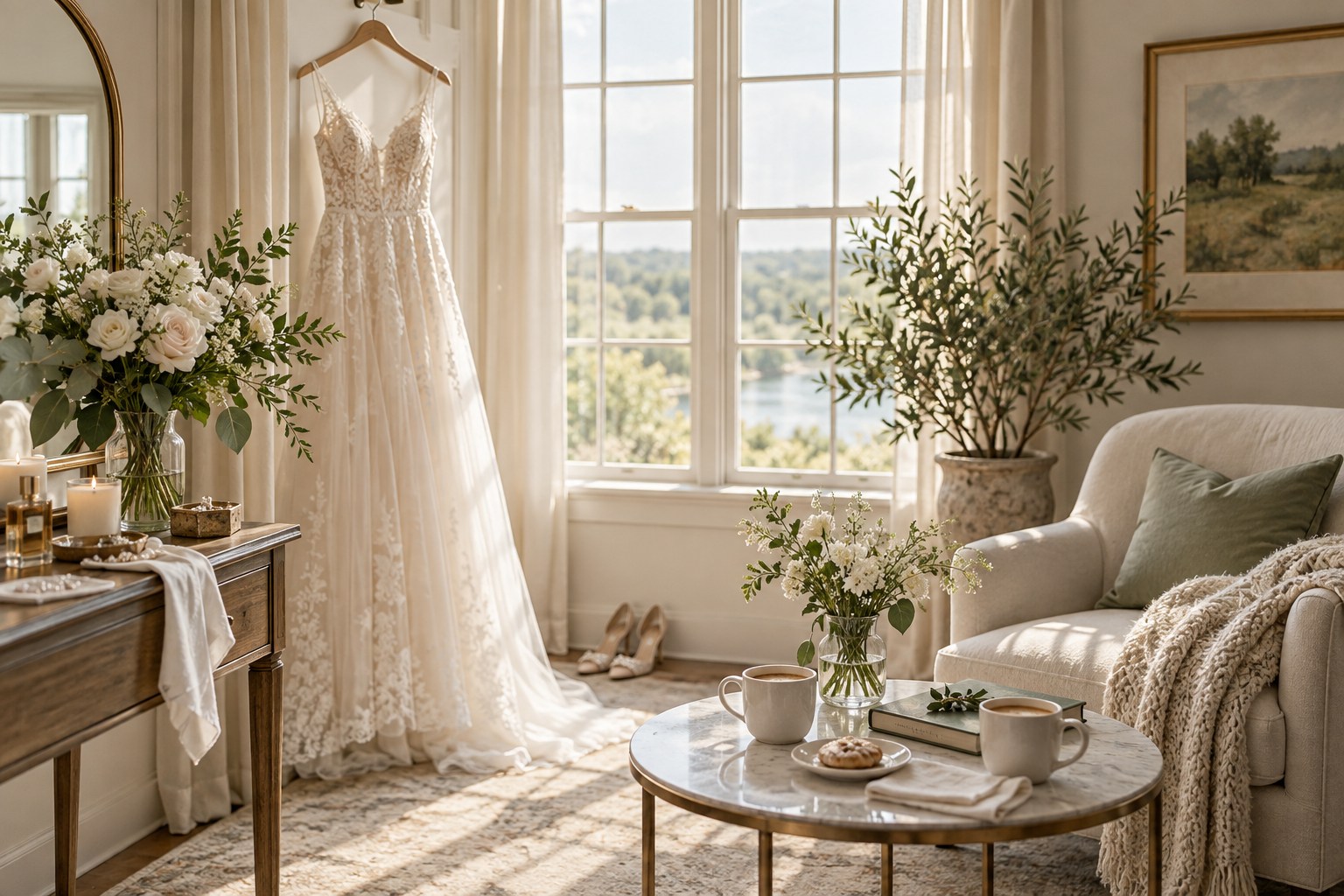
The best wedding preparations ideas are the ones that make the hours before the ceremony feel like yours. Some couples want a lively room with their whole wedding party. Others would rather get ready with two or three close people, keep partners in separate spaces until a planned reveal, or begin the day quietly together. None of those choices is more correct. The useful starting point is to decide what you want the morning to feel like, then build a practical plan around that preference.
It is easy to copy a sample timeline or focus on making the room photo-ready before asking who you want there. A wedding morning has beauty appointments, outfit changes, family visits, vendor arrivals, and a departure time, but it also has small moments you may want to protect. A shared breakfast, a private note, a short walk, or a few quiet minutes can matter more than another scheduled activity.

Start with three questions: Who helps you feel at ease? How much conversation do you want while getting ready? Which one moment would you be disappointed to miss? Your answers will help you choose a format and make the day easier to plan without filling every quiet space with another task.
Start with the feeling you want from your wedding morning
Take five minutes with your partner to picture the morning from the first arrival to the trip to the ceremony. Do not begin with a detailed schedule. Imagine the room, the people nearby, and the amount of activity around you. Do you picture music and conversation? A small circle of familiar faces? Time alone before everyone joins? A few separate places where different parts of the wedding party can get ready at their own pace?
Each answer affects practical decisions. A big shared group may need more than one place to sit, enough space for getting dressed, and a clear quiet corner for someone who needs a break. A small group may make a hotel room workable where a larger party would feel crowded. Separate preparation spaces require a communication plan and a realistic way to get everyone where they need to be. A quiet start may mean postponing visitors or asking one person to handle routine messages.
Write down a few words that describe the mood you want, such as “lively but unhurried,” “small and familiar,” or “quiet first, social later.” Then name one priority and one limit. A priority might be sharing breakfast with a parent. A limit could be no unplanned visitors before a certain point. This short note gives you a standard for considering ideas. If a suggestion adds work but does not support the mood or priority, you can leave it out.
This conversation should include both partners. It is common for one person to receive more attention in photos and preparation advice, while the other side of the wedding day is treated as an afterthought. Each partner can choose their own format. You might prefer a full suite with friends while your partner wants a calm room with one sibling. The two plans do not need to match, but they should fit the same departure and ceremony schedule.
Keep the decision visible with your planning notes. The Wedding Command Center can be a natural place to keep your chosen format, a short version of the schedule, and the names of the people who are helping. Keep it simple enough to share. The aim is to help everyone understand the morning you have chosen, not to create another complicated plan.
Choose a preparation format that fits your people and place
The full-group suite
Choose a shared suite if having friends and family close is part of what you are looking forward to. A lively group can make the morning feel like a celebration from the start. It can also give attendants a comfortable place to gather while different people take turns with hair, makeup, or final outfit details. Before you commit, confirm how many people can be in the room comfortably, what time you can enter, and whether there is a separate area for changing or storing coats and bags.
The tradeoff is that a full room can make private conversations and quiet pauses harder. Decide whether every person needs to stay for the entire preparation period. You may invite the group for breakfast, then let some guests leave while you dress, or keep one adjoining room open as a place to sit away from the styling activity. A shared morning does not require constant group activity.
The small-circle start
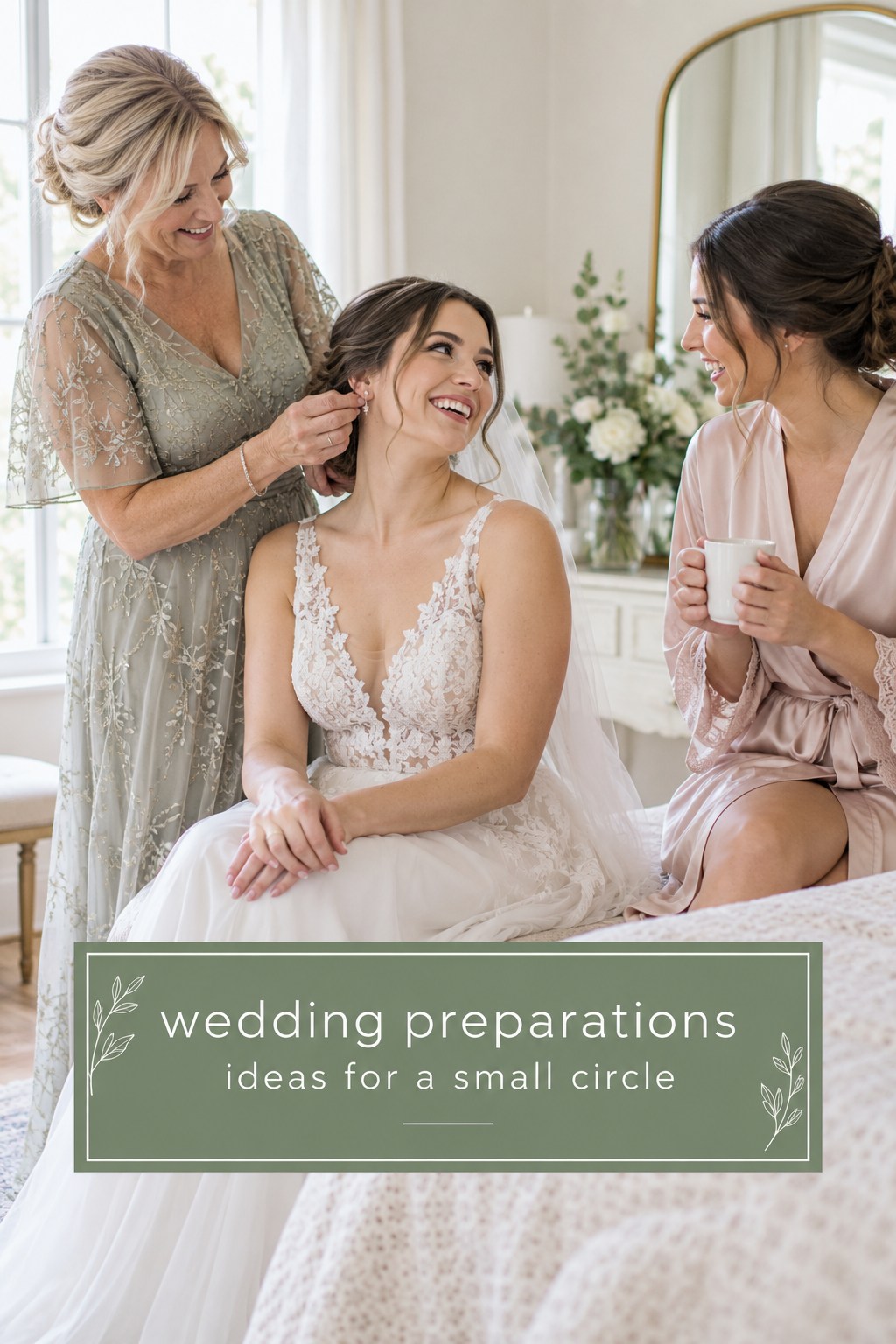
Prepare with a few people whose presence feels supportive, such as a sibling, parent, close friend, or chosen attendant. This format suits couples who value conversation but do not want to manage a crowded room. The smaller group may also make it easier to move between stations, enjoy a snack, or take a short pause without turning the room into a waiting area.
Let other friends and relatives know how they can join the day later. You could see them at the venue, include them in a planned photo, or meet them during a pre-ceremony gathering. Explain the arrangement with warmth and early notice so no one is left guessing about the morning. A smaller preparation group can still be hospitable and meaningful.
Separate spaces with a planned meeting point
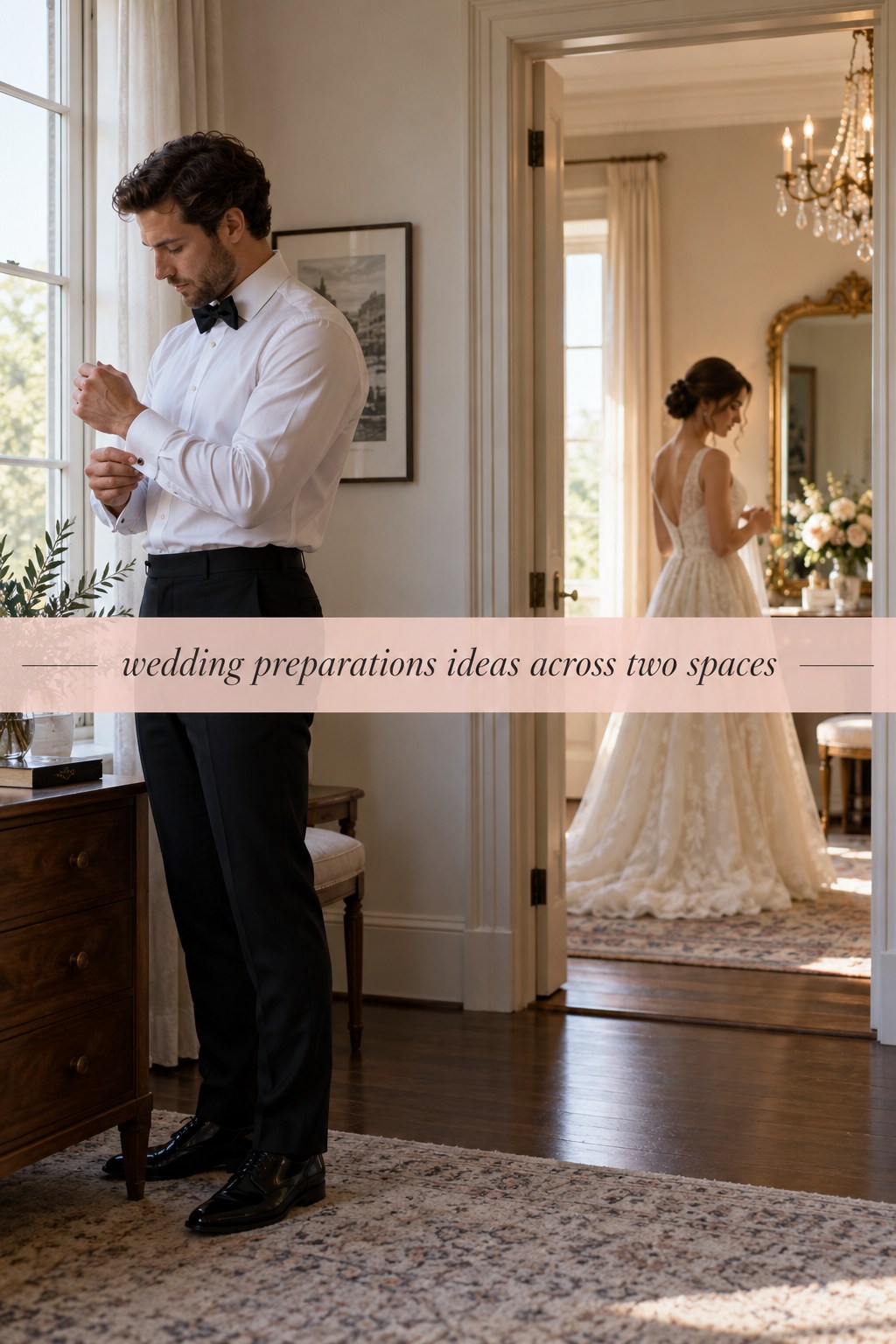
Separate rooms can help each partner keep a preferred routine, reduce crowding, or preserve a first look. They can also be practical when the couple has different preparation needs or their wedding party members are staying in different places. Decide where each group will get ready, when each person must be dressed, and how the couple or wedding party will travel to the next location. Share the plan with the photographer or coordinator if those professionals are helping manage the sequence.
The main tradeoff is coordination between spaces. If one group is ready early, give them a comfortable place to wait that does not interrupt the other group. Choose one person to communicate routine updates, rather than asking the couple to answer messages while getting dressed. If you want a first look or a shared moment before the ceremony, decide on its place and general window in advance, then confirm the details with your photo team.
A quieter, couple-centered morning
Some couples would rather spend part of the preparation time together or keep the guest list especially small. If that is your preference, ask the venue or photographer what arrangements are possible and which moments need to happen separately. A couple can share breakfast, exchange letters, or spend a quiet stretch together before getting dressed, while still keeping any private reveal they want later. If both partners get ready in one place, agree on wardrobe privacy, changing areas, and the point when helpers arrive.
A quieter plan may still have a busy stretch when hair, makeup, dressing, or vendor arrivals happen. Decide which friends or family members you want nearby for that portion and when the room should become private again. The goal is not to keep the day silent. It is to decide which parts you want to share and which parts you want to experience on your own terms.
Build the room and activities around that choice
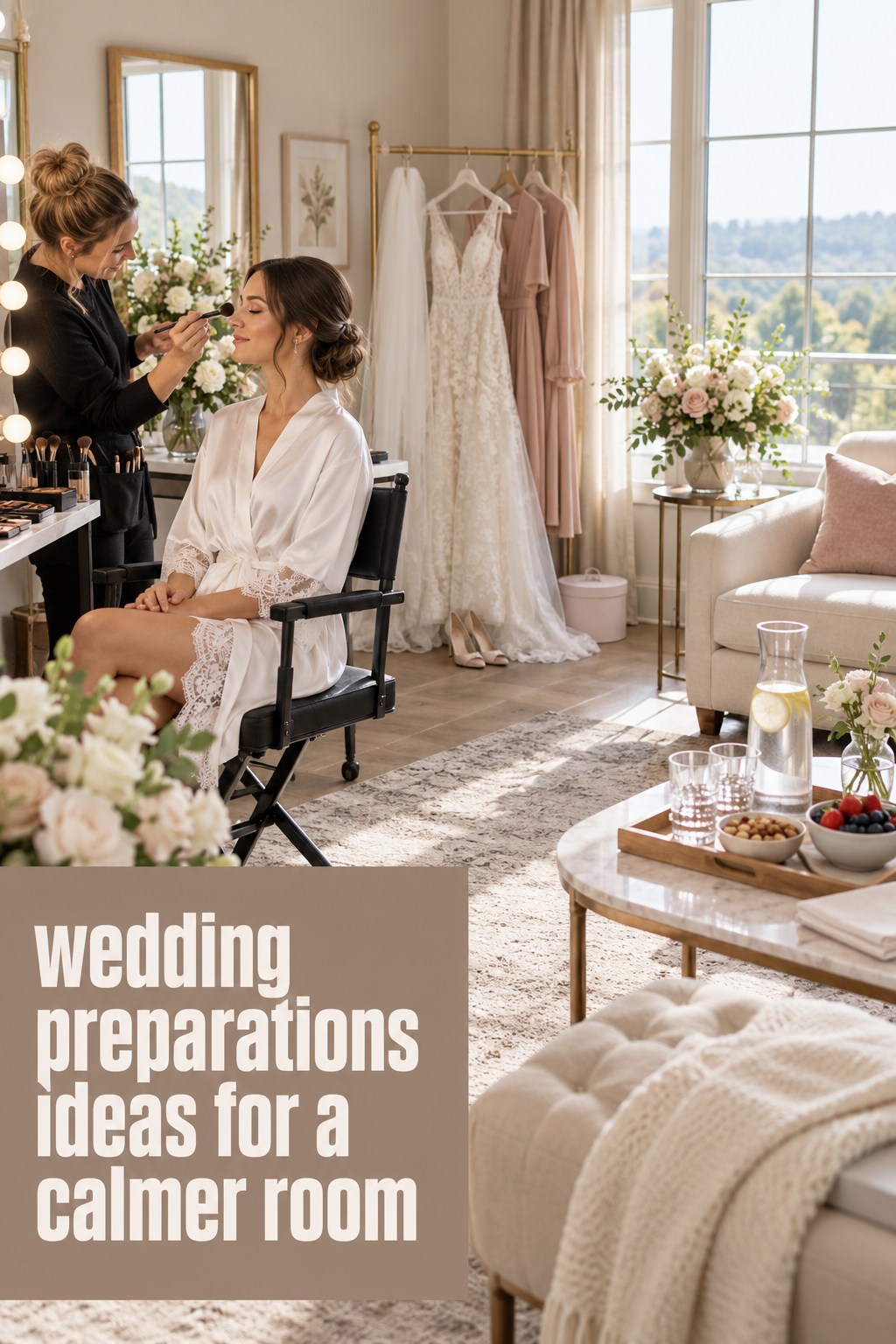
Once you have chosen a format, use the space you have in a way that supports it. A room does not need elaborate decor to feel personal. A clear surface for personal details, a comfortable chair for someone who is waiting, a place for bags away from the main activity, and a simple food and drink station can make the room more usable. If your venue has multiple preparation spaces, ask to see them at a similar time of day to your planned use.
Think about movement through the room. People may arrive, sit for a service, change clothes, step out, and return. Keep a direct path to the bathroom and exit. Put coats, overnight bags, and extra shoes in one agreed area rather than spreading them across the room. If vendors need access to outlets, mirrors, or a particular corner, ask what they need before assigning that space to a different activity.
Give the activities a similar edit. Choose one or two moments that help create the morning you pictured. These might be a relaxed breakfast, a short toast, a note exchange, a playlist chosen by a friend, a brief photo window, or a few minutes outside. You do not need to include every tradition, gift exchange, group photo, and posed moment that appears in someone else’s schedule. Choose the parts that matter to you and leave room for transitions.
If photographs matter to you, tell your photographer what you want documented and what you prefer to experience privately. You might want a few natural moments with family but no long sequence of posed preparation images. You might want the detail photographs taken while you are in another room. Or you might want the morning to stay off camera until you are fully ready. Your photographer can help you find a coverage plan that fits. A preparation guide from Nydam Photography highlights light, a brief window for details, and a small tidy-up as practical considerations, but your preferences set the scope.
Food and drink should fit the people, room, and time you actually have. Choose something easy to serve and eat while others are getting ready, and ask a helper to set it out. If you do not want a group meal, a few individual options may be simpler. No one has to recreate a brunch spread from a photograph to host a thoughtful morning.
Plan where phones go and who will answer ordinary questions. A trusted helper can respond to “where do I park?” or “when should I arrive?” while you focus on getting ready. Let vendors know the best contact for the morning. If you want to look at messages at a particular time, choose that window; if you want your phone put away, ask someone to hold it. These small boundaries help the social experience stay close to what you intended.
Keep the two partners’ plans connected without forcing them to be identical. Compare departure times, access instructions, photo arrangements, and the ceremony arrival point. If one partner’s plan includes a gathering and the other’s is private, make sure helpers on both sides know who is available and who should be contacted if something changes.
Give the morning a flexible shape and a simple backup
Use the ceremony arrival time as an anchor. Work backward with your beauty team, photographer, transportation provider, and venue contact to place the activities that have real dependencies. Then protect a small buffer before departure. A sample schedule can be useful for getting started, but published timelines are examples rather than rules. The Knot’s sample morning timeline uses a particular ceremony time and invites couples to adjust it. Your team can help fit your schedule to your ceremony, travel, group size, and chosen moments.
Write the sequence in plain language. For example: “Arrivals and breakfast, styling and conversation, private pause, final dressing and chosen photos, everyone ready, leave for ceremony.” Add times where a vendor, transport, or venue needs one. You do not need to assign an exact minute to every conversation or cup of coffee. Let the plan tell people what matters and where to be, while leaving some open space for the parts you cannot predict.
Mark the moments that are optional. If there is not enough time, would you drop a group toast, shorten the photo list, or move a gift exchange to another day? Decide this in advance. The answer gives your helper permission to simplify the plan without asking you to make a fresh decision while getting dressed.
Name a point person for each preparation space. That person can welcome arrivals, direct routine vendor questions, and tell the other group when it is time to leave. They should know which activities are important, which can move, and how you prefer to be contacted. Avoid giving a long list of unrelated jobs to one friend who is also trying to get ready.
Choose one realistic backup for a room or timing change. If your room is not available when expected, know whether another booked room or a nearby private space can work. If travel runs late, know which optional moment will be shortened. If you planned a quiet start and visitors arrive early, ask the point person to greet them elsewhere until the time you agreed. Keep the backup focused on preserving the part of the morning that matters most.
Share a short version with the people involved a few days beforehand. Include the address, arrival window, what to bring, where to put personal belongings, how you will travel, and who will answer questions. If the plan changes, send one clear update from a designated helper. A simple message is easier to follow than several overlapping reminders.
Finally, reconsider the plan after the venue walk-through or the final timeline discussion. Does the room fit the number of people you invited? Is there a place to wait without interrupting styling or dressing? Can you get to the ceremony without turning the last part of the morning into a rush? If not, reduce the group, change the room, or simplify an activity. The preparation plan is successful when it supports the experience you chose and gets you to the ceremony ready to begin.
Sources and methodology
This article synthesizes wedding-planning, venue, and photography guidance reviewed for morning schedules, room use, and getting-ready preferences. The Knot’s adaptable sample morning timeline informs the distinction between fixed dependencies and optional activities. Nydam Photography’s getting-ready guide informs the optional photo considerations. Schedules and room access vary, so confirm timing, space, and vendor needs with your own team. The article does not prescribe a universal start time or a required social format.
FAQ
What should we do first when planning wedding preparations?
Decide what you want the morning to feel like and who you want with you. Then check the available rooms, vendor needs, and departure time. Those choices will shape the schedule and the amount of preparation space you need.
How do we make the wedding morning feel more personal?
Choose one or two moments that matter to you, such as breakfast with a parent, a note exchange, a favorite playlist, or a quiet pause. Keep the rest of the morning simple enough to enjoy those moments without rushing between activities.
Should the whole wedding party get ready together?
Only if a shared room fits your preference and the available space. You can invite a smaller group, have people join later, or use separate rooms. Let everyone know the plan early so they understand when and where they are welcome.
How can we include quiet time in the morning?
Set aside a short period with no visitors or scheduled photos, and ask a trusted person to handle messages and routine questions. Tell the people helping you when the room should be private and when the next activity begins.
What if we do not have a bridal suite?
Consider a hotel room, private residence, salon for styling, or another space already available to you. Compare access time, changing privacy, the number of people, travel, and where you will get dressed. Confirm that any alternate location fits your schedule.
How detailed should our wedding morning timeline be?
Give times to vendor arrivals, appointments, photos you have chosen, and travel or venue access. Keep meals, conversation, and personal pauses flexible. Build the schedule backward from the ceremony with the professionals involved, then note which activities can be shortened.
Who should answer questions while we are getting ready?
Name a point person for each space or group. Share the timeline, arrival instructions, and vendor contacts with them beforehand. This lets helpers answer routine questions and update the other group without making the couple the main contact.
Leave a Reply