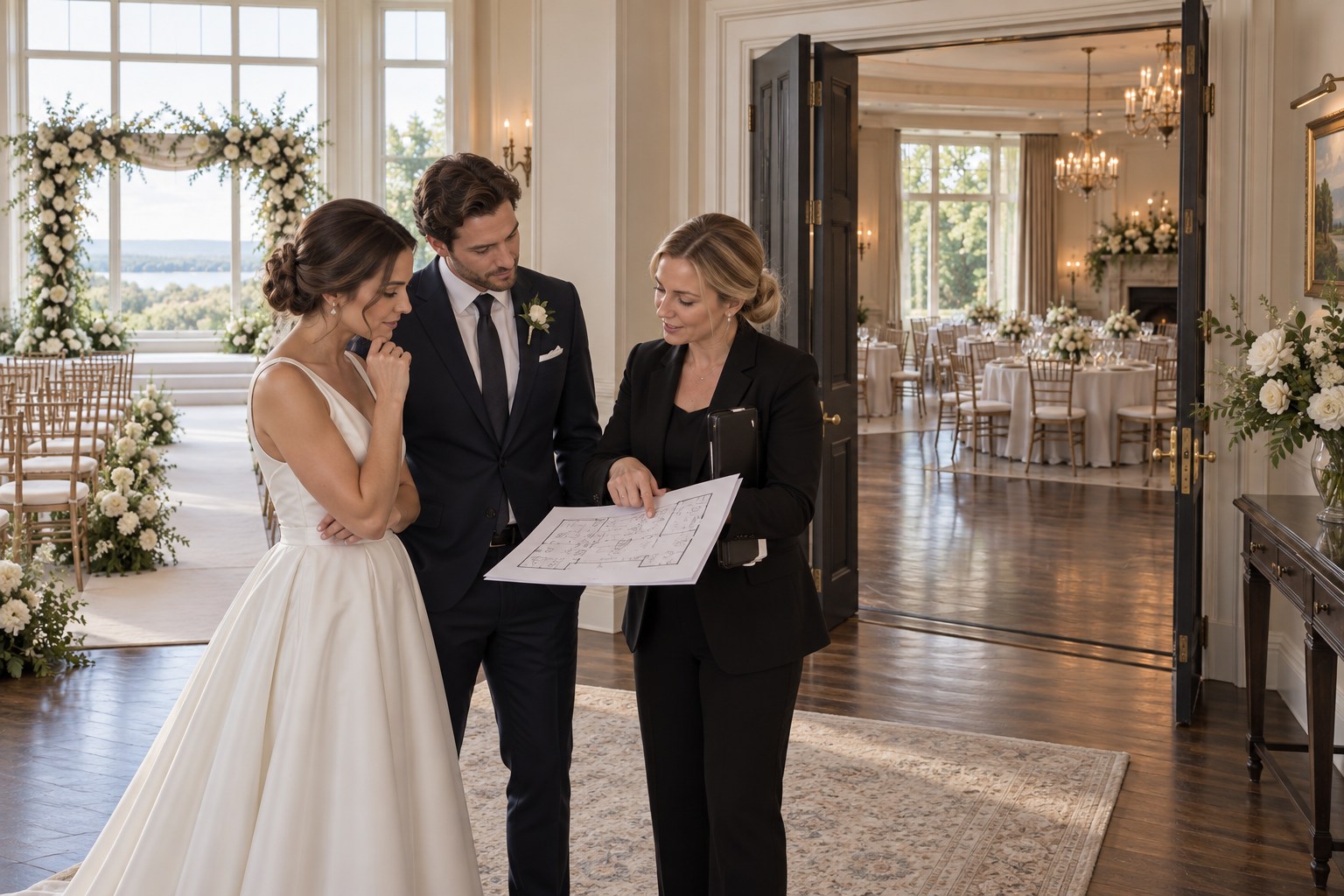
A wedding can look settled on a screen and still feel uncertain once you stand in the actual rooms. The ceremony layout is in a document, the vendor list is current, and everyone has a rough schedule. Then someone asks which door the florist should use, where guests will wait between spaces, or who is confirming the final room setup. Those questions are easier to answer while the venue team and the plan are in front of you.
That is the purpose of a useful venue walkthrough. It turns wedding preparations from a collection of decisions into a plan connected to real entrances, routes, rooms, setup windows, and people. The visit is not another opportunity to redesign everything. It is a chance to identify what still needs confirmation, agree who will get it, and share the answer with the team.
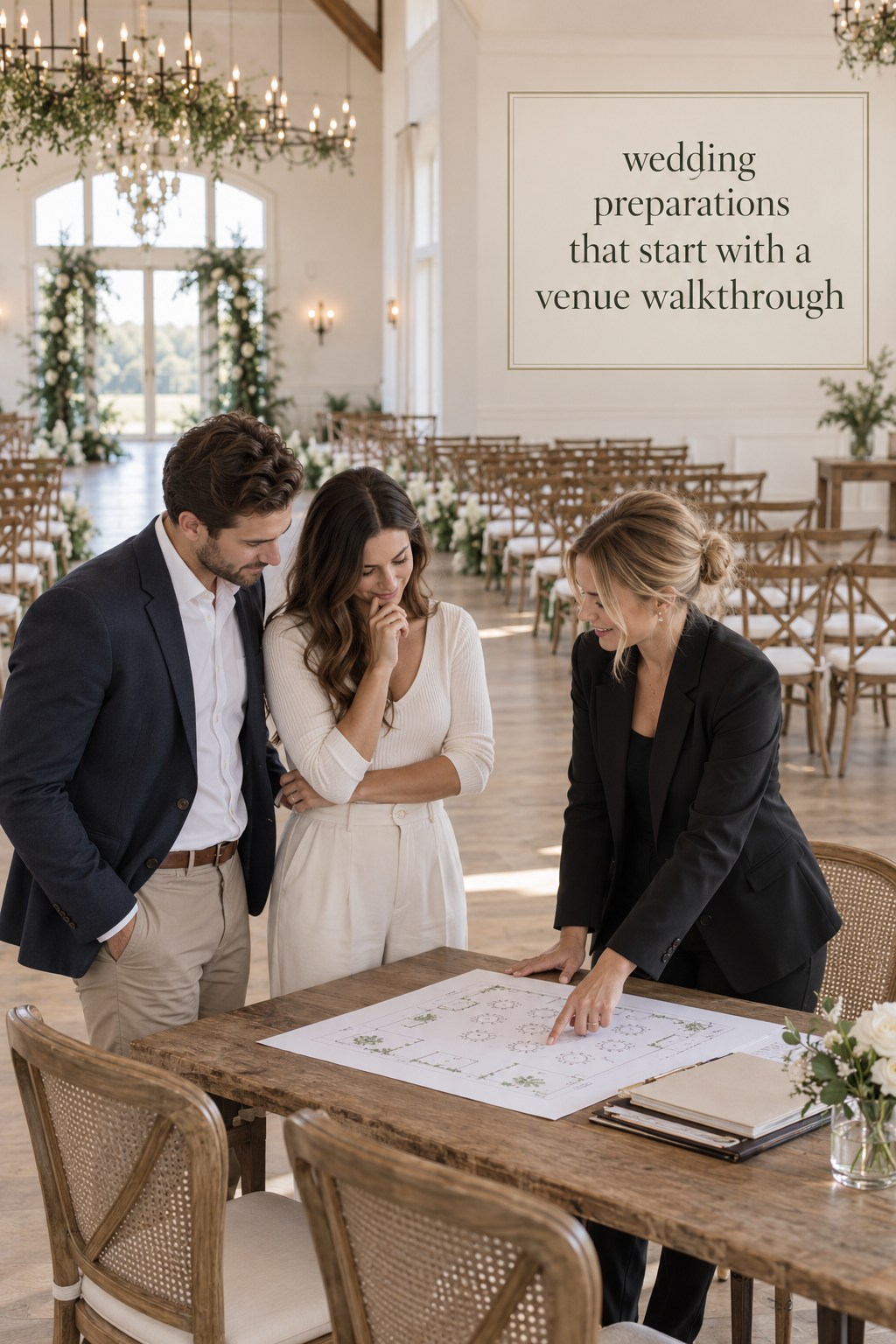
Think of the review as a short rehearsal of the place, rather than a tour of its prettiest features. The couple can leave with a clear route from arrival through the ceremony and reception, plus a short list of open items with named owners. That record will be more useful on the wedding day than a long set of photos without notes.
Give each venue visit a different job
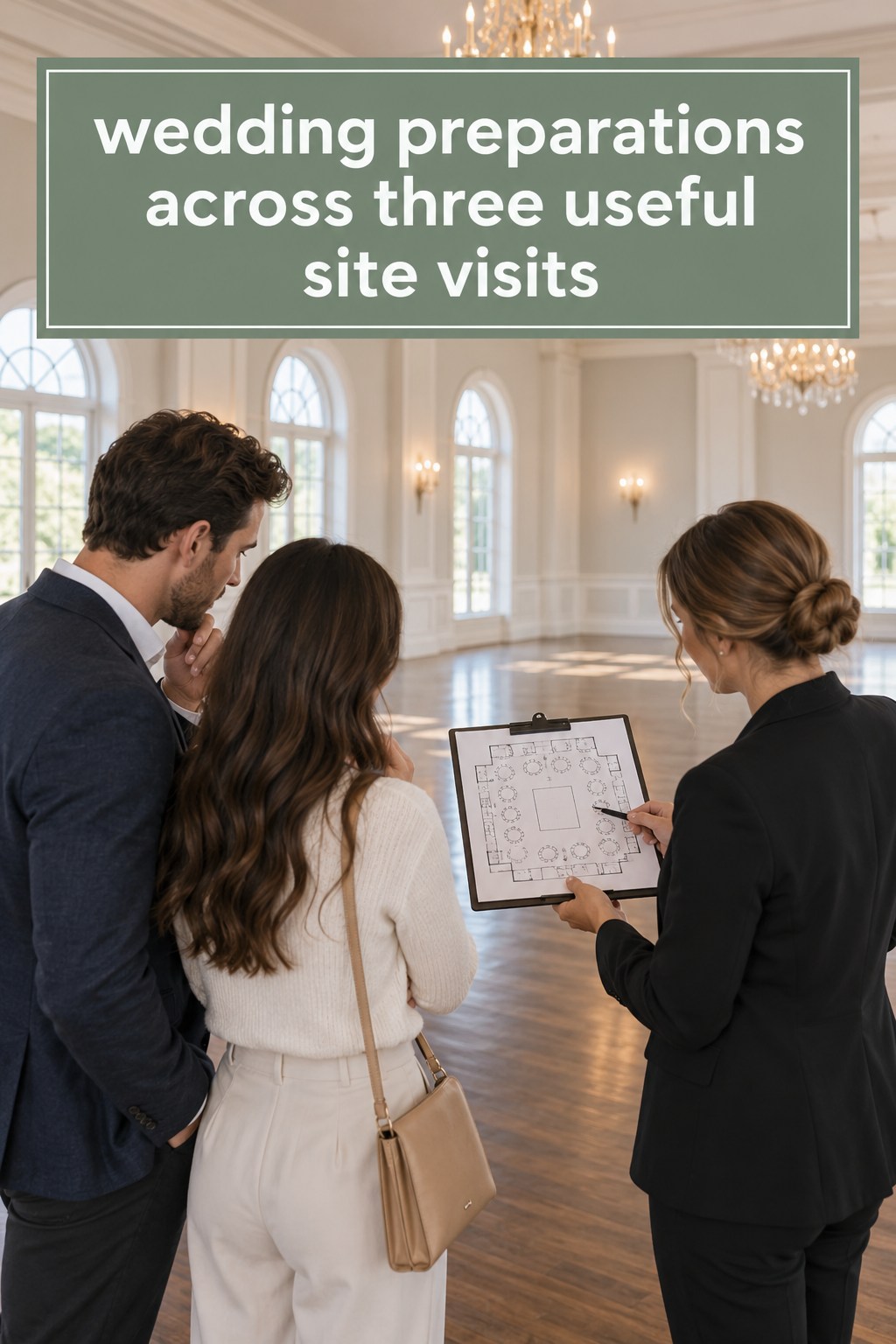
Venue visits often get treated as interchangeable. A couple may revisit the property several times, but each visit can answer a different question. Early on, the main question is whether the venue fits the celebration at all. Later, a design or production visit can test a specific plan with the people who need to build it. Near the event, the final review can confirm that the current documents match the actual space and that someone owns every remaining decision.
This distinction keeps a visit from becoming an unstructured discussion about every wedding detail. Before scheduling, write one sentence that describes what the meeting needs to resolve. For an early tour, it might be: “Can this venue support the guest experience and event format we want?” For a production visit, it might be: “Can the ceremony layout, rental plan, and room transition work in this space?” For a final review, it might be: “Are the route, access, setup responsibilities, and open confirmations clear enough for the day-of team?”
The participants should follow that purpose. A first visit may only require the couple and a venue representative. A production review may benefit from the planner, coordinator, florist, rental partner, or caterer if the decisions affect their work. A final venue meeting usually needs the couple or an authorized decision-maker, the venue contact who understands the event operations, and the planner or coordinator who will carry the plan on the day. Invite only the people who can answer, approve, or act on the questions at hand.
A wedding coordinator’s venue walkthrough questions distinguish what couples may need to learn on an initial tour from what should be revisited later, including access times, a possible room flip, rehearsal logistics, and what the venue supplies. A final walkthrough guide from WeddingWire also recommends checking arrival and vendor access against the event plan and signed details. Use these as prompts, then confirm the answers for your own venue and contract.
It helps to bring a small packet instead of trying to remember every version of the plan. Include the current floor plan, event sequence, vendor contacts, venue agreement, and a list of unresolved questions. Label each document with its date. If people arrive with different floor plans or an old timeline, pause and agree which file is current before debating the room.
Not every wedding needs three formal visits. A single venue may provide a thorough final meeting, while a private property or multi-space event may need separate technical checks. Treat the stages as a way to assign purpose, not a required number of appointments. The useful test is whether a visit is likely to resolve a real decision that cannot be settled by email, a diagram, or a short call.
Walk the day in the order people will experience it
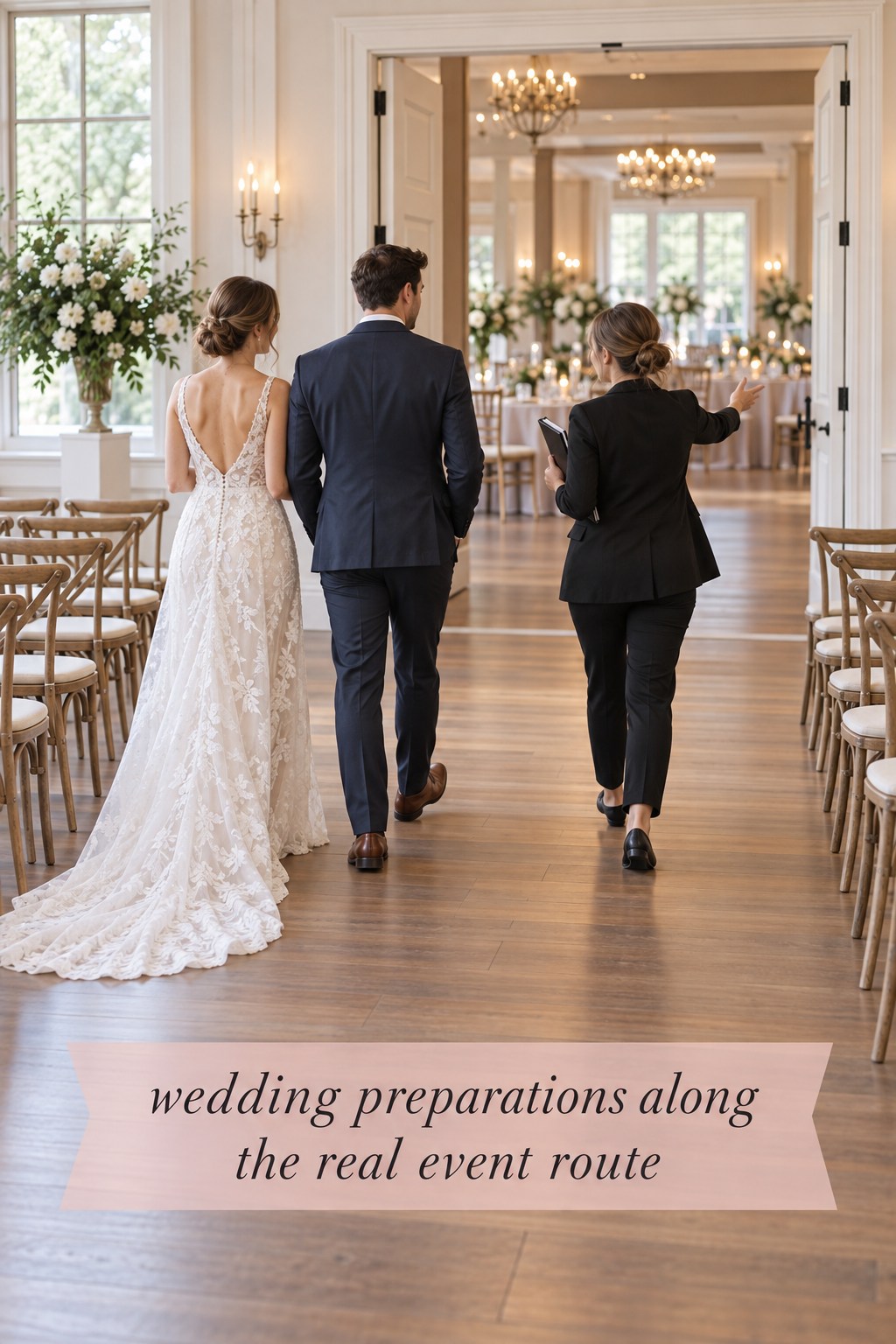
Once the group is together, resist the temptation to start with the reception room because it is the most decorated space. Begin where the first person will arrive and follow the sequence of the day. That makes gaps easier to spot. Ask the venue representative to show the route, rather than describing it from a floor plan. Pause wherever two groups, tasks, or room uses meet.
Start with vendor arrival and setup. Confirm which entrance each vendor should use, where unloading can happen, and who will let a crew into a room. Check how the route works for equipment that is larger than a tote bag: rental pieces, floral containers, audio gear, instruments, or catering supplies. If a path includes a shared hall, narrow doorway, elevator, stairs, or a second event space, record the detail and ask who will coordinate access. Keep the plan tied to written venue rules rather than assuming that a route used on the tour will be available during the event.
Then follow the guest’s arrival. Where will a car or shuttle stop? Which entrance should a guest see first? Is the sign visible before a person reaches a confusing fork in the path? Walk from parking or drop-off to the ceremony area at the pace of a guest who has never been there. Consider where someone might wait if they arrive early, where coats or personal items belong if the venue offers a place, and which contact can answer a question without sending the couple a message.
Move to the ceremony setup. Stand where the couple expects to stand and look toward the seats. Then choose a few representative guest viewpoints, including a seat farther back and any place with a different angle. Notice doors, columns, service areas, speaker locations, and routes that could enter the visual field or interrupt movement. If a musician, photographer, reader, or attendant needs a position, identify it on the floor plan and confirm whether that location changes a guest route.
Next, trace the transition after the ceremony. Where do guests go while the room changes or the wedding party takes portraits? Is the same room being reset, or does the group move to a different area? Who directs people, and what sign or verbal cue will tell them where to go? A room diagram may show that two spaces connect, but a short route rehearsal can reveal a doorway that becomes crowded or a stopping point where guests have no clear next step.
Finish the route at the end of the celebration. Confirm the guest exit, the vendor strike route, where rented items wait for collection, and which personal items need to leave with the couple or a trusted person. The room-clear time may differ from the last guest departure, so capture each time separately if the venue gives separate instructions. Do not rely on someone remembering a verbal note made during a busy meeting.
Walk the vendor path separately from the guest path. A route that feels obvious to the couple may send a crew through a guest entrance or across a ceremony setup. Ask the venue contact to describe the normal setup and breakdown process, then confirm any exception that applies to your event. You do not have to solve every technical issue at the site. You do need to learn which vendor or venue contact will resolve it and by when.
As you move, take a few reference photos from consistent places and attach short captions. “View from the back row toward the ceremony” is more useful than an unlabeled image among dozens of camera-roll pictures. Photograph the location of a planned item, not guests or venue staff without permission. A floor plan should remain the reference for dimensions and placement. Photos help people recognize the location, but they do not replace a measured plan or the venue’s written approval.
Turn what you notice into decisions someone can confirm
A walkthrough produces observations, but an observation by itself does not change the plan. “The entrance is around the side” is not enough for a vendor arriving with equipment. “We might move the guests after the ceremony” is not a cue that a coordinator can use. Convert each observation into a question with an answer, an owner, and a next step.
Use a simple decision record with five fields: the location or topic, what is currently known, what still needs an answer, the person responsible for confirming it, and the date or event that should prompt a follow-up. Add the source of confirmation when the answer matters, such as the venue contact, a contract clause, the caterer, or the planner. This makes it easier to distinguish a confirmed rule from a convenient assumption.
- Location: name the room, entrance, route, or event moment.
- Current understanding: state what the group believes is true.
- Open question: write the exact uncertainty in plain language.
- Owner: assign one person to obtain the answer. Others may help, but one person should close the loop.
- Proof and due date: record where the answer will be confirmed and when the planning team needs it.
For example, “The florist can unload near the garden” becomes: “Confirm whether the garden service door is available for floral delivery during our access window. The florist needs the door location and unloading instructions. The planner will ask the venue contact and add the written reply to the vendor packet before the final schedule is shared.” This avoids inventing an answer while still making the next action clear.
Use the same method for decisions about a ceremony-to-reception transition, a room reset, a weather alternative, a power request, or a delivery. State which person has authority to approve the change. A couple can choose the preferred layout, for example, while the venue confirms that the layout meets its rules and the rental company confirms the equipment. Responsibility should follow the person who can actually provide the answer.
Keep decisions and tasks separate. “Ceremony chairs face the garden” is a decision. “Venue team places the chairs by the approved plan” is a task. “Planner receives a photo after setup” is a verification step. When all three are compressed into one vague note, the team may agree on the design but still miss the setup or confirmation.
When an answer changes the plan, update the floor plan, timeline, and vendor instructions together. Avoid sending one person a revised text while everyone else keeps the old document. Mark the revised file clearly and tell each affected owner what changed. The goal is not to create paperwork for its own sake. It is to make sure the same decision reaches the people who need it before they arrive.
Some questions will remain open because a vendor has not been booked, a final guest count is not known, or the venue cannot confirm a staffing detail yet. Keep those questions visible and state what information would resolve them. If the answer depends on a later milestone, name that milestone instead of assigning an unrealistic date. For example, revisit the seating layout when the confirmed guest count arrives, then ask the venue to approve the clearances.
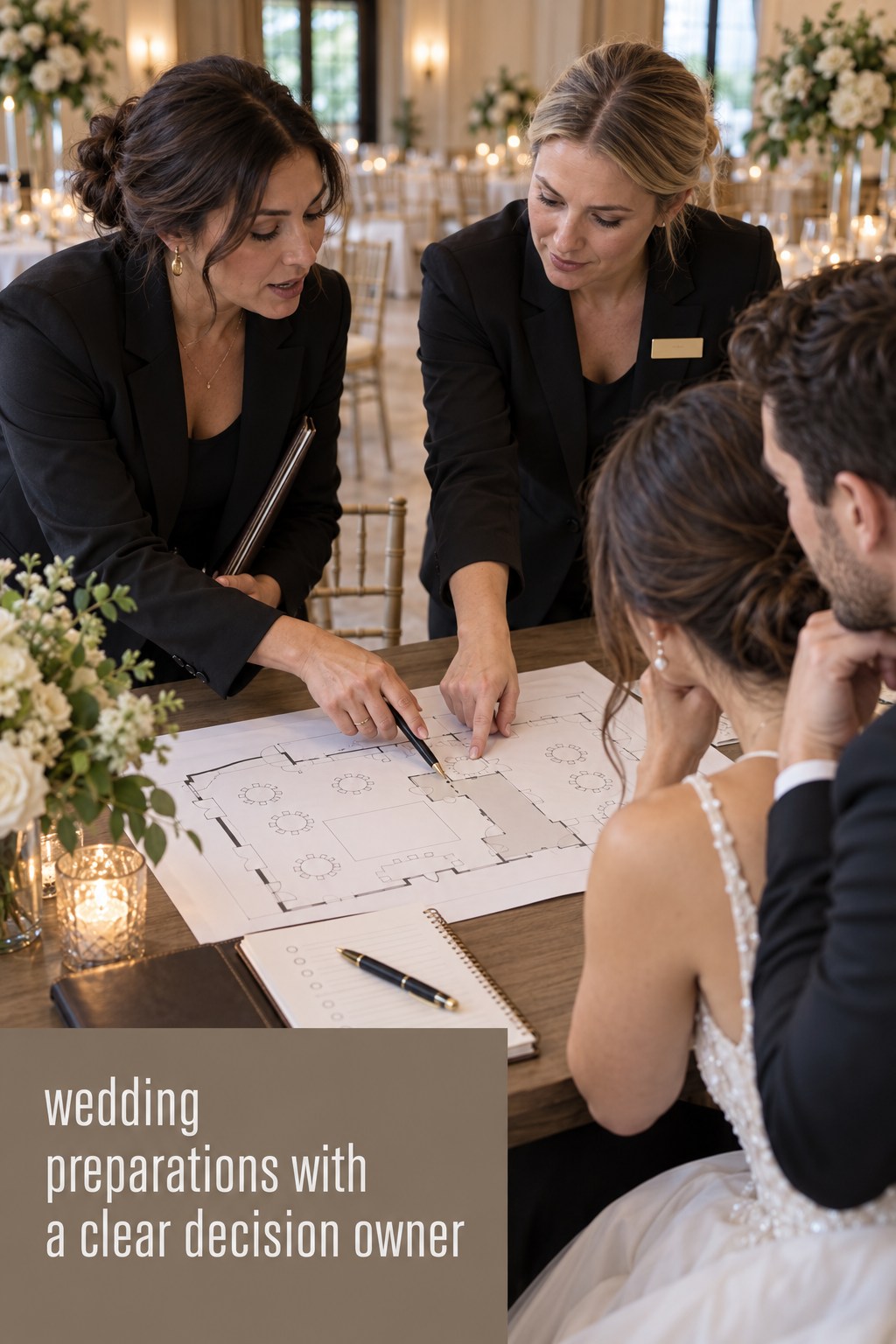
Close the visit with a clear handoff
Before anyone leaves, read the open-item list out loud. This is the moment to catch a question that sounded answered but still belongs to nobody. Ask the venue contact to confirm the items that are within the venue’s control, and ask each vendor to confirm the part that belongs to their service. The couple should not become the default courier for every conversation.
Write a short summary with three sections: decisions made, items still waiting, and who receives the next update. Include the date of the meeting, the people who attended, the current plan file, and the preferred contact channel. A useful summary can fit on one page. If the visit produces many photos, put the meaningful ones next to the relevant location or question rather than sending an unexplained folder.
Send the summary while the details are still easy to remember. Invite each owner to correct anything that was recorded incorrectly and to reply with confirmation or a clear next step. Store that response with the event plan. Whether you use a shared document, a wedding planning binder, or The Wedding Command Center as one part of your planning system, make sure the current answer is easy for the responsible people to find.
Close the loop by updating the files the team will actually use. The floor plan should show approved arrangements. The event schedule should show confirmed access and transition cues. The vendor contact sheet should identify who answers questions on site. If the venue uses its own event order or production document, compare it with the couple’s version and resolve differences before the wedding week.
Agree on a trigger for another review. A substantial change in the guest count, a new vendor, a change in ceremony or reception location, a weather decision, or a venue staffing change may affect earlier answers. The trigger should identify who notices the change and who schedules the follow-up. A new visit is not always needed. Sometimes one updated diagram and a written confirmation will do. The point is to notice when a decision made on site no longer matches the plan.
It can be tempting to end a venue meeting with “everything looks good.” Replace that phrase with a quick recap: these choices are final, these questions remain open, these people own them, and this is where the current version lives. Wedding preparations become more reliable when the team can tell the difference between a lovely idea, a venue-approved setup, and an action that still needs doing.
Sources and methodology
This article draws on wedding coordinator, venue, and event-planning guidance reviewed for venue tours, final walkthroughs, event routes, access, and team responsibilities. The coordinator resources inform the distinction between early questions and final confirmation. The WeddingWire guide informs the need to verify vendor arrival and venue flow against the current plan. The route rehearsal and five-field decision record are original practical frameworks, not a universal venue rule. Confirm timing, access, and room arrangements with your own venue and vendors.
FAQ
What is the purpose of a final wedding venue walkthrough?
It is an opportunity to check that the current event plan fits the real rooms, access rules, and people responsible for carrying it out. Use the visit to confirm open questions, test important guest and vendor routes, and assign any follow-up work.
Who should attend the final venue walkthrough?
Invite the couple or a decision-maker, the venue contact who can confirm operations, and the planner or coordinator who will manage the day. Add a vendor only when that person’s setup, equipment, or schedule is part of a decision that needs their input.
When should we schedule a final walkthrough?
Ask your venue and planner when a final review will be most useful for your event. The right point depends on when the venue can confirm operations and when your vendors need an approved layout or access plan. Do not treat a generic online date range as a rule for every contract.
What should we bring to a wedding venue walkthrough?
Bring the current floor plan, event sequence, vendor contact list, relevant venue agreement, and a short list of open questions. Label documents with their revision date so attendees can tell which version is current. Take reference photos only where they help explain a location or route.
What should we check during a venue site visit?
Follow the day from vendor arrival and guest entry through the ceremony, room transitions, reception, and exit. Check the routes, wait points, access instructions, and person responsible for each unresolved venue detail. Confirm measurements and venue rules with the appropriate professional.
How do we keep venue walkthrough notes useful?
For every open item, record the location, the exact question, one owner, the required confirmation, and a due date or milestone. After the meeting, share the notes with the people who need to act and update the relevant plan when an answer changes.
Do we need to revisit the venue after the final walkthrough?
Not automatically. Revisit or request a new confirmation when a meaningful change affects the agreed layout, access, vendor requirements, staffing, or weather plan. Some updates can be handled with a revised document and written approval instead of another site meeting.
Leave a Reply