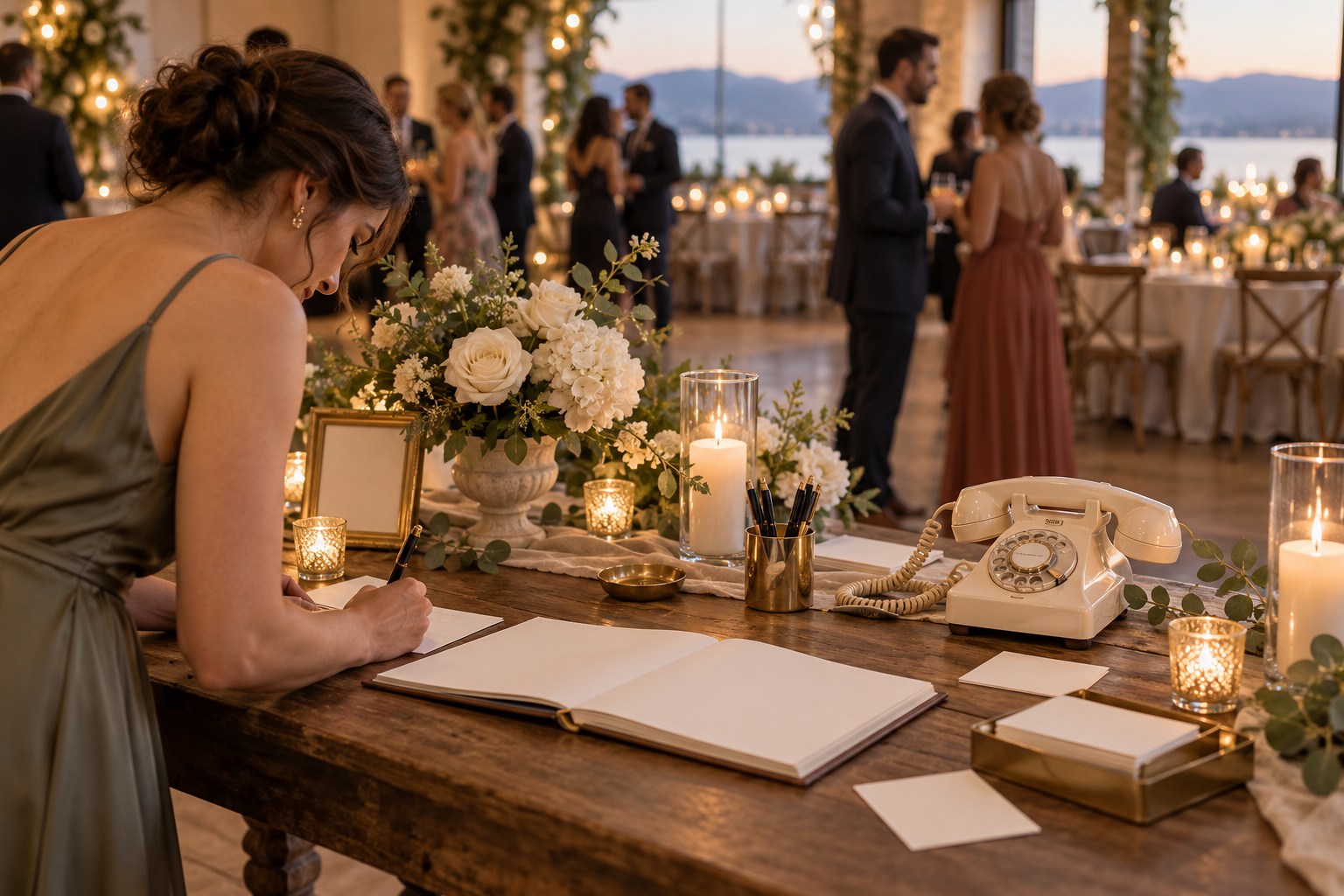
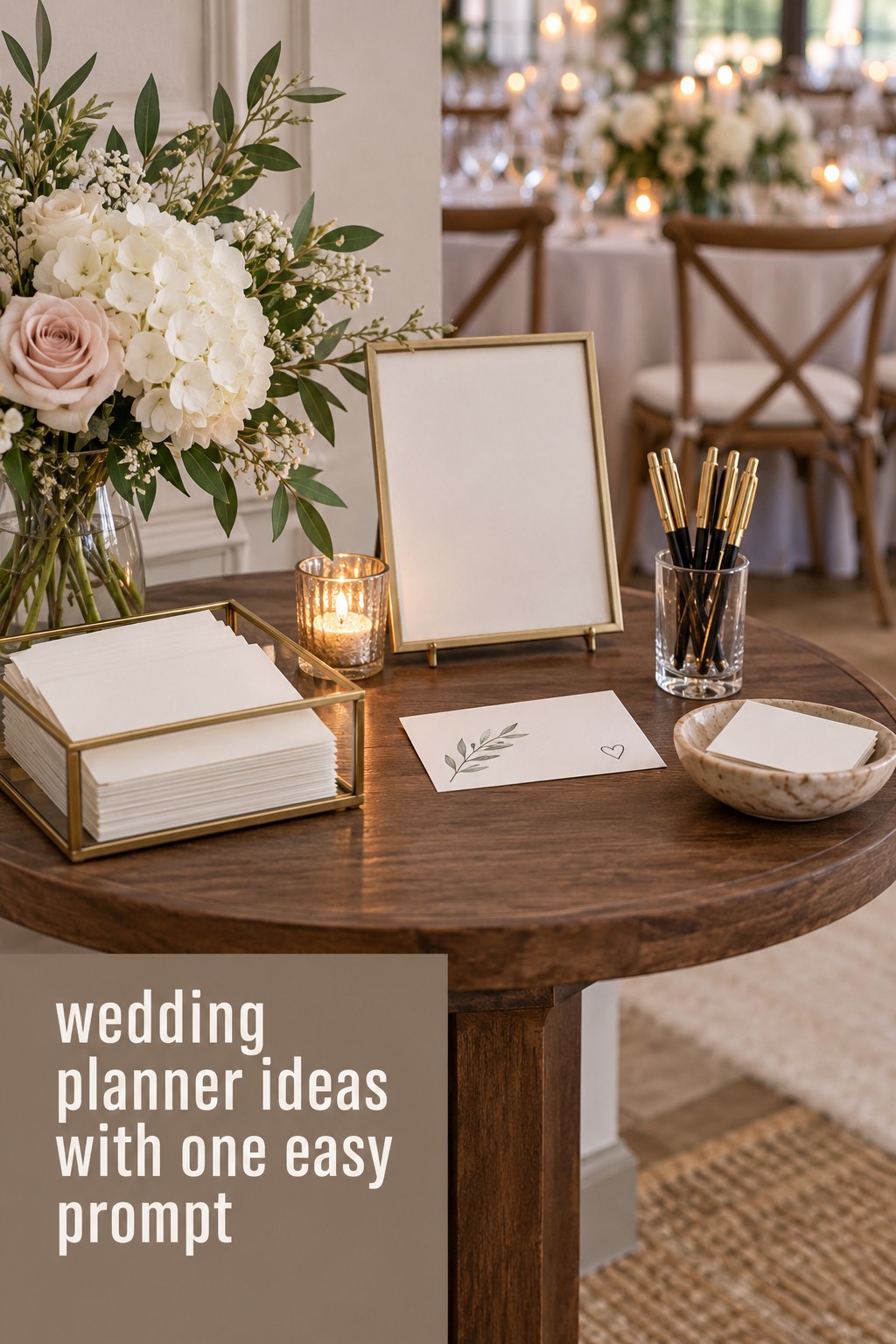
A guest book table can look finished before it has given anyone a reason to stop. The album is centered, the pens are lined up, and a framed sign says “Welcome.” Guests walk by on their way to find a seat. If the couple hoped to keep stories, advice, or voices from the people they love, the setup has done its job as decor but not yet as an invitation.
One useful wedding planner idea is to design a guest-message station around the keepsake the couple actually wants to revisit. Start with the end result, choose one easy way for guests to contribute, give them a clear prompt, and plan where every message will go after the celebration. That simple sequence connects the look of the station to the experience guests have and the memories the couple receives.
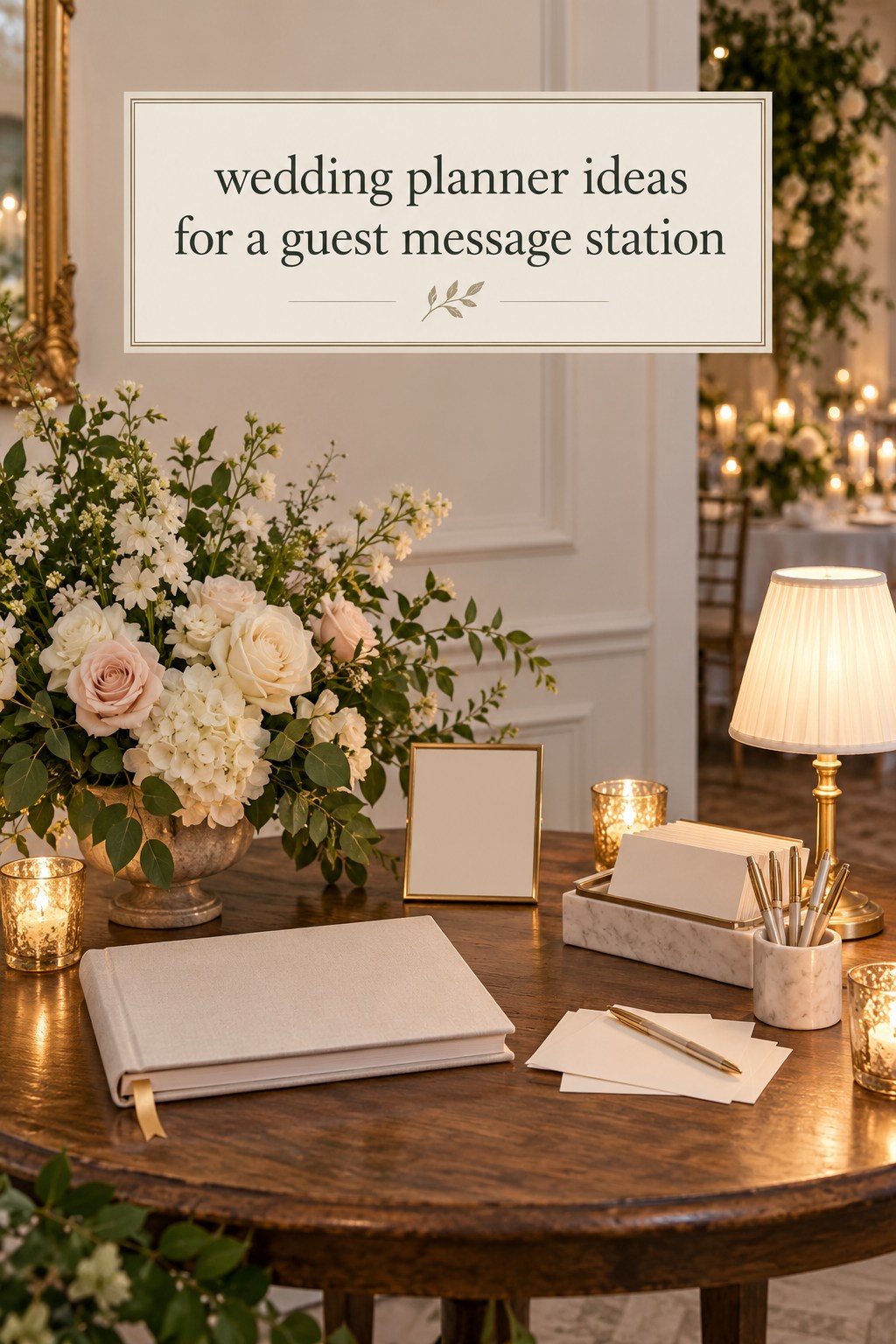
This can be a classic book, a photo album with notes, a set of cards, an audio recording point, or a combination that stays simple. The point is not to collect several activities. It is to make one meaningful idea feel natural in the room and easy to carry into the couple’s life afterward.
Choose the keepsake before the activity
Many lists of wedding planner ideas begin with objects: a globe, a puzzle, a phone, a print, a jar, or a pile of cards. It is easy to choose something that looks charming in a photograph and harder to decide what will happen to it once the chairs are cleared. Reverse that order. Ask the couple what they would like to keep, where it might live, and how they would like to encounter it again.
If the answer is “we want something to read together,” a book or a small set of written cards might make sense. If they want to see who was present, a photo-and-message album can keep names and images together. If they would rather hear familiar voices, an audio station may be a better fit. If they want a piece to display in their home, a signed illustration or framed print can turn the messages into an object that belongs on a wall. None of these options is automatically better. They serve different kinds of memories.
Then define the guest contribution in one sentence. “Write one memory you share with us.” “Take a photo together and add a note.” “Leave us a voice message for a future anniversary.” The sentence is the design brief for the rest of the station. It determines whether you need a page, a card, a camera, a recorder, a sign, or someone who can help guests start.
A good keepsake also has a realistic place to go. Before ordering or making anything, decide whether it will be read, displayed, played, assembled, or stored. A large object that has no spot at home may become hard to enjoy. Loose cards need an envelope or box that can close. A physical album needs enough room for messages as well as names. A digital file needs a clear storage plan and a second copy if it contains irreplaceable recordings.
The couple can use three questions to narrow the possibilities:
- What do we want to remember? The names of guests, their faces, their handwriting, their voices, a story, a wish, or a piece of advice?
- How will we revisit it? Read it over dinner, turn pages on an anniversary, hang it at home, play recordings, or add entries to a digital archive?
- What can we care for after the event? Consider who will collect, transport, assemble, and safely store the contributions.
When the answers are unclear, choose a modest version first. A small bound book with a prompt page may be more useful than a custom object that needs special display space. One album with photos and short notes may suit the couple better than separate photo, video, and audio activities. The easiest keepsake to enjoy is often the one that fits the way the couple already remembers important occasions.
The Knot’s roundup of wedding guest book alternatives includes formats such as signed pieces, photo options, and paper messages. That range shows how the contribution itself can change while the purpose remains: keep a trace of the people who were there. Use inspiration photos to notice possibilities, then judge each one by the couple’s desired keepsake and the work guests will be asked to do.
Match the format to the way guests want to contribute
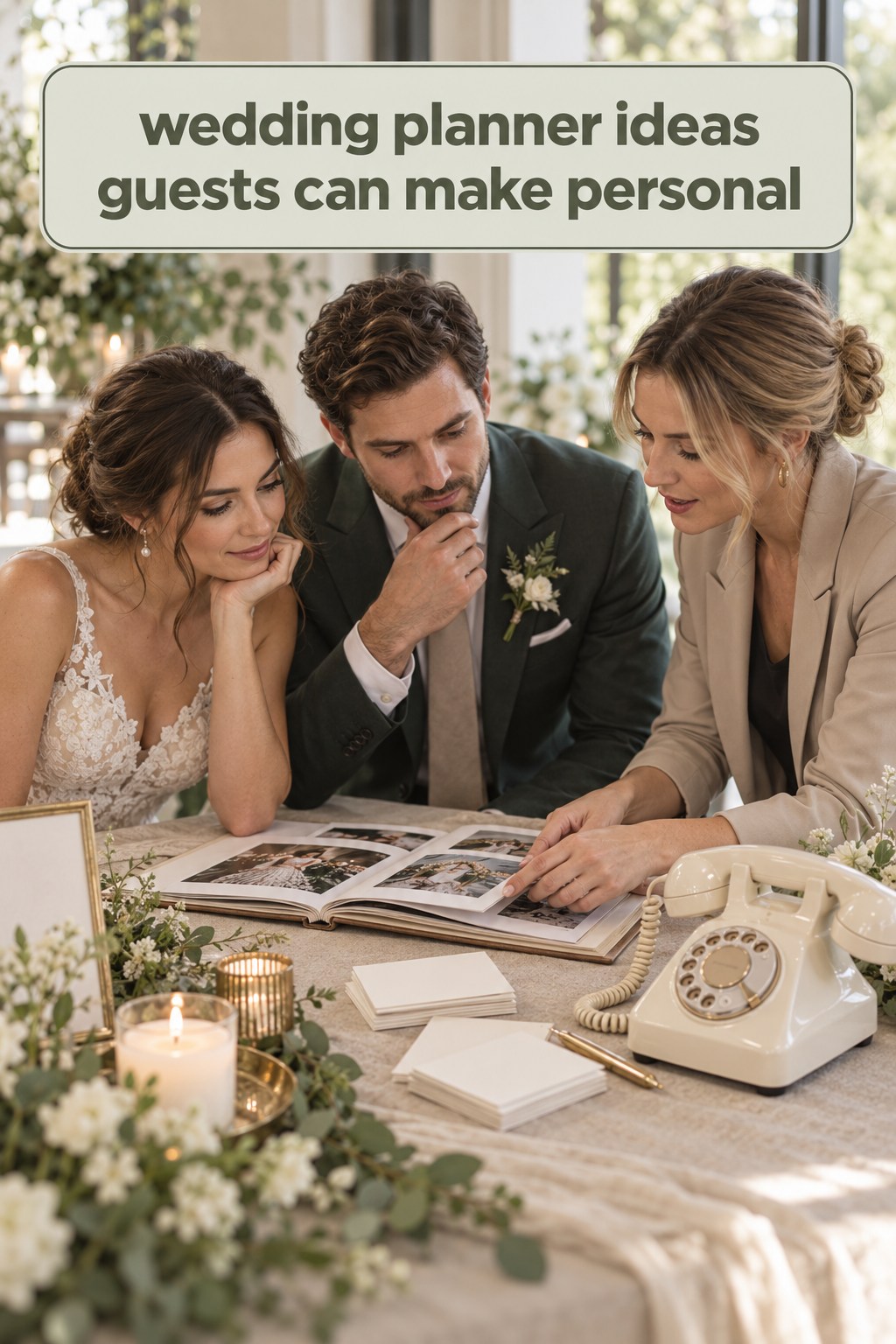
Once the couple knows what they want to keep, choose the action that creates it. The format can be quiet and personal or quick and playful, but guests should understand it at a glance. It can help to think in four families: written messages, photos with captions, recorded voices, and a mixed format that offers one main choice with one alternative.
Written messages suit couples who want handwriting, practical advice, or notes they can open later. A bound book works when guests can sit or stand comfortably to write. Individual cards work when the couple wants to sort or open messages by milestone. A jar or box can make the interaction brief, though loose notes should have an envelope or container ready before anyone arrives. Give guests a specific question so the page does not begin as a blank assignment.
For example, invite each person to share one favorite memory with the couple, one small ritual that keeps a relationship close, or a place they hope the couple visits together. One optional prompt is usually enough. Several questions compete for attention and may make the activity feel like a survey. If the couple wants a broad range of messages, place two prompts on separate cards and let a guest choose either one.
Photos with captions can capture faces and handwriting in the same keepsake. A station might offer a camera and a small album, or printed images with space for notes. Consider the steps involved: take a picture, wait for it to appear, attach it, and write. That is more work than adding a signature. The album needs enough blank space, a writing surface, a pen that works on the page, and a safe place to put photos that have not yet been attached.
A photo format can be made easier by letting guests choose whether to add an image. Avoid requiring every person to pose or handle equipment. A guest may prefer a simple note, and some guests may not wish to be photographed. Make sure the station still produces a complete keepsake if a visitor leaves only a message or only a signature.
Recorded voices give guests a different way to leave a story or wish. The setup could use a dedicated audio guestbook service, a recorder managed by a trusted person, or a phone-based method. Capabilities vary, so confirm how recording starts, where files are stored, who can access them, and how the couple can download or keep copies. If the recording method relies on a QR code or personal device, tell guests what will open and what they need to do before they commit to using it.
Some guests will be more comfortable speaking than writing. Others may prefer a note they can leave quickly without hearing their own voice. Offer one primary format and a low-effort alternative only when both can be managed well. A short audio prompt alongside a paper card can work if someone is responsible for both. A menu of four unrelated activities can turn one thoughtful idea into a confusing set of instructions.
A mixed station can pair formats that share the same purpose. A photo album with handwritten captions combines faces and text. A guest map with one memory prompt combines a visual keepsake and a short message. An audio station with one printed sign combines voice and a clear instruction. Keep the physical setup to a coherent visual area, and explain the connection in one warm sentence.
Before deciding, consider the people who will be invited to contribute. Is there somewhere stable to write? Can a guest reach the supplies while seated? Is there enough time during the event to take part? Does the activity require a smartphone, a camera, or a longer conversation? The goal is not to design for an imaginary average guest. It is to offer an easy choice that respects different preferences and does not make participation a condition of belonging.
Audio-sign guidance from Gathmo’s wedding guestbook prompt examples recommends giving guests a clear action, a reason, and an optional prompt. That sequence is useful beyond audio: tell people what they can do, why the couple would value it, and what they might say if they are unsure. Keep the invitation friendly and optional.
Build a station that is easy to notice and use
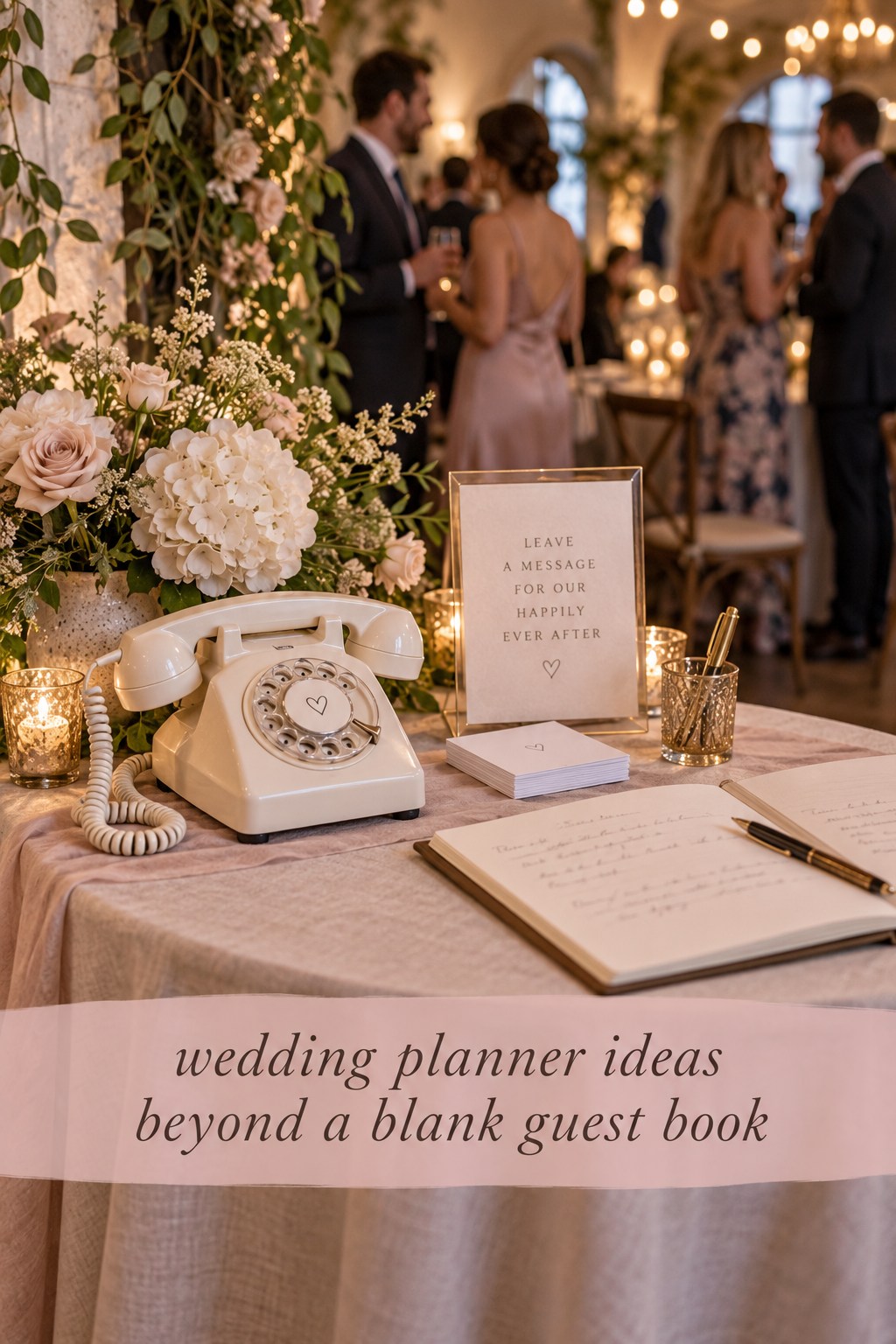
A guest-message idea depends on more than the keepsake. It needs a place, a clear instruction, the materials to complete the action, and someone who can keep the station ready. These are the practical building blocks that make a creative format possible without turning it into another performance for the couple.
Start with placement. Put the station where guests can notice it without blocking the entrance, bar, seating, or service routes. The first moments after arrival may be busy with greetings, coats, seating, or ceremony directions. If a message takes more than a few seconds, an area where people naturally pause may work better than a narrow doorway. Ask the venue or planner whether the table can stay there throughout the event and who can move it if the room changes.
Give the sign one clear job. A welcoming headline can set the tone, but the instructions should make the next step obvious. For a written book, the sign might say, “Choose a prompt and leave us a note for our first anniversary.” For a photo album, it might say, “Add a photo, then write the memory you want us to keep.” For audio, it might say, “Pick up the receiver and leave us a short voice message.” Keep the prompt concrete and easy to answer without revealing private information.
Include an example when the format needs explaining. A sample card, completed page, or small demonstration photo can show the length and style of an entry. Avoid displaying an example that looks like a required script. Guests should be able to understand the task and then express themselves in their own way.
Test the materials before the wedding. Use the exact pen on the actual paper, surface, wood, or photo backing. Check that pages turn easily and that the book stays open. Try the camera or recorder in the room where it will be placed. If there is a digital step, ask someone unfamiliar with the setup to follow the instructions once. A test is especially useful when a handmade or coated surface may not work with ordinary ink.
Prepare a small backup kit that matches the chosen format. It might contain extra pens, blank cards, tape or photo corners, a second sign, a charger, a power bank, or a box for finished contributions. Keep the backup near the station, but out of the way. Make one person responsible for checking whether the main supplies remain usable. That person does not have to supervise guests. They can simply answer the first question, replace a pen, and protect the keepsake from spills or relocation.
Ask the couple what they want to share and what should remain private. A message station does not need to ask about sensitive subjects or invite guests to post personal information publicly. If contributions will be photographed or shared digitally, explain where they will go. For a private keepsake, use a format and collection process that help the couple keep the messages together and limit accidental exposure.
Decide how the station will close. A book can be placed in a labeled bag or given to a named person. Loose cards can be counted into a closed box. Photo strips can be gathered before the display comes down. An audio recorder can be returned, charged, and transferred to the person responsible for saving the files. Write this task into the day-of handoff so the keepsake is not left behind when vendors clear the room.
Give the messages a destination after the wedding
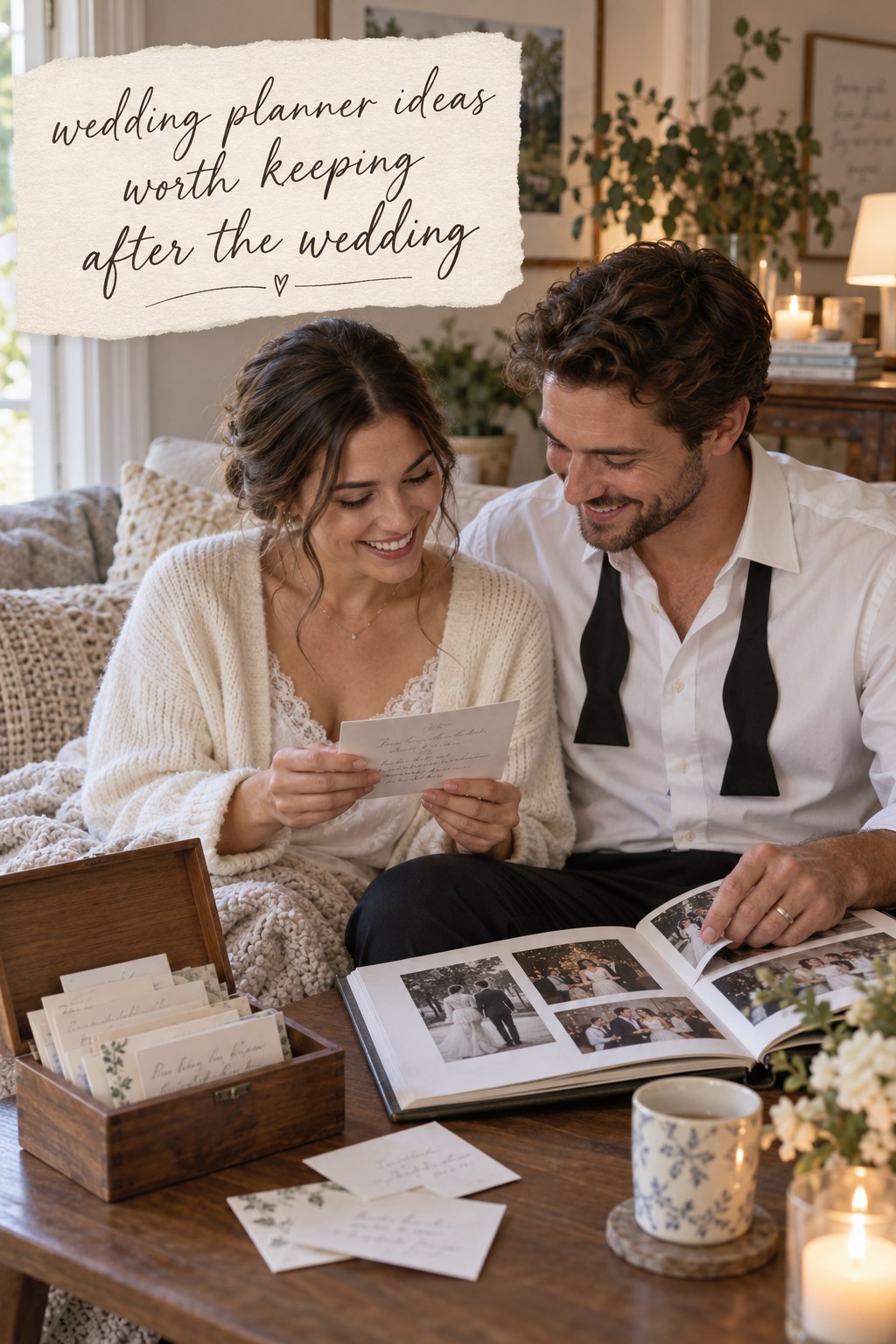
The final building block is what happens after guests have contributed. Design the destination while choosing the format, not months later when someone discovers a box of cards. The couple might want a book on a shelf, an illustration on a wall, a shared audio collection, or a set of letters to open over time. Each choice needs a small amount of care to move from a wedding activity into a lasting keepsake.
For written contributions, label the container before the event and choose a person who will bring it home. If the cards are meant for different anniversaries, separate them only if the guests can understand the instruction easily. Keep the prompt and the delivery method together so the couple can remember what the notes are for. If the messages contain personal advice, avoid leaving them unattended in a public area after the event.
For photos, choose an album or archive plan that does not depend on assembling everything during the reception. The couple can invite guests to place prints in a temporary box and add them to pages later, or assign a helper to insert them as the event goes on. If the photos include written captions, keep the notes attached to the correct image. A photo without a name may still be meaningful, but the couple should know whether identification matters to them.
For audio, decide who will collect the device, transfer the recordings, create a backup, and let the couple know where the files are stored. Test playback and file naming before the celebration if using a new recording method. Choose a private place to share or listen to personal messages. A voice recording can be a lovely way to remember a guest, but it should not be treated as an automatic replacement for a written note from anyone who prefers not to record.
A digital contribution can be helpful for guests who are not attending, but it should still feel connected to the event. Tell remote contributors what they are being invited to send and when the collection will close. Keep a copy of the instructions with the archive. If there are two separate collections, such as a public photo gallery and a private advice page, label them clearly so the couple can find each later.
Adapt the station to the size and rhythm of the celebration. At a small gathering, a prompt that invites a longer memory may fit the pace. At a large reception, a quick card, signature, or photo caption may be easier for guests to complete. During a short cocktail hour, avoid an activity that requires a queue or a lengthy recording. At a multi-day celebration, a simple written keepsake might be available at more than one gathering, while one person keeps contributions together between events.
For a seated dinner, a small prompt card at each table can remind guests of an optional activity without drawing them away from conversation. For an open reception, a station on a visible side table may be easier to approach at a natural pause. For an outdoor event, use a container or surface that can be closed and moved if weather changes. The couple and planner can choose the least complicated setup that fits the actual space and schedule.
Before finalizing, read the sign as a guest who has just arrived. Can you tell what to do in a few seconds? Do you know how much to write or how long to record? Is the activity optional? Can you complete it without asking the couple for help? Can the result be kept safely? If the answer to one of these questions is unclear, simplify a step or revise the prompt.
A memorable wedding planner idea does not need an elaborate installation. It needs a clear reason to exist, a contribution guests can comfortably make, and a destination for what they leave behind. When those pieces fit together, the station can feel personal while staying easy to use and easy to care for.
Sources and methodology
This article reviewed wedding publication, photo-book, stationery, and guestbook-provider pages for examples of written, photo, and audio contributions. The Knot supports the range of guestbook alternatives. Gathmo supports a simple instruction-and-prompt structure for an audio-message sign. The keepsake-first selection sequence and planning checks here are editorial recommendations, not claims that one activity works for every couple or guest list.
FAQ
What are some wedding planner ideas for guest participation?
Try one guest-message station with a format that fits the couple: a prompted book, a photo album with captions, a card box, or an audio guestbook. Make the invitation optional, give a clear prompt, and decide how the contributions will be collected after the celebration.
How do we choose a wedding guest book alternative?
Start with what you want to keep and how you might revisit it. Choose a book or cards for written messages, a photo format for faces and captions, audio for spoken memories, or a display piece for signatures. Then check how guests will use it and where it will live afterward.
What should we write on a wedding guest book sign?
Use one action, a short reason, and an optional prompt. For example: “Leave us a note for our first anniversary. What is one memory from today you hope we remember?” Adjust the wording to match the format and keep the request easy to understand.
Where should we put a guest-message station?
Choose a visible place where guests naturally pause, while keeping entrances, service paths, and seating clear. Ask the venue or planner whether the location can remain available through the event and name a person who can move or collect the station if needed.
How can we make a guest book easier for guests to use?
Keep the instructions short, add one specific prompt, provide tested materials, and show an example if the task is unfamiliar. Let guests choose a simpler option when possible, and do not require anyone to be photographed or recorded.
Who should collect the guest book at the end of the wedding?
Assign one trusted person before the event and include collection in the day-of handoff. Tell them where the book, cards, photos, or recorder should go. For digital messages, name the person responsible for transferring and backing up the files.
Can we offer both a physical and digital guest book?
You can, if each option has a clear purpose and someone can maintain it. Consider whether guests might be confused by two separate instructions. One main format with a simple alternative can be easier to explain, manage, and revisit.
Leave a Reply